Recently, the United States military captured Venezuelan President Nicolas Maduro. President Trump called him a “narco-terrorist” and initiated the action. Whatever a “narco-terrorist” is, Maduro is certainly another in a long line of “socialist” leaders that did not hesitate to murder and impoverish their own citizens, all the while lining the pockets of his family and his cronies. The standard of living plummeted and millions fled Venezuela in the years that followed his rise to power.
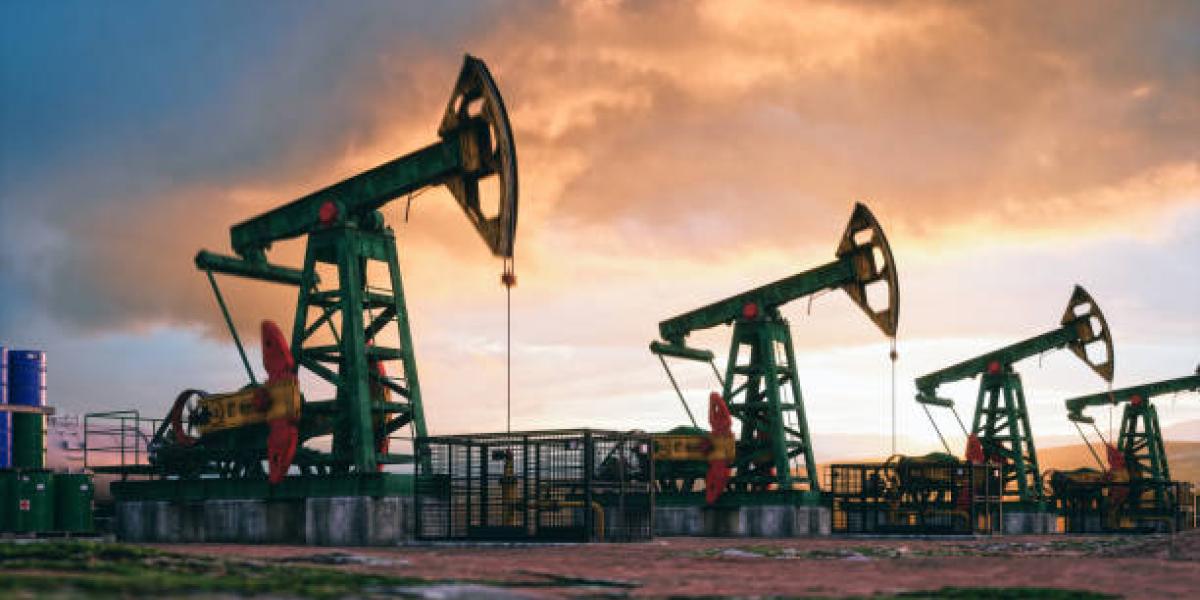
Additionally, Venezuela has the largest pool of proven oil reserves on the planet; a nice ancillary benefit if ever there was one. What will be discussed here is how the proven petroleum reserves are greater at the end of the year, as they have been every year since the statistics were calculated. “Peak oil” is nonsense and Geophysicist Hubbert is just wrong. Petroleum reserves are finite because everything on planet Earth is finite, but there is no need to panic; we are not running out.
This author first beat the Hubbert Theory dead horse back in 2007 for Lew Rockwell’s website, and updated his arguments a few years later.
President Trump’s decisive action in Venezuela brought the topic to the forefront. Just how much oil does the world have? The American Petroleum Institute (API) is considered the world leader in petroleum statistics and they set the standards the worldwide industry uses. Those good old boys from Texas have created the incredible technology that brings high quality gasoline to your neighborhood each and every day. The United States is unique among countries in the world because we allow private ownership of the mineral rights and all the technology required (what socialists call the means of production). This is clearly a triumph of capitalism and the right for individuals to own capital. The current estimate on reserves can be found here.
The proven reserves of petroleum now stands at 1.7 trillion barrels of oil, up significantly from 1.3 trillion barrels in 2009. During this 17-year interlude, some 100 million barrels per day have been consumed by the world. This is clearly a paradox for the Hubbert Peak Oil believers. Let’s put this in a frank discussion using Austrian economics.
A 1964 US dime (a Roosevelt dime) is made of 90 percent silver and 10 percent copper, the last year dimes contained silver before the composition changed in 1965. How much silver is in a 1964 dime?
Total weight: 2.50 grams (about 0.0804 troy ounces total weight)Silver content (90 percent): ≈ 0.0723 troy ounces of pure silver per coin
Silver Melt Value and Gasoline
To find the value based on silver alone, multiply the silver content by the current spot price of silver (the market price per troy ounce). Example calculation (based on recent spot prices): If silver is about $78 per troy ounce (current market varies daily) × 0.0723 oz of silver in the dime ≈ $5.63 intrinsic silver value per coin. So, as of early 2026: the melt value of a 1964 dime’s silver content is around $5.60–$6.50 (it moves with the silver price).
Melt value reflects only the metal content—many 1964 dimes sell for more than this to collectors, depending on condition, grade, and rarity. It’s illegal in the US to melt circulated coins for their metal value if they’re still legal tender.
In Nashville, TN today, regular unleaded gasoline was $2.59. Here’s a comparison of how much gasoline a silver dime’s value could buy today versus roughly a century ago: The current average US gasoline price is about $3 per gallon (national average recently dipped below $3.00/gal). A 1964 silver dime’s silver content (not its face 10¢) has an intrinsic melt value of about $6.04 (based on current silver spot prices). Today, a silver spot for a thin silver dime is worth $6.04. With average nationwide gas prices of $3.00 a gallon, the silver value of a silver dime is about 2 gallons of gasoline.
Gasoline Buying Power About a Century Ago (ca. 1920)
Gasoline prices around 1920 were roughly $0.25-$0.30 per gallon (nominal), depending on location and year. If we take $0.30/gal as a representative price, with the face value of silver dime (10¢), then a dime only purchased ⅓ of a gallon of gas.
Even with all the inflation of the Federal Reserve and the incredible debts Congress has piled on the back of the taxpayer, gasoline is roughly six times cheaper now than it was in the Roaring Twenties. This is clearly a triumph of the private ownership of the means of production and mineral rights of the property from which the crude oil is extracted. All the gasoline consumer needs to know is how much gasoline they can afford for whatever they desire to do with it. This is amazing evidence that capitalism works and socialism fails, and often kills horrifically in the process.
Venezuela—with the largest proven reserves on the planet—has seen their production capability crippled by the tenets of the Chavez Socialista’s. This program saw Venezuela drop from the wealthiest economy in South America to one of the poorest. Hopefully the Venezuelan people will rapidly restore prosperity from both the bounty nature has provided and rehabilitate their economy and the private ownership of the means of production.