Reacting to Federal Reserve Chair Jerome Powell’s remarks on political pressure, Freris said the real issue lay far beyond rhetoric. According to him, the growing attempts to intimidate independent institutions in the U.S. marked a troubling shift.
“There is absolutely no news, except that now, for me, it is much more important that the Department of Justice in the United States is being completely forced by the President to start a criminal investigation, which the Department of Justice knows very well has nothing to do with criminal activity in the Fed. This is simply to browbeat and possibly threaten the Fed. It is very sad to see that justice in the United States is now losing its independence,” he said.
Freris added that repeated criticism of former President Donald Trump had limited value for investors at this stage.
“It is now getting a little bit boring and of very little value added to carry on criticising Trump, because there are so many things that you can criticise him for. We will be spending unnecessary time picking points, as opposed to saying where it is possible to make money in this very, very messy period. I am sorry, I am being very blunt,” he remarked.
Turning to commodities, Freris expressed scepticism about the renewed rally in precious metals, even as gold crossed 4,500 and silver surged to $83.“I find it very sweet that here is Trump threatening to invade several Latin American countries, potentially have another go at Iran, and people buy gold. Remember, they are buying gold only on the expectation that other people later on will be buying gold. For me, it is such a sweet, childish reaction, but there you go — that is the way the market is behaving,” he said.While he acknowledged gold’s physical value compared to digital assets, he dismissed fear-driven buying as an investment strategy.
“At least in relation to Bitcoin, gold you can actually hold it, melt it, jump on it, make it into rings, whereas with Bitcoin, there is absolutely nothing behind it. But the reaction that if there is a crack in the heavens, you immediately go and buy gold — it is very sweet, but completely unbacked other than the expectation that other people will do exactly the same. That is not a way to invest money, but never mind, there you go,” he added.
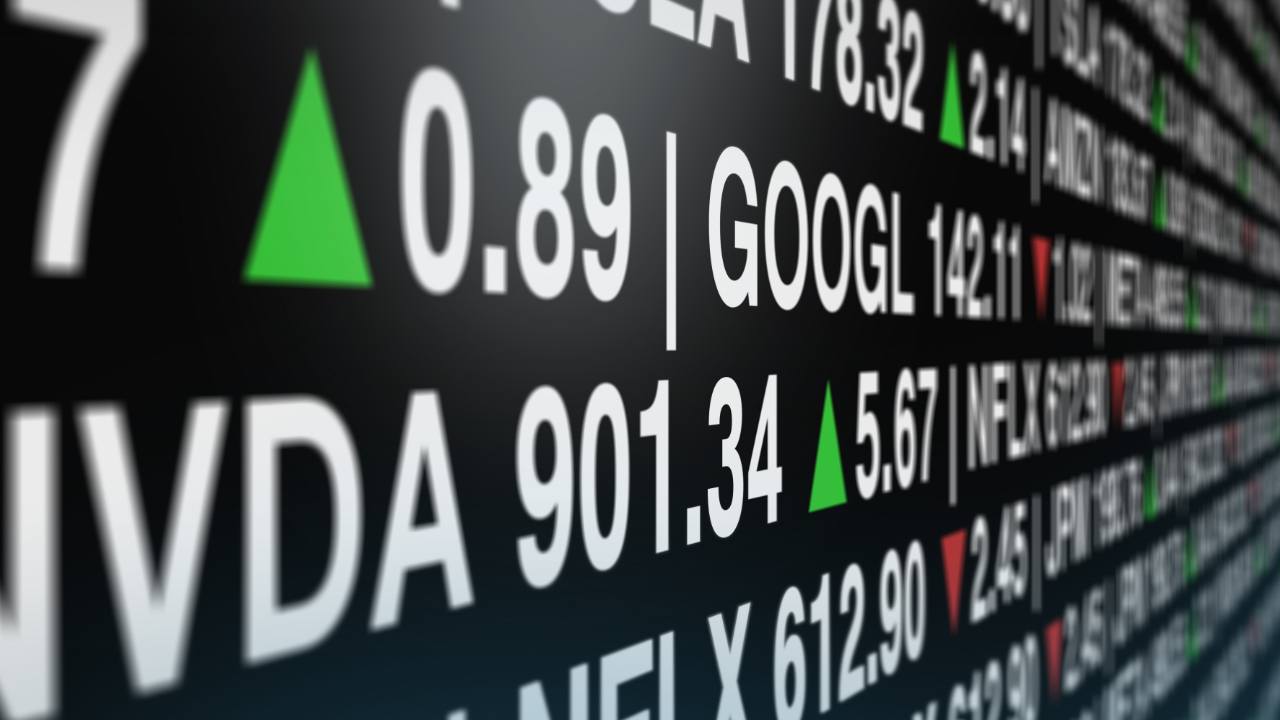
On U.S. equities trading at all-time highs amid expectations of rate cuts, Freris was unequivocal in his view that investors should look elsewhere.
“You are not going to make money in the American markets. It is only about 12 days since the end of last year. Last year, the S&P was an atrociously poor performer at 15%. South Korea was, I do not know, four times bigger than that. All the EU markets were 30% and over,” he said.
He argued that American markets had underperformed globally and warned that domestic political risks were being underestimated.
“The American markets were a lousy performer, and I say that with no fear of contradiction. The domestic situation in the States is in the hands of an administration which is incredibly dangerous to run the biggest and most powerful country in the world,” Freris cautioned.
As for where investors should deploy capital, his answer was stark and controversial.
“There are plenty of other places where you can make money. More than ever, defence — buy guns. The Americans are actually telling the world, ‘Do not expect us to defend you.’ What would be my reaction to that? I would buy more guns, of course,” he said.
Summing up his stance, Freris concluded that sectoral opportunities existed outside the U.S., particularly in defence-related industries.
“If you are asking me where to put your money, not in the States. If you are asking me which sector to put your money in, the answer is defence — anywhere defence, except the United States, of course.”