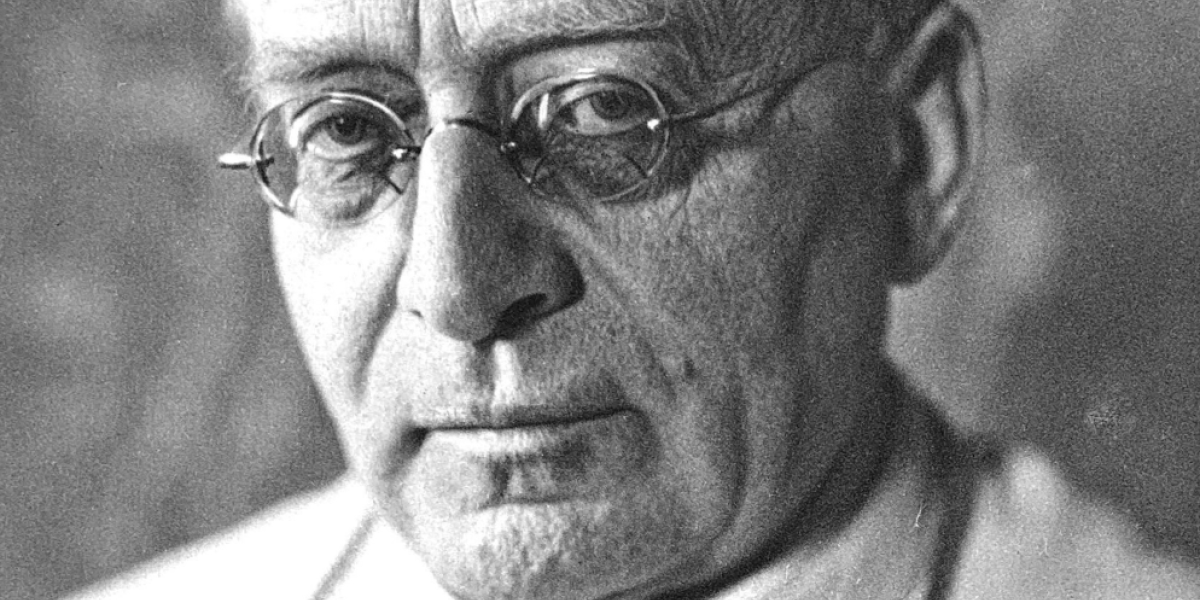
December 2025 marks the centennial of Pope Pius XI’s 1925 encyclical Quas Primas, which established the feast of Christ the King. Today, this feast is often commemorated by your average, milquetoast clergyman through calls to metaphorically embrace Jesus Christ as king and to have him “reign in our hearts.”
That sort of thing has its place, but it is clear, when we actually read Pius XI’s document, that Pius intended something far more political than the strictly spiritual interpretation that many give it today.
In the encyclical, Pius emphasizes that ideal government is something entirely separate from the temporary, provisional, and corrupted civil governments that rule over the earth for the time being. Similarly, the Western Christian tradition has long contrasted flawed and easily corrupted civil rulers with the perfect rule of God. In this view, God tolerates civil governments as a stopgap and ephemeral reality, but these human governments remain always degraded forms of the ideal and must necessarily be subject to an outside (and metaphysical) power.
By drawing upon this Western political tradition, Pius reiterates and recapitulates the ways that Christianity in the West had long placed limitations on civil governments and the state.
At the core of this is the fact that, in the realm of civil government, divine rule and human rule do not intersect. But, Pius writes:
It would be a grave error, on the other hand, to say that Christ has no authority whatever in civil affairs, since, by virtue of the absolute empire over all creatures committed to him by the Father, all things are in his power. Nevertheless, during his life on earth he refrained from the exercise of such authority, and although he himself disdained to possess or to care for earthly goods, he did not, nor does he today, interfere with those who possess them. Non eripit mortalia qui regna dat caelestia. [”He does not snatch away mortal things who gives heavenly kingdoms.”]
In this view, God’s power is exercised not in direct political power, but through “social kingship” which governs the central institutions of civil society, especially the family. In this view, legitimate and just political power can only be rightly exercised when those in positions of leadership in civil society live and govern in accordance with natural and divine law. As Saint Augustine notes, to govern otherwise is to rule over others in the manner of pirates and thieves.
In other words, the perfect kingdom of God, which cannot be approximated or recreated by men, has at its center an unchanging divine and natural law, to which all civil governments must conform to in order to be legitimate.
Importantly, this model ensures that no civil government can justly declare itself to have the “mandate of heaven” or worthy of religious veneration—as many ancient and Eastern despotisms have done.
In his history of Western political thought, historian Ralph Raico identifies this contrast between human government and divine government as central to the Western idea of freedom and limited government power. This is, Raico tells us, the contrast between the “city of God” and the “city of man.” Raico further notes that this idea was popularized and summarized by Augustine in late antiquity:
With Saint Augustine we have an interesting development in his work on the city of God. This has been called the desacralization of the state. In the Roman Empire, Roma was a god with the particular sacrifices and religious obligations due to this god, representing the Roman state.
In contrast to the city of man, what is important is the city of God. As our eventual and permanent habitation, the city of God is infinitely more important than the city of man, thus desacralizing the state, which had been considered godlike by the Romans.
The later Romans, of course, divinized their own emperors, and often viewed the Roman state as an archetypal and ideal state. And even before this, many ancient states and kingdoms established creation myths for their states, such as the myth that Rome was founded by Romulus, the son of a god.
In the Christian West, there is no equivalent of this, since Christ himself declares “my kingdom is not of this world” and furthermore identifies Satan as “the ruler of this world”—who will be overthrown by God himself and not by any human power.
Thus, no civil government can claim to be founded by any god, nor can any civil authority claim to be establishing perfect justice. Or, to use a phrase from Eric Voegelin, no state can claim a prerogative to “immanetize the eschaton.”
Yet, when civil government no longer conforms itself to natural and divine law, and thus rejects the social kingship of Christ, there can be no common good, and the authority of civil government ceases. That is, there can be no legitimate political rule because the basis of that authority—the adherence to natural law—is abandoned. Or, as Pius puts it, when the whims of political rulers are substituted for the divine and natural law,
the very basis of that [civil] authority has been taken away, because the chief reason of the distinction between ruler and subject has been eliminated. The result is that human society is tottering to its fall, because it has no longer a secure and solid foundation.
How Far Do the Powers of Civil Governments Go?
Toward the end of the encyclical, Pope Pius turns to the question of whether or not civil governments—which had evolved into modern states in Pius’s time—can exercise a total monopoly of political authority within their borders. Or, put more specifically: can civil governments rule over the Church?
In Pius’s time this was a question of practical and timely import because the so-called “Roman question” had not yet been resolved. That is, following the collapse of the Papal States, the Italian state claimed jurisdiction over the pope. The pope, however, did not recognize this authority based on centuries-old views of civil government predating the rise of the modern state.
It this context, Pius states:
The Church, founded by Christ as a perfect society, has a natural and inalienable right to perfect freedom and immunity from the power of the state; and that in fulfilling the task committed to her by God of teaching, ruling, and guiding to eternal bliss those who belong to the kingdom of Christ, she cannot be subject to any external power.
As Raico notes, this view of state power goes back at least to Saint Ambrose in the fourth century, when Ambrose refused to allow Emperor Theodosius to enter Milan’s Cathedral. Ambrose described the exchange in his letter to Marcellina:
It is not lawful for us to deliver it up nor for Your Majesty to receive it. By no law can you violate the house of a private man and do you think that the house of God may be taken away? It is asserted that all things are lawful to the Emperor, that all things are his, but do not burden your conscience with a thought that you have any right as Emperor over sacred things. It is written: God’s to God, Caesar’s to Caesar. The palace is the Emperor’s. The churches are the Bishop’s.
This set the tone of church-state relations for the next thousand years. Thanks in part to the church’s refusal to recognize state authority over all institutions and property within its borders, civil governments faced immense institutional opposition to governments’ attempts to establish true monopolistic state power.
Indeed, as Raico shows, this conflict between church and state over the powers of civil government largely formed the basis of Western respect for private property and political decentralization as a means of limiting state power. After all, if civil authorities were limited in their powers over the churches, might not other organizations seek similar protections as well? The result was what formed the foundation of Western political freedoms: a system of contracts and localized sovereignty which denied to civil authorities a “right” to seize the property of others. When Ambrose stated to the emperor that “no law” entitled him to “violate the house of a private man,” this anticipated the concept of private property as it developed in Western political thought.
In following Ambrose and stating that the Church was protected from state control, Pius nonetheless sounds hopelessly old fashioned. By 1925, of course, the modern state had nearly reached its height, and most of Europe’s states had fully consolidated power over all institutions within each state’s boundaries. Many states had even created their own state churches which were placed under the direct rule of the state’s monarch.
By clinging to an older model of limited power for civil governments, though, Pius was recalling a very different Europe. In 1925, Europe was still emerging from the social and political ashes of the First World War—a war that helped consolidate state power and to end all the institutional remnants of the old Europe of more limited state power. The Europe of an earlier time was looking quite good by comparison, especially since, in 1925, socialism and fascism seemed to be the future of Europe. After more than a century of “Enlightenment” in Europe, natural law had been eclipsed and the “total state” was the future.
Many of these new and modern regimes would indeed claim to be able to rule fully independent of any “outdated” concepts like natural law or limited state power. The new Europe believed itself fully capable of creating a new city of God in its own image. The Second World War and decades of totalitarianism were the result.
Image credit: Image of Pius XI by Josef B. Malina via Wikimedia.














-1024x683.jpg "Strait Outta Hormuz: Getting the Iran Oil Story Straight")