Adam Smith’s Wealth of Nations (1776) is considered the beginning of modern economics, a discipline of philosophical and political thought. From Smith to Marx, economics was primarily an explanation of human behavior until Western nations—advancing through technology and the Industrial Revolution—made an effort to shift economics into a quantitative science. Alfred Marshall’s Principles of Economics (1890) is considered the start of this shift in economic methodology and ignited debate over whether economics was quantitative or qualitative.
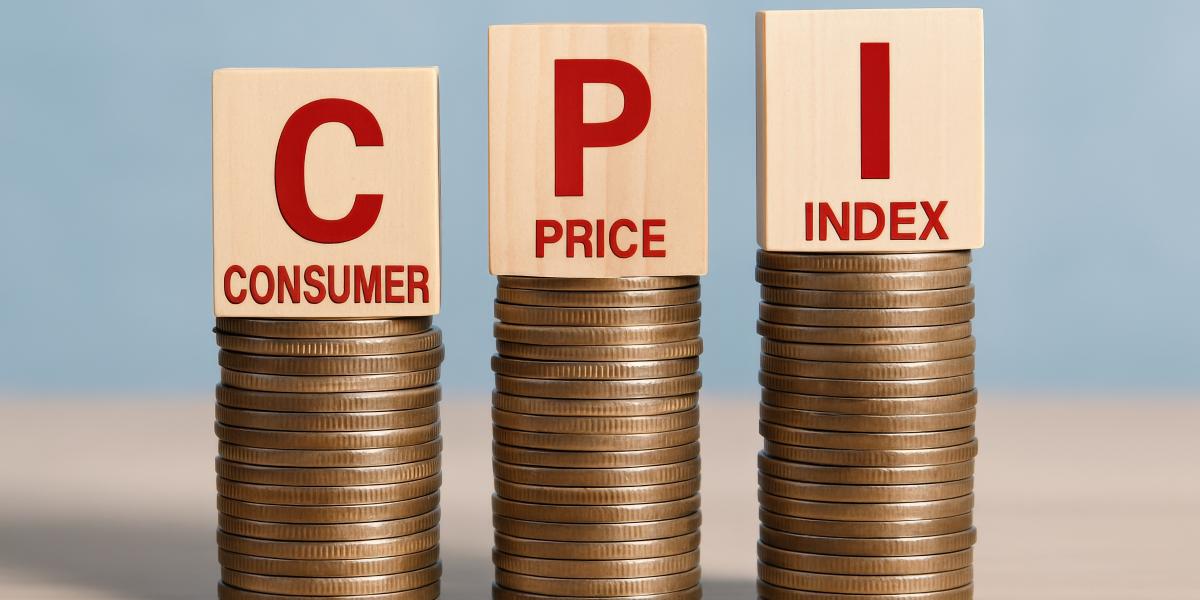
The quantitative perspective used the mathematical precision expected in the natural sciences like physics and chemistry to model and predict the economy. The qualitative perspective viewed economics as no less rigorous, but restrained economic thought to a study of human behavior and markets. The quantitative shift has continued well into the 20th century with Keynesianism, neoclassical economics, and monetarism, and has spurred the development of a host of new economic statistics. One such statistic is the Consumer Price Index (CPI) and is an example of this methodological error that abandoned the qualitative methodology in favor of a quantitative approach.
The Bureau of Labor Statistics (BLS) started the CPI by tabulating retail consumer prices in 1919. Over the decades, the BLS has modified how the CPI is calculated in terms of geographical regions sampled, goods and services included, weighting of prices, etc. The CPI has become a highly watched indicator of the cost of living. The CPI is used by the federal government as a barometer of the economy, to set interest rates, and by the Federal Reserve to determine monetary policy. Even though the CPI has significant impact on government intervention, and therefore the US population, there are three fundamental problems: first, there is no “general” price level that can be measured; second, the methods used to calculate the CPI are dubious; finally, the government’s use of CPI has caused financial harm.
There is No Such Thing as the Price Level
When people think of prices, they imagine there is a price level and inflation can be determined by measuring the change in this level between time A and B. The problem with this is that there is no overall price level. The market is made up of individual buyers and sellers agreeing to exchange at a specific price at a specific time. Because this goes on continuously hundreds of millions of times a day, there is no way to measure a stable price level. It is like trying to distill the behavior of a massive swarm of bees down to one number.
[Read More: “Exposing the Price Level Myth” by Jonathan Newman.]
Additionally, when new money enters the market, the prices of goods and services are not affected equally and at the same time. People who have early access to these funds bid up the prices of some goods first. However, it could be prior to an increase in wages for downstream consumers. Mises summarized these Cantillon effects:
When people talk of a “price level,” they have in mind the image of a level of a liquid which goes up or down according to the increase or decrease in its quantity, but which, like a liquid in a tank, always rises evenly. But with prices, there is no such thing as a “level.” Prices do not change to the same extent at the same time. There are always prices that are changing more rapidly, rising or falling more rapidly than other prices.
A Basket of Errors
The CPI is based on a “basket of goods.” This creates a quaint picture of a wicker basket and perhaps a plaid picnic blanket that seems so familiar. But there is nothing familiar in the way the CPI is calculated.
First, to accurately measure changes in prices, there must be consistency of the goods and services used. Unfortunately, the BLS uses a multi-year process sampling 211 different categories of goods and services from 32 different geographical regions for prices on 243 different items. This creates a matrix of 7,776 item-area prices. These prices are then given different weightings in the “black box” CPI algorithm. While it might seem appropriate to use a large dataset, the problem is that the aggregation of disparate prices across vast regions creates a measurement that in no way resembles the actual product mix that individual consumers purchase or prices they pay. The type, quality, and mix of items purchased are chosen by individuals making unique decisions in unique circumstances. Trying to aggregate this with a “basket of goods” that resembles products and prices paid by individuals is dubious. Mises again said this well: “A judicious housewife knows much more about price changes as far as they affect her own household than the statistical averages can tell.”
Using the CPI to Inform Policy Decisions has Caused Financial Harm
Given the limitations of the methodology for calculating CPI, it is inevitable that it will be a false indicator of the state of the economy. This was evident in the early 2000s when CPI inflation was in the target range of 2-3 percent per annum and the Fed believed the economy was running smoothly. In an attempt to “manage” the post-Dotcom recovery, the Fed maintained an easy-money policy, keeping the federal funds rate in the 1-3 percent range. Despite the “tame” CPI, an asset bubble was developing in housing due to low mortgage rates. In certain regions, homes were appreciating by double digits annually. Because of the false signal from a low CPI, the Fed maintained its low interest policy into 2005-2006. By this time home prices had reached unsustainable levels and led to the housing crash of 2008. Similar false signals occurred in 2020-2021 during post-covid federal programs. Even though there was considerable stimulatory spending, the CPI was initially tame. By the time the CPI saw a significant increase in 2022, the expansionary boom was well underway, pushing the CPI above 9 percent causing significant financial harm to the American public.
Conclusion
Economics began as a discipline to understand markets and human action in a universal and qualitative sense. However, this began to change in the early 20th century, with the belief that economics could provide quantitative precision. Using mathematics, economists began to model and provide prescriptive policy to manage the economy. The federal government’s use of CPI is an example of this hubris.
Whether it is the reality that a single price level does not exist, a “basket of goods” cannot be aggregated to accurately represent real-life experience of individual consumers, or ample evidence that using the CPI has led to poor monetary policy by the federal government, it is clear that this methodological shift has been an error. Economics is a rigorous discipline, but it must return to its proper role as a qualitative science aimed at understanding markets and human action, not quantitative predictions and policy prescriptions for the state.













-1024x683.jpg "Strait Outta Hormuz: Getting the Iran Oil Story Straight")