No Result
View All Result
  • Login
Saturday, March 21, 2026
FeeOnlyNews.com
  • Home
  • Business
  • Financial Planning
  • Personal Finance
  • Investing
  • Money
  • Economy
  • Markets
  • Stocks
  • Trading
  • Home
  • Business
  • Financial Planning
  • Personal Finance
  • Investing
  • Money
  • Economy
  • Markets
  • Stocks
  • Trading
No Result
View All Result
FeeOnlyNews.com
No Result
View All Result
Home Startups

The art of strategic laziness: 6 ways to work less and accomplish more

by FeeOnlyNews.com
4 months ago
in Startups
Reading Time: 7 mins read
A A
0
The art of strategic laziness: 6 ways to work less and accomplish more
Share on FacebookShare on TwitterShare on LInkedIn


Here’s a common misconception that gets repeated everywhere: if you want to accomplish more, you need to work harder.

More hours. More hustle. More grind.

But what if I told you that some of the most productive people I know actually work less than their burnt-out peers?

When I was running my first startup in my twenties, I thought success meant being busy every waking hour. I’d check emails constantly, say yes to every opportunity, and pride myself on never taking breaks.

The result? I got a lot done. But I didn’t accomplish much that actually mattered.

It took reading Greg McKeown’s “Essentialism” during a particularly chaotic period to realize I’d been confusing motion with progress. The book gave me permission to say no, to focus, and to understand that doing less can actually mean achieving more.

That’s what strategic laziness is all about. Working smarter by intentionally doing less of what doesn’t matter so you can excel at what does.

Let’s break down exactly how to put this into practice.

1) Ruthlessly eliminate the non-essential

Most people approach their to-do lists like collectors. They keep adding more and more tasks, hoping to somehow get through them all.

Strategic laziness starts with subtraction, not addition.

I learned this the hard way when I realized my bias toward action was actually a problem. I’d jump on every task that crossed my desk, thinking speed and volume equaled productivity. But I was just creating more work without more results.

The question isn’t “How can I fit this in?” The real question is “Does this really need to be done at all?”

How to develop this habit in your life

Start by listing everything you did last week. Now ask yourself: which of these activities directly contributed to your most important goals?

You’ll probably find that a significant portion of your time went to things that felt urgent but weren’t actually important.

Begin cutting one non-essential task per week. That meeting that could be an email? Skip it. That project that’s been lingering because you’re not sure it matters? Drop it.

The discomfort you feel from doing less is actually a good sign. It means you’re breaking free from the addiction to busyness.

2) Batch similar tasks together

Context switching is killing your productivity, even if you don’t realize it.

Every time you jump from writing to checking email to taking a call to finishing a report, your brain needs time to adjust. Those transition costs add up fast.

I used to check my email throughout the day whenever a notification popped up. I thought I was being responsive and efficient. In reality, I was destroying my ability to think deeply about anything.Now I batch process emails and messages in the afternoon. All at once, when my creative energy is already spent anyway.

A study from the University of California found that it takes an average of 23 minutes to fully regain focus after a distraction. If you’re switching tasks every ten minutes, you’re never actually focused.

The strategically lazy approach? Group similar tasks together and knock them out in dedicated blocks.

How to develop this habit in your life

Identify your task categories: emails, calls, admin work, creative work, meetings.

Assign specific time blocks to each category. Maybe emails are 2-3 PM only. Calls are Tuesday and Thursday afternoons. Creative work is first thing in the morning when you’re fresh.

Turn off notifications during your focused blocks. I promise the world won’t end if you don’t respond to that Slack message for two hours.

The goal isn’t to do more in less time. The goal is to do fewer things with better focus.

3) Automate and systematize everything you can

Want to know what’s not strategic? Doing the same repetitive task manually when you could set it up once and forget about it.

Every minute you spend on routine work is a minute you’re not spending on high-value activities.

I keep a weekly review practice where I look at what worked, what didn’t, and what needs to change. One of the key questions I ask: “What am I doing repeatedly that could be automated or systematized?”

The answer is usually more than you’d think.

According to McKinsey, about 45% of work activities could be automated with existing technology. That’s not future tech. That’s right now.

The strategically lazy person isn’t afraid of spending a few hours upfront to save dozens of hours down the line.

How to develop this habit in your life

Track your work for a week and identify repetitive tasks. Which ones happen the same way every time?

For digital tasks, look into automation tools. Email filters, scheduling software, template responses, automated workflows. Most of these take less than an hour to set up.

For analog tasks, create systems and checklists. If you do something more than twice, document how you do it. That way you can delegate it, automate it, or at least do it faster next time.

The initial time investment always feels like you’re being less productive. But that’s exactly the kind of strategic laziness that pays dividends.

4) Build in time for nothing

This is where strategic laziness really earns its name.

You need blocks of time where you’re not actively working on anything. No tasks. No goals. Just space to think.

Some of my best ideas didn’t come from working harder. They came from taking walks when I was stuck on a problem and letting my mind wander.

There’s actual science behind this. As noted by the folks at Scientific American downtime is essential for productivity and creativity. Your brain needs rest periods to process information and make new connections.

But most people treat any moment of not working as wasted time. They fill every gap with podcasts, social media, or busy work.

Strategic laziness means protecting empty space in your schedule like it’s your most important meeting.

How to develop this habit in your life

Schedule blocks of “nothing time” in your calendar. Even 15 minutes counts.

Take walks without your phone. Sit and stare out the window. Let yourself be bored.

Resist the urge to fill these moments with productivity. The whole point is to not be productive in the traditional sense.You’re not being lazy. You’re creating the conditions for your best thinking to emerge.

5) Get comfortable saying no

Every yes to something unimportant is a no to something that matters.

Most people struggle with this because saying no feels negative. Like you’re being difficult or unhelpful.

But the most successful people I know are excellent at declining things that don’t align with their priorities.

When I first started writing, I said yes to every collaboration, every guest post request, every “quick call to pick my brain.” I thought that’s what you’re supposed to do when you’re building something. All it did was spread me thin and prevent me from doing my actual work well.

Your inability to decline is literally making you less effective. Strategic laziness means understanding that protecting your time and energy isn’t selfish. It’s necessary.

How to develop this habit in your life

Create a clear filter for opportunities. Before you say yes, ask: Does this align with my top three priorities right now?If it doesn’t, the answer is no. You don’t need to justify it or apologize for it.

Practice your no scripts. “I appreciate you thinking of me, but I’m not able to commit to that right now.” Simple, polite, firm.

The first few nos will feel uncomfortable. But each one gets easier, and your calendar becomes more protective of your actual priorities.

6) Focus on leverage, not volume

Finally, the most important principle of strategic laziness: one high-leverage activity beats dozens of low-leverage ones.

This is about working on things that create disproportionate results relative to the effort you put in.

When I was running my startup, I spent way too much time in meetings that didn’t matter and not enough time on the few decisions that actually moved the company forward. I was incredibly busy but not particularly effective.

The shift happened when I started asking: “What’s the one thing I could do that would make everything else easier or unnecessary?”

Tim Ferriss talks about this as the 80/20 principle taken to its extreme. Find the 20% of activities that drive 80% of your results, then ruthlessly cut everything else.

According to research from Stanford, productivity per hour declines sharply after 50 hours of work per week. Working more hours doesn’t mean more output. It means diminishing returns and eventual burnout.

Strategic laziness is about identifying your highest-leverage activities and protecting time for those, even if it means you’re doing far fewer total tasks.

How to develop this habit in your life

List your current projects and activities. Now rank them by potential impact, not by urgency or how long they’ve been on your list.

What are the top three? Those are your focus. Everything else is negotiable.

Before starting any task, ask yourself: “Is this high-leverage work, or am I just staying busy?” If it’s the latter, delegate it, delay it, or delete it.

Track not how many hours you work or tasks you complete, but what actual results you produce. That’s the only metric that matters.

The bottom line

Strategic laziness isn’t about doing nothing. It’s about doing less of what doesn’t matter so you can excel at what does.

The world glorifies hustle and busyness, but those things are often just disguises for lack of focus. The people accomplishing the most aren’t the ones working the longest hours. They’re the ones who’ve figured out which work actually counts.

Start with one strategy from this list. Maybe it’s batching your tasks, or finally saying no to that commitment that’s been draining you, or just taking a walk without your phone.

You’ll probably feel guilty at first. Like you should be doing more.

That discomfort is the sign you’re on the right track.



Source link

Tags: AccomplishartlazinessStrategicWayswork
ShareTweetShare
Previous Post

Key deals this week: DigitalBridge, BHP, Goldman Sachs and more (ASAZY:OTCMKTS)

Next Post

Hegseth likens strikes on alleged drug boats to post-9/11 war on terror

Related Posts

Research says the more intelligent a person is the fewer friends they have — not because they’re difficult to be around, but because the older they get the less willing they become to spend their limited social energy on conversations that go nowhere and people who stay on the surface

Research says the more intelligent a person is the fewer friends they have — not because they’re difficult to be around, but because the older they get the less willing they become to spend their limited social energy on conversations that go nowhere and people who stay on the surface

by FeeOnlyNews.com
March 21, 2026
0

Add Silicon Canals to your Google News feed. I noticed something a few years ago. The older I got, the...

Research suggests adults who find it easier to bond with animals than with people aren’t antisocial — they’re drawn to a form of connection where the terms are visible, the loyalty isn’t conditional, and the relationship doesn’t require them to monitor a constantly shifting set of expectations that human attachment taught them to treat as a second job

Research suggests adults who find it easier to bond with animals than with people aren’t antisocial — they’re drawn to a form of connection where the terms are visible, the loyalty isn’t conditional, and the relationship doesn’t require them to monitor a constantly shifting set of expectations that human attachment taught them to treat as a second job

by FeeOnlyNews.com
March 21, 2026
0

Add Silicon Canals to your Google News feed. Tell someone you find it easier to connect with animals than with...

I’m 37 and I realized last month that I have two hundred contacts in my phone and not a single person I could call at 2 AM without feeling like I was being a burden — and that math broke something in me

I’m 37 and I realized last month that I have two hundred contacts in my phone and not a single person I could call at 2 AM without feeling like I was being a burden — and that math broke something in me

by FeeOnlyNews.com
March 21, 2026
0

Add Silicon Canals to your Google News feed. I turned 37 last month. And in the days after my birthday,...

Behavioral scientists found that people who aren’t genuinely good don’t lack empathy — they possess what researchers call ‘selective empathy’ that activates only when there’s an audience or when feeling someone’s pain serves their narrative

Behavioral scientists found that people who aren’t genuinely good don’t lack empathy — they possess what researchers call ‘selective empathy’ that activates only when there’s an audience or when feeling someone’s pain serves their narrative

by FeeOnlyNews.com
March 20, 2026
0

Add Silicon Canals to your Google News feed. You have met this person. They cried at the fundraiser. They posted...

The people who stay kind after being hurt aren’t soft — they’re the most structurally complex people in any room, because they’re holding two truths at the same time: that the world can be brutal and that they refuse to be, and the energy required to hold both of those without collapsing into one is a weight that nobody sees because it looks like ease

The people who stay kind after being hurt aren’t soft — they’re the most structurally complex people in any room, because they’re holding two truths at the same time: that the world can be brutal and that they refuse to be, and the energy required to hold both of those without collapsing into one is a weight that nobody sees because it looks like ease

by FeeOnlyNews.com
March 20, 2026
0

Here’s something that trips most people up: the world can be genuinely brutal, and you can still refuse to become...

I’m 66 and I finally understand that my father’s anger when I came home late wasn’t about rules — it was about the 45 minutes he spent at the window imagining every possible version of what might have happened, and by the time I walked through the door his nervous system had processed so many catastrophic simulations that the relief arrived as fury because his body didn’t have a calmer way to discharge the accumulation

I’m 66 and I finally understand that my father’s anger when I came home late wasn’t about rules — it was about the 45 minutes he spent at the window imagining every possible version of what might have happened, and by the time I walked through the door his nervous system had processed so many catastrophic simulations that the relief arrived as fury because his body didn’t have a calmer way to discharge the accumulation

by FeeOnlyNews.com
March 20, 2026
0

Add Silicon Canals to your Google News feed. I was seventeen the last time my father met me at the...

Next Post
Hegseth likens strikes on alleged drug boats to post-9/11 war on terror

Hegseth likens strikes on alleged drug boats to post-9/11 war on terror

3 Things to Watch With TGT Stock in 2026

3 Things to Watch With TGT Stock in 2026

  • Trending
  • Comments
  • Latest
York IE Appoints Chuck Saia to its Strategic Advisory Board

York IE Appoints Chuck Saia to its Strategic Advisory Board

February 18, 2026
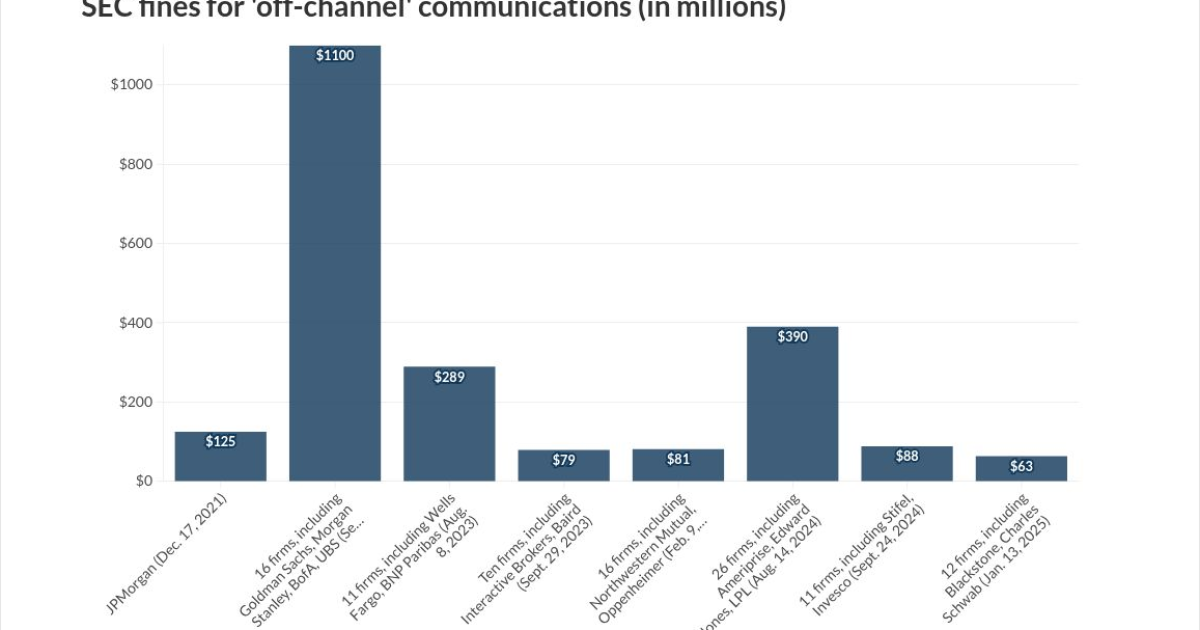
Judge orders SEC to release data behind B in WhatsApp fines

Judge orders SEC to release data behind $2B in WhatsApp fines

March 10, 2026
8 Cost-Cutting Moves Retirees Are Sharing Online in February

8 Cost-Cutting Moves Retirees Are Sharing Online in February

February 14, 2026
3 Grocery Chains That Give Seniors a “Gas Bonus” for Every  Spent

3 Grocery Chains That Give Seniors a “Gas Bonus” for Every $50 Spent

March 15, 2026
8 Procedures That Can Be Cheaper Without Insurance

8 Procedures That Can Be Cheaper Without Insurance

February 14, 2026
FPA partners with Snappy Kraken to update PlannerSearch

FPA partners with Snappy Kraken to update PlannerSearch

February 25, 2026
flyDubai cancels all Israel flights until end of April

flyDubai cancels all Israel flights until end of April

0
OpenAI targets 8,000 staff as AI competition heats up

OpenAI targets 8,000 staff as AI competition heats up

0
Research says the more intelligent a person is the fewer friends they have — not because they’re difficult to be around, but because the older they get the less willing they become to spend their limited social energy on conversations that go nowhere and people who stay on the surface

Research says the more intelligent a person is the fewer friends they have — not because they’re difficult to be around, but because the older they get the less willing they become to spend their limited social energy on conversations that go nowhere and people who stay on the surface

0
Twitter’s Twentieth: It’s Complicated

Twitter’s Twentieth: It’s Complicated

0
Tax time can be stressful—the right account can keep your money growing

Tax time can be stressful—the right account can keep your money growing

0
Better Semiconductor Stock: Broadcom vs. Marvell Technology

Better Semiconductor Stock: Broadcom vs. Marvell Technology

0
Better Semiconductor Stock: Broadcom vs. Marvell Technology

Better Semiconductor Stock: Broadcom vs. Marvell Technology

March 21, 2026
Research says the more intelligent a person is the fewer friends they have — not because they’re difficult to be around, but because the older they get the less willing they become to spend their limited social energy on conversations that go nowhere and people who stay on the surface

Research says the more intelligent a person is the fewer friends they have — not because they’re difficult to be around, but because the older they get the less willing they become to spend their limited social energy on conversations that go nowhere and people who stay on the surface

March 21, 2026
Key deals this week: Ecolab, Novartis, 3M and more (MMM:NYSE)

Key deals this week: Ecolab, Novartis, 3M and more (MMM:NYSE)

March 21, 2026
The ‘Medicare Advantage’ Switch: Why You Only Have Until March 31 to Return to Original Medicare

The ‘Medicare Advantage’ Switch: Why You Only Have Until March 31 to Return to Original Medicare

March 21, 2026
Ripple Study Reveals How Financial World Leaders Are Looking At The Market

Ripple Study Reveals How Financial World Leaders Are Looking At The Market

March 21, 2026
OpenAI cofounder says he hasn’t written a line of code in months and is in a ‘state of psychosis’

OpenAI cofounder says he hasn’t written a line of code in months and is in a ‘state of psychosis’

March 21, 2026
FeeOnlyNews.com

Get the latest news and follow the coverage of Business & Financial News, Stock Market Updates, Analysis, and more from the trusted sources.

CATEGORIES

  • Business
  • Cryptocurrency
  • Economy
  • Financial Planning
  • Investing
  • Market Analysis
  • Markets
  • Money
  • Personal Finance
  • Startups
  • Stock Market
  • Trading

LATEST UPDATES

  • Better Semiconductor Stock: Broadcom vs. Marvell Technology
  • Research says the more intelligent a person is the fewer friends they have — not because they’re difficult to be around, but because the older they get the less willing they become to spend their limited social energy on conversations that go nowhere and people who stay on the surface
  • Key deals this week: Ecolab, Novartis, 3M and more (MMM:NYSE)
  • Our Great Privacy Policy
  • Terms of Use, Legal Notices & Disclaimers
  • About Us
  • Contact Us

Copyright © 2022-2024 All Rights Reserved
See articles for original source and related links to external sites.

Welcome Back!

Sign In with Facebook
Sign In with Google
Sign In with Linked In
OR

Login to your account below

Forgotten Password?

Retrieve your password

Please enter your username or email address to reset your password.

Log In
No Result
View All Result
  • Home
  • Business
  • Financial Planning
  • Personal Finance
  • Investing
  • Money
  • Economy
  • Markets
  • Stocks
  • Trading

Copyright © 2022-2024 All Rights Reserved
See articles for original source and related links to external sites.