Add Silicon Canals to your Google News feed. 
Saudi Arabia has announced the creation of a $100 billion technology investment fund, the latest and most ambitious signal yet that the Gulf state is accelerating its departure from petroleum dependency with the kind of financial commitment that demands global attention.
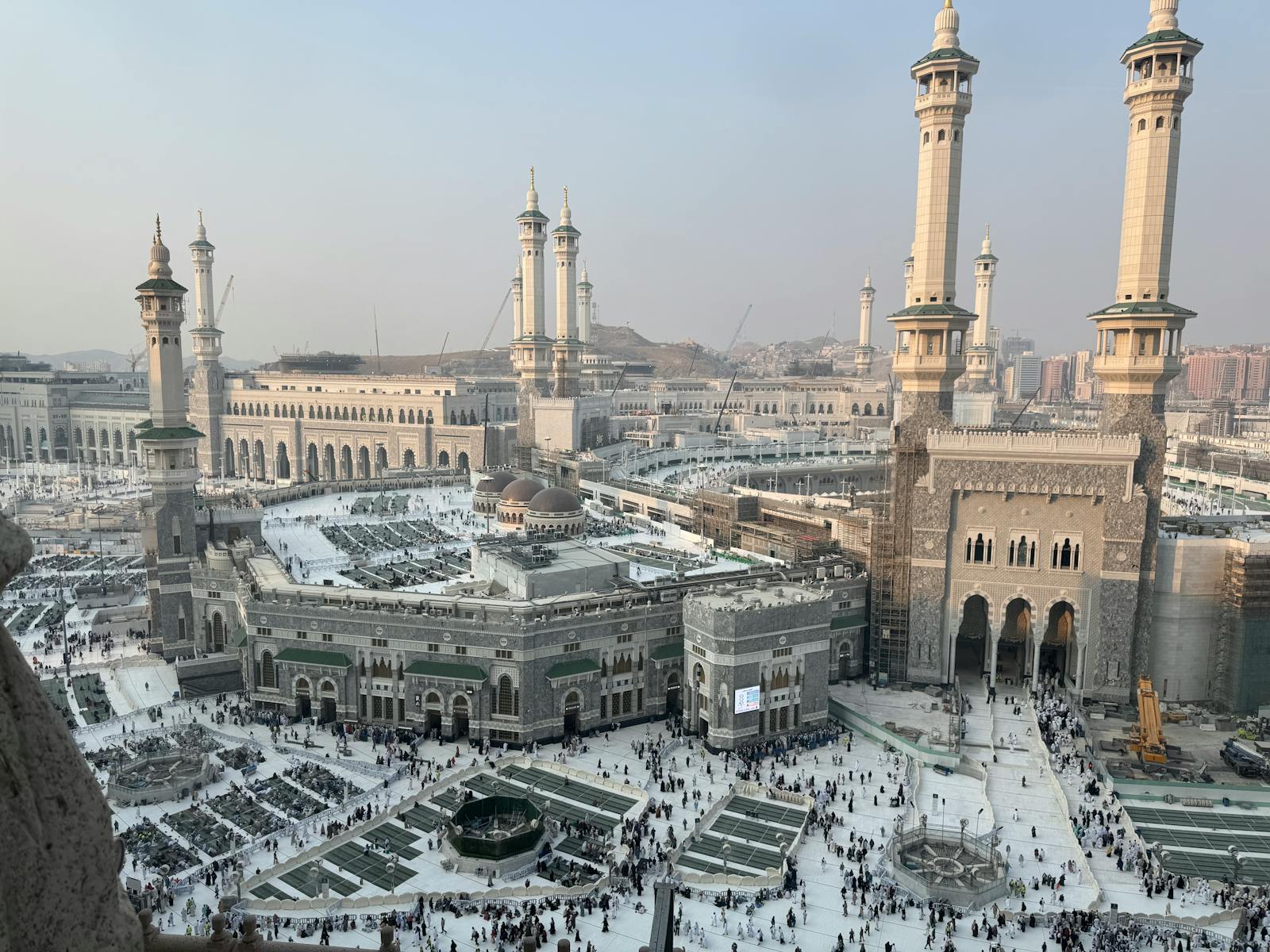
The fund, announced during President Trump’s visit to Riyadh in May 2025, will be managed through a new venture called Humain, an AI-focused company backed by Saudi Arabia’s Public Investment Fund (PIF). The capital will flow toward artificial intelligence infrastructure, semiconductor development, and data center construction, with early partnerships already confirmed with major US technology firms including AMD, Qualcomm, and Oracle.
For anyone who has watched the Middle East’s economic transformation over the past decade, the scale here is striking but the direction is familiar. What’s changed is the velocity.
The architecture of a post-oil economy
People who grew up in the Gulf states during the 1990s and early 2000s remember a different world: economies structured almost entirely around energy extraction, with diversification treated as a long-horizon aspiration rather than an urgent project. The generation now entering their 30s and 40s in Riyadh, Abu Dhabi, and Doha has lived through a remarkable psychological shift, watching their governments move from talking about economic transformation to spending hundreds of billions on it.
Saudi Arabia’s Vision 2030 framework, launched in 2016, was the inflection point. Under Crown Prince Mohammed bin Salman, the kingdom began treating technological self-sufficiency as a matter of national survival rather than prestige. The $100 billion fund represents the most concrete financial instrument of that philosophy to date.
The fund’s focus on AI infrastructure is deliberate. Saudi Arabia is positioning itself as a compute hub, a country that provides the physical and digital infrastructure for artificial intelligence workloads, rather than primarily developing the models themselves. The strategy mirrors what Singapore accomplished in financial services: becoming indispensable to the global system by controlling critical infrastructure.
Why $100 billion, and why now
The timing is shaped by two converging pressures. First, the global AI arms race has created genuine urgency around data center capacity and chip supply chains. Countries that build infrastructure now will capture long-term economic rents. Second, oil prices, while currently stable, face structural headwinds as the energy transition accelerates in Asia and Europe. The Saudi government’s internal projections, according to reporting by the Financial Times, suggest that non-oil GDP needs to grow at 6% annually to absorb the kingdom’s young and rapidly growing population.
That demographic detail matters. Saudi Arabia’s median age is 31. More than 60% of the population is under 35. These are people who have been educated in a system that increasingly emphasizes STEM, many of them sent abroad for university with government scholarships, and who are now returning to a country that needs to create millions of knowledge-economy jobs within a generation.
The $100 billion figure also serves a signaling function. In a region where the UAE, Qatar, and Bahrain are all competing for tech investment, Saudi Arabia is using sheer capital commitment to establish hierarchy. Abu Dhabi’s Mubadala Investment Company has deployed tens of billions into technology, and the UAE’s G42 AI group has built significant partnerships with Microsoft and OpenAI. Saudi Arabia’s move effectively says: we can outspend everyone.
The global competition for AI infrastructure
What makes this fund globally significant is how it intersects with the geopolitics of artificial intelligence. The United States, China, and the EU are all pursuing strategies to control critical AI supply chains. Saudi Arabia’s fund creates a fourth gravitational center, one with deep capital reserves and a willingness to partner across geopolitical lines that Western nations often cannot.
Humain’s partnerships with American chipmakers like AMD and Qualcomm suggest alignment with the US technology ecosystem, at least for now. But Saudi Arabia has also maintained relationships with Chinese AI firms, and the kingdom’s strategic ambiguity gives it leverage that more ideologically committed nations lack.
For global founders and investors watching this space, the practical implications are significant. Saudi Arabia is becoming a major limited partner in global venture funds, a primary customer for cloud and AI infrastructure companies, and increasingly, a direct investor in growth-stage technology companies worldwide.
The human cost of speed
The optimism around these investments is real, but so are the tensions. Workers building the data centers and technology campuses across the kingdom often face conditions that human rights organizations have documented extensively. The speed of Saudi Arabia’s transformation creates pressure at every level of the system, from migrant construction workers to young Saudi professionals navigating a labor market that is changing faster than institutions can adapt.
There is also the question of whether capital alone can build a technology ecosystem. The history of state-directed innovation is mixed. Countries that have succeeded (South Korea, Israel, Singapore) combined large investments with cultural ecosystems that tolerated failure, encouraged dissent, and attracted global talent through openness. Countries that deployed capital without those softer conditions often built impressive physical infrastructure around hollow institutional cores.
Saudi Arabia’s leadership is aware of this, which is why recent reforms have targeted social liberalization alongside economic investment. But the tension between top-down control and bottom-up innovation remains the defining challenge of the kingdom’s technology ambitions.
What this means for the decade ahead
The $100 billion fund is best understood as a single data point in a broader pattern: the redistribution of global technological power away from its traditional centers. When you combine Saudi Arabia’s capital deployment with the UAE’s infrastructure investments, India’s digital public goods strategy, and Southeast Asia’s growing startup ecosystem, a picture emerges of a world where Silicon Valley and Shenzhen are no longer the only places that matter.
For the generation of Saudi professionals in their late 20s and 30s who will be tasked with deploying this capital and building the companies it funds, the stakes are personal. They are the first cohort whose careers will be defined entirely by the post-oil economic experiment. Whether that experiment succeeds will depend on factors far more complex than money: institutional trust, talent retention, regulatory sophistication, and the willingness to let some bets fail spectacularly.
One hundred billion dollars buys a lot of compute power. The harder question is whether it can buy the culture that makes innovation sustainable.
Feature image by Earth Photart on Pexels