Add Silicon Canals to your Google News feed. 
Tell someone you find it easier to connect with animals than with most people and watch what happens to their face.
There’s a brief recalibration. A polite smile that’s doing a little extra work. Maybe a joke about becoming a hermit with cats. The social shorthand for what you just said is well established, and it isn’t particularly flattering.
But the research tells a different story. And the more you look at what’s actually driving this preference, the less it looks like a personality flaw and the more it looks like a very logical response to a specific kind of emotional history.
The label that gets it wrong
Antisocial is the word that tends to get attached to people who describe themselves this way. It’s the wrong word.
Antisocial implies an aversion to connection itself. What most people in this category are describing is something more precise: an aversion to the particular complexity of human connection, the unspoken negotiations, the shifting expectations, the gap between what people say and what they mean, and the sustained vigilance required to navigate all of it without causing damage.
That’s not a dislike of intimacy. That’s a very calibrated reading of what intimacy with humans tends to cost.
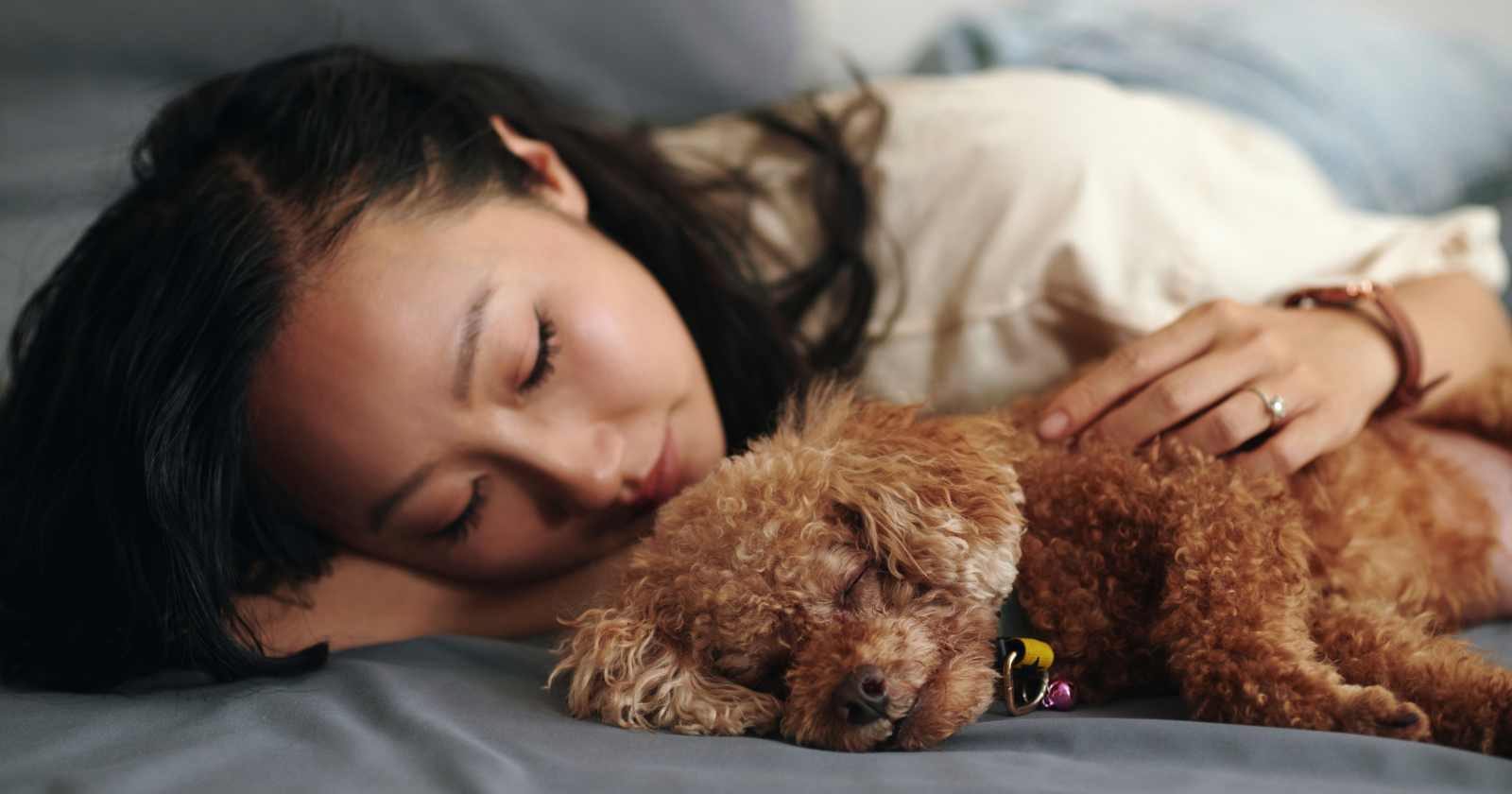
A dog doesn’t have a subtext. A cat’s displeasure is immediate, legible, and over quickly. There’s no post-conversation analysis required, no wondering whether the silence at the end meant something. The terms of the relationship are visible in real time, and they don’t change based on factors you weren’t told about.
For people whose nervous systems were trained to treat human relationships as something to be carefully managed, that visibility isn’t a consolation prize. It’s a genuine relief.
What the preference is actually tracking
Research by McConnell and colleagues published in the Journal of Personality and Social Psychology found that pet owners showed greater wellbeing, higher self-esteem, and lower levels of loneliness, with pets functioning as genuine sources of social support that helped satisfy basic belonging needs. Critically, the study found this wasn’t limited to people with weak human social networks. Pets were adding something distinct, not just compensating for an absence.
That distinction matters. The animal bond isn’t a substitute for human connection among people who can’t manage the real thing. It’s a different kind of connection that offers something human relationships structurally can’t: consistency without conditions.
You don’t have to earn it back after a bad week. You don’t have to decode a shift in tone. The loyalty isn’t contingent on your performance, your mood, or whether you said the right thing at the right moment.
For people who grew up in homes where love operated on visible or invisible conditions, where affection arrived inconsistently or came attached to behavioral requirements, that kind of reliability isn’t something they take for granted. They know exactly what it’s worth because they know what the alternative feels like.
Where the vigilance comes from
This is the part of the conversation that usually gets skipped when people talk about animal lovers in slightly reductive terms.
Attachment research has consistently shown that the patterns formed in early caregiving relationships don’t stay in childhood. They become the operating system for how we approach closeness as adults: what we expect, what we monitor for, what we brace against.
Work by Mikulincer, Gillath, and Shaver demonstrated that the attachment system in adults remains sensitive to threat-related cues, activating mental representations of security or danger in ways that directly influence how people behave in close relationships. When someone’s early experiences taught them that love is contingent or unpredictable, the attachment system learns to stay on alert. It scans. It monitors. It tries to stay one step ahead of a withdrawal that might be coming.
That’s not neurotic. It’s adaptive. Or it was, once.
The problem is that the system doesn’t automatically update when the environment changes. Someone who learned early that human relationships require constant management will bring that same vigilance into adult relationships, even when there’s no real threat present. The monitoring becomes the default mode. And over years, that’s exhausting in a way that’s hard to explain to someone whose system was calibrated differently.
I spent a long time thinking my difficulty being fully present in relationships was just a personality type. Too focused, too in my head, too oriented toward problems to solve. I treated emotional unavailability like it was an efficiency preference. It took a while, and honestly some outside help after my second startup fell apart, to understand that a lot of what I’d labelled as temperament was actually a set of learned strategies for keeping a certain kind of hurt at a manageable distance.
The relationship that doesn’t require the surveillance
I’ve mentioned this before but the most useful reframe I’ve come across for understanding connection is this: the nervous system doesn’t respond to intentions, it responds to signals. You can want to feel safe in a relationship and still feel vigilant if the signals your system has learned to look for are absent or ambiguous.
Animal relationships send clear signals. The feedback is immediate. The terms don’t change without notice. There’s no version of your dog reconsidering how it feels about you based on something you said three weeks ago.
For someone whose relational nervous system is running active surveillance at most hours, that simplicity isn’t trivial. It’s the experience of connection without the monitoring. And for a lot of people, it might be the first version of that they’ve ever consistently had.
The friends I’ve stayed closest to across a lot of upheaval tend to be the ones whose relationships feel similarly legible. People who say what they mean, who don’t run social games, who are the same person in every room. I don’t think that preference is coincidental. I think it reflects the same underlying need: connection where the terms are visible and the loyalty doesn’t come with a hidden audit trail.
Finally, what’s worth sitting with isn’t whether the preference for animal bonds is healthy or unhealthy. It’s what the preference is trying to tell you. Because the ease you feel in those relationships isn’t a sign that you’ve given up on human connection. It’s evidence that your system knows exactly what it’s looking for. It just learned, somewhere along the way, to expect not to find it.
That’s not a fixed condition. But it is useful information.
The bottom line
People who bond more easily with animals than with humans aren’t antisocial and they aren’t broken. They’re often people who learned early that human relationships come with a complexity that requires sustained vigilance, and they’ve found genuine relief in connections where that vigilance isn’t the entry fee.
The research backs this up. Animal bonds meet real social and emotional needs. They’re not a workaround.
But the deeper question is worth asking anyway. Not as a criticism of the preference, but as an honest inquiry into what it’s pointing at. Your nervous system knows what it needs. The more interesting work is figuring out whether you believe you’re allowed to look for it in both directions.
From the editors
Undercurrent — our weekly newsletter. The sharpest writing from Silicon Canals, curated reads from across the web, and an editorial connecting what others cover in isolation. Every Sunday.
Free. No spam. Unsubscribe anytime.