No Result
View All Result
  • Login
Wednesday, April 8, 2026
FeeOnlyNews.com
  • Home
  • Business
  • Financial Planning
  • Personal Finance
  • Investing
  • Money
  • Economy
  • Markets
  • Stocks
  • Trading
  • Home
  • Business
  • Financial Planning
  • Personal Finance
  • Investing
  • Money
  • Economy
  • Markets
  • Stocks
  • Trading
No Result
View All Result
FeeOnlyNews.com
No Result
View All Result
Home Startups

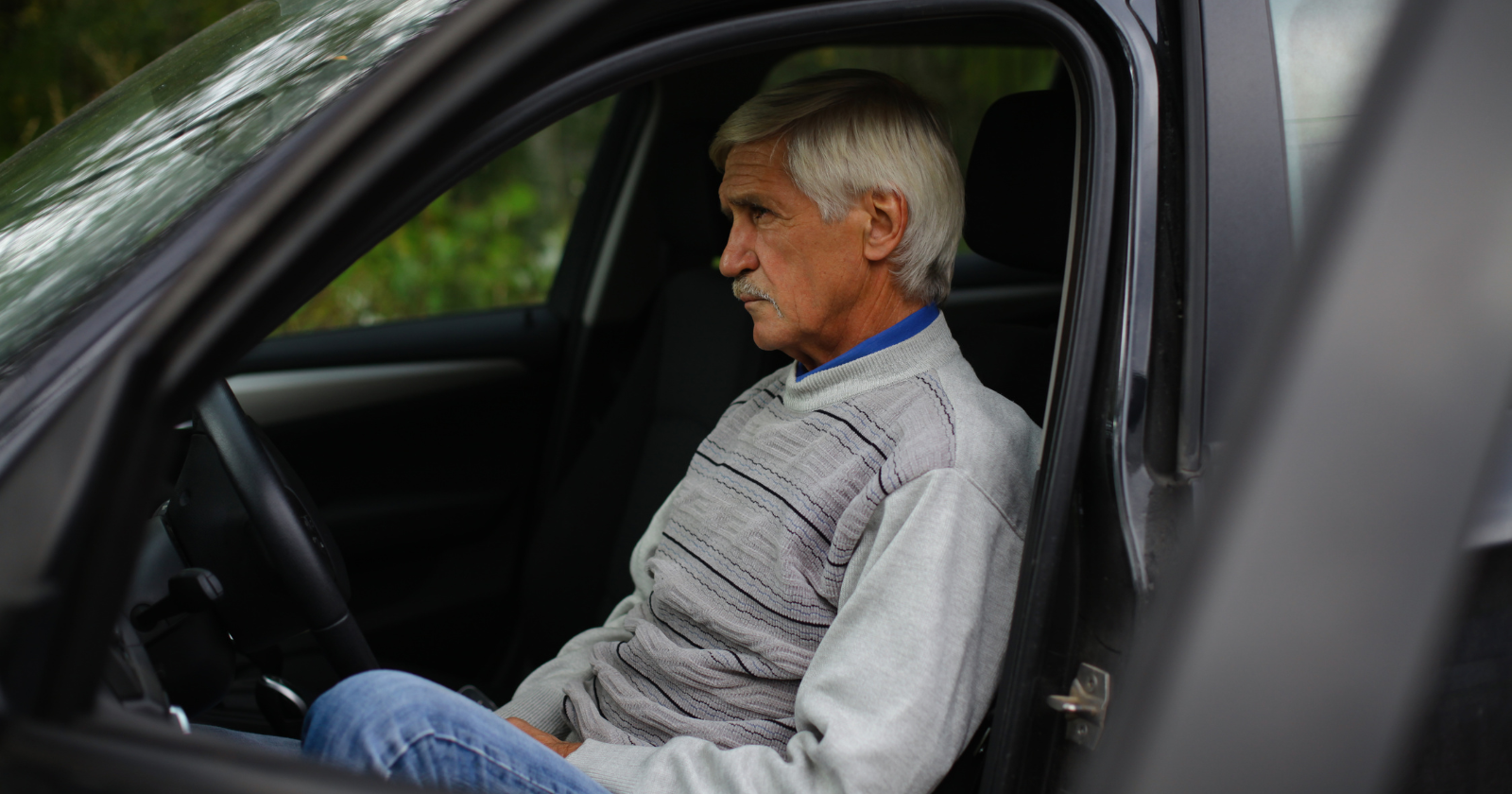
Psychology says the loneliest generation in history isn’t Gen Z – it’s the boomers who raised everyone, hosted everything, and are now sitting in quiet houses wondering where everybody went

by FeeOnlyNews.com
2 hours ago
in Startups
Reading Time: 6 mins read
A A
0
Psychology says the loneliest generation in history isn’t Gen Z – it’s the boomers who raised everyone, hosted everything, and are now sitting in quiet houses wondering where everybody went
Share on FacebookShare on TwitterShare on LInkedIn


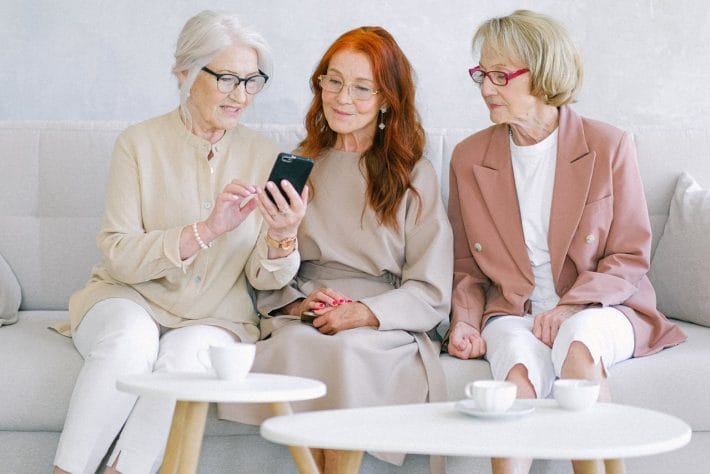
When people talk about a loneliness epidemic, they almost always mean young people. Gen Z glued to their phones. Teenagers who’ve replaced real friendship with group chats and streaks. Twenty-somethings who can’t make eye contact because they grew up on screens.

And some of that is real. I’m not dismissing it. But I think we’ve been looking at this wrong. Because the loneliest generation in the world right now isn’t the one growing up online. It’s the one that raised everyone, held everything together, and is now sitting in houses that used to be full of noise, wondering where everybody went.

It’s the boomers. And almost nobody is talking about it.

The numbers nobody wants to hear

The data on this is striking. Research from multiple countries consistently shows that adults over sixty-five report the highest rates of chronic loneliness of any age group. In the United States, the National Academies of Sciences reported that more than a third of adults aged forty-five and older feel lonely, with the problem most acute among those over sixty-five. In the UK, Age UK has found that over a million older adults go more than a month without speaking to a friend, neighbor, or family member.

These aren’t people who failed at relationships. Many of them had rich, vibrant social lives for decades. They had dinner parties and neighborhood barbecues and church communities and work friends and school networks that revolved around their children. They were the connectors. The hosts. The ones who organized and showed up and held the social fabric together.

And then, one by one, every pillar that held that social life in place was removed.

What actually happened

I’ve been thinking about this a lot, partly because of my own family and partly because of what I’ve observed living between Australia, Vietnam, and Singapore. The contrast between how different cultures treat their older generations is impossible to ignore.

But let me start with what happened structurally, because I think this matters more than anyone acknowledges.

The boomer social world was built on a set of institutions and circumstances that no longer exist in the same form. Work was the primary social engine. You spent eight hours a day, five days a week, surrounded by the same people for years. Those colleagues weren’t just colleagues. They were your lunch companions, your Friday drink mates, your daily source of human contact. Then retirement arrived and that entire network disappeared overnight. Not because anyone fell out, but because the reason to be in the same room evaporated.

Children were the second engine. For twenty or thirty years, your social calendar revolved around school events, sports games, parent groups, and neighborhood activities organized around kids. When the children left, those connections went with them. The other parents at soccer practice were never really your friends. They were people you saw because your kids played together. Remove the kids and the relationship reveals itself as proximity, not depth.

Geography was the third engine. Boomers grew up in an era when people stayed. You lived in a neighborhood for decades. You knew the postal worker, the grocer, the couple three doors down. That slow accumulation of familiar faces created a sense of belonging that didn’t require effort. But neighborhoods changed, people moved, and the organic social infrastructure of simply living near the same people for thirty years thinned out.

And then there’s the one nobody talks about: death. By the time you’re in your seventies, you’ve lost people. Friends, siblings, partners, neighbors. Each loss removes a thread from the social fabric, and after enough threads are pulled, the fabric doesn’t hold. Not dramatically. Not all at once. It just slowly becomes less than it was.

The cruelest part

Here’s what I think makes boomer loneliness different from every other kind, and what makes it particularly painful to witness.

This is a generation that was taught, explicitly and implicitly, that loneliness is a personal failure. If you’re lonely, you didn’t try hard enough. You didn’t build enough connections. You didn’t maintain your friendships. There’s something wrong with you.

That belief makes it almost impossible to ask for help. Because asking for help means admitting the loneliness, and admitting the loneliness means admitting failure. So millions of people sit in quiet houses, performing being fine, telling their children they’re busy and they’re good and they don’t need anything. And the children, busy with their own lives and grateful for the reassurance, believe them.

I know this pattern because I’ve watched it in my own family. My parents aren’t the type to say they’re lonely. They’re the type to say they’re fine, they’ve got plenty to do, they don’t want to be a burden. And for a long time, I took that at face value. It’s convenient, isn’t it? When your parents tell you they’re okay, you get to believe them without examining whether you’re looking closely enough.

Moving to Vietnam forced me to see this differently. In Vietnamese culture, multi-generational living is the norm. My wife’s grandmother isn’t lonely because she’s surrounded by family every single day. There’s no question about whether someone will visit. The family is already there, built into the architecture of daily life. When I compare that to the Western model, where independence is the highest value and living alone is treated as a sign of success, something feels deeply broken.

Why the usual solutions don’t work

The standard advice for lonely older adults is well-intentioned and mostly useless. Join a club. Take a class. Volunteer. Get a hobby. All of those things can help, and I don’t want to dismiss them entirely. But they miss the fundamental problem.

The problem isn’t a lack of activities. It’s the loss of being known.

There’s a difference between social contact and social connection. You can attend a painting class every Tuesday and still feel profoundly alone if nobody in that room knows your name, your history, or anything real about your life. What lonely people are missing isn’t stimulation. It’s the feeling that someone sees them. That someone would notice if they didn’t show up. That their presence in the world matters to at least one other person in a way that goes beyond pleasantries.

Thich Nhat Hanh called this “interbeing”, the understanding that we don’t exist in isolation but in relationship to everything around us. When those relationships thin out, our sense of self thins with them. We lose not just company but context. Without people who reflect us back to ourselves, we start to fade. Not physically, but existentially.

This is something I write about in my book Hidden Secrets of Buddhism: How To Live With Maximum Impact and Minimum Ego. Buddhism teaches that the self isn’t a fixed, isolated thing. It arises through connection, through relationship, through the web of people and places that give our lives meaning. When that web frays, the sense of who we are frays with it.

I think that’s what my father was describing when he told me, almost casually, that the days all feel the same now. He wasn’t saying he was bored. He was saying that without someone to show up for, the days lose their edges. Monday becomes Tuesday becomes Saturday and it doesn’t matter because nobody is keeping track.

What I think needs to change

I don’t have a tidy solution for this. I wish I did. But I think three things need to happen, and none of them are comfortable.

The first is that we need to stop treating loneliness in older adults as their problem to solve. It’s not a personal failing and it’s not fixable with a hobby. It’s a structural issue created by the way we’ve organized modern life, around nuclear families, geographic mobility, and the assumption that independence is always preferable to interdependence. Fixing it requires rethinking how we design communities, how we support aging, and how we value the people who built the world we inherited.

The second is that adult children, and I include myself here, need to look more honestly at how often we check in and what we’re actually asking when we do. Calling your parents once a week is not the same as knowing how they’re doing. A quick “everything okay?” gives them the perfect script to say yes. A better question might be: “When was the last time you had a real conversation with someone who isn’t me?” That question is harder to ask and harder to hear the answer to. But it’s the honest one.

The third is that boomers themselves need permission to say the thing they’ve been trained never to say. I’m lonely. I need more. The house is too quiet. The days are too long. This isn’t what I expected. Saying those words doesn’t make you weak or ungrateful. It makes you human. And it gives the people who love you the chance to actually show up instead of assuming you’re fine because you told them you were.

The loneliest generation didn’t get here by failing at connection. They got here because every structure that connected them was quietly removed while everyone, themselves included, was looking somewhere else.

They held the table together for decades. The least we can do is notice that nobody invited them to sit down.



Source link

Tags: boomersGenGenerationHistoryHostedHousesIsntloneliestPsychologyQuietraisedSittingwondering
ShareTweetShare
Previous Post

The Sneaky Disney World Expenses Most Visitors Forget to Budget

Next Post

U.S. and Iran agree to a conditional ceasefire. What happens now?

Related Posts

Essential Business Tools for Startup Growth

Essential Business Tools for Startup Growth

by FeeOnlyNews.com
April 7, 2026
0

Whether you are already running a business or preparing to launch one, building a startup is exciting but scaling it...

Psychology says people who describe their 70s as the best years of their life aren’t looking back through a nostalgic filter — they’ve simply reached the age at which the things that were costing them the most have expired, and what remains when the performance obligations, the career pressure, and the need for approval all fall away at once is frequently the first honest version of a person’s life they have ever been able to live

Psychology says people who describe their 70s as the best years of their life aren’t looking back through a nostalgic filter — they’ve simply reached the age at which the things that were costing them the most have expired, and what remains when the performance obligations, the career pressure, and the need for approval all fall away at once is frequently the first honest version of a person’s life they have ever been able to live

by FeeOnlyNews.com
April 7, 2026
0

Psychology Today puts it this way: “In old age, a large number of the psychological attachments which normally support our...

The quiet power of doing nothing — why highly sensitive people who protect their solitude aren’t avoiding life, they’re preserving the energy most people burn through by noon

The quiet power of doing nothing — why highly sensitive people who protect their solitude aren’t avoiding life, they’re preserving the energy most people burn through by noon

by FeeOnlyNews.com
April 7, 2026
0

I wonder why solitude still feels like something that needs defending. Why does choosing a quiet Saturday over brunch plans...

AI job displacement predictions rest on a metric economists call ‘completely meaningless’

AI job displacement predictions rest on a metric economists call ‘completely meaningless’

by FeeOnlyNews.com
April 7, 2026
0

AI executives warn that machines will replace human workers across nearly every profession within years. Economists say the data needed...

I’m in my 30s and I recently noticed that the people I resent most aren’t the ones who hurt me. They’re the ones who saw exactly what was happening, had the standing to say something, and chose their own comfort over my safety. The betrayal that actually shaped me wasn’t the cruelty. It was the audience.

I’m in my 30s and I recently noticed that the people I resent most aren’t the ones who hurt me. They’re the ones who saw exactly what was happening, had the standing to say something, and chose their own comfort over my safety. The betrayal that actually shaped me wasn’t the cruelty. It was the audience.

by FeeOnlyNews.com
April 6, 2026
0

Last winter, walking my border collie through Holyrood Park on one of those Edinburgh mornings where the cold sits in...

I’m 66 and the thing that broke me open this year was not a loss or a diagnosis or anything large — it was my grandson falling asleep on my chest on an ordinary afternoon, his whole small weight trusting me completely, and I sat there unable to move and understood that this is what all of it was for, not the career or the mortgage or the decades of doing the right thing, just this, just him, just now

I’m 66 and the thing that broke me open this year was not a loss or a diagnosis or anything large — it was my grandson falling asleep on my chest on an ordinary afternoon, his whole small weight trusting me completely, and I sat there unable to move and understood that this is what all of it was for, not the career or the mortgage or the decades of doing the right thing, just this, just him, just now

by FeeOnlyNews.com
April 6, 2026
0

Four months ago, I was sitting on my couch watching some game I can’t even remember now. My son had...

Next Post
U.S. and Iran agree to a conditional ceasefire. What happens now?

U.S. and Iran agree to a conditional ceasefire. What happens now?

a16z-backed Infinite Machine is building e-bikes that feel like mopeds. Cyclists may have qualms

a16z-backed Infinite Machine is building e-bikes that feel like mopeds. Cyclists may have qualms

  • Trending
  • Comments
  • Latest
Judge orders SEC to release data behind B in WhatsApp fines

Judge orders SEC to release data behind $2B in WhatsApp fines

March 10, 2026
The 23 Largest Global Startup Funding Rounds of February 2026 – AlleyWatch

The 23 Largest Global Startup Funding Rounds of February 2026 – AlleyWatch

March 27, 2026
Easter Basket Ideas for Kids

Easter Basket Ideas for Kids

March 23, 2026
3 Grocery Chains That Give Seniors a “Gas Bonus” for Every  Spent

3 Grocery Chains That Give Seniors a “Gas Bonus” for Every $50 Spent

March 15, 2026
8 Cost-Cutting Moves Retirees Are Sharing Online in February

8 Cost-Cutting Moves Retirees Are Sharing Online in February

February 14, 2026
Royal Caribbean, Bank of America Launching New Credit Cards

Royal Caribbean, Bank of America Launching New Credit Cards

March 31, 2026
Seniors Could Slash Property Taxes in 2026 — New Relief Programs Are Expanding Nationwide

Seniors Could Slash Property Taxes in 2026 — New Relief Programs Are Expanding Nationwide

0
Equity Research Report: Booz Allen Hamilton Holding Corporation

Equity Research Report: Booz Allen Hamilton Holding Corporation

0
U.S. and Iran agree to a conditional ceasefire. What happens now?

U.S. and Iran agree to a conditional ceasefire. What happens now?

0
a16z-backed Infinite Machine is building e-bikes that feel like mopeds. Cyclists may have qualms

a16z-backed Infinite Machine is building e-bikes that feel like mopeds. Cyclists may have qualms

0
Half of advisors eschew asset minimums — here’s what it gets them

Half of advisors eschew asset minimums — here’s what it gets them

0
Psychology says the loneliest generation in history isn’t Gen Z – it’s the boomers who raised everyone, hosted everything, and are now sitting in quiet houses wondering where everybody went

Psychology says the loneliest generation in history isn’t Gen Z – it’s the boomers who raised everyone, hosted everything, and are now sitting in quiet houses wondering where everybody went

0
a16z-backed Infinite Machine is building e-bikes that feel like mopeds. Cyclists may have qualms

a16z-backed Infinite Machine is building e-bikes that feel like mopeds. Cyclists may have qualms

April 8, 2026
U.S. and Iran agree to a conditional ceasefire. What happens now?

U.S. and Iran agree to a conditional ceasefire. What happens now?

April 8, 2026
Psychology says the loneliest generation in history isn’t Gen Z – it’s the boomers who raised everyone, hosted everything, and are now sitting in quiet houses wondering where everybody went

Psychology says the loneliest generation in history isn’t Gen Z – it’s the boomers who raised everyone, hosted everything, and are now sitting in quiet houses wondering where everybody went

April 8, 2026
The Sneaky Disney World Expenses Most Visitors Forget to Budget

The Sneaky Disney World Expenses Most Visitors Forget to Budget

April 8, 2026
BREAKING: Bitcoin Price Rises as President Trump Signals US-Iran War End

BREAKING: Bitcoin Price Rises as President Trump Signals US-Iran War End

April 8, 2026
Crude may soften, but global supply challenges remain: Peter McGuire

Crude may soften, but global supply challenges remain: Peter McGuire

April 8, 2026
FeeOnlyNews.com

Get the latest news and follow the coverage of Business & Financial News, Stock Market Updates, Analysis, and more from the trusted sources.

CATEGORIES

  • Business
  • Cryptocurrency
  • Economy
  • Financial Planning
  • Investing
  • Market Analysis
  • Markets
  • Money
  • Personal Finance
  • Startups
  • Stock Market
  • Trading

LATEST UPDATES

  • a16z-backed Infinite Machine is building e-bikes that feel like mopeds. Cyclists may have qualms
  • U.S. and Iran agree to a conditional ceasefire. What happens now?
  • Psychology says the loneliest generation in history isn’t Gen Z – it’s the boomers who raised everyone, hosted everything, and are now sitting in quiet houses wondering where everybody went
  • Our Great Privacy Policy
  • Terms of Use, Legal Notices & Disclaimers
  • About Us
  • Contact Us

Copyright © 2022-2024 All Rights Reserved
See articles for original source and related links to external sites.

Welcome Back!

Sign In with Facebook
Sign In with Google
Sign In with Linked In
OR

Login to your account below

Forgotten Password?

Retrieve your password

Please enter your username or email address to reset your password.

Log In
No Result
View All Result
  • Home
  • Business
  • Financial Planning
  • Personal Finance
  • Investing
  • Money
  • Economy
  • Markets
  • Stocks
  • Trading

Copyright © 2022-2024 All Rights Reserved
See articles for original source and related links to external sites.