Add Silicon Canals to your Google News feed. 
I was seventeen the last time my father met me at the door.
I’d been out with friends, lost track of time the way you do at seventeen when nothing bad has ever happened to you yet. I walked in maybe forty-five minutes late, and my father was standing in the hallway in his undershirt with his arms crossed, and before I could get a word out he was already at full volume.
Where was I. Who was I with. Did I think the rules didn’t apply to me. Did I have any idea what time it was.
I remember standing there absorbing it, equal parts guilty and indignant, and thinking: it’s forty-five minutes. I’m not dead. Why are you acting like this.
That was the thought I had at seventeen.
It took me until sixty-six to get the answer.
The window
My father worked with his hands his whole life. He was a union pipefitter — physical work, long days, a man who came home tired in a way that was visible on him. He wasn’t the type who talked about what he was feeling. In the neighborhood we grew up in, that wasn’t on offer.
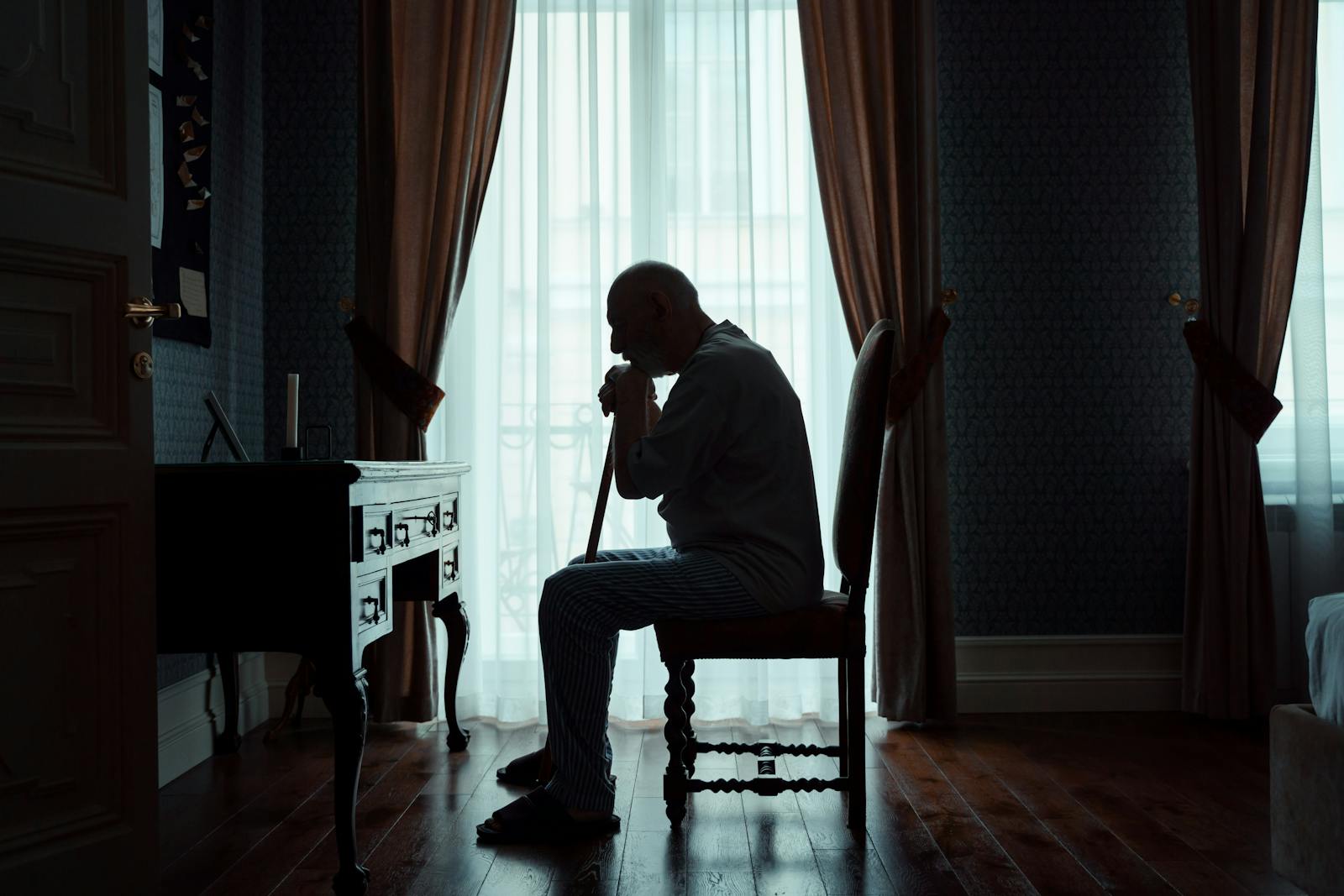
But here’s what I understand now that I didn’t understand then: while I was out with my friends, not thinking about the time, my father was at the window.
Not the whole forty-five minutes, maybe. But enough. Enough to notice the darkness, notice the time, notice that I wasn’t home. And then, because that’s what a parent’s brain does — because that’s what a parent’s brain can’t stop itself from doing — he started running simulations.
The car that didn’t see me crossing. The wrong crowd I might’ve gotten mixed up with. The thing that happens in a second to a kid who isn’t paying attention. Parents in that neighborhood had reasons to think about those things. Kids they knew had not come home.
By the time I walked through the door, he’d lived forty-five minutes of that.
What relief looks like when you’re not built for it
Here’s the thing about my father’s generation, and about the way men in that world were raised: nobody taught them what to do with fear.
Anger had a shape. Anger had permission. You could raise your voice, cross your arms, fill a hallway with presence. There was a whole grammar of anger available to a man like my father, and he spoke it fluently.
Fear didn’t have that. Fear was something you pushed down and kept moving. You didn’t name it, didn’t show it, and you certainly didn’t let your seventeen-year-old son see it on your face when he walked through the door.
So what happened instead, and I believe this now in a way I couldn’t have articulated twenty years ago, was that the relief arrived as fury. The moment I walked in the door alive and whole and clearly fine, his nervous system had forty-five minutes of catastrophic simulation to discharge, and the only instrument available to it was anger.
That’s not an excuse. It’s an explanation. The difference matters.
I did the same thing
I know this is true because I’ve done it myself.
Danny was sixteen, maybe seventeen. He’d taken my truck out on an errand that should’ve taken twenty minutes and was gone for over an hour with his phone turned off. Donna was calm about it. She said he was probably fine, that there was probably a simple explanation.
She was right. He’d stopped to help a friend whose car had broken down, hadn’t thought to call, came home looking pleased with himself for being useful.
And I met him at the door the same way my father met me.
Not because I was angry at him. I hadn’t been angry for most of that hour. I’d been standing in our kitchen running scenarios I didn’t want to be running, my chest getting tighter with each one, and when his key turned in the lock and I saw his face, something discharged in me that I didn’t have a clean way to handle.
He looked at me the same way I must’ve looked at my father. Confused. A little defensive. Forty-five minutes, Dad. I was helping a friend.
I said the wrong things. I knew I was saying the wrong things while I was saying them and I couldn’t stop.
Later I apologized, which is more than my father ever managed. But the impulse was identical. The mechanism was the same.
The inheritance nobody talks about
We talk a lot about what parents pass down deliberately. The values they mean to teach, the habits they try to model, the mistakes they swear they won’t repeat.
We talk less about what gets passed down without anyone choosing it. The patterns so baked in that they don’t feel like patterns — they just feel like who you are.
My father’s anger at the door was his father’s anger. I’d bet on it. A whole line of men who loved their children without a useful vocabulary for the fear that love produces, who discharged that fear the only way they knew how, who met their kids at the door with fury when what they meant was I am so relieved you’re standing in front of me.
I broke part of that chain. Not all of it, not cleanly, but I got better at naming the fear before it became something else. I got better at saying I was worried instead of leading with volume. Couples counseling helped, which I wouldn’t have admitted for a long time. Writing helped, which I still find slightly embarrassing to say.
But I didn’t break it the night Danny came home late. That night I was my father completely.
What I wish I’d said at seventeen
I wish I’d understood, standing in that hallway, that my father’s anger was the shape his love took when it didn’t know what else to do with itself.
He wasn’t furious at me. He was furious that he’d spent forty-five minutes at the window, and that the window had cost him something, and that I’d walked in like nothing had happened because for me, nothing had. I was just late. I’d had a good time. I had no idea what I’d put him through.
That asymmetry is part of what makes parenting so hard. The child is living their life. The parent is at the window living a hundred versions of it simultaneously, most of them ending badly. And when the child comes home and the bad versions dissolve and the real version is standing there fine and unbothered, the discharge of all that accumulated fear has to go somewhere.
My father didn’t have the tools to aim it correctly. Neither did I, for a long time.
Bottom line
At 66, I’ve made my peace with who my father was at the door.
He wasn’t a man who couldn’t control his temper. He was a man who loved me in a way that produced real fear, and who had no instrument for that fear except the ones his own father gave him, which were blunt and loud and wrong for the job.
The anger was real. But underneath it, if you could’ve cracked it open, was forty-five minutes of a man standing at a window who just wanted his kid to come home.
That’s what was in there. I’m sure of it now.
If your father met you at the door that way — if you’ve been carrying that memory as evidence of something cold in him — it might be worth asking what he was doing in the forty-five minutes before you walked in. What his face looked like at the window when he thought no one was watching.
The anger was the part he knew how to show.
The rest of it was the part he didn’t.
From the editors
Undercurrent — our weekly newsletter. The sharpest writing from Silicon Canals, curated reads from across the web, and an editorial connecting what others cover in isolation. Every Sunday.
Free. No spam. Unsubscribe anytime.