Add Silicon Canals to your Google News feed. 
I’ve been calling myself an introvert since I was about seventeen. It was a useful word. It explained why I needed time alone after social events, why I found small talk exhausting, why I preferred a quiet evening at home to a loud bar. People understood it. It let me set limits without having to justify them. “I’m an introvert” was a complete sentence that ended conversations about why I wasn’t coming, why I left early, why I needed the weekend to myself.
I’m 37 now, and I’ve recently started questioning whether introversion was ever really the right word – or whether it was just the most socially acceptable way to describe something else entirely. Something less flattering and more honest: that I’m not wired for solitude so much as I’m depleted from a lifetime of accommodating other people’s need for constant noise. That what I’ve been calling a personality trait might actually be the accumulated exhaustion of someone who learned very young to suppress his own preferences in favour of everyone else’s comfort.
It’s an uncomfortable distinction. But I think it matters.
What introversion is supposed to mean
The technical definition of introversion – the one from personality psychology, the one that shows up in the research – is about where you get your energy. Introverts recharge in solitude. Extroverts recharge through social interaction. It’s not about shyness, or misanthropy, or social anxiety. It’s a neutral descriptor of a neurological tendency. Introverts aren’t broken extroverts. They’re just wired differently, and that wiring is as valid as any other.
I believed I was wired this way. All the signs pointed to it. I needed alone time. Social situations drained me. I was more comfortable in small groups than large ones, preferred depth to breadth, found prolonged smalltalk about nothing genuinely painful in a way that didn’t seem to bother other people as much.
But here’s what I’ve been sitting with lately: how much of that is wiring, and how much is conditioning? How much of my need for silence is an innate trait, and how much is the response of someone who has spent their entire life in environments calibrated for people louder, more demanding, and more comfortable taking up space than he ever felt permitted to be?
The noise I grew up accommodating
My family was loud. Not dysfunctionally loud – they were warm, loving, well-meaning people who happened to communicate primarily through volume and constant presence and the implicit assumption that togetherness meant occupying the same space and filling it with sound. Silence was something that happened when someone was upset. Wanting to be alone was something to be worried about or fixed. Needing quiet was a problem that conversation was supposed to solve.
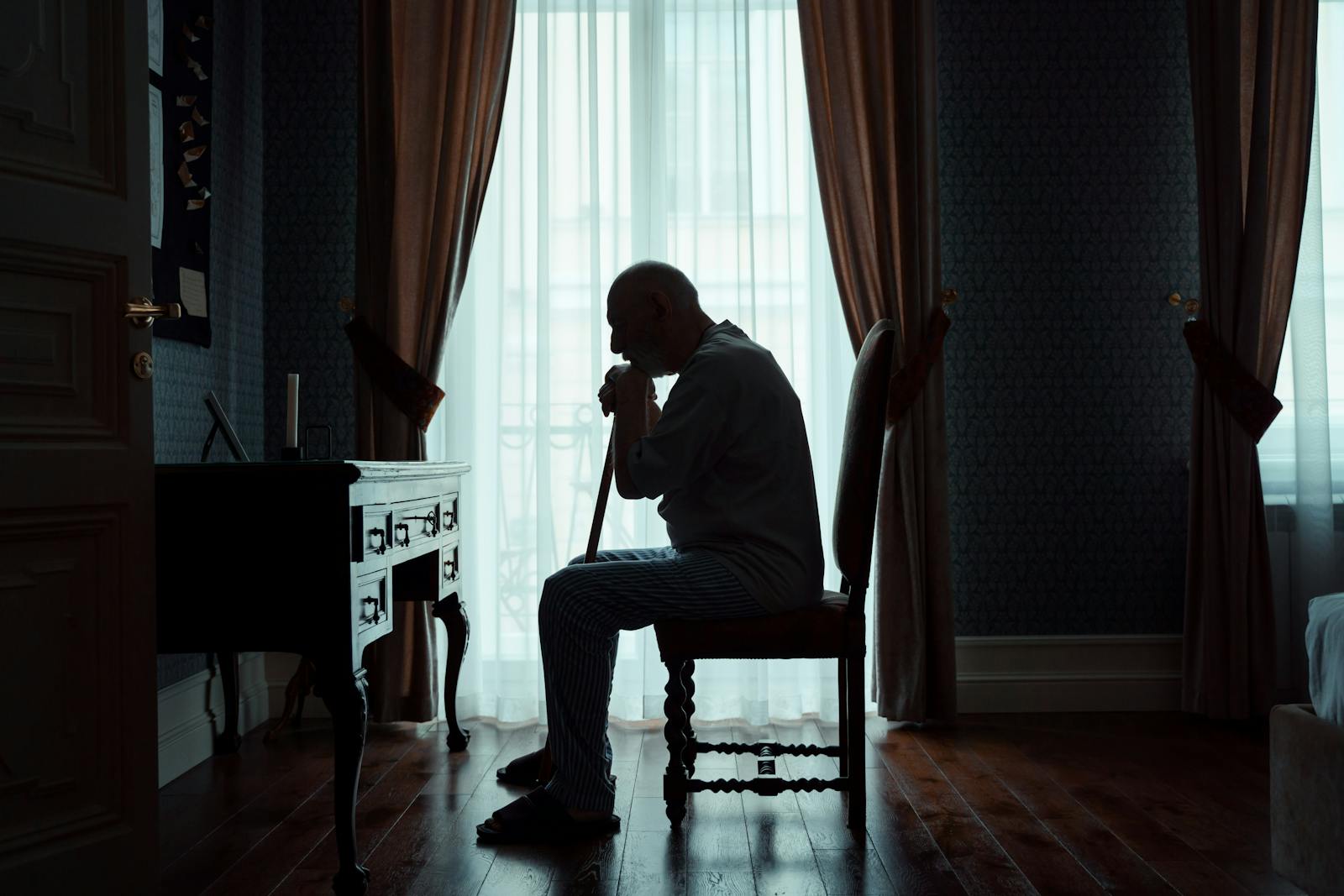
So I learned to function in the noise. Learned to do my thinking inside it, to manage my internal life while the external world stayed loud, to be present in the way that was required of me while keeping a private, quiet space somewhere in the back of my mind where I could actually be myself. That private space was my retreat. It was where I went, mentally, when the noise got to be too much. And I got so good at retreating there that I started to think the retreat was my nature.
School was noise. Workplaces were noise. Every share house I lived in through my twenties was noise – communal living with people who didn’t understand why you’d close your door on a Saturday afternoon, who treated silence as an invitation to talk. Relationships were noise too, in subtler ways – the unspoken requirement to be present and engaged and available, to match someone else’s energy, to be there in the particular way they needed you to be there even when what you needed was simply to be left alone.
I accommodated all of it. Not because I’m passive or conflict-averse – though I can be both – but because the need for noise seemed so much more urgent than my need for quiet. Loud needs announce themselves. Quiet needs are easy to override. And I became very skilled at overriding mine, at telling myself I was fine, at extending my capacity for noise further and further past where it wanted to go.
The label that made it easier to hide
When I found the word introvert in my late teens, it was genuinely useful. It gave me a framework for understanding why I felt the way I felt. It normalised the need for solitude. It told me there was nothing wrong with me, that I wasn’t broken or antisocial or doing relationships incorrectly. And that normalisation was important at a time when I’d been absorbing the opposite message my whole life.
But the label also became a hiding place. A way of giving a personality name to something that was actually closer to an injury. Because calling yourself an introvert suggests that your need for quiet is a fixed trait, a permanent feature of your character, something to be understood and accommodated but not really examined. It forecloses the question of why. Why do you need so much recovery time after social events? Why does noise drain you so completely? Why is being around people – even people you love – so often more exhausting than it seems to be for everyone else?
Introversion answered those questions with “that’s just how you are.” Which might be true. But it might also be: because you’ve been managing other people’s emotional needs since you were a child and your baseline is already depleted before any social event begins. Because you never really learned to have needs of your own in company, so every social interaction is an exercise in suppression that costs energy you can’t afford to spend. Because the noise you’re withdrawing from isn’t just loud – it’s a specific kind of noise that has always, in your experience, required you to disappear inside yourself to survive it.
Those are different things. And treating them as the same thing means the exhaustion never gets examined. It just gets labelled and lived with.
The realisation that shifted things
A few months ago I spent a weekend with two close friends – people I’ve known for over a decade, people I’m genuinely easy with – at a quiet house in the countryside. No obligations, no schedule, no requirement to perform or be entertaining. We cooked together, walked, sat around a fire and talked or didn’t talk, went to bed when we felt like it. The whole thing was low-pressure in a way that most social occasions aren’t.
I came home not depleted but full. Actually full – the kind of replenished feeling I usually only get from extended time completely alone. And I sat with that for a while, because it didn’t fit the story I’d been telling myself. Introverts recharge alone, not with people. Being with people, even good people, was supposed to cost something. That was the whole framework.
But the weekend hadn’t cost anything. If anything, it had given me something back. And the difference between that weekend and the social occasions that left me flattened wasn’t the number of people or the length of time. It was the noise. Or rather, the absence of it. The absence of the requirement to perform, to fill space, to accommodate someone else’s rhythm, to be available in the specific way that loud, demanding social environments require you to be available.
What drains me, I started to understand, isn’t people. It’s the performance that certain kinds of social situations require. The constant modulation of yourself to fit the energy of the room. The suppression of your own needs in favour of the group’s. The management of other people’s comfort that becomes so automatic you don’t realise you’re doing it. That’s what costs something. That’s what sends me to bed exhausted after a party. Not the presence of other human beings.
The difference between introversion and depletion
I’ve talked to a therapist about this – something I’d recommend to anyone willing to do it – and what she said has stayed with me. She made a distinction between constitutional introversion, which is a genuine neurological trait, and what she called learned withdrawal, which is the pattern of someone who discovered early that disappearing was safer than having needs.
Constitutional introverts, she explained, typically feel comfortable and happy in solitude from a young age. The alone time is genuinely restorative. It’s not a recovery from anything – it’s just the natural state that works for them. They might still enjoy company; they just need solitude as a regular part of life the way other people need sleep.
Learned withdrawal looks similar from the outside but feels different from the inside. The solitude is recovery, not just rest. You’re not retreating to something pleasant – you’re retreating from something costly. And the cost is almost always social performance of some kind: the management of someone else’s expectations, the suppression of your own responses, the constant low-level work of being who a situation requires you to be rather than who you actually are.
I’m not saying I’m not an introvert. I probably am, at least partly. But I think the introversion has been doing double duty for a long time – covering not just a genuine need for quiet but also a thoroughly conditioned response to environments that required me to abandon myself in order to function. Those are related, but they’re not the same. And treating them as the same thing means the second one never gets addressed. It just gets called personality and lived with indefinitely.
What I’m trying now
I’ve started paying closer attention to what specifically drains me and what doesn’t. Not just people versus no people, but what kind of interaction, with whom, under what conditions. The finding, so far, is predictable but clarifying: what drains me is suppression. Any situation where I’m required to be smaller or quieter or more accommodating than I actually am. Any dynamic where someone else’s comfort consistently overrides mine. Any environment where the noise is compulsory rather than chosen.
What doesn’t drain me – and this is the part I’m still getting used to – is genuine connection. Conversations where I can actually say what I think. Situations where I’m allowed to be as quiet as I am without someone trying to fix it. Relationships where my needs get treated as legitimate rather than inconvenient. Time alone that’s chosen rather than necessary. These things fill me in a way that purely isolating myself never quite did, because isolation was always partly about recovering from having been required to suppress myself – and it solved the symptom without touching the cause.
The cause is the suppression. And the work isn’t finding more solitude. It’s learning, twenty years late, to stop disappearing in company.
I’m 37. I’ve been calling myself an introvert for half my life and I probably am one, in some genuine sense. But I’m also someone who learned to want quiet because quiet was the only place that ever belonged entirely to him. Someone who mistook the relief of being alone for the pleasure of it. Someone who built a personality around a coping mechanism and then forgot which part was the person and which part was the coping.
I’m still figuring out the difference. But at least I’m finally asking the question.
From the editors
Undercurrent — our weekly newsletter. The sharpest writing from Silicon Canals, curated reads from across the web, and an editorial connecting what others cover in isolation. Every Sunday.
Free. No spam. Unsubscribe anytime.