No Result
View All Result
  • Login
Friday, March 20, 2026
FeeOnlyNews.com
  • Home
  • Business
  • Financial Planning
  • Personal Finance
  • Investing
  • Money
  • Economy
  • Markets
  • Stocks
  • Trading
  • Home
  • Business
  • Financial Planning
  • Personal Finance
  • Investing
  • Money
  • Economy
  • Markets
  • Stocks
  • Trading
No Result
View All Result
FeeOnlyNews.com
No Result
View All Result
Home Startups

I used to think forgiveness meant I had to feel peaceful about what happened. It took me until my late thirties to understand that forgiveness is just the moment you stop carrying someone else’s debt in your own body and it has absolutely nothing to do with how you feel about them.

by FeeOnlyNews.com
2 hours ago
in Startups
Reading Time: 7 mins read
A A
0
I used to think forgiveness meant I had to feel peaceful about what happened. It took me until my late thirties to understand that forgiveness is just the moment you stop carrying someone else’s debt in your own body and it has absolutely nothing to do with how you feel about them.
Share on FacebookShare on TwitterShare on LInkedIn


Add Silicon Canals to your Google News feed.

Most of my thirties have been spent unlearning things I was sure about in my twenties. Forgiveness might be the biggest one. For years I thought forgiving someone meant arriving at some clean, resolved emotional state where I could think about what they did and feel nothing, or at least feel something warm. That never happened. And because it never happened, I assumed I hadn’t actually forgiven anyone at all.

The conventional wisdom around forgiveness is almost religious in its framing: let go, release the anger, find peace. Self-help culture has taken that template and made it even more demanding. You’re supposed to forgive for yourself, as though your body will magically unclench the moment you decide to stop being angry. But that misses something fundamental about how resentment actually works in the nervous system and in the patterns of thought that keep looping long after the event is over.

What I eventually came to understand, mostly through reading researchers who study this stuff rather than people selling courses about it, is that forgiveness doesn’t require emotional resolution. It requires a decision. And those are very different things.

The Debt Metaphor Your Body Already Understands

When someone wrongs you, your brain does something remarkably concrete: it opens a ledger. Psychologists who study forgiveness as a psychological process describe it in terms of perceived transgression and the resulting “debt” the offender now carries. You were owed honesty and received a lie. You were owed loyalty and received betrayal. The debt is real. Your body knows it.

The problem is that your body doesn’t distinguish between a debt someone else is carrying and a debt you’re carrying yourself. The cortisol doesn’t care whose fault it is. The tension in your jaw at 2am doesn’t check the moral ledger before it tightens. You hold someone’s wrongdoing in your muscles, your sleep patterns, your digestion. The debt lives in you regardless of who owes it.

Forgiveness, as I’ve come to understand it, is the moment you close that ledger. Not because the debt was paid. Not because you feel good about it. Because you’ve decided to stop being the bank.

person releasing burden
Photo by Kindel Media on Pexels

Why “Forgive and Forget” Gets It Backwards

One of the more damaging pieces of folk wisdom around forgiveness is that it requires forgetting. Or at minimum, that remembering clearly is evidence you haven’t truly let go.

That’s backwards. Psychologists who study emotional clarity describe the ability to forgive while maintaining a clear memory of what happened as a sign of cognitive sophistication, not grudge-holding. The people with the healthiest relationships aren’t the ones who pretend injuries didn’t happen. They’re the ones who can hold the memory without letting it dictate their present behavior.

I wrote recently about how certain kinds of math never leave your body even after the numbers change. Forgiveness is similar. The memory of being wronged doesn’t dissolve when you forgive. It simply stops running the calculations in the background. You still know what happened. You’ve just stopped expecting the universe to balance the equation.

This distinction matters enormously because people who believe forgiveness requires amnesia end up in one of two places. Either they fake it, suppressing genuine memories and building resentment underneath a performance of peace. Or they refuse to forgive at all, because they can’t meet an impossible standard.

Both outcomes make things worse.

What the Research Actually Says About Forgiveness and Health

The physical effects of unforgiveness are not subtle. Research compiled through Nature’s overview of forgiveness and mental health connects chronic unforgiveness to depression, anxiety, and reduced psychological well-being. The mechanisms aren’t mysterious: sustained rumination keeps the stress response active, which over time degrades cardiovascular function, immune response, and sleep architecture.

What’s striking in the literature is that the health benefits of forgiveness appear to be independent of whether the relationship is repaired. You don’t need to reconcile. You don’t need to have a conversation. You don’t even need the other person to know you’ve forgiven them. The benefit comes from the internal shift: the decision to stop rehearsing the injury.

This is the part that took me years to accept. The forgiveness isn’t for them. But it also isn’t a feeling. It’s a direction.

The Difference Between Forgiveness and Reconciliation

A counseling professor recently outlined something I wish someone had told me at twenty: forgiveness and reconciliation are completely separate processes. Forgiveness is internal. Reconciliation is relational. You can do one without the other. You can do both. You can do neither.

Conflating the two creates a trap I’ve watched friends fall into repeatedly. They believe that forgiving means they must re-enter the relationship. So they don’t forgive, because re-entering would be unsafe or unwise. The resentment builds. Their health pays the price. And the person who wronged them continues to occupy space in their body without even knowing it.

When someone tells me they can’t forgive because the person doesn’t deserve it, I understand what they mean. They’re describing reconciliation. They’re describing the idea of saying “what you did was okay.” Forgiveness says nothing of the sort. Forgiveness says: I’m done carrying this. Whatever you owe, I’m no longer the one keeping track.

You can forgive someone and never speak to them again. You can forgive someone and maintain firm boundaries. You can forgive someone who is dead.

What Forgiveness Looks Like in the Body

I’ve been paying more attention in recent years to where emotions actually live physically. In my piece on mindfulness and living in my head, I wrote about the gap between thinking about your life and actually being present in your body during it. Unforgiveness is one of the most vivid examples of that gap.

When you carry resentment, you can often locate it physically if you pay attention. The chest tightens when a name comes up. The shoulders creep toward your ears when you drive past a certain street. Your stomach drops when a mutual friend mentions them. These aren’t metaphors. They’re your autonomic nervous system responding to an unresolved threat.

Researchers who study moral injury describe this as a burden that compounds over time. The longer the ledger stays open, the more your body invests in maintaining the vigilance required to keep it open. It’s metabolically expensive to stay angry. Your body has to keep the threat response available at all times, because the situation is technically unresolved.

Forgiveness, in physical terms, is the signal that says: the threat is over. Even if the person hasn’t changed. Even if justice was never served. The threat of actively carrying this is now greater than the threat of letting it go.

calm water reflection
Photo by Francesco Ungaro on Pexels

How I Think About It Now

I don’t think forgiveness is a single moment. I think it’s a practice, closer to a daily discipline than a breakthrough. Some mornings you wake up and the resentment is back, and you have to choose again. That’s not failure. That’s how the nervous system works. It doesn’t update all at once.

In my recent piece on daily disciplines and willpower, I explored how the things that keep us sharp over decades are rarely dramatic. They’re small, repeated, unglamorous choices. Forgiveness works the same way. You don’t arrive at it once and stay there. You practice it until the interval between resentment and release gets shorter.

Some debts I thought I’d forgiven years ago still surface occasionally. A song, a smell, a particular quality of afternoon light will pull me back to something I thought I’d closed. The difference now is that I don’t interpret the feeling as evidence that I’ve failed at forgiveness. The feeling is just the feeling. The decision to stop carrying it remains separate.

That separation is the whole thing. Feelings and decisions are different categories. Forgiveness lives in the decision category. How you feel about what happened gets to be whatever it is.

For most of my twenties, I would have said I couldn’t forgive people because I still felt hurt when I thought about them. Now I realize the hurt wasn’t the obstacle. The hurt was just the hurt. The obstacle was my belief that forgiveness would make it disappear.

It doesn’t disappear. You just stop building your day around it.

You stop rehearsing the conversation you’ll never have. You stop scanning for evidence that confirms your version of events. You stop holding the tension in your body like a vigil, as though relaxing would mean admitting you were wrong to be hurt in the first place.

Being hurt was legitimate. Carrying the debt for a decade is the part that becomes voluntary.

And recognizing that it’s voluntary is where the actual freedom is. Not peace, necessarily. Not resolution. Just the quiet recognition that you have been the one keeping score, and you can stop whenever you choose to, and nobody else needs to be involved in that decision at all.

Feature image by Nelson Ribeiro on Pexels

From the editors

Undercurrent — our weekly newsletter. The sharpest writing from Silicon Canals, curated reads from across the web, and an editorial connecting what others cover in isolation. Every Sunday.

Free. No spam. Unsubscribe anytime.



Source link

Tags: AbsolutelybodyCarryingdebtElsesFeelForgivenesshappenedLatemeantmomentpeacefulstopthirtiesUnderstand
ShareTweetShare
Previous Post

Rupee weakness likely to persist as oil prices stay elevated: Anindya Banerjee

Next Post

It’s Not Anarcho-Tyranny, It’s Interventionist Non-Intervention

Related Posts

Research suggests that people who talk to themselves out loud while problem-solving aren’t eccentric — they’re accessing a cognitive loop that processes information 30% more efficiently than internal dialogue, and the habit that most people suppress in public is the exact mechanism their brain would choose if social judgement weren’t part of the equation

Research suggests that people who talk to themselves out loud while problem-solving aren’t eccentric — they’re accessing a cognitive loop that processes information 30% more efficiently than internal dialogue, and the habit that most people suppress in public is the exact mechanism their brain would choose if social judgement weren’t part of the equation

by FeeOnlyNews.com
March 19, 2026
0

Add Silicon Canals to your Google News feed. Think about the last time you caught yourself talking out loud to...

I’m 37 and I just realized I’ve been calling myself an introvert for twenty years when the truth is I’m just exhausted from spending my entire life accommodating other people’s need for constant noise

I’m 37 and I just realized I’ve been calling myself an introvert for twenty years when the truth is I’m just exhausted from spending my entire life accommodating other people’s need for constant noise

by FeeOnlyNews.com
March 19, 2026
0

Add Silicon Canals to your Google News feed. I’ve been calling myself an introvert since I was about seventeen. It...

Translucent Raises M to Replace Manual FP&A with Agentic AI Built for Healthcare – AlleyWatch

Translucent Raises $27M to Replace Manual FP&A with Agentic AI Built for Healthcare – AlleyWatch

by FeeOnlyNews.com
March 19, 2026
0

Healthcare providers in the U.S. now face a structural paradox: national healthcare spending surpassed $5.6T in 2025, yet most hospitals...

Psychologists explain that the loneliest part of retirement isn’t being alone — it’s realizing that your relationships were scaffolded by routine and proximity, and without the structure of work, there’s almost nothing left

Psychologists explain that the loneliest part of retirement isn’t being alone — it’s realizing that your relationships were scaffolded by routine and proximity, and without the structure of work, there’s almost nothing left

by FeeOnlyNews.com
March 19, 2026
0

Add Silicon Canals to your Google News feed. When I left corporate life in my mid-thirties to start my own...

People who get inexplicably emotional when someone is unexpectedly kind to them aren’t fragile — their nervous system has a very specific expectation of how the world operates, and genuine unprompted kindness violates that expectation so completely that the body doesn’t have a prepared response and defaults to the only honest reaction it has left

People who get inexplicably emotional when someone is unexpectedly kind to them aren’t fragile — their nervous system has a very specific expectation of how the world operates, and genuine unprompted kindness violates that expectation so completely that the body doesn’t have a prepared response and defaults to the only honest reaction it has left

by FeeOnlyNews.com
March 18, 2026
0

Add Silicon Canals to your Google News feed. I was in a café a few months back, having one of...

Customer Service for Small Businesses: How to Get Off to a Great Start

Customer Service for Small Businesses: How to Get Off to a Great Start

by FeeOnlyNews.com
March 18, 2026
0

Many startups will emphasize product development and marketing as pillars of growth and concentrate their investment and resources accordingly. However,...

Next Post
It’s Not Anarcho-Tyranny, It’s Interventionist Non-Intervention

It’s Not Anarcho-Tyranny, It’s Interventionist Non-Intervention

  • Trending
  • Comments
  • Latest
York IE Appoints Chuck Saia to its Strategic Advisory Board

York IE Appoints Chuck Saia to its Strategic Advisory Board

February 18, 2026
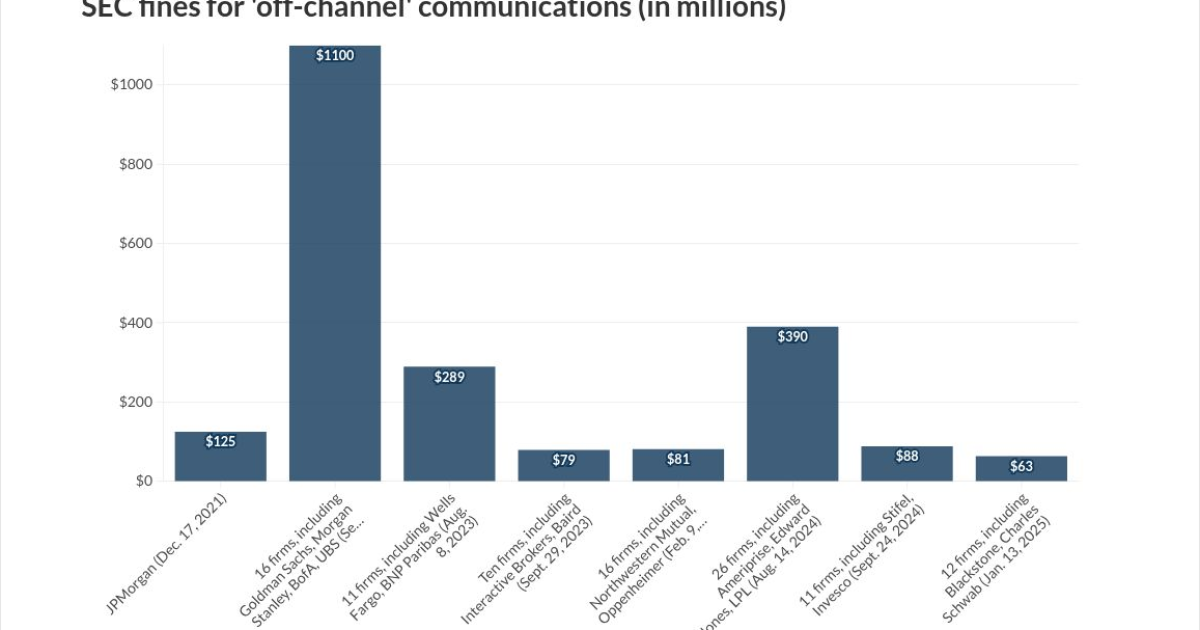
Judge orders SEC to release data behind B in WhatsApp fines

Judge orders SEC to release data behind $2B in WhatsApp fines

March 10, 2026
8 Cost-Cutting Moves Retirees Are Sharing Online in February

8 Cost-Cutting Moves Retirees Are Sharing Online in February

February 14, 2026
3 Grocery Chains That Give Seniors a “Gas Bonus” for Every  Spent

3 Grocery Chains That Give Seniors a “Gas Bonus” for Every $50 Spent

March 15, 2026
8 Procedures That Can Be Cheaper Without Insurance

8 Procedures That Can Be Cheaper Without Insurance

February 14, 2026
FPA partners with Snappy Kraken to update PlannerSearch

FPA partners with Snappy Kraken to update PlannerSearch

February 25, 2026
DigitalOcean (DOCN) Hits 4-Year High on Oppenheimer 18% Price Target Hike

DigitalOcean (DOCN) Hits 4-Year High on Oppenheimer 18% Price Target Hike

0
It’s Not Anarcho-Tyranny, It’s Interventionist Non-Intervention

It’s Not Anarcho-Tyranny, It’s Interventionist Non-Intervention

0
Sanctuary Beach Resort: An Underrated Coastal Splurge

Sanctuary Beach Resort: An Underrated Coastal Splurge

0
Why Townhomes Have Quickly Become a Top Investment Option For Investors Looking For Cash Flow

Why Townhomes Have Quickly Become a Top Investment Option For Investors Looking For Cash Flow

0
Rupee weakness likely to persist as oil prices stay elevated: Anindya Banerjee

Rupee weakness likely to persist as oil prices stay elevated: Anindya Banerjee

0
Retail power gold’s rise, while Bitcoin attracts fresh institutional interest

Retail power gold’s rise, while Bitcoin attracts fresh institutional interest

0
It’s Not Anarcho-Tyranny, It’s Interventionist Non-Intervention

It’s Not Anarcho-Tyranny, It’s Interventionist Non-Intervention

March 20, 2026
I used to think forgiveness meant I had to feel peaceful about what happened. It took me until my late thirties to understand that forgiveness is just the moment you stop carrying someone else’s debt in your own body and it has absolutely nothing to do with how you feel about them.

I used to think forgiveness meant I had to feel peaceful about what happened. It took me until my late thirties to understand that forgiveness is just the moment you stop carrying someone else’s debt in your own body and it has absolutely nothing to do with how you feel about them.

March 20, 2026
Rupee weakness likely to persist as oil prices stay elevated: Anindya Banerjee

Rupee weakness likely to persist as oil prices stay elevated: Anindya Banerjee

March 20, 2026
Lamborghini CEO says ‘disappointing’ EV charging infrastructure contributed to no demand for the EVs

Lamborghini CEO says ‘disappointing’ EV charging infrastructure contributed to no demand for the EVs

March 20, 2026
Making sense of the Bank of Canada interest rate decision on March 18, 2026

Making sense of the Bank of Canada interest rate decision on March 18, 2026

March 20, 2026
Treasury extends unpaid leave benefit period

Treasury extends unpaid leave benefit period

March 20, 2026
FeeOnlyNews.com

Get the latest news and follow the coverage of Business & Financial News, Stock Market Updates, Analysis, and more from the trusted sources.

CATEGORIES

  • Business
  • Cryptocurrency
  • Economy
  • Financial Planning
  • Investing
  • Market Analysis
  • Markets
  • Money
  • Personal Finance
  • Startups
  • Stock Market
  • Trading

LATEST UPDATES

  • It’s Not Anarcho-Tyranny, It’s Interventionist Non-Intervention
  • I used to think forgiveness meant I had to feel peaceful about what happened. It took me until my late thirties to understand that forgiveness is just the moment you stop carrying someone else’s debt in your own body and it has absolutely nothing to do with how you feel about them.
  • Rupee weakness likely to persist as oil prices stay elevated: Anindya Banerjee
  • Our Great Privacy Policy
  • Terms of Use, Legal Notices & Disclaimers
  • About Us
  • Contact Us

Copyright © 2022-2024 All Rights Reserved
See articles for original source and related links to external sites.

Welcome Back!

Sign In with Facebook
Sign In with Google
Sign In with Linked In
OR

Login to your account below

Forgotten Password?

Retrieve your password

Please enter your username or email address to reset your password.

Log In
No Result
View All Result
  • Home
  • Business
  • Financial Planning
  • Personal Finance
  • Investing
  • Money
  • Economy
  • Markets
  • Stocks
  • Trading

Copyright © 2022-2024 All Rights Reserved
See articles for original source and related links to external sites.