When Iran’s blockade of the Strait of Hormuz began choking global oil flows, Vietnam offered a case study in what happens when a fast-growing economy is built atop a single-point-of-failure energy infrastructure. The country sources a substantial portion of its crude oil from Kuwait, funnelled through one of the world’s most vulnerable maritime chokepoints. Its largest refinery was weeks from running dry. And the consequences did not distribute evenly; they cascaded downward through the economy, landing hardest on the workers with the least capacity to absorb them. Vietnam’s fuel crisis is not a story about rising prices. It is a story about what structural dependency actually costs when the structure breaks.
One route, one refinery, one crisis
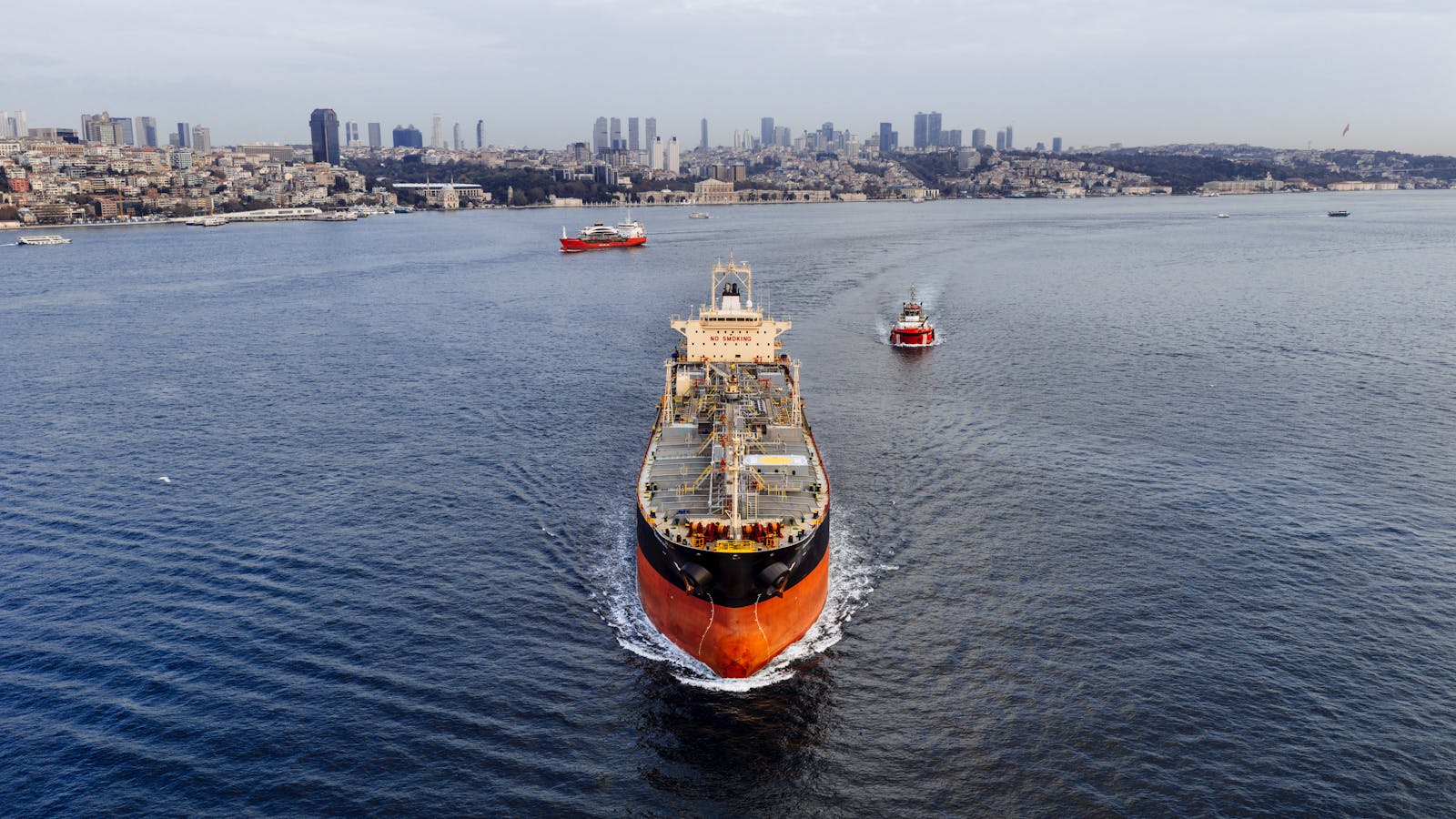
Vietnam’s energy architecture concentrates risk at every level. Kuwaiti crude travels through the Strait of Hormuz, where Iran has been charging substantial tolls or blocking passage outright. That crude feeds the Nghi Son refinery complex, which supplies a significant portion of the country’s petrol needs. Officials who visited the facility late last month warned that current crude supplies were expected to run out by the end of May.
The redundancy, one might observe, does not exist.
This is not a diversified energy system absorbing a shock; it is a pipeline with a single valve, and someone has turned it off. Vietnam has limited domestic refinery capacity, minimal strategic reserves relative to consumption, and no rapid-deployment alternative supply agreements that could offset a disruption of this magnitude. The vulnerability was always there (embedded, in fact, in procurement decisions made years ago that prioritised cost efficiency over supply chain resilience). The Iran crisis simply made it impossible to ignore.
The gig economy as the canary
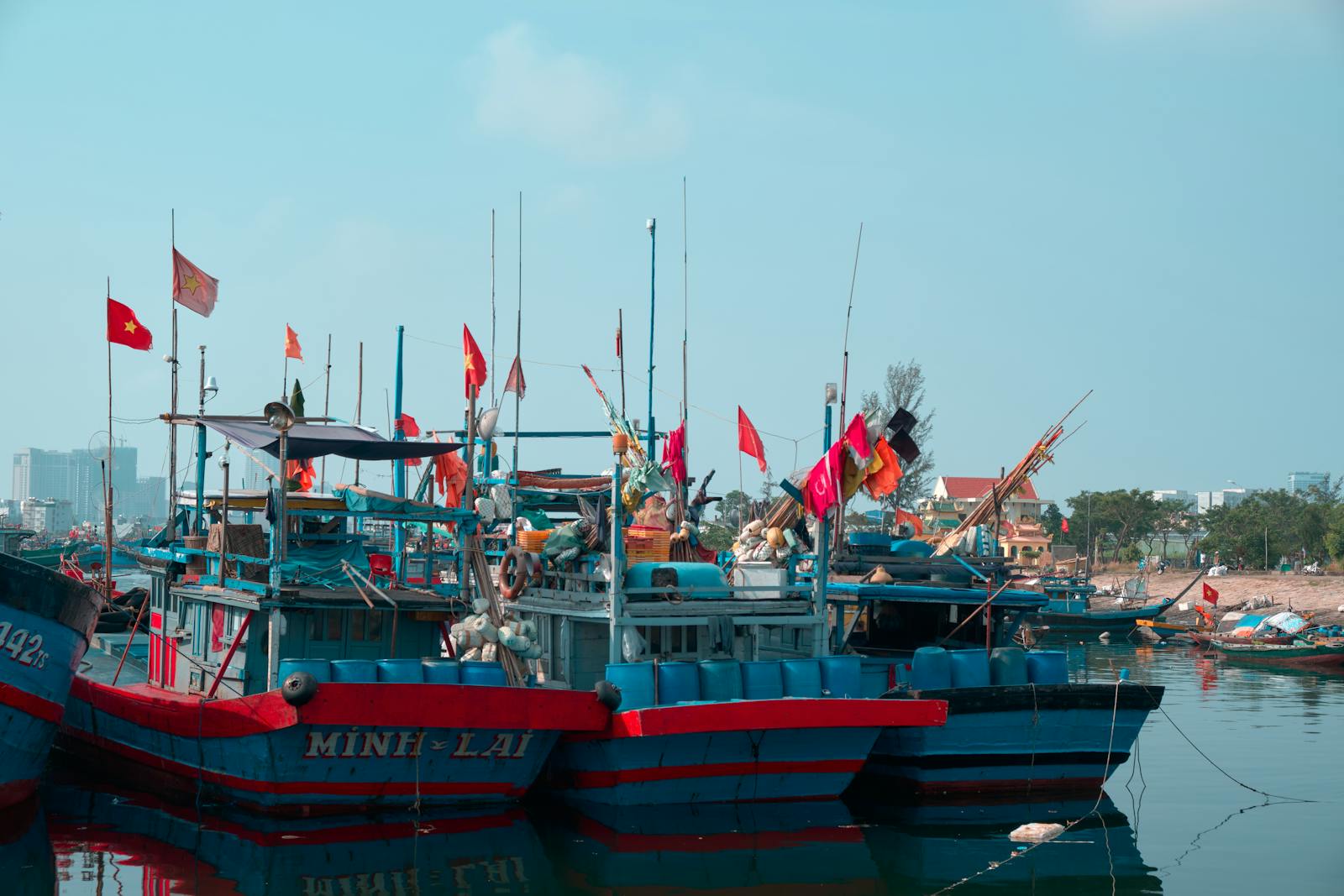
The sharpest illustration of what this structural failure looks like at ground level comes from Ho Chi Minh City’s gig workers. As Al Jazeera reports, an e-hailing motorcycle driver recently completed a seven-to-eight hour shift earning 240,000 Vietnamese dong ($9.11). Half of it went to fuel.
In a city where motorcycles dominate urban transport, fuel costs are not an overhead line item; they are the business model. Gig workers absorb fuel price shocks directly, with no capacity to pass costs to consumers or negotiate with platforms. According to research by Do Hai Ha at the University of Melbourne, gig workers face income volatility from factors they cannot control and lack bargaining power with platform companies. It bears noting that the rational response for many drivers is not to work harder but to stop working entirely; many are simply switching off their apps and going home.
This is the mechanism by which geopolitical risk becomes household poverty. Vietnam’s gig workers did not sign up to bear the cost of Strait of Hormuz dependency. No platform pricing model accounted for it. No labour protection framework cushions against it. Yet they are the ones absorbing the shock — not because of any failure on their part, but because Vietnam’s energy infrastructure was designed with no redundancy, and gig platforms were designed with no floor.
A government response that reveals the limits
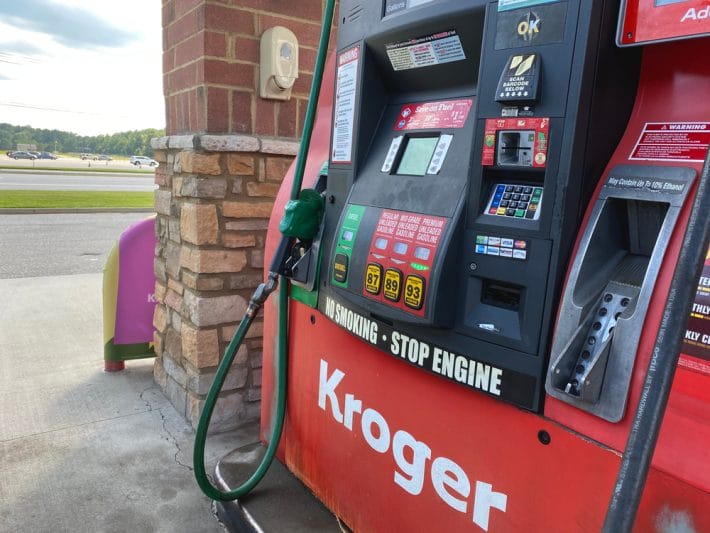
Prime Minister Pham Minh Chinh suspended environmental taxes on diesel, petrol, and aviation fuel. The measure was projected to reduce petrol prices by about one-quarter and diesel by about 5 percent, but it comes at significant cost to government revenue. For low-income families in rural regions, where cooking gas prices have risen substantially, the tax cut barely registers against the scale of the shock.
The intervention exposes a familiar bind for governments facing supply-side energy crises: demand-side subsidies drain fiscal capacity without resolving the underlying constraint. Vietnam cannot tax-cut its way out of a supply chain that runs through a warzone. And every month the environmental levy stays suspended is a month of foregone revenue that was earmarked for climate adaptation (a bitter irony, one might argue, for a country already among the most climate-vulnerable in Southeast Asia).
What the crisis forces next
Nguyen Khac Giang, a visiting fellow at the ISEAS-Yusof Ishak Institute in Singapore, said the crisis raises important questions about Vietnam’s strategic autonomy and energy dependencies. With limited refinery capacity serving the domestic market, Vietnam’s exposure to a single maritime chokepoint has become an acute national security concern.
The capital markets are already responding. Vingroup, Vietnam’s largest conglomerate, has reportedly informed authorities it wanted to halt plans to build a major liquefied gas-fired power plant and redirect funds toward renewable energy, citing concerns about fuel price volatility for LNG power projects. But Vingroup’s pivot, however significant, is one company reacting to one price signal; the structural decisions ahead are far larger.
Vietnamese policymakers now face a set of concrete and expensive choices. First, whether to invest in strategic petroleum reserves large enough to buffer against multi-month supply disruptions; this is a capital commitment that competes directly with infrastructure spending. Second, whether to diversify crude sourcing toward suppliers whose shipments do not transit the Strait of Hormuz, which likely means renegotiating long-standing procurement relationships and accepting higher baseline costs. Third, whether to accelerate domestic renewable energy deployment not as a climate initiative but as a national security programme, reframing solar and wind capacity as strategic insulation against maritime chokepoint risk. Each of these decisions carries significant fiscal and political costs. None of them were on the policy agenda six months ago.
For foreign investors, the crisis reframes Vietnam’s risk profile in ways that extend well beyond the current disruption. The country has spent a decade attracting manufacturing FDI on the strength of low labour costs, political stability, and geographic proximity to major markets; energy resilience was not part of that pitch, and it bears noting that the omission was not an oversight so much as a reflection of how rarely chokepoint risk featured in investment due diligence before the Iran blockade made it unavoidable. It will need to be part of the pitch now. Companies evaluating factory placements, logistics hubs, and data centre investments will price in energy supply fragility — and Vietnam’s competitors in the region (particularly those with more diversified energy portfolios, such as Thailand or Indonesia) will benefit from the comparison.
As Silicon Canals has explored regarding the broader oil shock, the Iran conflict is not producing localised disruptions; it is stress-testing energy dependencies worldwide. Vietnam’s crisis is a particularly stark version of a pattern repeating across emerging economies: the geopolitical risk that was priced into no one’s business model is now being paid for by the people with the least ability to bear it.
Feature image by Duc Nguyen on Pexels