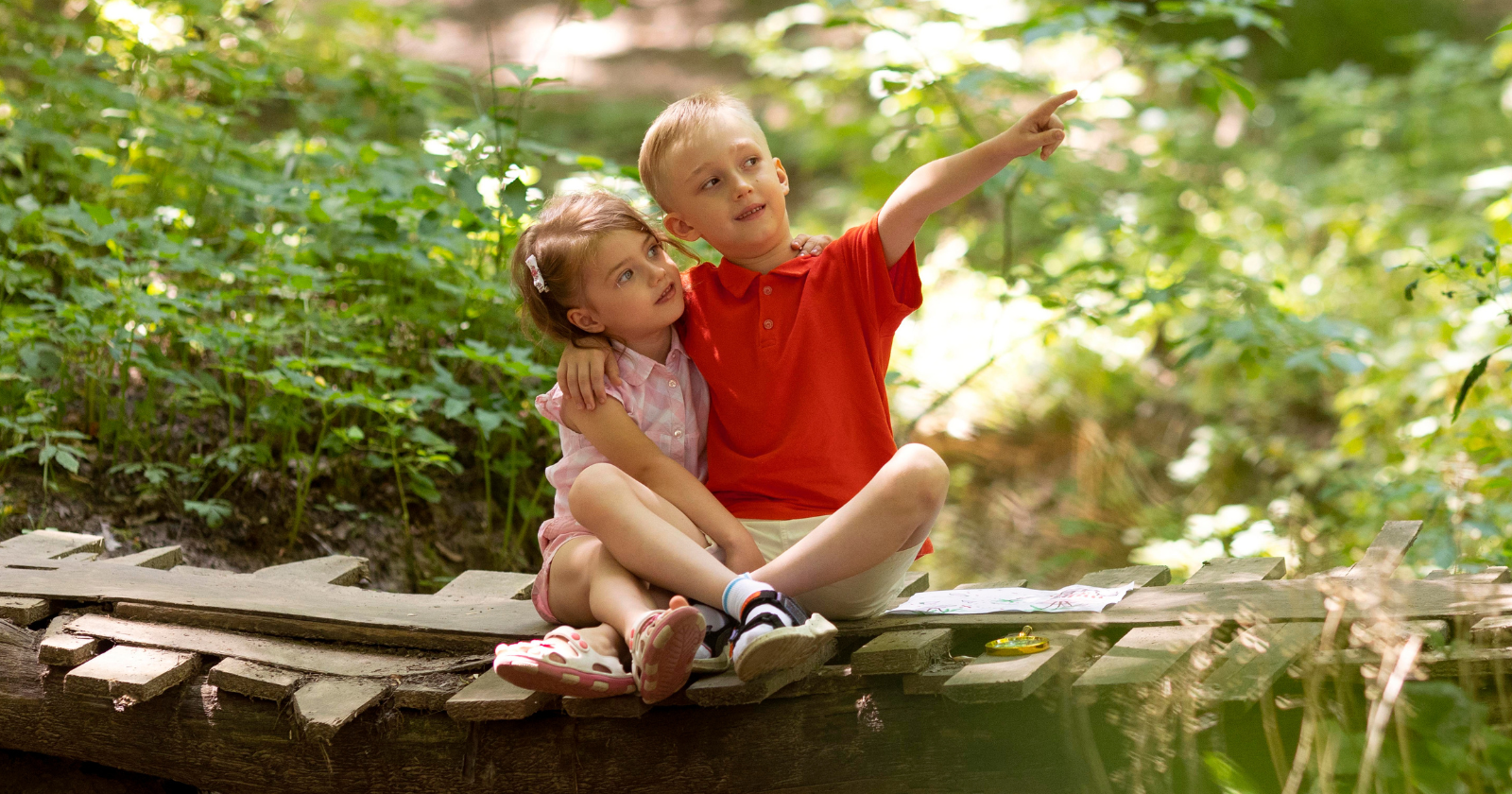
Growing up, my grandparents would tell me stories about their childhoods that seemed like they were from another planet. Kids roaming the streets until dark, no mobile phones, no constant supervision. Just freedom.
Fast forward to today, and I watch parents navigate a completely different world. They’re criticized if they let their eight-year-old walk to the corner shop alone. They’re judged if their kids don’t have structured activities every afternoon.
The contrast is stark, and it got me thinking about all the freedoms that were normal for boomers but would be unthinkable for today’s parents to allow.
1. Playing outside unsupervised until the streetlights came on
Remember when “be home before dark” was the only rule? Boomers spent entire days exploring their neighborhoods without adult supervision. They built forts in woods, played street hockey, and created elaborate games with nothing but imagination and whatever they could find.
Growing up outside Manchester, our entire street was our playground. No parent watched us constantly. We learned to negotiate conflicts, assess risks, and entertain ourselves. These weren’t special skills we developed; they were just part of being a kid.
Today, many neighborhoods feel empty of children’s voices. Parents face judgment or even legal consequences for letting kids play unsupervised. In some places, allowing your nine-year-old to play alone in the park can trigger a visit from child services.
The cultural shift is remarkable. What was once considered normal childhood independence is now viewed as neglect.
2. Walking or biking to school alone
Boomers often walked miles to school, sometimes from kindergarten age. It was expected. Parents didn’t drive kids to school unless there was a genuine reason.
Now, school drop-off lines stretch for blocks. The idea of a six-year-old walking to school alone seems almost absurd to modern parents. And honestly, can you blame them?
Traffic has increased exponentially. The design of many communities prioritizes cars over pedestrians. Media coverage of rare but terrifying incidents has made every parent hyperaware of potential dangers.
But something important has been lost. That daily walk or bike ride taught independence, time management, and gave kids unstructured time to think and daydream.
3. Having unsupervised time at home
Latchkey kids were everywhere in the boomer generation. Coming home to an empty house after school was normal for many. They’d make themselves snacks, start homework, maybe watch some TV before parents returned from work.
Today, leaving a child home alone can be legally questionable depending on their age and location. Many states have guidelines about the minimum age for unsupervised children. Parents arrange elaborate after-school care schedules, and the idea of a ten-year-old being home alone for two hours raises eyebrows.
What changed? Partly it’s legal liability. Partly it’s social pressure. But it’s also that dual-income households often mean parents working longer hours with less predictable schedules.
4. Taking real risks during play
Boomers climbed tall trees, built rickety ramps for their bikes, and played with tools in the garage. Playground equipment was metal and concrete, built high off the ground with no safety surfacing underneath.
Walk through a modern playground and you’ll see the difference immediately. Everything is lower to the ground, covered in rubber surfacing, designed to minimize any possibility of injury. Kids are told “be careful” constantly. Tree climbing is often forbidden.
Child development experts have started discussing the importance of “risky play” for child development. Kids need to test boundaries, experience minor failures, and learn their own limits. But modern parenting culture makes this incredibly difficult to allow.
My father would tell me stories about building go-carts with his friends using whatever materials they could scavenge. They’d race them down hills, occasionally crashing, getting scraped up, then doing it all over again. Try explaining that to today’s safety-conscious parent.
5. Having privacy and unmonitored communications
Boomers had private conversations with friends that no adult would ever know about. They passed notes in class, talked on phones in their bedrooms, and had thoughts and friendships that existed entirely outside adult awareness.
For modern kids, this seems to be impossible. Their texts can be monitored. Their internet history tracked. GPS on their phones shows their location constantly. Social media means their interactions leave permanent digital footprints. Parents can read every message, track every movement, monitor every interaction if they choose.
This isn’t necessarily parents being controlling. They’re responding to real concerns about cyberbullying, online predators, and digital footprints that could affect their child’s future. But the complete loss of privacy fundamentally changes the experience of growing up.
6. Making mistakes without permanent consequences
When boomers did something stupid as kids, it might be remembered by a few people. Maybe it became a family story told at gatherings. But it didn’t follow them forever.
Kids today grow up knowing that everything they do might be recorded, photographed, or shared online. One bad decision at fourteen could surface when they’re applying for university or jobs.
Parents know this too, which adds another layer of anxiety to every parenting decision.
The pressure this creates is immense. Both kids and parents operate under constant scrutiny, real or imagined.
7. Having unstructured time to be bored
Boomers had vast stretches of unscheduled time. Summer days that seemed endless with nothing planned. Weekends without activities or obligations. They had to figure out how to entertain themselves.
Look at a modern child’s schedule and it’s often packed. Sports practice, music lessons, tutoring, organized playdates. Parents feel pressure to provide enrichment activities, to give their kids every advantage. The competition for university places starts earlier than ever.
But boredom serves a purpose. It forces creativity, self-reflection, and problem-solving. Without it, kids miss crucial developmental experiences.
8. Forming independent relationships with adults
Boomers often had relationships with neighborhood adults that their parents knew nothing about. The corner shop owner who’d chat with them. The retired neighbor who taught them card games.
These relationships formed naturally, without parental orchestration or supervision.
Today, any adult showing interest in a child is viewed with suspicion. Parents carefully vet every adult their child interacts with. Structured activities mean adults are background-checked and trained. The informal mentorships and friendships that once enriched childhood have largely disappeared.
The bottom line
These lost freedoms aren’t just nostalgic memories. They represent fundamental changes in how children develop independence, resilience, and social skills.
Modern parents aren’t wrong to be concerned. The world has changed in real ways. But recognizing what’s been lost is the first step in figuring out how to give kids some of these essential experiences in a way that works for today’s reality.
Maybe we can’t replicate the boomer childhood exactly, nor should we try. But understanding these differences helps us think more carefully about what children really need to grow into capable, confident adults. The challenge for today’s parents is finding ways to provide independence and freedom within the constraints of modern life.
What freedoms from your own childhood do you wish you could give to kids today?