No Result
View All Result
  • Login
Wednesday, February 4, 2026
FeeOnlyNews.com
  • Home
  • Business
  • Financial Planning
  • Personal Finance
  • Investing
  • Money
  • Economy
  • Markets
  • Stocks
  • Trading
  • Home
  • Business
  • Financial Planning
  • Personal Finance
  • Investing
  • Money
  • Economy
  • Markets
  • Stocks
  • Trading
No Result
View All Result
FeeOnlyNews.com
No Result
View All Result
Home Money

Who you gonna trust: Barry Ritholtz or Jim Cramer?

by FeeOnlyNews.com
3 months ago
in Money
Reading Time: 5 mins read
A A
0
Who you gonna trust: Barry Ritholtz or Jim Cramer?
Share on FacebookShare on TwitterShare on LInkedIn


The first can be regarded by retirees and those on the cusp of retirement as a must read: William Bengen’s A Richer Retirement, the long-awaited update of his classic book on the much-cited 4% Rule: Conserving Client Portfolios During Retirement. First published in 2006, that book was really aimed at financial advisors but became popular with the general investing public after it got extensive press exposure over the years.

 The 4% Rule—which is actually closer to a 4.7% Rule depending how you interpret it—refers to the “safe” percentage of a portfolio that retirees can withdraw each year without running out of money in 30 years, net of inflation. Bengen’s term for this is “SAFEMAX.”

The new book is supposedly aimed at average investors. Still, I found it pretty technical, filled chock-a-block with charts and tables that are probably more accessible to the original audience of financial professionals. Counting some useful appendices, the book is just under 250 pages.

After wading through all Bengen’s tweaks meant to minimize the impact of inflation, bear markets, and unexpected longevity, I was left with the impression the original 4% Rule remains a pretty good initial guestimate for what retirees can safely withdraw in any given year. 

Sure, 3.5% or 3% may be technically “safer,” especially if you expect to live a very long life or want to leave an estate for your heirs. I’ve even seen arguments that a 2% retirement rule may be appropriate for extremely risk-averse retirees. 

On the other hand,  it’s not too dangerous to withdraw 6% or 7% or more as long as stock markets and interest rates cooperate. That’s what many retirees intuitively do anyway; they reduce withdrawals in bear markets, and splurge a bit in raging bull markets. 

It’s also worth noting that whether you choose 3%, 5%, or larger percentages, that guideline really just applies to your investment portfolios, whether held in tax-deferred or tax-exempt accounts or taxable ones. Most Canadian retirees can also count on the Canada Pension Plan (CPP) and Old Age Security (OAS), not to mention employer pensions. Those lacking big defined-benefit pensions but who have plenty saved in RRSPs and TFSAs can choose to pensionize or partially pensionize their nest eggs by buying annuities. (For timing, see this piece published recently on my blog.) For that concept, refer to Professor Moshe Milevsky’s excellent book, Pensionize Your Nest Egg.  

Making money in any market
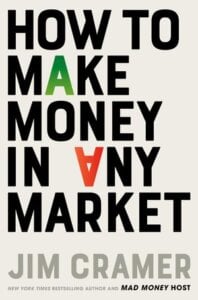
More controversial is Jim Cramer’s How to Make Money in Any Market. I know it’s fashionable for some mainstream financial journalists to disparage the long-time host of Mad Money and in-house stock-picking guru on Squawk on the Street. I never watch him on TV (MSNBC) but often listen to his podcasts while walking or at the gym, usually at 1.5x speed and skipping over interviews with the CEOs of more speculative stocks I have no interest in. Cramer’s critics tend to be diehard indexers who swear it’s impossible to consistently pick stocks and “beat” the market over the long run. I tend to side with them, but more on that below.

Article Continues Below Advertisement

Outstream Pause Icon

Outstream Volume Icon

Skip Ad

X

Obviously, Cramer begs to differ, often trotting out testimonials from Nvidia millionaires who bought that spectacular artificial intelligence (AI) chip stock the moment he named his dog after it (sadly now deceased). Cramer devotes an entire chapter to that call, which he mentions every chance he gets. I did buy that stock too, although I was too late and risk-averse to bet the farm enough to change my life with it.

What his critics may not realize is that even Cramer believes in indexing at least 50% of a portfolio. In fact, he tells newcomers to stocks that their first $10,000 (US) should go in an S&P500 index fund. Hard to argue with that.

Where I part ways is his book’s recommendation of holding just five stocks for the 50% of a portfolio that is not indexed. That would mean holding around 10% of your total portfolio in each such stock, which is way more concentrated than most investors would countenance. Much of the book goes into how to choose the kind of secular growth stocks he prefers, with the help of modern AI tools like ChatGPT, Grok, and all the rest.

I used to wonder about his show’s regular segment, Am I diversified?, where readers submit their five picks for Cramer’s consideration. I’d be surprized if there is an investor anywhere whose portfolio is that concentrated. Even Cramer’s much-cited Charitable Trust holds many more than five stocks. 

Canada’s best dividend stocks

How not to invest
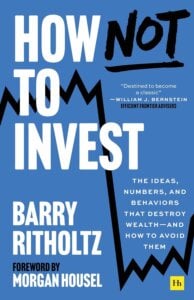
This leads me to the third book I ordered from Amazon, recently reviewed by Michael J. Wiener of the Michael James on Money blog: Barry Ritholtz’s book How Not to Invest. Cramer cynics might quip that would have been a better title for How to make money in any market had it not already been taken by Ritholtz; Cramer has after all famously inspired some ETF companies to provide “reverse Cramer” funds that short his major long recommendations. 

Ritholtz’s book clocks in at almost 500 pages but is quite readable. It has attracted multiple testimonials ranging from William Bernstein (“Destined to become a classic.”) to DFA’s David Booth, Shark Tank’s Mark Cuban and author Morgan Housel, known through The Motley Fool, and who penned the foreword.

Ritholtz organizes his book in four parts: Bad Ideas, Bad Numbers, Bad Behavior, and Good Advice. While Cramer tempts us into individual stock-picking, Ritholtz reminds us that few can do it well; nor can most of us successfully pull off market timing. He devotes a fair bit of space to how badly some pundits’ predictions have panned out in the past. I was left with a renewed appreciation for the benefits of indexing, certainly for the core of portfolios if not for their entirety. As he puts it: “Index (mostly). Own a broad set of low-cost equity indices for the best long-term results.” He lists five advantages to indexing: lower costs and taxes, you own all the winners, better long-term performance, simplicity and less bad behaviour. 

Fortunately, ordinary investors have many advantages over the pros, such as not having to benchmark against indices or worry about investors who sell a fund, the ability to keep costs low, and in theory a much longer time horizon. But the clincher is that “indexing gives you a better chance to be ‘less stupid.’”



Source link

Tags: BarryCramergonnaJimRitholtzTrust
ShareTweetShare
Previous Post

Covered call ETFs have high yields but come with a trade-off

Next Post

What financial advisors should know about heirs’ property

Related Posts

9 Reasons More Than Half of Americans Are Terrified of Their Emergency Savings

9 Reasons More Than Half of Americans Are Terrified of Their Emergency Savings

by FeeOnlyNews.com
February 3, 2026
0

Emergency funds sound comforting in theory, but they can feel scary in real life. Many people look at their emergency...

6 Shared Expense Arrangements That Rarely Stay Fair

6 Shared Expense Arrangements That Rarely Stay Fair

by FeeOnlyNews.com
February 3, 2026
0

Splitting costs with someone else sounds simple until real life starts shifting under your feet. One person gets a raise,...

5 Financial Favors That Are Hard to Undo

5 Financial Favors That Are Hard to Undo

by FeeOnlyNews.com
February 3, 2026
0

Saying yes to help someone out can feel like the right thing, especially when it’s “just this once,” and they...

As a CPA, I Thought I Knew Social Security — Until I Retired. Here Are 5 Costly Blunders Even the Experts Make.

As a CPA, I Thought I Knew Social Security — Until I Retired. Here Are 5 Costly Blunders Even the Experts Make.

by FeeOnlyNews.com
February 3, 2026
0

I’m a CPA and personal finance writer with more than 30 years of experience, which includes writing dozens of articles...

6 Estate Planning Shortcuts That Backfire During Health Crises

6 Estate Planning Shortcuts That Backfire During Health Crises

by FeeOnlyNews.com
February 3, 2026
0

Estate planning is often sold as a way to handle death, but its most critical function is actually handling life—specifically,...

The “Stealth Tax” That’s Quietly Saving Social Security (and Costing You Thousands)

The “Stealth Tax” That’s Quietly Saving Social Security (and Costing You Thousands)

by FeeOnlyNews.com
February 3, 2026
0

While politicians love to get in front of cameras and argue about “saving” Social Security, there’s a quiet machine running...

Next Post
What financial advisors should know about heirs’ property

What financial advisors should know about heirs' property

How advisors are using AI without explicit SEC guidance

How advisors are using AI without explicit SEC guidance

  • Trending
  • Comments
  • Latest
Self-driving startup Waabi raises up to  billion, partners with Uber to deploy 25,000 robotaxis

Self-driving startup Waabi raises up to $1 billion, partners with Uber to deploy 25,000 robotaxis

January 28, 2026
Student Beans made him a millionaire, a heart condition made this millennial founder rethink life

Student Beans made him a millionaire, a heart condition made this millennial founder rethink life

December 11, 2025
Sellers Are Accepting Even Less

Sellers Are Accepting Even Less

January 23, 2026
Episode 242. “Our couples therapist couldn’t fix this. Please help.”

Episode 242. “Our couples therapist couldn’t fix this. Please help.”

January 6, 2026
US SEC Issues Key Crypto Custody Guidelines For Broker-Dealers

US SEC Issues Key Crypto Custody Guidelines For Broker-Dealers

December 19, 2025
How to sell a minority stake in RIA M&A

How to sell a minority stake in RIA M&A

November 11, 2025
‘SaaSpocalypse’: What is Anthropic’s newest AI tool and what are the consequences for global tech companies?

‘SaaSpocalypse’: What is Anthropic’s newest AI tool and what are the consequences for global tech companies?

0
5 Financial Favors That Are Hard to Undo

5 Financial Favors That Are Hard to Undo

0
PayPal Holdings, Inc. (PYPL) Q4 2025 Earnings Call Transcript

PayPal Holdings, Inc. (PYPL) Q4 2025 Earnings Call Transcript

0
Israel’s ADC to build Albania’s first data center

Israel’s ADC to build Albania’s first data center

0
Adam Smith Misunderstood the Origins of the Division of Labor

Adam Smith Misunderstood the Origins of the Division of Labor

0
‘You Probably Don’t Want To Go Buy A House,’ Says Best-Selling Author JL Collins—Even As Homeownership Remains The ‘American Dream’

‘You Probably Don’t Want To Go Buy A House,’ Says Best-Selling Author JL Collins—Even As Homeownership Remains The ‘American Dream’

0
Binance completes second batch of Bitcoin conversion, acquires 0M in BTC

Binance completes second batch of Bitcoin conversion, acquires $100M in BTC

February 4, 2026
Silver & gold ETFs rally up to 9% as bullion boom continues. Should you invest now?

Silver & gold ETFs rally up to 9% as bullion boom continues. Should you invest now?

February 4, 2026
‘SaaSpocalypse’: What is Anthropic’s newest AI tool and what are the consequences for global tech companies?

‘SaaSpocalypse’: What is Anthropic’s newest AI tool and what are the consequences for global tech companies?

February 4, 2026
XRP Open Interest Falls to Lowest Level Since 2024: Market Reset Or Warning Signal?

XRP Open Interest Falls to Lowest Level Since 2024: Market Reset Or Warning Signal?

February 4, 2026
Clorox outlines 0–1% category growth target and innovation-led recovery as ERP transition ends (NYSE:CLX)

Clorox outlines 0–1% category growth target and innovation-led recovery as ERP transition ends (NYSE:CLX)

February 3, 2026
Sun shines on Waaree Energies as tariff clouds clear

Sun shines on Waaree Energies as tariff clouds clear

February 3, 2026
FeeOnlyNews.com

Get the latest news and follow the coverage of Business & Financial News, Stock Market Updates, Analysis, and more from the trusted sources.

CATEGORIES

  • Business
  • Cryptocurrency
  • Economy
  • Financial Planning
  • Investing
  • Market Analysis
  • Markets
  • Money
  • Personal Finance
  • Startups
  • Stock Market
  • Trading

LATEST UPDATES

  • Binance completes second batch of Bitcoin conversion, acquires $100M in BTC
  • Silver & gold ETFs rally up to 9% as bullion boom continues. Should you invest now?
  • ‘SaaSpocalypse’: What is Anthropic’s newest AI tool and what are the consequences for global tech companies?
  • Our Great Privacy Policy
  • Terms of Use, Legal Notices & Disclaimers
  • About Us
  • Contact Us

Copyright © 2022-2024 All Rights Reserved
See articles for original source and related links to external sites.

Welcome Back!

Sign In with Facebook
Sign In with Google
Sign In with Linked In
OR

Login to your account below

Forgotten Password?

Retrieve your password

Please enter your username or email address to reset your password.

Log In
No Result
View All Result
  • Home
  • Business
  • Financial Planning
  • Personal Finance
  • Investing
  • Money
  • Economy
  • Markets
  • Stocks
  • Trading

Copyright © 2022-2024 All Rights Reserved
See articles for original source and related links to external sites.