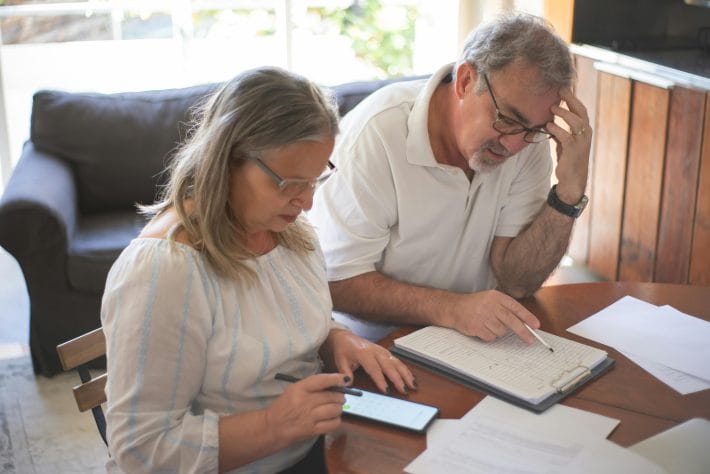
February is the month when many retirees open their first full pension or annuity checks of the year, only to find the net amount is lower than expected. In 2026, the IRS will continue to refine the Form W-4P tables, which often default to a higher withholding rate if a new form hasn’t been filed in years. Seniors who have paid off their mortgages or have high medical deductions often do not owe as much tax as the default tables assume.
Consequently, they are effectively loaning the government hundreds of dollars a month interest-free, reducing their day-to-day liquidity. Performing a “Withholding Reset” now ensures that your monthly check reflects your actual tax liability, not an outdated algorithm.
The “Default” Rate Trap
If you did not submit a new W-4P when you started your pension, your plan administrator likely applied the default rate of “Single with no adjustments.” In 2026, tax brackets have shifted due to inflation, meaning this default setting might be withholding significantly more than necessary for your current income. This is especially true for married retirees where one spouse has stopped working, dropping the household into a lower effective bracket. You can submit a new W-4P to your payer at any time to adjust this. There is no penalty for changing it multiple times a year to dial in the exact number.
The Medical Deduction Factor
Many seniors fail to account for their high medical expenses when setting their withholding. If you live in an Assisted Living facility or have significant home care costs, these are often deductible medical expenses that drastically lower your taxable income. By updating Step 4(b) on the W-4P to reflect these deductions, you can legally reduce the amount of tax taken from each pension check. This keeps the money in your pocket month-to-month to pay the facility, rather than waiting until next April for a refund. It converts a future tax break into immediate cash flow.
The “Standard Deduction” Bump
For the 2026 tax year, the standard deduction for seniors over 65 has increased again to adjust for inflation. If your withholding is based on 2020 or 2022 rules, you are not capturing this larger tax-free buffer in your monthly checks. Updating your form allows you to claim this increased standard deduction in real-time. This is particularly important for widows or widowers who may have forgotten to adjust their filing status after a spouse’s passing. A quick review ensures you aren’t withholding as if you were still in a higher-tax situation.
Social Security Tax Coordination
A common error occurs when seniors have taxes withheld from their pension but not their Social Security, or vice versa. The W-4V form allows you to set a flat percentage (7%, 10%, 12%, or 22%) to be withheld from your Social Security benefits. Coordinating these two forms prevents the “seesaw” effect where one income source is over-taxed to cover the other. Proper synchronization ensures both checks are consistent and that you don’t face an underpayment penalty. It creates a predictable “net income” floor for your budget.
The “Refund” Opportunity Cost
Getting a $4,000 tax refund might feel like a bonus, but for a retiree, it represents a financial failure. That is $333 a month that could have been earning 4% interest in a high-yield savings account or helping to pay for groceries. In a high-inflation environment like 2026, holding onto your cash is more valuable than lending it to the Treasury. A “Withholding Reset” moves that capital back into your control immediately. The goal of tax planning in retirement should be to break even, not to give the IRS a free loan.
File the Form This Week
Do not wait until April to fix your cash flow. Download the 2026 W-4P today, calculate your expected deductions, and send it to your pension administrator to see the increase in your March check.
Did you get a huge tax refund last year? Leave a comment below—tell us if you adjusted your withholding.
You May Also Like…

Teri Monroe started her career in communications working for local government and nonprofits. Today, she is a freelance finance and lifestyle writer and small business owner. In her spare time, she loves golfing with her husband, taking her dog Milo on long walks, and playing pickleball with friends.