I was at CES in Las Vegas this week, and I’ll have much more to share with you about what I saw there in later issues.
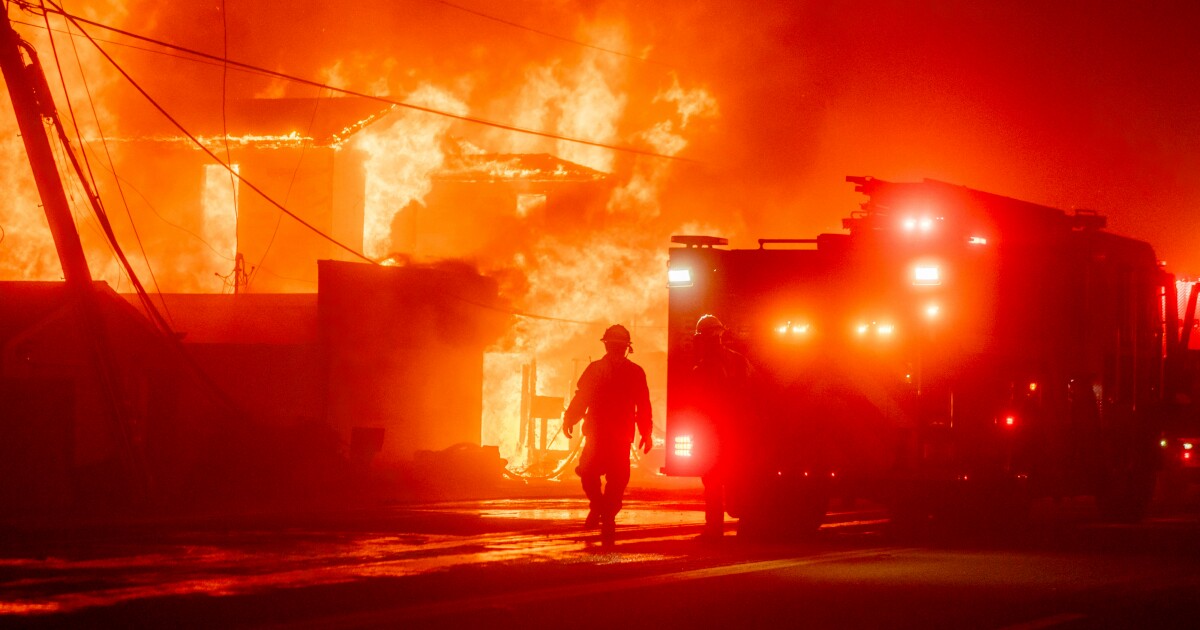
But today I want to talk about what happened earlier this week, when U.S. forces entered Venezuela and captured its president, Nicolás Maduro.
The Trump administration framed the operation as a law-and-order mission to enforce long-standing U.S. indictments tied to drug trafficking, and to dismantle what it calls a narco-state.
But there was obviously more to it than that.
Whether you applaud the move or were appalled by it, there was nothing ambiguous about its purpose. It was meant to engineer a political transition in a country that once produced more than 3 million barrels of oil per day and now only produces a fraction of that.
By acting decisively, the Trump administration signaled it’s willing to use force — not just through pressure or sanctions, but through direct military control — to protect what it considers vital U.S. interests.
That’s why I don’t see Venezuela as an isolated event. I see it as the first domino in a broader effort to expand U.S. power.
And I predicted the next domino to fall nearly eight months ago.
The First Domino Falls
Last May, I joined Porter Stansberry to explain why Trump’s talk of making Greenland the 51st state was more than just rhetoric.
After this week’s events, I believe the odds are even higher that it will happen.
What happened in Venezuela is proof that Trump’s team wants to ensure that the U.S. has leverage over our energy supply and trade routes, and to secure long-term power in this hemisphere.
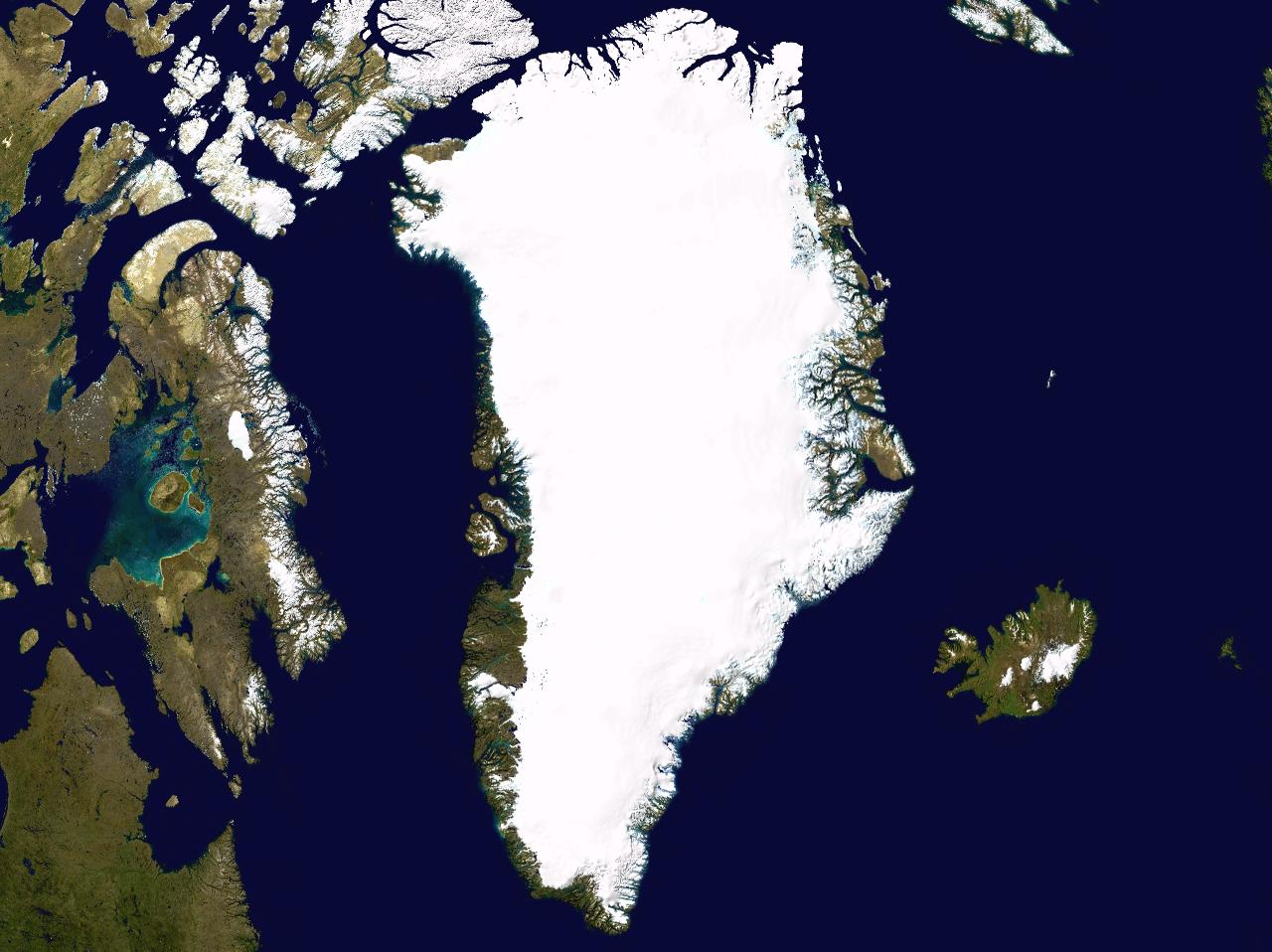
That way of thinking puts Greenland squarely back on Trump’s radar.
Image: NASA/Ames Research Center
And he’s not being quiet about it.
White House press secretary Karoline Leavitt told CNBC on Tuesday that Trump and his team are considering “a range of options” in order to acquire Greenland, even if it means “utilizing the U.S. Military.”
Why is he so keen on making Greenland a U.S. territory?
It’s simple. The Arctic isn’t an empty frontier any longer.
Over the past two decades, average Arctic temperatures have risen nearly 4X faster than the global average. This is accelerating ice melt and opening up territory that was previously inaccessible.
As a result, Greenland has shifted from a Cold War outpost into a strategic hub tied to new shipping routes, energy reserves and military infrastructure.
According to the U.S. Geological Survey, the broader Arctic region contains roughly 13% of the world’s undiscovered oil and 30% of its undiscovered natural gas. What’s more, it contains significant deposits of rare earth elements that are essential for advanced electronics, AI hardware, EV motors and modern weapons systems.
Greenland alone holds commercially relevant deposits of neodymium, dysprosium and other critical inputs the U.S. currently depends on China to supply.
We’ve talked before about how rare earths are America’s Achilles’ heel in the race to AI. China currently controls about 60% of global rare earth production and nearly 90% of the processing needed to turn those minerals into usable materials.
Despite years of effort, the United States still relies heavily on that supply chain.
But Greenland is one of the few places where those minerals exist at scale without falling under Chinese or Russian control.
And that’s only part of the reason why the world’s largest island matters strategically.
Consider the future of energy.

Image: worldoil.com
Venezuela’s collapse removed millions of barrels per day from global output, and it exposed how fragile energy markets become when supply is politically misaligned.
Greenland represents the opposite. Its large reserves are undeveloped but potentially alignable with U.S. interests.
In other words, Greenland’s oil and gas reserves offer long-term supply security rather than short-term output.
And its position along future shipping routes adds another layer of potential leverage for the U.S.
As ice retreats, routes like the Northern Sea Route are open for longer stretches of the year. In some cases, transit distances between Asia and Europe can be cut by up to 40% compared to traditional routes through the Suez Canal. That cuts fuel costs, lowers insurance risk and reduces reliance on narrow chokepoints that can be disrupted by weather or accidents.
Whoever controls those routes has the ability to influence trade flows.
And every country knows it.
That’s why Russia has spent the last decade rebuilding its Arctic presence. It has reopened Soviet-era bases and deployed new radar and missile systems. It has also expanded the world’s largest icebreaker fleet, including nuclear-powered vessels designed to keep Arctic lanes open year-round.
China has taken a different approach. It declared itself a “near-Arctic state,” investing heavily in Arctic research stations, port infrastructure and mineral exploration agreements tied to long-term supply chains.
Simply put, Beijing views the Arctic as a future logistics corridor. But from Washington’s perspective, there’s more to it than that.
It’s also about defense.
Greenland sits between North America and Europe.

Image: Wikipedia Commons
And it hosts critical early-warning radar and space-tracking infrastructure.
Modern missile trajectories increasingly pass over the Arctic, and hypersonic weapons leave very little time to react. Being positioned farther north helps detect them sooner. And with today’s technology, even a few extra seconds matter.
Computing infrastructure is another consideration.
Artificial intelligence has turned data centers into strategic assets. These facilities consume enormous amounts of power and generate extreme heat. Cooling alone can account for 30% to 40% of operating costs.
But cold climates turn cooling from a problem into an advantage.
Greenland offers persistent low temperatures. It also provides proximity to major markets, and potential access to renewable energy.
As AI workloads scale, those advantages will compound.
Put all of these things together, and you can see why I said last May that Trump’s Greenland rhetoric deserved to be taken seriously.
And why I believe that what happened this week in Venezuela looks less like an exception and more like a preview.
Here’s My Take
The Venezuela operation wasn’t just a strike on Maduro’s regime.
It was a signal that — under the Trump administration — the United States is willing to use military force to reassert control over strategic geography.
Greenland isn’t likely to become a U.S. territory next week.
But what was once a punchline for late night hosts has now become a potential reality.
Just as I predicted last year.
Regards,
 Ian KingChief Strategist, Banyan Hill Publishing
Editor’s Note: We’d love to hear from you!
If you want to share your thoughts or suggestions about the Daily Disruptor, or if there are any specific topics you’d like us to cover, just send an email to [email protected].
Don’t worry, we won’t reveal your full name in the event we publish a response. So feel free to comment away!