Henry:For investors, the market does not have to be perfect. It just has to make sense. The challenge is knowing which trends are actually changing the math. What’s up, everybody? I am Henry Washington, and today I’m stepping in for Dave Meyer as the host of this week’s On the Market Show. And I’m also joined by my friends, Kathy Fettke and James Dainard. And today, we’re gonna be going over the most important headlines that we found this week. We’ll be breaking down the lock-in effect and whether it’s still in play or if it’s starting to change a little bit, we’ll talk about the current state of real estate inventory and the top US cities where U-Haul says people are moving to. You’re listening to On the Market, let’s jump in with our first headline. All right, my article is from Fortune, and it is about the lock-in effect.And we’ve talked about the lock-in effect several times on this show. When interest rates dropped to sub 3% millions of homeowners locked in two to 4% mortgage rates, and that made it challenging for them want, to want to sell their properties and transition to new homes when the interest rates rose because they would be trading a very low interest rate for a very high interest rate. So that caused inventory to dry up because people were locked into their lower mortgage rates. And what this article talks about is that as of late in 2025, more homeowners have mortgage rates above ones with sub 3%. In other words, there’s a shift from the pandemic era where m- the majority of homeowners had a sub 3% mortgage rate. Now, we’ve seen a shift where there are more homeowners that own interest rates higher than 3%. So the article also talks about because there are fewer homeowners that now hold these lower interest rates, that means the financial burden or the penalty for these people transitioning homes is now lessened, which means more people are willing to go ahead and put their homes on the market, and that should help inventory kind of unlock the inventory and we start to see more transaction volume.I think that is the hope. I mean, I can say in my market that we are seeing people transacting faster. The last few homes that have gone on the market by either myself or some of the other people that work out of this office all went under contract in the first 24 hours with multiple offers. So in my market, we’re starting to see some of this, but what are you guys seeing in your markets, especially you, James?
James:There is not a lot of inventory, but I will say I was pretty surprised to see that there’s more homeowners now with rates above the 3%, 3.5%, because all we talked about for like a year after rates went up was the lock-in effect- Yeah. … that no one’s moving, the rates are gonna stay here forever. Like, you just don’t know what’s gonna happen nowadays, right? Right. Like it, like everything that you anticipate to happen doesn’t happen. And then this goes over here. It’s like, I never really thought that people were gonna stay forever in the house just because people changed their minds and a lot of people bought homes on a very quick whim. And they kind of jumped in because they had FOMO, they didn’t wanna lose buying a home. But I don’t know if this is gonna really cause more inventory because we’re seeing a l- inventory shrink up and then for the last six months, all we’ve heard about is inventory rose, inventory rose- … It’s finally coming, and then it shrinks back down.It, it’s- We don’t know which way is what going where. And what it, it’s important for everyone to do is just not overthink it too. Like, what are you trying to accomplish? What are you trying to do? And is there more inventory or not? It doesn’t matter what someone’s home, their rate is on their existing mortgage has nothing to do with what you’re doing next, right? But I do think this shows that it doesn’t matter. Americans are used to borrowing and they don’t care if their rates are 3.5% or 20%. They just want the money where they want it, and they’re gonna keep moving things forward. But this is pretty surprising that there’s more mortgages locked in above the pre-pandemic.
Henry:I think this article also touches on something that some of us all said in previous episodes, is that people don’t just stay in a home or move because of the interest rate, right? Mm-hmm. There are life events and things that happen that cause people to either need or want to move. And most homeowners are less concerned about the financial impact and are more concerned about like, “What’s my lifestyle impact?” ‘Cause these, a lot of these homeowners aren’t investors. And so what the article says is like some of the big drivers in people breaking the lock-in effect now that it isn’t as financially challenging for them is job changes in relocations. You know, a lot of companies are limiting remote work. Like that was a thing before. It’s not as much of a thing for a lot of companies, family changes or divorces, downsizing, there’s people downsizing and they’re wanting to sell.So normal life factors are now coming into play and it’s easier for people to make the decision to sell because the financial implication isn’t as harsh as it was before.
Kathy:Yeah. It, it’s just a matter of time, right? Uh, you know, every year, four million, about four million homes have been trading, have, have been selling. That, that means the people buying them are probably in those 6% rates. In fact, some might be in much higher rates and so happy to be refinancing into a 6% rate from eight or something. So it just is a matter of time. 6% is not a bad rate.
Henry:Right.
Kathy:It’s actually a really, really good rate. The problem was that home prices soared at the same time, but they have stayed relatively flat for a few years now, and that’s given some time, again, for wages to rise and for affordability to increase. And that was kind of the headline of last month, which is for the first time, uh, housing has become a little bit more affordable. And that’s the combination of rates coming down just a bit and wages going up a bit and home prices staying flat. And in some areas, coming down quite substantially. You know, if you were ever wanting to buy a house in Austin, why, goodness, you could get a deal.
Henry:Right?
Kathy:Yeah, you could get a deal. And that’s, that’s not just Austin. There’s several markets like that. So that’s, that’s part of it. And, and then the other part is that it’s just there’s a lot of people sitting on massive amounts of equity. If you bought in 2020 and you’re looking at all that equity-
Henry:I’m about to list my house and I’m locked into a sub 3%. My mortgage rate is like 2.3%, but I have a ton of equity because I literally bought right in 2020, right before the market shifted to, to where things were selling like hotcakes, and now I’ve got a ton of equity, and we’re gonna use that equity to build a home on 20 acres of land that we are closing on today.
Kathy:Oh my gosh, so exciting. And again, lifestyle change. Yeah. So for you, if you actually look at the, the 0% return that you’re getting on that equity, um, and, and then you combine it, it, it, you know, you’re, you’re going to be making more money by putting that equity to use when you’re thinking like an investor. Now, I think a lot of people don’t think like investors. If they have to move or do something else, they might not wanna keep that older house and rent it out even though it might cash flow because that’s a foreign concept and a scary one, and maybe they need access to that equity. So yeah, it’s just, I think it’s just a matter of time. Plus, one more thing, so many people kept thinking, “I’m just gonna wait till rates come back down to 2%, 3%.” Yes. “That’s when I’ll buy.” And I think reality has set in that that’s probably not happening.
Henry:I think you both make great points here because if you wanted to buy a deal or buy a property in a great market that’s now experiencing some downturn, like what an opportunity, right? Like, you know, we just did the Texas Cashflow Roadshow and we were in Austin and there are tons of people both in Austin and outside of Austin who love that area want to invest there, but people just kept saying, “Man, things aren’t looking good. Prices are down.” Yeah, that’s when you should buy. Austin’s cool. It’s gonna come back, right? Now you get to get in at a discount. If you’re a retail kind of buyer, this is a great time to buy in that area. And if you’re an investor and you’re looking to capitalize, you’re supposed to buy low, sell high, right? This gives you an opportunity to buy low and sell high.And James, you’re right, there’s so many different data points. Like we can literate … I’m sure if we dig for five seconds, we can find an article saying the exact opposite,
Kathy:Right?
Henry:But I think you’re right. We have to focus on the fundamentals. If you’re a flipper or a value add investor, like this shouldn’t change your approach. You should still be buying undervalue. You should still be adding value, doing the best job you can in the shortest period of time, and then understanding your market, your customer, and providing them the product that they want, regardless of how many homes are on the market. Like, it’s more important now than ever to, like, be a fundamentally sound investor. What we aim to do is I wanna be the nicest home in the area at one of the middle or lowest prices so that people have no choice but to come see my house. Because if you’re shopping and you see options that look worse than mine and that are priced higher, then I know I’m gonna get those looks.Like those fundamentals will carry you in any market.
James:Austin is a head scratcher though. Like, because it came down fast when rates shot up, just like San Francisco, Seattle, Chicago, a lot of them did. It has had no pop back though, like none i- unless I’m just totally off on that. But I’ve seen San Francisco rebound and then, you know, it like kinda does like the EKG monitor, right, where it’s like boom, boom, boom. Austin’s just flatlined. There has to be opportunity there. And, and I think that’s what people have to change their brains on is when it doesn’t feel comfortable is when you wanna buy.
Henry:Yeah. Like
James:You have to keep buying and keep going. And if the, a market’s not rebounding like the rest of them, then that’s where the opportunity is. Yep. Right? It, it’s, uh … I should’ve gone out to that Austin roadshow and you have to have some properties.
Kathy: I know, I know, right?
James:We got some good barbecue and- Yeah. … got some good deals.
Henry:The barbecue was amazing. Houston did have the best barbecue that we tried on this trip. I’m not saying Houston has the best barbecue in all of Texas. Don’t come at me in the comments. But put a pin in that thought, James, about Austin and about Texas. All right, well, that’s great information about the impact of the lock-in effect. We’ve got more amazing headlines for you when we come back. All right, we’re back with On the Market. Let’s dive into our next headline. I wanna move on to the next article that Kathy brought, and I think it may have something to do with real estate in Texas.
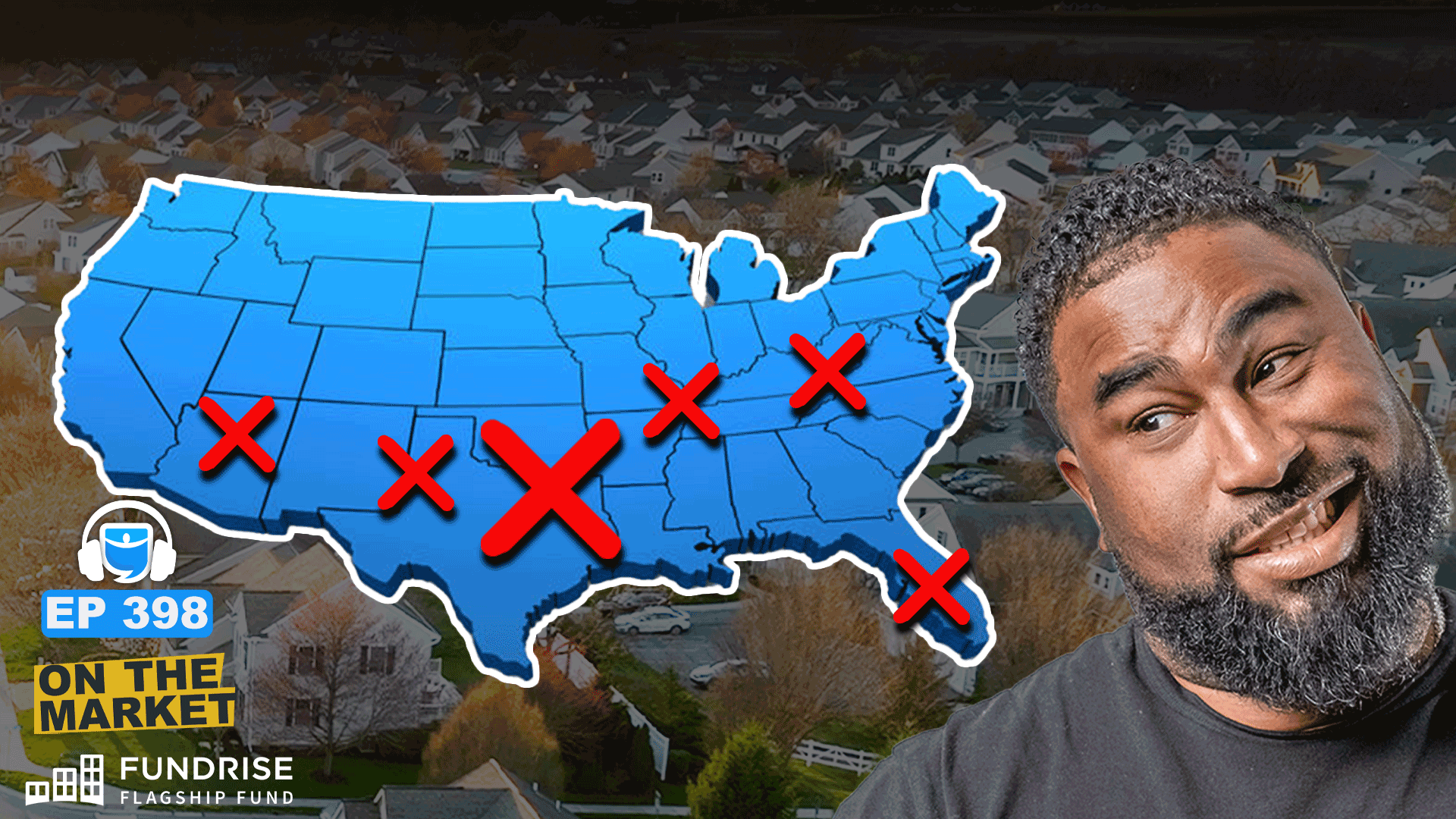
Kathy:Mine is the U-Haul Growth Index Report. This is just, you know, go to U-Haul and they track where the trucks are going and where they’re coming, you know, where they’re coming back from. And if there’s a lot of demand for where they’re going, prices go up, if there’s not a lot of demand, prices go down. Uh, so California, once again, bottom of the list. Fewer people coming, so if you wanna rent a U-Haul to California, you’re gonna get a great deal. No surprise that the top U-Haul growth markets where the most U-Hauls were going, number one, number one, Dallas. Not a surprise, but investing there for 22 years for this reason. That’s where people are going. That’s because the job market is on fire. Uh, it has been for 20 years. Uh, second is Houston, and it’s because of their barbecue. Everybody’s just gonna get more barbecue. Third, Austin. I think people are realizing I can go have barbecue and live for pretty cheap because they’re probably just giving away apartments at this point.
Henry:They did overbuild. It looks like A- class apartments, especially in Austin.
Kathy:Then, uh, Charlotte, Phoenix, Nashville, Charleston. So, you know, you could see a trend here, still the Southeast and Phoenix. It’s where people are moving despite what you hear in the news. And this is why you have to be so careful. When I talk to people about our single family rental fund, for example, where we’re focused on Dallas, they’re like, “Oh yeah, but, you know, there’s all these vacancies.” And it’s like, yeah, in, in the areas where they overbuilt, but not in the areas where we’re buying, not where the jobs are going, uh, companies are moving to the Dallas area and obviously to Houston and, and, uh, Austin because it’s much more affordable and the laws are in their favor and there’s tax credits many times for these businesses to move and that’s gonna drive workers to be there, but the employers wanna make sure that their employees can live well.So they move to the areas that are more affordable within there. Now, if you go to downtown Dallas, not affordable, but you kinda go out into the outskirts-
Henry:Yeah.
Kathy:… that’s where the businesses are going and that’s where we’re investing too.
Henry:I think recently McKinney, Texas, which is just outside of Dallas, was ranked as, like, one of the top, if not the top real estate market in terms of rent-price ratio, in terms- Yeah. … of, uh, appreciation. And that’s literally, like, just a stone’s throw outside of Dallas.
Kathy:That’s been our focus for, for about a decade, and it’s paid off.
James:And, you know, as we look at what’s gonna happen in real estate over the next three to five years, I think it’s really important to see what’s going on in politics in the local regions because the reason people are leaving and businesses are leaving is because of all these taxes. California has, what, that billionaire tax up in the air right now where they wanna tax more billionaires. Washington is in front of the Senate right now, it, and they’re, they’re gonna vote on it. They proposed a 9.9% income tax on anybody making more than a million dollars in, in Washington. And that, that means stock too, right? And that there’s a lot of tech that’s, that’s coming into Washington. This is where all of a sudden businesses go, wait a second.
Kathy:Yeah. What the heck?
James:You know, there’s a lot of San Francisco tech coming up to Washington because there’s benefits. We have lower properties. I mean, we are expensive, but it’s not, we’re not San Francisco expensive, and there’s no income tax. And then what happens is you hit that breaking point and you go, “No, you know what? This ain’t worth it anymore.”
Kathy:Yeah.
James:And now I gotta go elsewhere. Seattle’s proposing other taxes on businesses for income. Like, and, and these are the things that are making people go to Texas. They’re going to Florida and they’re going to more friendly states for businesses, and this is not gonna stop. This is a trend that started during the pandemic and people really started moving. If these states don’t sparten up, people are going to leave. You know, that’s something I’m watching closely in Washington because if a 9.9% income tax goes through on a millionaire, the next thing is 700 grand, then 500 grand on earnings. And the income tax is gonna be a real expense. Washington has higher expenses than a lot of other states and makes it unaffordable. That’s where property values go down. I think this is gonna continue because these states are pushing hard and, you know, I, I’m gonna be curious to see if there’s a fallout in those states.Like, I mean, anybody who’s buying in the, these less business-friendly states, you gotta watch out. Like, I’m, I’m heavily into Seattle and I’m like, whoa, if this goes through, I’m gonna be making a shift into some other spots for sure.
Kathy:Yeah.
Henry:Kathy, you had mentioned Phoenix on this list. Where on the list did Phoenix fall?
Kathy:Phoenix was number five.
Henry:That’s cool. Again, I think that’s one of those situations similar to what we were talking about with Austin, because Phoenix real estate- Yeah. … uh, values have been flat and/or coming down over the past few years. But if it’s now on this list or it’s, data is showing that people are still moving there, businesses are still moving there. Again, that seems like a formula for an opportunity if you’re an investor, because you can get in now while prices are low, and if you hold through, you now know that businesses are moving there, which means businesses are gonna pour money into those communities, they’re gonna create jobs in those communities, and more people are gonna be living there, that creates a scenario where appreciation can happen again in the future.
Kathy:There’s also a second part of this article that’s U-Haul Growth Cities. The, the one I just said was the metro area, because like I said, with Dallas, if you just focus on Dallas alone, not as interesting as the Dallas Metro area because so many of the businesses are moving actually outside of Dallas into areas like McKinney, like you said. But the U-Haul growth cities, the number one is, and most of these are in Florida, actually. So the, the metros are Dallas, and that’s because so much of the growth is actually in the suburbs. In Florida, the number one city is Ocala. And once again- Oh, man. … my company has been focused on Ocala for a couple of decades- Yeah.… seeing the growth there. Um, I, I was shocked to see it’s the number one, but then it, it’s Northpoint, Florida, Myrtle Beach, South of Carolina. Remember you were looking at that, James? You like that town? Just Florida, Florida. And then McKinney is number six, so yep. Yeah. Yep. The bottom line is that Texas and Florida have gotten a lot of headline news about vacancies, but you have to dig in a little deeper. We also just did a mastermind with the teams that we work with across the country, and the Florida guys were like, every time someone, an investor calls, the first thing they said is, “Insurance, you’re, uh, we don’t wanna buy here because of insurance.” And I get it. Like, I’m in California. I know the problems with insurance, but they said, “It’s, it’s not as bad as people think. ” And I looked at our portfolio and I’m like, “Yeah, look at Rich.Like, has our insurance gone up much?” And he goes, “Not a, a little bit, but, but also the houses have doubled, if not tripled in value. So of course the insurance has gone up.” Of course,
Henry:Right.
Kathy:You know? That’s the piece people are, aren’t maybe looking at. It’s not necessarily all related to storms, it’s that the values have gone up.
Henry:No, Kathy, we want low expenses, low insurance, but we want high values. We want our cake and eat it too.
Kathy:I agree.
Henry:All right. Thank you, Kathy, for sharing that article. We do have to take a quick break, but when we return, we will be talking with James Dainard about inventory increases or not. We’ll be right back. All right, we’re back with On the Market. We have James Dainard and Kathy Fettke and myself. You heard me bring a story talking about the lock-in effect and how that may be shifting, and we heard from Kathy telling us about all the amazing places people are moving to, creating potential opportunities for investors and homeowners alike. And now we’re shifting to James Dainard, who has a story about inventory. James, take it away.
James:One thing I track all the time is inventory levels. You know, as a flipper, developer, I mean, even as a landlord, right, I’m always looking at that because all 1031 exchange anything and trade out. I don’t care what my rate is, that locking effect does not matter to me. If I can buy something different and better, we’re buying it and selling. But how many doom and gloom articles have we seen come out the last 12 months about inventory’s way up? We’re going back into 2008. It’s finally … And then it’s like, oh, well, no, it’s gone up. You know, it’s more than it was. And now all of a sudden, you know, what this article talks about is active listings have increased 10% year over year nationwide, and it is very regional specific, but inventory is slowing down now, and there’s less coming on. And despite the year over year gains, total inventory is still 17.2% below pre-pandemic levels.
Kathy:Mm-hmm. Yeah.
James:And that’s pre-pandemic levels, right? And if we, it, what everyone forgets about is going into the pandemic, the market wasn’t doing well. It wasn’t crashing, it was puttering though. Everything was flat. We had, like, a little bit of a slow dip. I remember moving down to Newport Beach, and man, what a mistake that was not buying there, because it was declining. And so once those tariffs hit this year, everyone kind of froze for a second, and they wanted to see what was gonna happen. Then we saw that really nothing bad happened, but then the buyers didn’t resume buying like they normally would, right? Rates were lower, stock market was up, more homes for sale, and people still weren’t transacting.
Henry:It was also wintertime during that, during that specific moment too. No,
James:It was April is when we hit a rock wall in our market. It was April, which we usually hit that wall in June, and it was like summer came early on us, and summer’s not good in our market. And we didn’t see any kind of rebound up until December. It was just kind of flat, slow, and grinding through. I even took three homes off the market in December. I re-listed them, and we got multiple offers on all three, like a month later, right? 30 days later. And so, you know, for any home buyer that’s sitting on the sidelines going like, “I wanna get this perfected, I want the lowest price and the lowest rate, and to put it all together,” I can tell you in 20 years of buying, I’ve never perfected that box. It, like, it just goes where it goes, but inventory is really shrinking up.And in our local market in Washington, we saw inventory starting to hit around four months of supply, even getting towards five, which gets to a balanced market. We’re at 1.7 months now.
Kathy:Yeah. Wow. Oh my gosh.
James:And there is nothing for sale. We’re comping houses. I’m like, “Where’s the houses? This is weird.” And we are seeing multiple offers. I just renovated my grandpa’s house, and we put that up for sale for the family. We got multiple offers on that house, and that was an expensive home in the area. Two homes that we couldn’t sell, sold. It’s like, I was anticipating this flood coming out, like everyone was waiting for the spring, and I’ve not seen the flood. Things are selling, and if you have a good product and a good house, and you’re a buyer, buy it if you can afford it. If you are selling it, it’s gonna sell. And, and so we’re, we’re seeing these kind of, like, little shifts, and I think the doom and gloom that we, everyone was talking about six months ago, you’re not gonna hear any of that in the next three months.You’re gonna talk, hear about how people can’t find a house.
Kathy:I wonder if it’s, like, s- some of these tech areas because of AI just being such a big new industry. Do you think that’s partly it? ‘Cause on the one hand, we talked about people wanting to leave because of this millionaire tax, but at the same time, they’re clamoring for real estate, so-
James:Yeah, I think some of the first time home buying, like, Sunbelt areas haven’t been quite going as, up, but what I have seen is I don’t think this last six months had anything to do with economics. It’s all mental because, like, before those tariffs came out, we were getting massive amounts of showings and then they just disappeared, but nothing bad happened because of the tariffs economically.
Kathy:Mm-hmm.
James:That doesn’t make any sense. And so I think it’s FOMO. Like, there’s just buyers, it’s like everyone’s so afraid to make a decision that they just don’t make it. And once we see that pent up demand of not decision making, we see a rush in. Same with investing, right? Like, people are like, “I need to get my rental.” And be- people just start buying up stuff. And so don’t miss the bull rush and just keep steadily buying because I’m seeing inventories really shrinking and I’m actually … I thought we were gonna be flat for the next 12 months. I think we’re gonna get a pop in some of these markets. I
Henry:Think a lot of it does have to do with the fact that interest rates are more reasonable now. Mm-hmm. Are they sub 5%? No. But I don’t know that I necessarily want them to be. But a 6% interest rate, if you’re a normal homeowner, is very, very reasonable, in my opinion. And I think that that’s helped people kind of be more comfortable with making a shift and buying properties. And you’re right. In, in my market, it’s, it’s very similar, James. In the past 30 days, we’ve just seen this pop in terms of people snapping up properties. Inventory on the market has shrunk, uh, from the winner. In the winter, every street you drove down, multiple for sale signs, and now you don’t see that anymore, and deals are getting snapped up. Uh, we’ve, like I said earlier in the show, the last three properties that have gone on the market in this office, all under contract within 24 hours, multiple offers.And so that’s telling me that people are transacting and they’re eager to transact. But I will say, these buyers, they’re smarter now because they still are asking for a lot. And typically when you see homes getting snapped up with multiple offers, people are willing to waive certain things, but that’s not what’s happening. We’re getting buyers that are snapping up deals and then they’re asking for the moon.
Kathy:Yeah.
Henry:And I think that that’s fair. Put it on us, the seller, to make the determination on whether we want to do those things or not. But that’s why I say the fundamentals are key, because if you put out a good product, then you’re gonna have less crazy requests from people and you’ll be able to get your property sold faster. But buyers are, buyers are smarter and they’re asking for a lot.
Kathy:Yeah, this was really the headline news story of 2025 is increased inventory and there were headlines everywhere and people were freaking out and calling it 2008 again. And, and it was true that at the beginning, like a year ago, this time a year ago, inventory levels were 33% above the year before. But by the end of the year, it, that growth rate went down to 10%. So beginning of the year last year, it was, inventory was rising quickly. I think you’re right. As soon as interest rates came down, uh, we saw a big, big shift starting around the summertime to where, again, only 10% over the year before. That’s like two-thirds less and that is amazing because interest rates didn’t move that much, right? It just needs to be enough. And, and if it just moves ever so slightly, that’s that many more people that could cross the line into homeownership.So very, very sensitive to interest rates. That’s the big question. What’s next, right? Are they going to stay here? Are they gonna go up? They’re gonna go down? No one knows. But right now, that’s the story. The new story is not last year’s story of too much. Now it’s back to, too little.
James:And one thing we saw, like when rates shot up and we were in the seven and a halfs, like, I mean, when I bought this house I’m in right now, my rate, they, they quote, it was 7.5%- Wow.
Henry:… was
James:The average rate. We still saw home selling. Like I pulled a little regional stat like inside Washington just by price point, because I really wanna break it down, but listen to this like inventory shift. August 2025, King County had almost three months of supply. Right now, 1.4 months. Wow. We have Snohomish, 2.8 month supply down to 1.6. And these are different median home prices. You got Seattle at 830, so almost 760. Then we have Skagit, which is further down. That’s at, that’s 500,000 around the median home price. Inventory in August was at 3.4 to four months of supply, now it’s below two months of supply. And so this is all different price points, all different types of buyers, tech related, not tech related. We’re seeing across the board the inventory shrinking and just like any supply and demand, if there’s nothing for sale, things go up in price, right?It’s like that go walk through a mall and you walk through like those fancy designer stores and they got the line and they’re like, ” I gotta get in the line. I gotta get in the line. ” But no one really wants to go in the line, right? Like it’s like, it creates that, that’s that mental psyche that if you wanna pop, this is the time to put things for sale. Just really watch the data and the stats, don’t watch the news articles because when you read them, you’re like, ” Holy crap, that’s 50% of the inventory just fell off in a six month period.
Henry:“I agree with you wholeheartedly, James, you need to track data points. And so if you’re an investor and you’re investing in certain markets, please get with investor-friendly agents or people within your market who have access to this data who can provide you these data points so that you can make the best decision for you and your market because every market is a little bit different, especially right now. These are some trends we’re seeing across the country, but as you dive into each individual market, things can be drastically different. So it’s, it’s, it’s more important than ever to be tied into the data in your local market. All right, folks, that’s all we got for the show today. Thank you so much for tuning in to On The Market. Make sure you follow on the market wherever you get your podcast and subscribe to our YouTube channel because that’s where we share exclusive content and in- depth analysis.I’m Henry Washington. Thank you so much for listening and we’ll see you on the next episode of On The Market.
Help us reach new listeners on iTunes by leaving us a rating and review! It takes just 30 seconds and instructions can be found here. Thanks! We really appreciate it!
Interested in learning more about today’s sponsors or becoming a BiggerPockets partner yourself? Email [email protected].