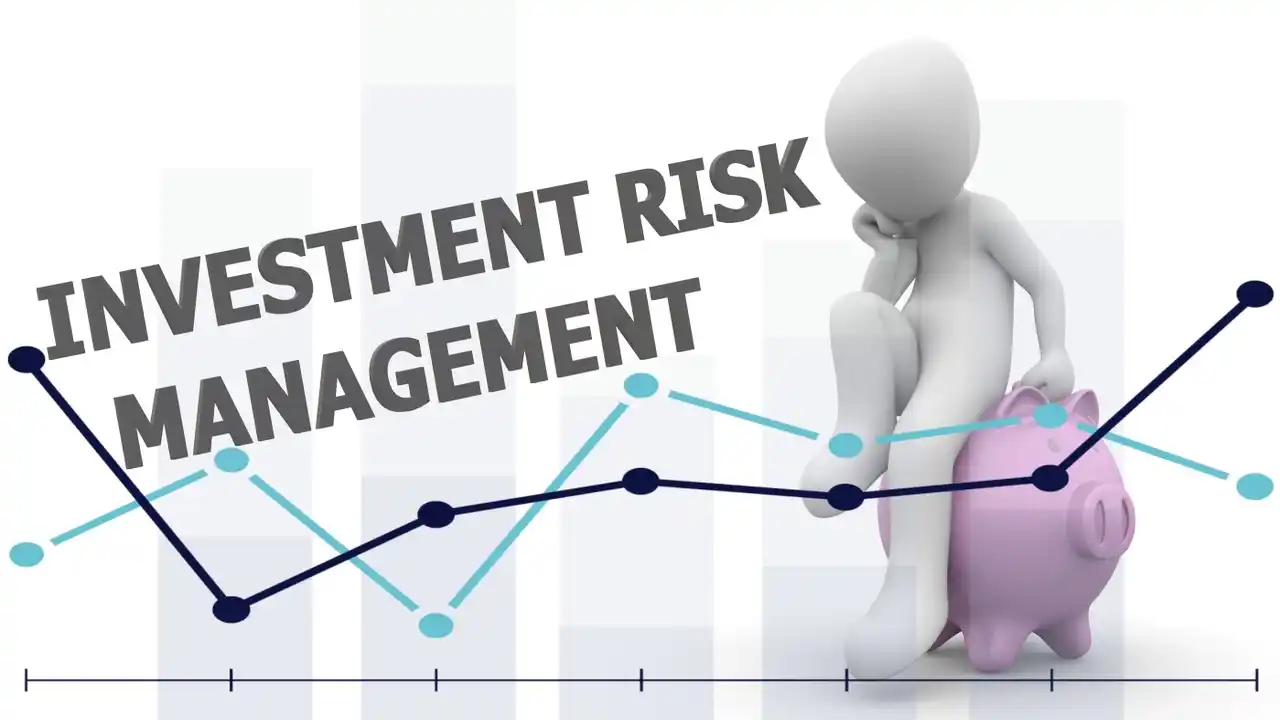
Risks? Who does not recoil at the thought of investing in “risky” financial assets? Benjamin Graham is widely considered the “Father of Value Investing.” The secret to successful investing, he adds, is learning how to manage risk. Investment risk cannot be completely eliminated, but it can be mitigated through investment risk management. Undoubtedly, you are pondering how to deal with the threats. As always, you should not be concerned. Lets understand the best ways to minimize investment risk management.
In pursuit of investment success, we should manage risk rather than avoid it. Have you ever heard of the phrase? – We will instruct you on how to effectively control dangers. “There is no return without risk, therefore aim high!” Risque is unavoidable. Risk diversification enables us to achieve larger returns, which facilitates wealth accumulation. When investing in high-risk tools, we must employ investment risk management to reduce potential losses and investment risk. In this week’s blog, we will discuss: 8 Risk-Reduction Techniques
What is Investment Risk Management?
Recognizing, evaluating, and ranking risks, followed by the coordinated and cost-effective use of resources to limit, monitor, and control unfavourable events or their effects, or to maximise opportunities. This is the essence of “investment risk management.”
Finance risk management acknowledges, analyses, and accepts or lowers investment decision uncertainty An investor or fund manager engages in risk management when they analyse and estimate the potential of investment losses, such as moral hazard, and then take the proper action (or inaction). The most fundamental method of risk management is investing.
Return is correlated with risk. An investment always carries some degree of risk, whether it is near to zero for a U.S. Treasury bill or extremely high under inflationary conditions for emerging-market equities or real estate. Risk can be viewed as either absolute or relative, based on the circumstances. To better comprehend the opportunities, trade-offs, and costs associated with various investing techniques, it may be advantageous for investors to comprehend all forms of risk.
An Example of a Potential Investment Risk
From August 1, 1992 through July 31, 2007, the S&P 500 returned an average of 10.7 percent annually. The duration of this phase was from August 1, 1992 to July 31, 2007. This graph represents what occurred in aggregate, but not in detail. For the same time period, the standard deviation of the S&P 500 was 13.5%. This is the difference between 15-year average and actual returns. The return is averaged across the full period.
Any given outcome should be within one standard deviation of the mean 67 percent of the time and 95 percent of the time, according to the bell curve model. 67 percent of the time, an S&P 500 investor might anticipate a return of 10.7 percent plus or minus 13.5 percent standard deviation; 95 percent of the time, he could anticipate a gain or loss of 27 percent, equivalent to two standard deviations. Only invest if he can afford to lose money.
Best Ways to Minimize Investment Risk Management
Utilizing risk management approaches to mitigate risks and comprehend their effects. A risk management plan describes how your organisation or group will recognise and respond to potential hazards. These strategies are offered for risk management. Let’s examine best ways to minimize investment risk management.
Risk-assess Tolerance
The capacity of an investor to bear the possibility of investing losses is known as “risk tolerance.”
The risk tolerance of an investor is affected by his or her age and financial responsibilities. You have a higher risk tolerance if you are in your 20s, unmarried, and have less financial obligations than if you are in your 50s, married, and have college-aged children. You put less money at risk. Younger investors are more risk averse than older investors.
If we begin investing at an early age, we can begin with an all-stock portfolio designed to accumulate wealth. This technique is not recommended for individuals who must manage their finances and are nearing retirement. If we know our risk tolerance, we can select assets that offer the highest return relative to their risk.
Diversify
After discovering the optimal asset class combination for our portfolio, we can reduce investment risk by diversifying within the same asset class. If we choose to invest in equity mutual funds, we should purchase large-, mid-, and small-cap funds. Small-cap stocks decline more than large-cap stocks during market declines. Diversification in our portfolio reduces investment risk.
Focus on your Tenure
Instead of attempting to time the market, we should remain invested for a longer duration. Then, we can apply compounding. If we maintain a long-term investment in the stock market, we will not be affected by minor market fluctuations, and our investment risk will be reduced.
Keep your Portfolio Liquid
Beware! A financial catastrophe may arise at any moment. At some time, regardless of the market, we must sell our investments. Having sufficient cash on hand reduces our risk. If we have liquid assets in our portfolio, our present investments will generate strong long-term returns, and we will gain from market declines.
Having an emergency fund balance of six to eight months will help ensure the liquidity of your assets. If we need funds fast due to an emergency, we should invest in overnight and liquid funds with little risk. After establishing our risk tolerance and reserving capital to protect the liquidity of our portfolio, we can investigate asset allocation strategies.
Conduct a Thorough Inquiry
Because you are accountable for your finances, you should never invest without conducting sufficient research. If you’re searching for a long-term investment, you should investigate the company’s management as well as its price-to-earnings ratio, debt-to-equity ratio, etc. We can predict the evolution of the company through fundamental study. If we invest without conducting our own research and instead rely on the advice of others, we run the chance of losing money, thereby increasing the stakes of the entire investment.
Asset Allocation Strategy
Asset allocation is the practise of investing in various asset types. This approach maximises profits while minimising investment risk. We are able to invest in a diversified portfolio of equities, bonds, mutual funds, real estate, gold, etc. Investing in diverse asset classes with negative correlations may be a component of asset allocation. When one asset class, such as equities, performs better than the others, the other asset classes suffer. Due to their inverse relationship, when equities do well, gold underperforms.
Purchase Superior Stocks
Invest in blue-chip equities or ETFs to mitigate the risk of liquidity. When purchasing debt instruments, investors must assess the credit rating of the issuer. Every investment carries its own set of risks. Before making a financial decision, a person’s risk tolerance must be evaluated. Investing decisions might affect one’s standard of living, so proceed with caution.
Regulate
After reviewing the preceding information, monitor your portfolio frequently. Long-term investors should not overlook portfolios. You must frequently examine the performance of your portfolio. Long-term investors should disregard short-term volatility and only make adjustments when their holdings underperform. Certain asset classes, including stocks, are prone to short-term volatility.
Conclusion
Because all assets contain some degree of risk, it is challenging to design a portfolio that is risk-free. We promise that if you follow the eight methods outlined in this section, you will find the optimal risk-reward ratio.
Your investments will increase, allowing you to reach your financial goals. We hope that you found this blog to be educational and will implement what you’ve learned in the real world. As stated at the opening of best ways to minimize investment risk management, the key to successful investing is risk management, not risk aversion. By sharing this message to members of your extended family and social circle, you can assist us in achieving our goal of increasing people’s awareness of the importance of making sensible financial decisions.