The gap between the best and worse off Americans is growing — and economists don’t see an end in sight.
The “K-shaped” economy has been top of mind for consumers, corporate leaders, policymakers and investors since the Covid pandemic drastically reshaped Americans’ financial habits almost six years ago. Economists now warn that this two-speed economic structure is a core feature — rather than a passing fad — within the world’s largest economy.
“This is not a cyclical or temporary phenomena,” said Mark Zandi, chief economist at Moody’s Analytics. “This is a structural, fundamental issue.”
The prevailing theory goes something like this: Higher-earning consumers, encouraged by rallying stock holdings and elevated property values, are splashing out on vacations and premium goods. On the other hand, after years of higher-than-ideal inflation rates, lower-income cohorts are struggling to afford necessities such as housing, groceries and gasoline.
A luxury airline seat and a value meal.
Mensent Photography | Moment | Mario Tama | Getty Images
Taken together, recent data suggests that bifurcation is as exacerbated as ever.
The widening gap
A key measure of wealth concentration called the Gini coefficient sits at 60-year highs, according to a report from U.S. Bank published earlier this month. That signaled a reversal of the drop to multidecade lows seen amid the rollout of pandemic-era economic stimulus, said Beth Ann Bovino, the bank’s chief economist.
The net worth of America’s top 1% hit a record share of nearly 32% in the third quarter of 2025, the Federal Reserve reported. By comparison, the bottom 50% cumulatively held 2.5% of overall net wealth.
The portion of U.S. GDP heading to workers in the form of compensation tumbled to its lowest level in its more than 75-year history, per data tracked by the Bureau of Labor Statistics. That means the average nonfarm business worker is seeing an increasingly small slice of an economy that has largely boomed over the last 15 years.
This disparity has implications for how — and if — consumers spend their money.
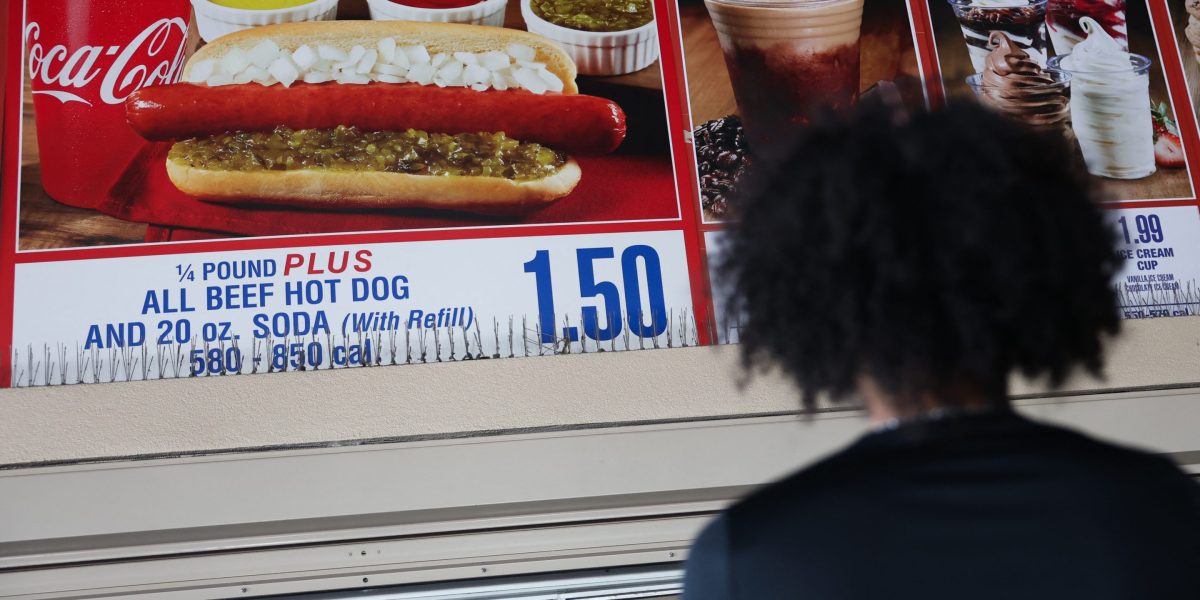
For instance, this divergence can explain why airlines are racing to build out luxury offerings at the same time that fast-food companies are leaning on value meals. Households with incomes under $75,000 are allocating less on discretionary categories like travel and experiences than in 2019, while those above $150,000 are allotting more, according to a Bank of America report released last month.
Total relative “outlays” — a broad measure of spending and nonmortgage payments — by U.S. consumers in the top 20% hit multidecade highs last year, a data analysis conducted by Moody’s found. The other 80% tumbled to new lows, the data shows.
For that 80%, overall spending hasn’t outpaced inflation over the last six years, said Moody’s Zandi. That means neither economic quality of life nor spending power has improved for the lion’s share of U.S. taxpayers in this timeframe, he said.
“Their standard of living has not budged since the pandemic hit,” Zandi said. “It’s just disconcerting.”
A ‘winner-take-all economy’
While the “K-shape” term became popularized as an explanation for the uneven economic recovery seen during the pandemic, economists say the origins of this breakaway can be traced back decades earlier.
This type of diverging economy stems from the economic reorganization seen during the Reagan administration, according to Joe Brusuelas, chief economist at tax firm RSM. About two decades later, the structural break that created the K-shaped economy, as it’s now understood, was more clearly observed in the wake of the Global Financial Crisis of the late 2000s, he said.

That was in part due to the loss of wealth tied to the historic housing market crash, Brusuelas said. On top of that, he said the jump in joblessness limited earnings potential for those without steady employment in their prime working years.
The Great Recession “created the conditions for the winner-take-all economy that emerged in its aftermath,” said Brusuelas, who first heard the K-shape term around 2008. “If you live, work and inhabit certain portions of the economy, you might as well live on the dark side of the moon compared to what goes on down-market.”
Zandi pointed to the decline of unionization rates in the late 1900s as another driver of this divergence, given that it led to less negotiating power for workers.
When the pandemic took hold in 2020, the stock market tanked and unemployment spiked as corporate America wondered what was coming next. But the benchmark S&P 500 has climbed over 130% since the Covid crisis’ onset in March 2020, further boosting the wealth of higher-earning Americans who data shows are more likely to own stocks.

The S&P 500 since March 2020
Lower-earners were seen as beneficiaries of pandemic stimulus programs and the subsequent worker shortage that led to outsized wage gains. However, Bank of America found higher-income Americans began seeing stronger wage growth last year. Spending also rose at a faster clip for top earners during much of 2025, data shows.
Now, the poorest Americans feel increasingly cast out. The confidence gap between how the highest- and lowest-earners feel about their financial situation compared with five years prior grew to its widest in more than a decade in 2025, according to the University of Michigan’s Surveys of Consumers. Michigan’s overall sentiment index regained ground in January after tumbling near all-time lows in recent months.
This can help explain the success of politicians who center campaigns on affordability. It’s been a winning strategy for everyone from President Donald Trump, a Republican, to New York City Mayor Zohran Mamdani, a self-described democratic socialist.
New York City Mayor-elect Zohran Mamdani (L) and US Senator Bernie Sanders join striking Starbucks workers in New York on Dec. 1, 2025.
Angela Weiss | AFP | Getty Images
The path forward
Looking ahead, economists expect this inequality to only intensify.
Several pointed to Trump’s “One Big Beautiful Bill” — which shrinks programs like Medicaid and food stamps aimed at the poorest citizens — as a driver of further divergence. To make meaningful inroads, the U.S. would instead need to focus on tax reform and expanding social safety nets, according to RSM’s Brusuelas.
Current White House affordability efforts have had “limited impact,” said Dubravko Lakos-Bujas, JPMorgan’s head of global markets strategy. But they could ramp up ahead of the November midterm elections, Lakos-Bujas said.
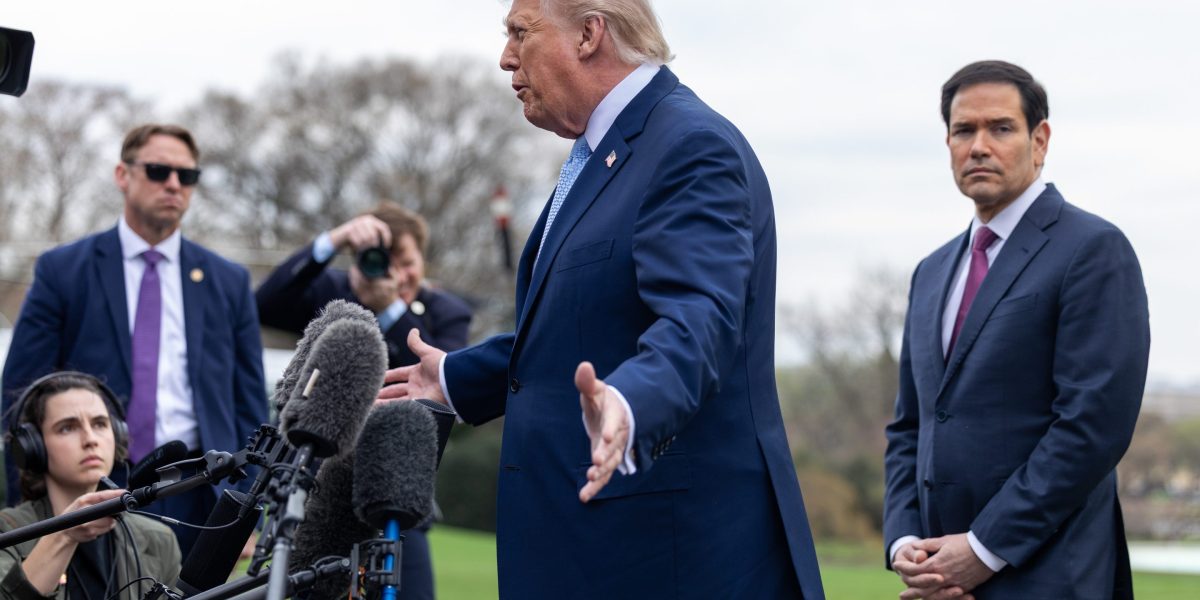
Trump has pushed for temporary caps on credit card interest rates and a ban on institutional investors buying homes this year. He claimed last week that the U.S. has “virtually no inflation,” though recent data shows price growth remains above the 2% annual rate deemed healthy by the Fed.
Beyond politics, economists worry that artificial intelligence will encourage businesses to further slash workforces in an already shaky labor market. Layoffs surged more than 50% in 2025 compared with a year prior, consulting firm Challenger, Gray & Christmas reported. Amazon, Home Depot and UPS announced job cuts this week.
Some have warned against planning on long-term economic growth through the K-shape. Barry Bannister, Stifel’s chief equity strategist, called it “economically unsustainable” in a note to clients this month. The viability of having better-off consumers accounting for an outsized share of spending makes for “a good question,” Fed Chair Jerome Powell said in December.
Federal Reserve chair Jerome Powell speaks at a press conference following the Federal Open Markets Committee meeting at the Federal Reserve on Dec. 10, 2025 in Washington, DC.
Chip Somodevilla | Getty Images
Ultimately, the K-shape illustrates how the U.S. economy is reliant on small pockets of strength in several key areas, Zandi said. Because of that, he said economic growth can feel fragile or fleeting.
Health care is the only sector consistently adding jobs in the labor market, Zandi noted. Megacap technology’s leadership has propelled the stock market higher over recent years, the economist pointed out. Consumer spending, he said, is driven mostly by the highest earners.
“It doesn’t feel like the economy’s perched on a strong foundation,” Zandi said. “It’s perched on a few poles that are sticking up. If one of those poles gets knocked out, then the whole economy gets knocked down.”