Trump’s addiction to playing Colossus and putting more plates in the air to distract attention from the ones that have or about to crash to the ground has produced yet another not-too-bright idea: that of declaring a housing emergency so as to improve housing affordability. As we’ll see, making any real headway would take time and require pulling quite a few policy levers. It would also require helping the poors, something that this Administration demonstrates it is opposed via numerous policy actions, from SNAP benefits to Medicaid work requirements to Medicare cuts to running the homeless out of Washington, DC.
We aren’t alone in our skepticism. The constituency that ought to be all on board, relators, is as well.
One reason for the lack of enthusiasm is that the scheme is unconvincingly thin. From Bloomberg:
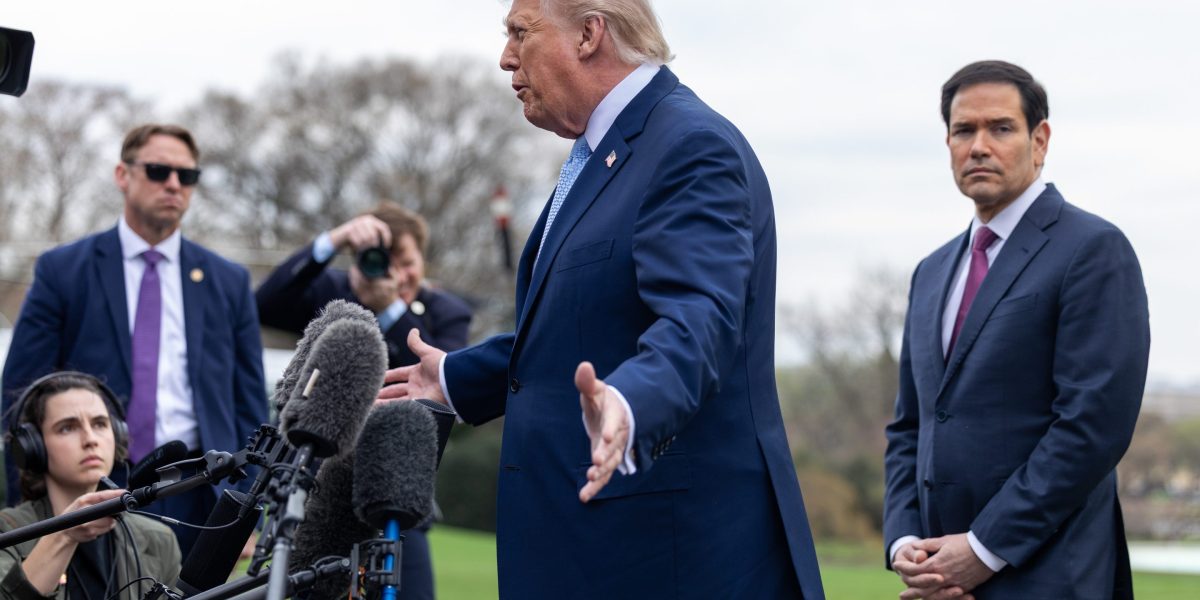
Treasury Secretary Scott Bessent said the Trump administration may declare a national housing emergency this fall as the White House looks to highlight key issues for midterm campaign voters.
“We’re trying to figure out what we can do, and we don’t want to step into the business of states, counties, and municipal governments,” Bessent told the Washington Examiner. “We may declare a national housing emergency in the fall.”
Bessent said housing affordability would be a critical leg of Republicans’ 2026 midterm election platform. Bessent declined to list any specific actions the president may take, but he suggested that administration officials are directly studying ways to standardize local building and zoning codes and decrease closing costs.
The conservative publication Reason poured on the acid:
The secretary’s comments all suggest this housing emergency declaration is very much a work in progress, if it is declared at all.
Indeed, the fact that the administration is studying potential actions it might take within a few months doesn’t quite sound like it considers the state of housing in the country to be a proper dictionary-definition emergency requiring immediate action to prevent the loss of life, limb, and property.
Rather, it would appear this would be another “emergency” that the president will declare to force through policy changes that in nonemergency times would require going through the federal rule-making process or even, gasp, Congress.
While the press has cited a number of proximate causes for the housing price squeeze, they skip over the ultimate one: neoliberalism, meaning the policy shift that really took hold in the Reagan era to favor asset price increases over real wage growth and use easier access to consumer debt to create the illusion of rising prosperity. While there are many ways to tell this story, this one from Statista should suffice, of Median inflation adjusted hourly earnings of wage and salary workers in the United States from 1979 to 2023. Look at the scale of the chart to see how small the rise has been over time:
Another factor has been the change in policy over the role of housing. Matt Stoller, in a Fordham Law Review article, described how housing was once shelter plus a forced savings vehicle. Most people stayed with one employer in one location for their working life. Buying a house with a 30 year mortgage meant that these employees would pay off their mortgage over their career and retire owning their house free and clear, and as a result, with much lower monthly fixed costs. Financialization now allows for equity extraction.
Housing (and medical) costs are pain points as Americans are ever more pessimistic about their futures. From a Lobor Day article in the Wall Street Journal, Americans Lose Faith That Hard Work Leads to Economic Gains, WSJ-NORC Poll Finds:
A new Wall Street Journal-NORC poll finds that the share of people who say they have a good chance of improving their standard of living fell to 25%, a record low in surveys dating to 1987. More than three-quarters said they lack confidence that life for the next generation will be better than their own, the poll found.
Nearly 70% of people said they believe the American dream—that if you work hard, you will get ahead—no longer holds true or never did, the highest level in nearly 15 years of surveys…
The discontent reaches across demographic lines. By large majorities, both women and men held a pessimistic view in the combined questions. So did both younger and older adults, those with and without a college degree and respondents with more than $100,000 in household income, as well as those with less….
And yet many people in the survey, as well as in interviews, said they felt a sense of economic fragility, even if their finances were adequate or secure today. In a generational cascade, majorities said the prior generation had an easier time buying a home, starting a business or being a full-time parent rather than in the workforce, while majorities also said they lacked confidence that the next generation could buy a home or save adequately for retirement.
While Jeff Lindly, 61, said he believes the economy is improving slowly, his adult children’s experience in the housing market draws a contrast with his own. Lindly was able to earn enough to support his wife and family when his children were young. They bought a house and, later, built two more. Now, two of his three adult children live with him in Godley, Texas, one in a trailer on the property and one with her husband and child in the home.
“They can’t afford a house yet, even though they’re trying to save by living with us,” said Lindly, a real-estate appraiser who said that he expects housing affordability to improve with time and that he supports President Trump’s policies. His income recently has been about 40% of what is typical amid a slow housing market.
Precarity is a feature, not a bug, of neoliberalism.
Most accounts describe the severity of the home price crunch and list proximate causes. For instance, from Newsweek:
The U.S. housing market is currently in the midst of an affordability crisis caused by a combination of sky-high home prices, historically elevated mortgage rates, and other rising costs including property taxes, homeowners association fees, and home insurance premiums.
Limited inventory during the pandemic homebuying frenzy, when mortgage rates as low as 2-3 percent sparked a nationwide surge in demand, led to home prices rocketing by more than 40 percent between 2019 and 2022, according to the Harvard Joint Center for Housing Studies.
Three years after mortgage rates shot up to 6-7 percent as a result of the Federal Reserve’s aggressive rate-hiking campaign to fight inflation, putting a dampener on demand, home prices nationwide remain much higher than before the pandemic. As of July, according to Redfin, the median sale price of a typical U.S. home was $443,141, up 1.1 percent from a year earlier.
Mortgage rates have also remained stubbornly high…
Not only Americans are struggling to buy homes—with sales down by 1.6 percent in July compared to a year earlier and sellers outnumbering buyers by more than 500,000, according to Redfin data—but those who already own a property carry a heavier financial burden to maintain it than they did before the pandemic.
Property taxes have risen in nearly every major U.S. metropolitan area over the past five years as a result of the rise home values, according to a Redfin report. Home insurance premiums have surpassed 40 percent over the past six years, according to LendingTree, as more frequent and more severe natural disasters increase the risk of paying higher claims for carriers.
Alert readers will notice that housing prices are sticky and should have fallen in light of higher mortgage rates and insurance costs, as well as the fact that things like HOA fees, property taxes, and those insurance costs are not something the Feds can readily address.
Some assert that there is a housing shortage. We debunked that in a July post.1
Paul Krugman argued that the problem may be that the US has hit the limits of sprawl and more dense housing, such as apartment buildings and townhouses, might be the answer. We’ve been advocating that for years as the most obvious remedy for affordability, since what the US needs is more lower-cost units. Not just homebuilders, but also developers of multi-family housing, have greatly preferred the high end buyer. But another obstacle is NIMBY-ism, that many communities reject permits for more dense housing. Can’t let the riff-raff in!
So what can Trump do? Even if he gets Powell out sooner rather than later and gets his much-desired rate cut, that will have little effect on mortgage rates. The central bank sets interest at the short end of the yield curve. Mortgage rates are set off five to seven year rates. Those reflect inflation expectations. It’s hard to see those falling much, given Trump’s gaping fiscal deficits, ex a crash.
Of course, the Fed could engage in QE again, since the point back in the day was to lower both Treasury yields and mortgage spreads over Treasuries. But QE has become a dirty word, so this seems extremely unlikely.
Time Magazine questioned what Trump might do:
Under the 1976 National Emergencies Act, the President can declare a national emergency at his discretion. The act does not provide an explicit definition of what constitutes an “emergency,” but it does require the President to issue a formal declaration, such as through an executive order, and cite the statutory powers he plans to use in that declaration.
Declaring a national emergency allows the President to bypass Congress to take a range of actions limited to the 137 emergency powers defined by law, as well as an additional 13 statutory powers if Congress declares a national emergency…
Congress can terminate a national emergency by passing legislation, although the President can veto the resolution unless it reaches a supermajority. Otherwise, a national emergency can technically go on forever, so long as it is reaffirmed every year.
But national emergencies, and actions undertaken during them, can also be challenged in court…
During his 2024 presidential campaign, Trump said he would address the housing crisis by making federal land available for housing development and by slashing regulations.
And from Realtor.com:
However, any federal attempt to tackle the housing crisis will have to face the harsh reality that most of the key policies that influence housing supply are set at the state and local level.
“It remains unclear exactly what kind of emergency measures the administration could take to address housing, or even if using emergency powers in this way is lawful,” says Realtor.com® Senior Economist Joel Berner. “The best ways the administration could make an impact are by encouraging the building and purchase of homes.”
Berner suggests that finding ways to streamline the permitting process for homebuilders—and put fewer restrictions on builders—could help boost housing supply, particularly in heavily-regulated, high-cost areas like the Northeast.
“This would have the best long-term impact, but the federal government could also juice the housing market in the short run by making it easier to buy a home,” he says. “This could include offering a tax credit to offset closing costs.”
A similar tax credit was offered to first-time homebuyers during the Obama administration in 2008, when the economy entered deep recession. However, that tax credit required an act of Congress, and it is unclear whether the executive branch could take a similar step on its own.
In other words, thin gruel.
Michael Shedlock, who was not impressed, still had a proposal:
Housing Hoot
“We’re trying to figure out what we can do, and we don’t want to step into the business of states, counties, and municipal governments,” said Bessent.
Since when did Trump decide not to step into the business of states, counties, and municipal governments, the Fed, the business of India, or the business of anything else including the Smithsonian?
I have a suggestion Mr. President: End the lumber tariffs, the steel tariffs, and all the rest of the tariffs that inflate the cost of a new home.
So this may be the trial balloon of the day, or perhaps we’ll see a variant of the Ukraine raw earths deal: a lot of noise and spinning wheels, generating pretty much nothing in the way of results.
––––––––1 From the post:
The big problem in the US is housing affordability. There is no housing shortage:
The total is just short of 148 million. About 35% is rental property, which has a typical vacancy rate of 7%, so one could argue for reducing the total stock by 3.6 million. FRED shows the active listings for owned residences at under 1.1 million; Zillow has the for-sale inventory as of end of June at 1.3 million. Generously (for the purpose of this analysis) using the Zillow figure and assuming all homes listed for sale are not occupied, we get 143.1 million, so say 143 million.
The Census put the number of households (admittedly as of 2023) at 127.8 million.
So there is no housing shortage on a macro level, as many claim.
Now real estate is always and ever local, so there are shortages in certainly chronically underhoused metro areas like New York City, and no doubt in certain other spots.
The not-sufficiently-discussed issues are the mismatch in housing stock composition versus needs (particularly the dearth of affordable housing) and the way policy schemes to increase housing affordability, just like the canard of health care “access”, have increased prices and enriched providers.