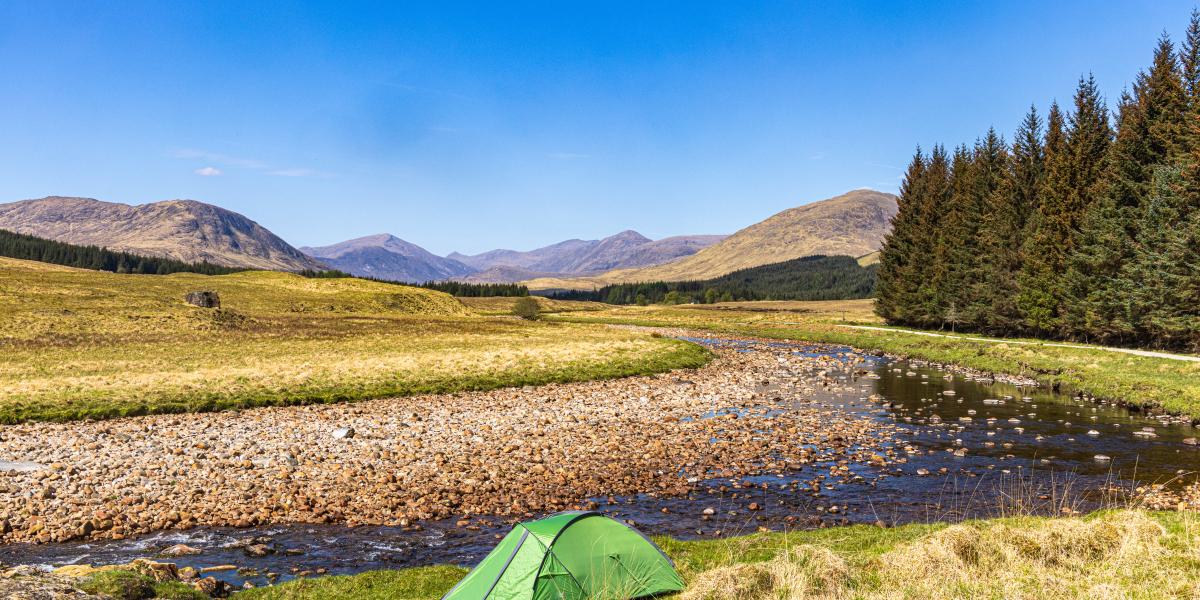
“Freedom to roam” is marketed as a wholesome civic ideal: fresh air, exercise, social inclusion, a nation’s natural beauty shared by all. But beneath the sentimental branding is a simple legal transformation: your neighbor’s boundary stops being a boundary when the state decides your recreation matters more than his consent. That is not liberty. It is the political re-labeling of trespass.
A libertarian analysis begins where modern policy rhetoric usually refuses to start: rights are enforceable claims over scarce resources—i.e., property titles. When someone says, “I have a right to do X,” the first question is: Where? On whose owned resource? Murray Rothbard put the point sharply: the alleged “right” (speech, assembly, etc.) is never floating in midair; it is always exercised somewhere, on someone’s property, and if you are there without permission you are trespassing—not exercising a human right.
The “right to roam” tries to bypass that question by treating the countryside as a kind of quasi-public stage where private title exists on paper, but the owner’s right to exclude is treated as an embarrassment to be shaved down by statute.
What “Right to Roam” Means in Practice
England’s version is already explicit about the basic move. Under the Countryside and Rights of Way framework, mapped “open access land” includes privately-owned mountains, moors, heaths, and downs, and the public may enter it for “open-air recreation.” The state then defines the terms: you may walk, run, watch wildlife, climb—while other uses (cycling, camping, fires, organized games, vehicles, etc.) are generally prohibited unless separately permitted.
Scotland goes further. Its access regime expressly includes wild camping and even some commercial activity “where the activities are the same as those done by the general public,” so long as the access is “responsible” under the Scottish Outdoor Access Code.
And, crucially, these systems do not remain politely confined to “walking.” The ratchet is built in. Dartmoor is the current exhibit: in 2025 the UK Supreme Court held that “open-air recreation” under the Dartmoor Commons Act includes wild camping, rejecting the claim that camping was outside the statutory access right.
Supporters often point to Nordic “everyone’s rights” as proof that this can be civilized. Sweden’s Environmental Protection Agency describes allemansrätten as applying “almost everywhere,” including privately-owned land, limited by crop areas and a private “protection zone” near residences, and framed as a “unique privilege” grounded in “shared responsibility.” Norway’s Outdoor Recreation Act likewise permits access and camping in uncultivated areas, but with legal conditions (distance from homes, time limits, etc.). Finland’s Ministry of the Environment describes “everyman’s right” as allowing roaming without permission and “no cost,” provided no damage or disturbance is caused.
Even in the best cultural conditions, notice what is doing the work: the owner’s consent is not the gate, the statute is. “Shared responsibility” is admirable—but it is not a property title. It is a behavioral plea stapled onto a coerced easement.
And the frictions are real even there. Finland’s own ministry notes recurring conflicts: illegal prohibitory signs and barriers, parking problems, crowding, unpermitted campfires, unauthorized use of private roads, and other disputes—i.e., precisely the predictable clash that arises when the law teaches one side it needn’t ask.
The Core Error: Turning “I Want” into “I’m Owed”
Right-to-roam rhetoric leans heavily on three themes:
“They didn’t create the land.”“Some titles are historically dubious.”“Nature is a shared heritage; health and equality require access.”
From a libertarian standpoint, each is either irrelevant or a category mistake.
1) “They didn’t create the land.”
No one “creates” land ex nihilo; that’s not the point of ownership. Ownership is a norm for allocating control of scarce resources so that conflicts can be avoided and cooperation can occur. Libertarian theory grounds initial title in original appropriation and transformation (homesteading) and then voluntary transfer. You own what you legitimately appropriate or acquire, and your ownership is meaningless unless it includes the right to exclude. After all, you didn’t create your house’s location, or the steel in your car, or every part in anything you own. Creation is not the criterion; peaceful appropriation and exchange are.
2) “Some titles are dubious.”
That may be, but if this is the real claim, then the remedy is not a roaming entitlement over millions of acres owned by people whose titles you have not shown to be illegitimate. The remedy is case-by-case restitution and title correction—the very thing a property-rights framework is designed to handle. A blanket “right to roam” is the antithesis of such a framework.
3) “Nature is shared; health requires access.”
Walking is healthy, and this fact is used as the state’s justification for invasion; for instance, Scotland’s access code openly sells access in public-health terms. But health benefits do not generate an enforceable claim over someone else’s resource. If health created property claims, there would be no limiting principle. The same logic would justify commandeering private gyms, private gardens, private coastlines, private forests—anything that makes life “better.” It is the end of the principle of property rights.
The Economic Reality: Externalizing Costs Is the Point
The pro-roam story pretends the land is just “there,” waiting to be enjoyed, and that exclusion is mere snobbery. But access is not costless:
erosion and habitat disturbance;livestock stress and biosecurity risks;litter, fires, and vandalism;privacy loss (often the whole point of rural ownership);liability/management burdens, signage, fencing, monitoring
England’s official guidance implicitly admits the cost structure by spelling out what the public can do, what it cannot do, how dogs must be controlled seasonally and around livestock, and what land is “excepted.” That is bureaucracy performing triage on a predictable problem: once you establish “access without asking,” you must endlessly legislate the boundary between “acceptable” and “too damaging.”
A market test is clarifying: if roamers won’t pay what owners would require to cover these burdens, then the recreation is being financed the only other way available—by coercion. The policy is sold as “sharing,” but it operates as cost dumping onto politically-disfavored owners.
Finland’s ministry report is revealing here too: even under a culturally-entrenched norm, conflicts cluster around barriers, private roads, crowding, fires, and unauthorized uses—i.e., the classic tragedy-of-the-commons pressure that appears wherever exclusion is politically stigmatized.
“Right to Roam” versus Libertarian Easements: Don’t Confuse Luxury with Necessity
Here’s the crucial distinction the “right to roam” movement tries to blur: A blanket roaming right is a general entitlement to cross and occupy others’ land for leisure. On the other hand, a libertarian easement (in the serious sense) is a narrow, necessity-based rule meant to prevent aggression-like confinement, contradiction, or strategic “forestalling.”
Pro-easement libertarians accept that it is wrong to trespass over legitimate property, but accept also that property rules cannot be specified so that they generate impossible duties, trap innocents, or enable a kind of private imprisonment through strategic exclusion. Walter Block stimulated much discussion on this by arguing that libertarian homesteading theory has the built-in goal of turning all unowned land into private property, and hence, an automatic easement is granted if needed to reach unowned territory. This assumption was too strong, and was criticized by Stephan Kinsella.
Nevertheless, it is easy to imagine situations where some right-of-way constraints seem required to keep property norms coherent and conflict-avoiding. Zark’s recent pro-easement argument relies on analysis of such hypotheticals: being blown by the wind onto someone’s land with no exit except across another’s, or alternatively, a hostile owner who lets you sit on his couch but then chooses to exclude you from the rest of his property, considering it trespass if you step off the couch to leave. Here, as in Frank van Dun’s discussions of “hostile encirclement,” we have a scenario that looks like confinement-by-property-rule.
Far from these attempts to minimize aggression, the “right to roam” is the opposite: it grants a standing privilege to enter for enjoyment, regardless of whether anyone is being trapped, defrauded, or aggressed against. Attempts to portray “roam” as merely a cousin of easement are rhetorical sleight of hand, taking the exceptional logic of necessity (if you accept it) and converting it into a lifestyle entitlement.
The Real Libertarian Alternative: Buy Access, Don’t Nationalize It
Once we reject the fake “right” to invade, roaming can be governed by voluntary exchange and voluntary institutional design:
trail associations that negotiate routes and pay maintenance fees;land trusts that purchase access corridors outright;owners who offer day passes, memberships, or guided access with clear rules;insurers and contract terms that price risk honestly;charities that subsidize access for the poor or disabled without conscripting owners
Rothbard emphasized that when people want to use a scarce resource they do not own, the solution is not to invent a positive right; it is to rent or purchase the right from the owner. Aside from being more ethical, this is also more productive. When access is a consensual exchange, owners have incentives to provide paths, signage, facilities, and stewardship—because the “roamers” are customers, not political intruders.