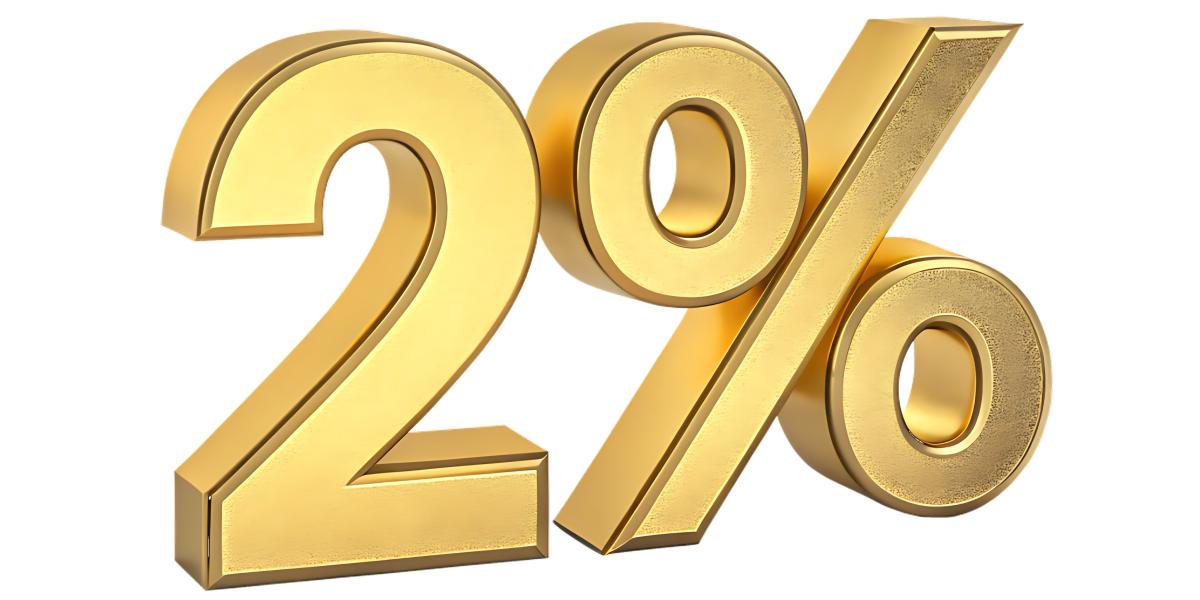
The Two percent inflation target—monetary policy’s sacred commandment for three decades—has become structurally impossible to achieve. Not because central bankers lack skill, but because every attempt to hit the target destroys the financial architecture that previous monetary expansion built. This is the endgame of central planning: a system that cannot tolerate its own success criteria without collapsing.
The Arbitrary Anchor
New Zealand invented the two percent target in 1989 by looking backward at what inflation had been when things felt stable—hardly rigorous science. Other central banks copied this guess, transforming it into dogma. But the economy of 2025 bears no resemblance to 1989. We’ve financialized every asset class, built supply chains optimized for fragility, and erected a debt tower requiring perpetual refinancing at suppressed rates just to avoid collapse. The two percent target was designed for a world we’ve already destroyed.
The Cantillon Trap: Winners and Losers by Design
Monetary expansion doesn’t spread evenly. New money concentrates where it enters—in financial assets, real estate, and the balance sheets of those with credit access. This creates two economies: one for asset-holders, enriched by expansion; another for wage-earners, crushed by the cost increases that follow.
To hit 2 percent consumer inflation, central banks must restrict money supply enough to destroy demand among ordinary households—the people furthest from the monetary spigot. But they’ve already inflated assets to the point where millions of families, pension funds, and governments depend on continued expansion to stay solvent. Tightening enough to hit 2 percent CPI means liquidating the phantom wealth propping up the entire system. We glimpsed this in 2022-2023: modest rate increases triggered bank failures and sovereign debt crises.
The trap is complete: monetary expansion enriches the few while punishing the many, but contraction would bankrupt both.
The Measurement Mirage
The CPI doesn’t measure what people experience. Housing costs appear through “owner’s equivalent rent”—a fiction understating reality by a significant amount. Healthcare, education, childcare—costs that have doubled or tripled—receive minimal weight. Meanwhile, falling electronics and import prices pull the average down.
A family whose rent has doubled, childcare tripled, and healthcare quadrupled is told inflation is “only” three percent. Central banks fight to hit a target disconnected from lived reality, using tools that damage those already most hurt by mismeasured inflation.
The Sovereign Debt Vise
The United States now carries $38.12 trillion in debt, with deficits locked in structural overdrive. For fiscal year 2025 (ending September 30, 2025), the federal budget deficit totaled approximately $1.8 trillion—marking one of the largest annual deficits in US history in nominal terms. In calendar year 2025 alone (through November), the debt has already climbed by over $1 trillion, representing one of the fastest accumulations outside of pandemic-era spikes.
The Fed cannot pursue “price stability” without triggering sovereign default. It cannot monetize the debt without abandoning its inflation target. Monetary and fiscal policy have fused into a single system where every path leads to ruin.
The Trump Tariff Dividend: Fiscal Lunacy as Stimulus
Trump’s proposed $2,000 “tariff dividend” crystallizes the absurdity. Tariffs might generate $300-400 billion annually. Distributing $2,000 to 150 million Americans costs $300 billion, consuming all revenue and leaving nothing for Trump’s simultaneous promise to “substantially pay down national debt.”
But fiscal arithmetic is merely the surface problem. This is stimulus injected into an economy already overheating from tariff-induced price increases. Tariffs function as a regressive consumption tax, raising prices across the board. What is the proposed solution? Send everyone cash, which immediately bids prices higher in a textbook demand-pull spiral. We learned this during the pandemic: stimulus checks fueled the inflation that hit 9 percent.
The circularity is perfect: American consumers pay the tariffs, raising prices. The government sends that revenue back, and consumers use it to pay higher tariff prices. It’s a perpetual motion machine of economic waste. Tariffs misallocate capital by making inefficient domestic production appear profitable, while dividends provide purchasing power divorced from productive activity. We’re restricting supply through tariffs while boosting demand through dividends—engineering an inflationary explosion while calling it economic nationalism.
The QT Surrender: Why the Fed Can’t Stop Printing
The Federal Reserve announced in October 2025 that quantitative tightening will end in December after reducing its balance sheet from $9 trillion to $6.6 trillion. This isn’t a policy choice—it’s mathematical surrender.
The Fed’s balance sheet remains bloated with low-yielding assets from QE rounds dating to 2008, earning two-three percent while the Fed pays 4.5 percent on reserves it created to buy them. The Fed operated at a loss for three consecutive years.
But the Fed cannot shrink its balance sheet to pre-crisis levels without triggering a liquidity crisis. The modern financial system operates under an “ample reserves framework”—a euphemism for permanent monetary expansion. Banks, pension funds, and Treasury markets have become structurally dependent on massive reserve creation. When the Fed attempted modest QT reductions, repo markets showed stress. They’re stopping, not because inflation is conquered, but because the financial system cannot handle genuine monetary normalization.
The QT cessation sets the stage for QE’s inevitable return. The Fed is now in what Austrian economists call the “crack-up boom” phase—the point where monetary authorities choose between deflation (and cascading debt defaults) or continued inflation (and currency destruction). The QT cessation signals their choice.
The Perfect Storm
The Fed needs tight policy to combat inflation—inflation partly driven by tariffs Trump defends as revenue generators. But tightening is impossible because government debt service already consumes $1 trillion annually and the financial system requires ongoing liquidity support. So the Fed will maintain its swollen balance sheet, ready to expand again at the first crisis signal, while Trump pumps fiscal stimulus through tariff dividends into the economy.
The 2 percent inflation target becomes farcical. How can the Fed hit an inflation target when fiscal policy is overtly inflationary, when monetary policy cannot genuinely tighten without breaking the system, and when political pressure tilts entirely toward more spending? The Fed’s QT announcement is an admission they’ve lost control, even if they won’t admit it.
Policy Checkmate—The Impossible Choice
High inflation destroys savings, distorts price signals, and creates social instability. But we must be honest: the 2 percent target cannot be achieved without either. The options seem to be: 1) a deflationary depression that liquidates the debt overhang—and likely the social order with it; 2) a financial repression that slowly confiscates wealth through negative real rates; or, 3) a restructuring of how we conceptualize monetary stability in a hyper-financialized economy.
The first option is politically impossible and humanly catastrophic. The second is what we’re already doing, just with more dishonesty. The third requires admitting central banking as currently practiced has failed.
The Austrian Vindication
Precision inflation targeting was always hubris—imposing mechanical control over an organic, complex system. The error wasn’t choosing two percent specifically; it was believing any centrally-planned monetary system could generate sustainable prosperity while coupled with fiscal incontinence.
We’ve created a monetary system that cannot tolerate the price discovery necessary for genuine economic coordination. Every attempt to hit an arbitrary inflation target generates distortions making the next cycle more severe. The Fed’s balance sheet cannot shrink because the economy was restructured around permanent monetary expansion. Interest rates cannot normalize because the debt burden makes higher rates catastrophic.
The 2 percent target isn’t failing because central bankers lack competence—it’s failing because it represents an impossible constraint on a system that has already inflated beyond the point of return.
The Endgame
The question isn’t whether we’ll abandon the two percent target. The Fed’s QT cessation and Trump’s tariff dividend have already abandoned it in practice, whatever they claim in theory. The real question is whether we’ll do so explicitly, through honest debate about what comes after central banking’s failure, or implicitly, through the slow-motion credibility crisis we’re witnessing—where inflation stays persistently above target, the Fed’s balance sheet can never shrink, and fiscal policy becomes increasingly untethered from reality.
This is the endgame of monetary central planning: not with hyperinflationary bang or deflationary whimper, but with the confused stumbling of policymakers who cannot admit their tools have welded them into a cage. The two percent target, tariff dividends, ample reserves frameworks, and technocratic jargon cannot obscure the simple truth: we have built an economic system requiring perpetual monetary expansion to avoid collapse, and we’ve run out of ways to pretend this is sustainable policy rather than slow-motion currency debasement with extra steps.