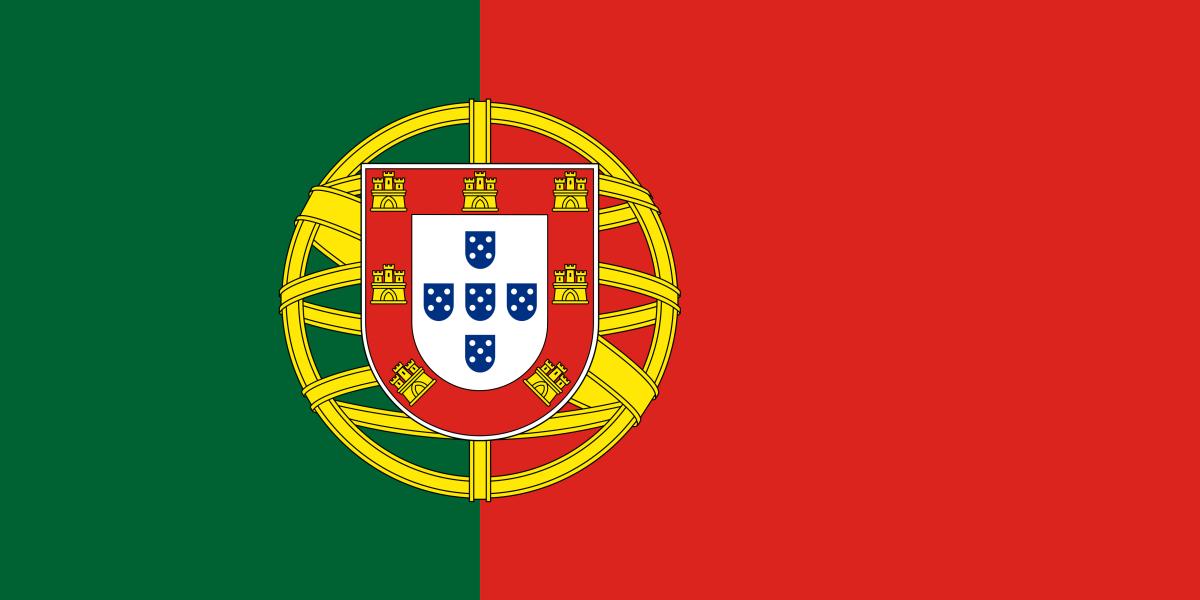
Months ago, I wrote an article “The Portuguese Estado Novo Was Socialist” outlining the socialist characteristics of the Portuguese Estado Novo (New State), that existed from 1933-1974. It was almost unprecedented, and today I return to elaborate on points I previously built.
Salazar, according to Jaime Nogueira Pinto, stressed,
…the primacy of the group over the individual, of social organicism based on the conviction of corruption and malicious inclination of human nature, and, consequently, on the need for the authority of the church and the state to protect everyone from everyone/everybody, and everyone from themselves… Marked by deep, anthropological pessimism. (pp. 230-231, Portugal Ascensão e Queda)
This is in line with the core tenets of Jansenism and Augustinian anthropology that man—owing to his depravity—is past salvation through his own volition and only through divine grace can anybody be saved. Because of the Fall from Eden, we are condemned to committing sin, irrespective of the free will we possess, imbued in each of us by God. Without discipline from above—vertical political power—humanity is doomed to social ruin and fierce competition leading to conflict.
From Salazar’s perspective, the nation had to be organized to prevent it from dissolving into differing factions. He had had a very negative experience of party politics in the First Republic. Only through corporatism or corpus—in Portuguese, the terminology is “corpo”—or different bodies of the nation, can Portugal not just redeem her sinful past but resuscitate her future potential. Ironically, by rejecting the class struggle, it accidently subscribed to the Marxian notion that a class struggle would supposedly break out between employers and employees, with only the state able to harmonize social divergences. Labor Day was celebrated in 1934 and 1935 to bolster social peace in the workplace.
To achieve this end, hundreds of unions and guilds proliferated over the decades in Portugal, often mandatory, grouped into federations representing various professions, industries, and trades, whose function was supervised by corporations, ultimately arbitrated by the government to promote harmony between labor and capital. There were 11 corporations, consisting of agriculture, fishing, livestock and animal products, forestry and wood products, mining and extractive industries, manufacturing, construction and public works, commerce, transport and communications, tourism and hospitality, and insurance and financial services. Through harmonization, the homogenization of the economy was complete, since all national production was regulated by the state. Price control prevailed and export quotas were enforced to “protect the nation,” mockingly harming the population through higher consumer prices, in a country with severely low wages.
In Italy, a corporatist organization was built along similar lines as well, which is not surprising given the influence of the Carta del Lavoro (the Charter of Labor) had on the National Labor Statute (1933), which guaranteed a minimum wage, limited working hours, and granted fully paid vacations—all ideas so cherished by today’s egalitarians. So, the big question is: was the Estado Novo fascist? The answer is: Yes, and socialist, therefore, leftist.
He was anti-capitalist, proclaimed in one speech, “The liberal economy that gave us super capitalism, unbridled competition, economic anarchy, commodity labor, unemployment for millions of men, is already dead” (História de Portugal, vol. XII, p. 273). He cherished poverty, proclaiming in a 1949 speech, “I owe to Providence the grace of being poor.” His lifelong governess, D. Maria de Jesus Caetano Freire, related in an interview near the end of her life the distaste Salazar had for wealth, saying: “The doctor said that money was a dirty thing, wherever it came from, that it was always stained with blood, misery and tears… But there was nothing he could do about it. He didn’t even like rich people.” (p. 22, Salazar Confidencial).
Other anti-capitalists that converted to Salazarism include Carlos Ratos, the Portuguese Communist party’s first secretary general; António José Saraiva and Jaime Batalha Reis, a famed socialist of the 70s generation who praised Salazar near the end of his life (p. 90, As Conferências do Casino e o Socialismo em Portugal). Other anti-capitalists included Ezequiel de Campos and Quirino Jesus; the latter wrote for the left-wing Seara Nova magazine and helped draft the 1933 constitution, which Caetano confessed was positivist (p. 31, Constituição de 1933). As is known, Auguste Comte’s law of nature (viewing societies as scientific and empirical, meant patterns and behaviours could be digested from observation similarly to physics) served as an outlet for Marx’s historical materialism that the universe is governed by economic forces that inevitably clash—borrowing from Hegel’s Aufheben that opposites eventually cancel one another, giving rise to a new synthesis. Both deterministic, they removed individual decision-making from the human equation.
Another left-leaning individual—the jurist Luís Cabral de Moncada—advocated a third way: “In a word: let us take from socialism something of its substance; from nationalism, its form; and from Christianity, its meaning—for the construction of the new ideology” (p. 277, Estudos Filosóficos e Históricos, Vol. 2, 1959). A Hegelian synthesis (Erebung) that replaces Christianity with a gnostic religion leeching off the Catholic ethos and shedding all the cultural norms and customary rights Portugal spontaneously spawned over the centuries; the abandonment of autonomy to serve the group, the collective.
And the slogan of the National Syndicalists—rivals of the regime—was: “The rich need to become less rich so that the poor become less poor.” Curiously, the leader of these Blueshirts—modeled after the Nazis—Rolão Preto, shifted to supporting the British Labourites during the 1940s, and culminated his political activity by endorsing a Soviet King after the Carnation Revolution. He was posthumously Knighted Order of Prince Henry the Navigator by Salazar’s “enemy,” President Mário Soares.
Although the regime officially persecuted communism, the social teaching of the Catholic Church—especially Rerum Novarum, which criticized the excesses of liberal capitalism—converged with Marx’s thought of labor as commodity, forcing the state to intervene and pledging to uphold worker rights. As Marcello Caetano wrote:
It has been proven that the State cannot remain a mere spectator of economic life, watching impassively the clash of interests, the immoral struggle for profit, and the triumph achieved through injustice and force. It has been proven that the worker, freed from associative bonds, became merely an easier prey for the greedy capitalist, for misery, and for hunger. It has been proven, finally, that businessmen without laws rushed toward their own annihilation, destroying the social values for which they are responsible before us all, in the disoriented wealth of free competition, the generator of crises. (p. 109, Princípios e Definições, 1969)
As Prime minister, in a 1971 June speech entitled, “Neither oppressive Communism nor Suicidal Liberalism,” Marcello Caetano admitted that the New State was indeed socialistic by declaring:
…Socialism has no other path other than Communism, because in a country like ours, where for many years, and above all thanks to the corporatist doctrine, social interests have been given in fact fulfilled, given prominence and State intervention in the economy has been widespread—what development is left for Socialists short of its appropriation of the means of production, i.e. the Socialization of land, factories and commerce?
This was exactly what Vasco Gonçalves and the Council of Revolution did following the March 11 coup and the birth of PREC or the (then) Ongoing Revolutionary Process, as many of the nationalized industries and sectors were already subsidized, with the old regime heavily intervening in every sector. The welfare state ballooned, becoming gigantic whereby Caetano received correspondence in relation to housing, employment, pensions and endowments, scholarships, court rulings, and complaints about employers.
What’s truly fascinating is the lack of academic attention dedicated to the left-leaning policies of the Estado Novo. While much has been written about Salazar, they have all been from a socialistic, hence biased, perspective, distancing his policies by delusively proclaiming fascism as a right-wing phenomenon. It embarrasses the establishment and the social welfare achievements of the regime they indoctrinate new generations to despise.
With scarce resources, I have uncovered more about the revolutionary nature of the Estado Novo in two years than the established academia in decades. All of Portugal stands on one of two sides: the left who admonish poverty and censorship; and the other who are nostalgic for the return of order and stability. Portugal is indeed in dire straits; however, nobody recognizes the inherent statism embedded within the deposed regime, nor is it a solution to the calamities of today.
With his usually brilliant takedowns, Ludwig von Mises strips down the fallacies behind corporativism, arguing in Human Action that a guild—monopolistic by default—would disrupt all factors of production concerning higher-ordered goods and lower-ordered goods, weakening all economic activities because everything is interdependent, writing: “If within any branch of business there is inefficiency, a squandering of scarce factors of production, or a reluctance to adopt the most appropriate methods of production, everybody’s material interests are hurt.” Freedom and objectivity must always triumph.