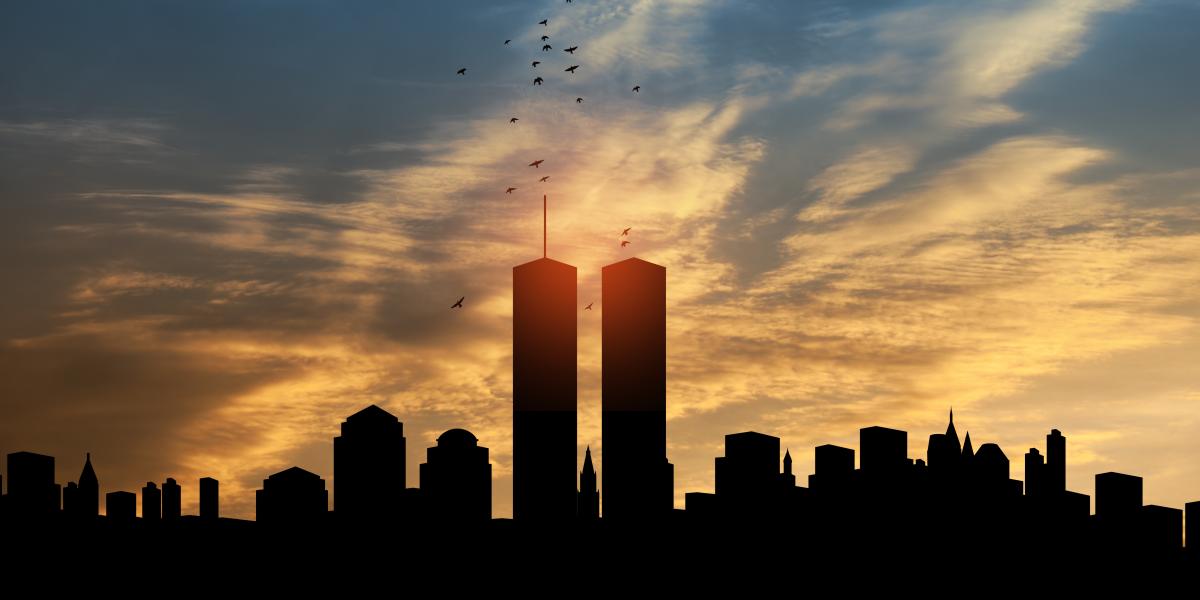
Like those of us who remember the assassination of President John F. Kennedy, the attacks on the World Trade Towers and the Pentagon, along with the downing of Flight 93, evoke clear memories of what people were doing when they heard about the event. The news was stunning, hard to comprehend, and made people fear for the future—and perhaps that fear was justified.
As has happened so many times before, when we see a massive failure of government, the response is to give government even more power, and 9/11 was no exception. This was a classic Crisis and Leviathan event, as economist Robert Higgs laid out in his often-cited book. A government failure created a crisis which led to Congress granting the executive branch even more authority but resulting in even more government failure.
While the Bush administration claimed that the attacks occurred because of structural problems with the government’s intelligence apparatus, FBI agents were warned about suspicious activity by flight students who were among the 9/11 hijackers. The agents, however, blew off the warnings. The flight schools also alerted the Federal Aviation Administration about suspicious Arab students, but nothing came of it.
In other words, the government didn’t need a Patriot Act or any other terrorism law to have stopped the hijackers, but that would have required the bureaucratic careerists better known as FBI agents to have done their jobs. Instead, the agents did what bureaucrats usually do: absolutely nothing.
Unfortunately, the US government did respond to the attacks, but in ways that made Americans worse off. From setting off wars in the Middle East to blowing up the economy at home, the US government took a crisis and turned it into an even bigger crisis, and we still are harvesting the bitter fruits.
The Response: The “Global War on Terror”
We know the aftermath. Less than two months after the attacks, US troops had invaded Afghanistan and, within a year, overheated rhetoric about Saddam Hussein of Iraq dominated the conversation at the White House. In early 2003, US forces invaded Iraq, ostensibly to protect Americans from the “weapons of mass destruction” that Iraq was reputed to be developing.
On the domestic front, the Bush administration pushed Congress to pass the infamous Patriot Act, which vastly increased the so-called terrorism statutes and ramped up domestic surveillance. In the name of safety, Americans found themselves losing liberties, but getting nothing in return.
We know the rest of the story. After the initial easy victories in both Afghanistan and Iraq, the fighting became fierce and never-ending. The “easy” conquest of Afghanistan turned into 20 years of bitter fighting, culminating in the disastrous US troop pullout in August, 2021. The US war with Iraq “officially” ended in 2011, although the US Armed Forces keeps fighters in that country ostensibly for “peacekeeping” purposes, but really for special operations.
More than 7,000 US troops died fighting in those two countries and many thousands more were wounded, many grievously. Nearly a million people have died (officially) in fighting in Iraq and Afghanistan, as well as other countries targeted by the West such as Syria and Yemen. On top of that, war creates refugees and the US-led “War on Terror” conflicts were no exception, with more than 30 million people displaced by the fighting.
The US actions neither ended terrorism nor made the world a safer place. Instead, they helped to create a mentality that the US soldier can—and should—go anywhere in the world to fight injustice and fight they did. Of course, injustice wasn’t going anywhere and in the end the US government exhausted people and scarce resources in an unsuccessful attempt to rid the world of terrorism and terrorists, creating one disaster after another.
There is no other way to honestly assess the so-called War on Terror. It wasn’t a thoughtful and reasonable way to respond to what happened on 9/11; it was throwing gasoline onto a fire in the belief that doing so would make the fire go away. It reflected a mentality that all that was needed to make the world “safe from terrorism” was to invade a few countries, impose “democracy,” and watch the terrorist regimes fall, a reversal of the old “Domino Theory.”
Creating the Housing Bubble as a False Economic Recovery
The 9/11 attacks occurred when the US economy was mired in a recession following the collapse of the Dot.Com Bubble that was created during the latter half of the Bill Clinton administration. Bush did not cause the bubble but had inherited it—and he inherited the criticism that always accompanies a president when the economy tanks.
As recessions go, the one in 2001 was mild, but the question that followed was how the Bush administration would handle it and not allow it to turn into a serious downturn. Unfortunately, Bush chose to follow the Keynesian stimulus route, using a vast increase in government spending to mitigate the aftereffects of the 9/11 attacks and the lingering recession.
Ever the Keynesian, Paul Krugman wrote three days afterward that the destruction of the Twin Towers and nearby buildings could have a positive economic effect because it would necessitate new spending:
So the direct economic impact of the attacks will probably not be that bad. And there will, potentially, be two favorable effects.
First, the driving force behind the economic slowdown has been a plunge in business investment. Now, all of a sudden, we need some new office buildings. As I’ve already indicated, the destruction isn’t big compared with the economy, but rebuilding will generate at least some increase in business spending.
Second, the attack opens the door to some sensible recession-fighting measures. For the last few weeks there has been a heated debate among liberals over whether to advocate the classic Keynesian response to economic slowdown, a temporary burst of public spending. There were plausible economic arguments in favor of such a move, but it was questionable whether Congress could agree on how to spend the money in time to be of any use — and there was also the certainty that conservatives would refuse to accept any such move unless it were tied to another round of irresponsible long-term tax cuts. Now it seems that we will indeed get a quick burst of public spending, however tragic the reasons.
However, the US economy was slowly recovering and, in 2003, Federal Reserve Chairman Alan Greenspan lowered the Fed’s benchmark interest rate to one percent. Even though the Bush administration pushed through cuts in income tax rates, the economy was sluggish.
In his book, America’s Great Depression, Murray Rothbard wrote that the way to deal with economic downturns was for government to lessen its role in the economy, something the Bush administration refused to do:
In sum, the proper governmental policy in a depression is strict laissez-faire, including stringent budget slashing, and coupled perhaps with positive encouragement for credit contraction. For decades such a program has been labelled “ignorant,” “reactionary,” or “Neanderthal” by conventional economists. On the contrary, it is the policy clearly dictated by economic science to those who wish to end the depression as quickly and as cleanly as possible.
Contrary to Paul Krugman’s “advice” following 9/11, the correct thing for the Bush administration to have done would have been measures to cut federal spending, reduce the tax burden, and refrain from vastly expanding its military capacity. While the administration did cut tax rates, it foolishly ramped up spending to a point where it created huge new burdens on the economy.
Keynesian dogma would hold that the “War on Terror” would have served as an economic stimulus, not to mention the spending for cleanup. However, that kind of spending is nothing more than the classic Bastiat “Broken Window” fallacy. The 9/11 attacks, by severely disrupting the financial and transportation sectors, imposed huge costs on the US economy—and in the real world, such costs are a drag on the economy, not a stimulus.
Unfortunately, instead of allowing a real economy to build, the Bush administration pushed what Peter Schiff labeled a “phony economy” based upon creating a bubble in the housing markets. The house of cards collapsed in 2008, and the US entered the Great Recession. (Unfortunately, the government’s response was to continue to fuel the bubble-based economy, putting off a reckoning that is in our future).
While the housing bubble was not directly caused by the government’s reaction to the 9/11 attacks, nonetheless it came about because of policies advocated by the Bush administration to help mitigate the negative economic effects of the attacks and the economic drag caused by the US reaction. To put it another way, to counter the negative economic effects of the collapse of the Dot.Com bubble and the 9/11 attacks, the Bush administration continued the housing policies of the Clinton administration to create yet another financial bubble.
Conclusion
The 9/11 attacks were one of the greatest government failures in our nation’s history, yet the “solution”—according to both supporters of President Bush as well as Democrats—was to give the government even more power and authority. For example, a few weeks after the towers fell, Al Hunt of the Wall Street Journal wrote a column, “Government to the Rescue,” as though this were a market failure.
Likewise, conservative figure Dennis Prager put out a video trying to rehabilitate the Bush administration despite its disastrous policies. For both Prager and Hunt, the problem wasn’t government but rather that government supposedly didn’t have enough power and authority.
It seems both men got their wish. Government grew in nearly every way possible. The government’s debt at the end of 2001 was $5.8 trillion, and 24 years later, it has ballooned to more than $36 trillion. Deficit spending is out of control, and the economy is slowly tanking.
The 9/11 attacks didn’t cause these problems; the expansion of government did. Unfortunately, Americans failed to learn the lesson of 9/11, and they will have to live with the consequences.