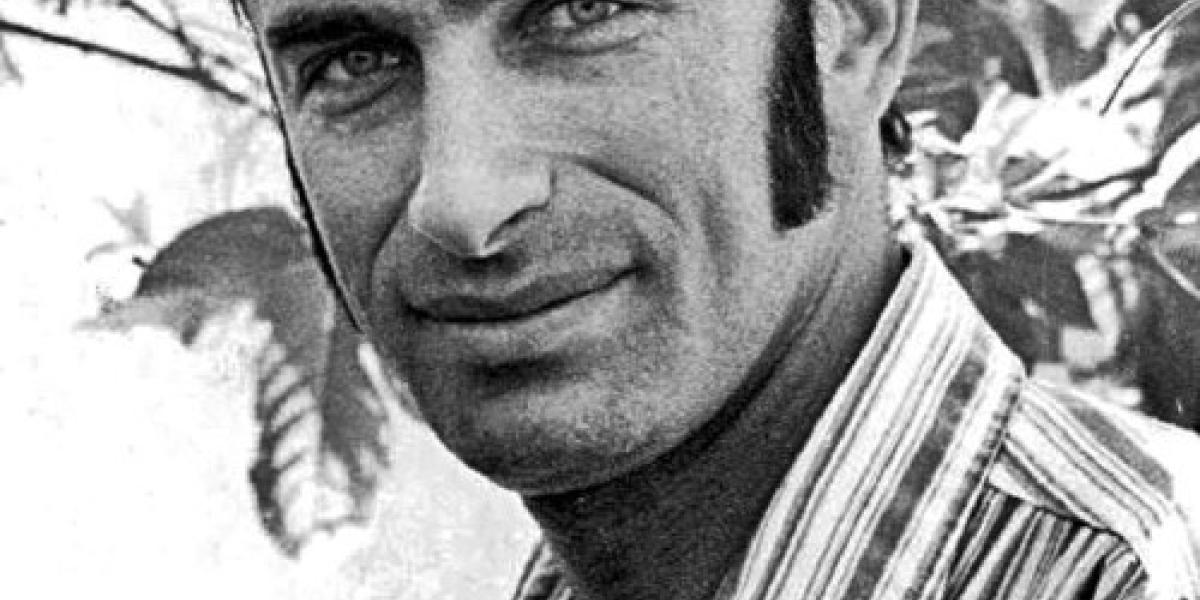
More than 30 years ago, I was listening to an NPR interview with Paul Ehrlich, the late Stanford University biologist who became the nation’s top environmental guru. His comments were opposite of the truth but well-received by his interviewer. Despite the fact that he often made unwise and outrageous claims that governing elites turned into brutal, coercive policies that made life worse for some of the poorest people on the globe, elites treated Ehrlich as a hero. Knowledgeable people knew better.
Paul Ehrlich—author of The Population Bomb and other doomsday books and articles—passed away last week at age 93 on Friday the 13th, which might be an appropriate date, given he was bad luck for the truth. In keeping with its commitment to avoid veracity whenever possible, the New York Times presented a hagiographic portrayal of the “eminent” biologist who regularly made environmental doomsday forecasts that didn’t pan out (the NYT claimed his false predictions were “premature”). But the fact that much of the honor he received throughout his career was undeserved didn’t stop the NYT from honoring him, anyway:
A member of the National Academy of Sciences, Dr. Ehrlich was a founder of Zero Population Growth (now known as Population Connection) in 1968, and Stanford’s Center for Conservation Biology in 1984. He was the author, co-author or editor of 50 books and hundreds of scientific articles. He won a MacArthur prize in 1990, and many other prestigious national and international environmental science and achievement awards, several of which were shared with his wife.
In the last years of his life, journalists would occasionally remind Dr. Ehrlich about some of his dire predictions that had not come to pass: that 65 million Americans would starve to death, for example, or that there were fair odds that “England will not exist in the year 2000.”
But he stood by his fundamental convictions. In 2018, he told The Guardian that an unsustainable focus on “perpetual growth” — leading to climate change and loss of biodiversity — meant that the collapse of civilization was “a near certainty in the next few decades.”
And in 2015, he told The New York Times that his analysis in the 1960s had actually been somewhat conservative, adding: “My language would be even more apocalyptic today.”
One doubts the NYT would have had any intellectual capacity to answer Ehrlich, given the paper is populated by those lost in the groupthink of environmentalism and socialism, although the paper was willing to mention that Ehrlich lost his famous bet with Julian Simon, co-author of The Resourceful Earth:
Convinced that the growing population would make natural resources ever more scarce and thus drive up costs, Dr. Ehrlich accepted Mr. Simon’s challenge, betting that the prices of five key metals would rise in the 1980s. Mr. Simon believed that innovation would drive prices down.
In 1990, Dr. Ehrlich and his colleagues conceded defeat and sent Mr. Simon a check for $576.07 — an amount that represented the decline in the metals’ prices after accounting for inflation.
While this is shown as a minor setback for Ehrlich, it actually exposed his economic ignorance. John Tierney wrote in the NYT:
Ehrlich decided to put his money where his mouth was by responding to an open challenge issued by Simon to all Malthusians. Simon offered to let anyone pick any natural resource — grain, oil, coal, timber, metals — and any future date. If the resource really were to become scarcer as the world’s population grew, then its price should rise. Simon wanted to bet that the price would instead decline by the appointed date. Ehrlich derisively announced that he would “accept Simon’s astonishing offer before other greedy people jump in.” He then formed a consortium with John Harte and John P. Holdren, colleagues at the University of California at Berkeley specializing in energy and resource questions.
As noted above, Ehrlich lost the bet and quietly sent the check to Simon but made no public comment. About a year later, I heard Ehrlich on NPR making preposterous claims that businesses make profits because resource prices go up over time due to increasing scarcity. The man learned nothing from his experience. In the same year, the MacArthur Foundation gave him a $345,000 Genius Grant—and it wasn’t for his expertise in studying butterflies.
Paul Ehrlich was not world-famous because he made correct predictions. Indeed, his predictions were never right, but they appealed to the political, academic, and social elites who saw the need for them to use government to coerce “inferiors” into having fewer children and to stop seeking a better life. A number of governments heeding the Ehrlich message undertook to impose sterilization on women, while China imposed its draconian—and ultimately disastrous—“One Child” policy on Chinese families. Writes Jack Butler in The Wall Street Journal:
Ehrlich helped make overpopulation fears trendy. In a 1969 speech at the University of Notre Dame, World Bank President Robert McNamara called for a “humane and rational reduction of the birth rate” out of concern for the effects of what he similarly called the “population explosion.”
Some of these ideas became brutal policy in the world’s most populous nations. China instituted a one-child policy from which it’s now trying to backpedal. India launched a campaign of compulsory sterilization.
Ehrlich’s ideas also were heartily embraced by the ecclesiastical leadership of the Church of England and the mainline Protestant denominations in the United States. It is telling that his claims also made their way into places they never should have gone: to the faculties of many Christian colleges and to evangelical publishing entities like Christianity Today and Inter-Varsity Press. One of the most popular books in evangelical history, Ronald Sider’s Rich Christians in an Age of Hunger, was constructed entirely on the radical environmentalism and fear of population growth that made up the bulk of Ehrlich’s writings. (While Rich Christians didn’t mention Ehrlich by name, it did take as gospel truth the radical claims made in books like the Club of Rome’s Limits to Growth and Robert Heilbroner’s An Inquiry into the Human Prospect).
Inter-Varsity Press published Rich Christians, which was its best-selling book ever when first published in 1977, also published New Life, New Lifestyle by Anglican clergyman Michael Green. He wrote that “having more children than is your right” was a modern violation of the Biblical commandment against adultery. Of course, Green never specified what number of children would constitute an offense against the Ten Commandments, but one can surmise that any more than two might disturb the Almighty Himself.
One should ask why Ehrlich’s ideas were so popular, especially when his dire predictions have failed to materialize. First, there is logic to his views, not unlike the widespread acceptance of the claims made by Thomas Malthus in 1798 that population grew geometrically while the food supply increased arithmetically, creating an obvious problem in the future. David Ricardo—believing Mathus’s logic—gave his own interpretation as to how economic growth that was being seen in England during the Industrial Revolution would ultimately flatten out in the inevitable “stationary state” in which food production would remain steady, along with births and deaths.
Ricardo’s “stationary state” was almost a tautology, given the premises of his argument. If there was an absolute limit on food production, as he assumed, then economic growth could go only so far. The Ricardian viewpoint was accepted by his fellow British economists (even if he and Malthus disagreed strongly on Say’s Law) just as elites around the world took Ehrlich at his word.
Ehrlich and his fellow neo-Malthusians reasoned that if resources that come from the ground are finite, including petroleum, and if food growth is limited by technology and available arable land, then it would seem obvious that there are going to be limits to growth, as the Club of Rome claimed. Furthermore, in the late 1960s, dire poverty was widespread and travelers to countries like India had what they believed was the empirical evidence before them that the world was headed toward a population crisis. As Ehrlich wrote in The Population Bomb:
I have understood the population explosion intellectually for a long time. I came to understand it emotionally one stinking hot night in Delhi a few years ago. My wife and daughter and I were returning to our hotel in an ancient taxi. The seats were hopping with fleas. The only functional gear was third. As we crawled through the city, we entered a crowded slum area. The temperature was well over 100, and the air was a haze of dust and smoke. The streets seemed alive with people. People eating, people washing, people sleeping. People visiting, arguing, and screaming. People thrusting their hands through the taxi window, begging. People defecating and urinating. People clinging to buses. People herding animals. People, people, people, people. As we moved slowly through the mob hand horn squawking, the dust, noise, heat, and cooling fires gave the scene a hellish aspect. Would we ever get to our hotel? All three of us were, frankly, frightened. It seemed that anything could happen – but, of course, nothing did. Old India hands will laugh at our reaction: We were just some overprivileged tourists, unaccustomed to the sights and sounds of India. Perhaps, but the problems of Delhi and Calcutta are our problems too. Americans have helped to create them; we help to prevent their solution. We must all learn to identify with the plight of our less fortunate fellows on Spaceship Earth if we are to help both them and ourselves to survive.
Shortly after experiencing that ride, he wrote his famous line, “The battle to feed humanity is over.” Of course, it wasn’t over and it still isn’t over no matter what Ehrlich and his fellow elites might believe. Julian Simon was right in his view that market economies have effectively conserved some resources and developed new ones, and humanity—contra Ehrlich and others—has become wealthier, not poorer.
Paul Ehrlich never understood economics, but that was not an intellectual failure on his part. Understanding basic economics would have forced him to say and write things that would not have enabled him to receive his “Genius Grant,” influence governments around the world, and get him numerous appearances on the “Johnny Carson Show,” where he could regale his audiences with his great knowledge. In other words, he would have been just another biologist on another college faculty laboring in relative obscurity.
But, had he told the truth, he would have died an honest man, not the fraud that he became.