No Result
View All Result
  • Login
Saturday, March 21, 2026
FeeOnlyNews.com
  • Home
  • Business
  • Financial Planning
  • Personal Finance
  • Investing
  • Money
  • Economy
  • Markets
  • Stocks
  • Trading
  • Home
  • Business
  • Financial Planning
  • Personal Finance
  • Investing
  • Money
  • Economy
  • Markets
  • Stocks
  • Trading
No Result
View All Result
FeeOnlyNews.com
No Result
View All Result
Home Economy

Internet of Beings: The Dream of Digitising Human Bodies for Healthcare (and the Nightmare)

by FeeOnlyNews.com
4 months ago
in Economy
Reading Time: 5 mins read
A A
0
Internet of Beings: The Dream of Digitising Human Bodies for Healthcare (and the Nightmare)
Share on FacebookShare on TwitterShare on LInkedIn


Yves here. I very much hope KLG, IM Doc, Ignacio and other medical or medical-science experts will weigh in on what I see as a deranged line of thinking….unless you are a tech squillionaire unduly invested in the idea of miracle cures or seeking to profit from hawking them. The “internet of beings” branding (like the bizarre revival of “coalition of the willing”) ought to be seen as an unintended “run the other way” warning. How many have been subjected to bricked devices and systems like locks due (among things to small vendors going kaput, so no service and upgrades? To hacking? To provider and government spying? Do you want that happening to your person, as opposed to (already bad enough) your car or your house?

The fallacy here also underlies the new monitoring fetish, aggressively promoted by RFK Jr., whose surgeon general happens to be an investor in a continuous blood glucose monitoring company. KLG pointed to research that explained why its sales pitch, that this level of data would allow for better control and therefore better health, was bogus. A study found that when patients were fed the exact same meal at the same time over successive days, their glucose levels varied quite a bit after the meal.

This piece touts crazy ideas like prescribing medications and adjusting doses daily based on intensive monitoring. The human body has many many systems to deal with day-to-day variations and insults, from excessive pollution or pollen exposure, to fighting off a cold, to fighting cancers, which we grow all the time but nearly always our bodies stop before they get much of anywhere. So does this system propose to interfere with them via its own hyper-fast interventions? When I was in Australia in the early 2000s, doctors there were much less inclined toward US quick trigger reactions, as in overtreatment. Their default was, “Let’s monitor this and see what happens in XYZ timeframe.”

And you can be sure these monitoring systems will rat out patients on their smoking, drinking and eating habits, as well as their sex lives.

By Francesco Grillo, Academic Fellow, Department of Social and Political Sciences, Bocconi University. Originally published at The Conversation

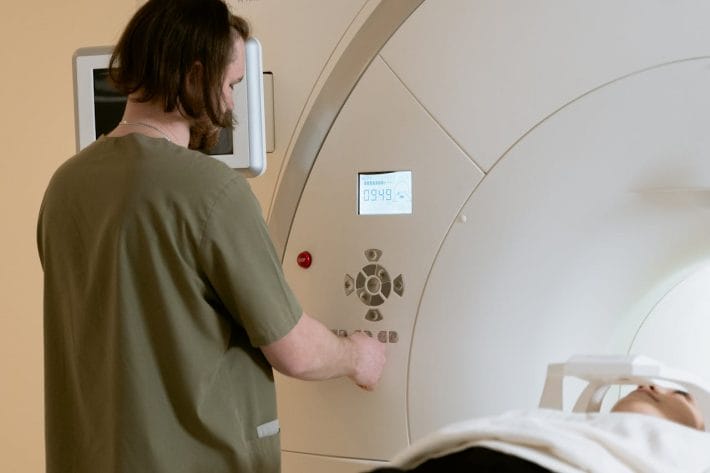
In the 1966 film Fantastic Voyage, a spacecraft and its crew are shrunk to microscopic size and injected into the body of an injured astronaut to remove a life-threatening blood clot from his brain. The Academy Award-winning movie – later developed into a novel by Isaac Asimov – seemed like pure fantasy at the time. However, it anticipated what could be the next revolution in medicine: the idea that ever-smaller and more sophisticated sensors are about to enter our bodies, connecting human beings to the internet.

This “internet of beings” could be the third and ultimate phase of the internet’s evolution. After linking computers in the first phase and everyday objects in the second, global information systems would now connect directly to our organs. According to natural scientists, who recently met in Dubai for a conference titled Prototypes for Humanity, this scenario is becoming technically feasible. The impact on individuals, industries and societies will be enormous.

The idea of digitising human bodies inspires both dreams and nightmares. Some Silicon Valley billionaires fantasise about living forever, while security experts worry that the risks of hacking bodies dwarf current cybersecurity concerns. As I discuss in my forthcoming book, Internet of Beings, this technology will have at least three radical consequences.

First, permanent monitoring of health conditions will make it far easier to detect diseases before they develop. Treatment costs much more than prevention, but sophisticated tracking could replace many drugs with less invasive measures – changes in diet or more personalised exercise routines.

Millions of deaths could be prevented simply by sending alerts in time. In the US alone, 170,000 of the 805,000 heart attacks each year are “silent” because people don’t recognise the symptoms.

Second, the sensors – better called biorobots, since they’ll probably be made of gel – are becoming capable of not just monitoring the body but actively healing it. They could release doses of aspirin when detecting a blood clot, or activate vaccines when viruses attack.

The mRNA vaccines developed for COVID may have opened this frontier. Advances in gene editing technologies may even lead to biorobots that can perform microsurgery with minuscule protein-made “scissors” that repair damaged DNA.

Third, and most important, medical research and drug discovery will be turned on its head. Today, scientists propose hypotheses about substances that might work against certain conditions, then test them through expensive, time-consuming trials. In the internet of beings era, the process reverses: huge databases generate patterns showing what works for a problem, and scientists work backwards to understand why. Solutions will be developed much more quickly, cheaply and precisely.

Radical Transformations

The era of one-size-fits-all medicine is already ending, but the internet of beings will go much further. Each person could receive daily advice on medication doses tailored to micro-changes such as body temperature or sleep quality.

The organisation of medical research itself will transform radically. Enormous amounts of data from bodies living natural lives might reveal that some headaches are caused by how we walk, or that brains and feet influence each other in unexpected ways.

Research currently focuses on specific diseases and organs. In future, this could shift to the use of increasingly sophisticated “digital twins” – virtual models of a person’s biology that update in real time using their health data. These simulations can be used to test treatments, predict how the body will respond and explore disease before it appears. Such a shift would fundamentally change what we mean by life science.

The dream here isn’t to defeat ageing, as some transhumanists claim. It’s more concrete: making healthcare accessible to all Americans, saving the UK’s NHS, defeating cancers, reaching poorer countries and helping everyone live longer without disease.

The nightmare, however, is about losing our humanity while digitising our bodies. The internet of beings is one of the most fascinating possibilities that technology is opening up – but we need to explore it carefully. We’re resuming the voyage that humankind was travelling in those optimistic years of the 1960s, when we landed on an alien planet for the first time. Only now, the alien territory we’re exploring is ourselves.

This article was commissioned in conjunction with the Professors’ Programme, part of Prototypes for Humanity, a global initiative that showcases and accelerates academic innovation to solve social and environmental challenges. The Conversation is the media partner of Prototypes for Humanity 2025.

This entry was posted in Dubious statistics, Guest Post, Health care, Ridiculously obvious scams, Surveillance state, Technology and innovation on December 2, 2025 by Yves Smith.

Post navigation

← Links 12/2/2025


Source link

Tags: BeingsbodiesdigitisingDreamHealthcarehumanInternetNightmare
ShareTweetShare
Previous Post

Govt to exercise green shoe option to divest 6% stake in Bank of Maharashtra after 400% over-subscription

Next Post

OECD sees sustained post-war growth in Israel

Related Posts

Who Owns the Bus? | Mises Institute

Who Owns the Bus? | Mises Institute

by FeeOnlyNews.com
March 21, 2026
0

In nearly every city, the same bitter argument repeats itself: riders complain about disorder on trains and buses—open drug use,...

The Global Energy Crisis & The Market Impact Into 2028

The Global Energy Crisis & The Market Impact Into 2028

by FeeOnlyNews.com
March 21, 2026
0

  The advantage of having offices around the world is that this also provides us with boots on the ground...

Trump Backs Down – Will Declare Victory

Trump Backs Down – Will Declare Victory

by FeeOnlyNews.com
March 20, 2026
0

QUESTION: Marty, the word is you have been screaming on Capitol Hill and some are listening to your computer. You...

New Age Of Chaos | Armstrong Economics

New Age Of Chaos | Armstrong Economics

by FeeOnlyNews.com
March 20, 2026
0

QUESTION: Mr. Armstrong; Will you do a comprehensive report on the Middle East. We are done with the academics and...

Market Talk – March 20, 2026

Market Talk – March 20, 2026

by FeeOnlyNews.com
March 20, 2026
0

ASIA: The major Asian stock markets had a mixed day today: • NIKKEI 225 closed • Shanghai decreased 49.50 points...

Elizabeth Warren demands answers on costs, economic impact of ‘illegal and reckless war’

Elizabeth Warren demands answers on costs, economic impact of ‘illegal and reckless war’

by FeeOnlyNews.com
March 20, 2026
0

Senator Elizabeth Warren, a Democrat from Massachusetts and ranking member of Senate Banking, Housing, and Urban Affairs Committee, speaks during...

Next Post
OECD sees sustained post-war growth in Israel

OECD sees sustained post-war growth in Israel

11 High-Conviction S&P 500 Stocks Best Positioned to Outperform Into Year-End

11 High-Conviction S&P 500 Stocks Best Positioned to Outperform Into Year-End

  • Trending
  • Comments
  • Latest
York IE Appoints Chuck Saia to its Strategic Advisory Board

York IE Appoints Chuck Saia to its Strategic Advisory Board

February 18, 2026
Judge orders SEC to release data behind B in WhatsApp fines

Judge orders SEC to release data behind $2B in WhatsApp fines

March 10, 2026
8 Cost-Cutting Moves Retirees Are Sharing Online in February

8 Cost-Cutting Moves Retirees Are Sharing Online in February

February 14, 2026
3 Grocery Chains That Give Seniors a “Gas Bonus” for Every  Spent

3 Grocery Chains That Give Seniors a “Gas Bonus” for Every $50 Spent

March 15, 2026
8 Procedures That Can Be Cheaper Without Insurance

8 Procedures That Can Be Cheaper Without Insurance

February 14, 2026
FPA partners with Snappy Kraken to update PlannerSearch

FPA partners with Snappy Kraken to update PlannerSearch

February 25, 2026
CLARITY Act May Still Delay Despite Stablecoin Yield Deal, Galaxy’s Alex Thorn Warns

CLARITY Act May Still Delay Despite Stablecoin Yield Deal, Galaxy’s Alex Thorn Warns

0
Research suggests adults who find it easier to bond with animals than with people aren’t antisocial — they’re drawn to a form of connection where the terms are visible, the loyalty isn’t conditional, and the relationship doesn’t require them to monitor a constantly shifting set of expectations that human attachment taught them to treat as a second job

Research suggests adults who find it easier to bond with animals than with people aren’t antisocial — they’re drawn to a form of connection where the terms are visible, the loyalty isn’t conditional, and the relationship doesn’t require them to monitor a constantly shifting set of expectations that human attachment taught them to treat as a second job

0
4 Undervalued Stocks Worth Buying to Navigate 2026 Market Volatility

4 Undervalued Stocks Worth Buying to Navigate 2026 Market Volatility

0
Scammers want your retirement—here’s how to protect yourself

Scammers want your retirement—here’s how to protect yourself

0
Iran launches missiles at U.K.-U.S. base 2,500 away in the Indian Ocean

Iran launches missiles at U.K.-U.S. base 2,500 away in the Indian Ocean

0
Buffett defends ‘Giving Pledge’ against Thiel and ‘billionaire backlash’

Buffett defends ‘Giving Pledge’ against Thiel and ‘billionaire backlash’

0
Research suggests adults who find it easier to bond with animals than with people aren’t antisocial — they’re drawn to a form of connection where the terms are visible, the loyalty isn’t conditional, and the relationship doesn’t require them to monitor a constantly shifting set of expectations that human attachment taught them to treat as a second job

Research suggests adults who find it easier to bond with animals than with people aren’t antisocial — they’re drawn to a form of connection where the terms are visible, the loyalty isn’t conditional, and the relationship doesn’t require them to monitor a constantly shifting set of expectations that human attachment taught them to treat as a second job

March 21, 2026
Iran launches missiles at U.K.-U.S. base 2,500 away in the Indian Ocean

Iran launches missiles at U.K.-U.S. base 2,500 away in the Indian Ocean

March 21, 2026
CLARITY Act May Still Delay Despite Stablecoin Yield Deal, Galaxy’s Alex Thorn Warns

CLARITY Act May Still Delay Despite Stablecoin Yield Deal, Galaxy’s Alex Thorn Warns

March 21, 2026
T-Mobile, Verizon, AT&T Go All-In On Discounts As Churn Surge Hits

T-Mobile, Verizon, AT&T Go All-In On Discounts As Churn Surge Hits

March 21, 2026
Verizon – VZ: eine Aktie für risikoscheue Anleger!

Verizon – VZ: eine Aktie für risikoscheue Anleger!

March 21, 2026
Buffett defends ‘Giving Pledge’ against Thiel and ‘billionaire backlash’

Buffett defends ‘Giving Pledge’ against Thiel and ‘billionaire backlash’

March 21, 2026
FeeOnlyNews.com

Get the latest news and follow the coverage of Business & Financial News, Stock Market Updates, Analysis, and more from the trusted sources.

CATEGORIES

  • Business
  • Cryptocurrency
  • Economy
  • Financial Planning
  • Investing
  • Market Analysis
  • Markets
  • Money
  • Personal Finance
  • Startups
  • Stock Market
  • Trading

LATEST UPDATES

  • Research suggests adults who find it easier to bond with animals than with people aren’t antisocial — they’re drawn to a form of connection where the terms are visible, the loyalty isn’t conditional, and the relationship doesn’t require them to monitor a constantly shifting set of expectations that human attachment taught them to treat as a second job
  • Iran launches missiles at U.K.-U.S. base 2,500 away in the Indian Ocean
  • CLARITY Act May Still Delay Despite Stablecoin Yield Deal, Galaxy’s Alex Thorn Warns
  • Our Great Privacy Policy
  • Terms of Use, Legal Notices & Disclaimers
  • About Us
  • Contact Us

Copyright © 2022-2024 All Rights Reserved
See articles for original source and related links to external sites.

Welcome Back!

Sign In with Facebook
Sign In with Google
Sign In with Linked In
OR

Login to your account below

Forgotten Password?

Retrieve your password

Please enter your username or email address to reset your password.

Log In
No Result
View All Result
  • Home
  • Business
  • Financial Planning
  • Personal Finance
  • Investing
  • Money
  • Economy
  • Markets
  • Stocks
  • Trading

Copyright © 2022-2024 All Rights Reserved
See articles for original source and related links to external sites.