No Result
View All Result
  • Login
Thursday, February 26, 2026
FeeOnlyNews.com
  • Home
  • Business
  • Financial Planning
  • Personal Finance
  • Investing
  • Money
  • Economy
  • Markets
  • Stocks
  • Trading
  • Home
  • Business
  • Financial Planning
  • Personal Finance
  • Investing
  • Money
  • Economy
  • Markets
  • Stocks
  • Trading
No Result
View All Result
FeeOnlyNews.com
No Result
View All Result
Home Economy

How the Fourteenth Amendment Empowers Judicial Activism

by FeeOnlyNews.com
5 months ago
in Economy
Reading Time: 4 mins read
A A
0
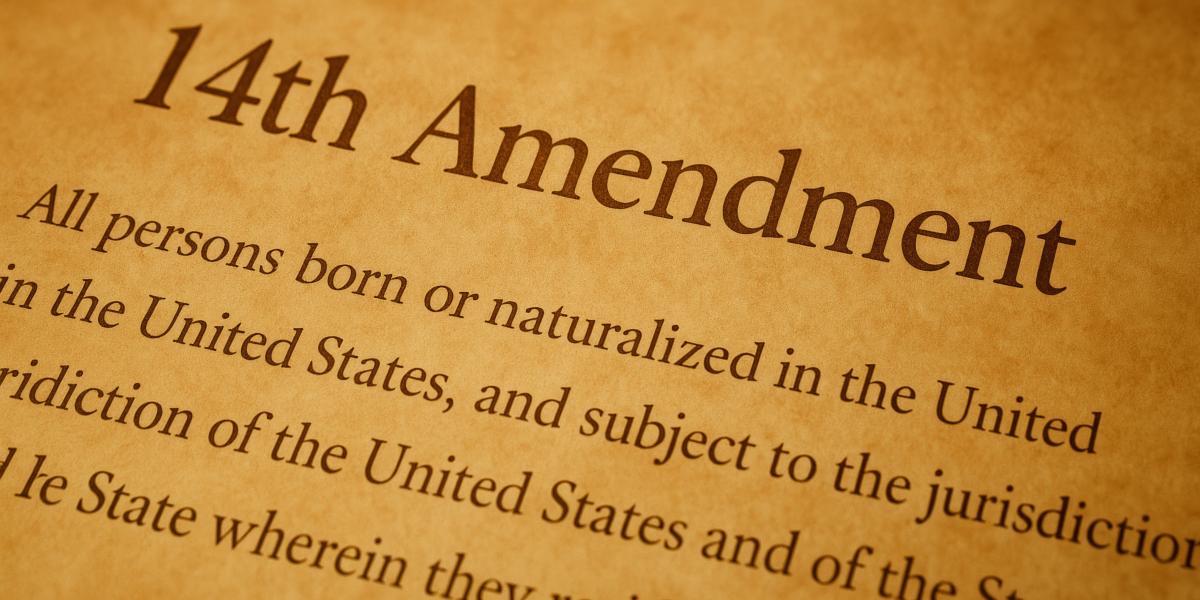
How the Fourteenth Amendment Empowers Judicial Activism
Share on FacebookShare on TwitterShare on LInkedIn


In “Government by Judiciary: The Transformation of the Fourteenth Amendment” Raoul Berger argues that the Fourteenth Amendment is treated by activist judges as a platform for “social and political revolution.” In theory, the role of the courts is to interpret the Constitution not to amend it. Nevertheless, by treating the Fourteenth Amendment as a “vague and elastic” tool designed to forge a brave world of racial equality, progressive judges have conferred revolutionary powers on themselves.

Progressive courts, while purporting merely to enforce the equal protection of the law, have reasoned that in order to give effect to equality it is necessary to “incorporate” the Bill of Rights into the Fourteenth Amendment. This then allows the Bill of Rights to be litigated in anti-discrimination cases brought by civil rights activists against state governments. For example, the incorporation doctrine was relied on in the recent federal court ruling that schools named after Confederate generals violate the First Amendment free speech rights of black students by constituting a form of “compelled speech”.

David Gordon has also pointed out that the incorporation doctrine is not found in the Constitution itself, but has been crafted by activist judges as a way of centralizing federal power in a manner that is inimical to individual liberty. As Gordon observes,

Critics of incorporation such as Raoul Berger have persuasively argued that the doctrine has scant basis; additionally, it strikes at the states as independent sources of authority to the federal government. Is it not likely that more is lost to individual liberty by the increased subordination of the states to federal courts than is gained by decisions that on occasion strike down bad state laws?

Berger notes that the Fourteenth Amendment began life as political measure in the tumult of the Reconstruction Era but soon grew in such leaps and bounds that it is now “probably the largest source of the [Supreme] Court’s business and furnishes the chief fulcrum for its control of controversial policies.” This is a far cry from the original intention of the amendment. It was originally “intended only to protect the freedmen from southern Black Codes that threatened to return them to slavery” by ensuring that freedmen would have “the right to contract, to own property, and to have access to the courts.”

It is certainly true that these basic liberties, which are protected at federal level by the Fifth Amendment due process clause, struck many observers in 1865 as essential to give effect to the abolition of slavery. As an originalist, Justice Clarence Thomas has emphasized this aspect of the amendment, but he argues that it has extended over time far beyond its original purpose. In Medina v. Planned Parenthood, he commented on the misuse of the procedural provisions of the Civil Rights Act of 1871 (the Ku Klux Klan Act) which were intended to enable freedmen to protect their constitutional rights from violation by states in order to ensure that the equal protection clause could be meaningfully enforced. Justice Thomas outlined the legislative history of this law in Medina, further observing that

The 1871 Act was designed “to enforce the Provisions of the Fourteenth Amendment … in response to an ongoing pattern of violence and intimidation” against former slaves … [to provide] a means by which private plaintiffs could obtain redress from state and local officials for certain constitutional violations.

This is a classic example of laws being enacted to resolve an emergency, which subsequently continue in force long after the emergency is over, being put to various new uses that were never originally contemplated. When the Ku Klux Klan Act was passed to deal with the violence of the Reconstruction Era, it created emergency powers that would not usually be accepted by citizens. For example, it gave the President power to suspend habeas corpus. These emergency powers were temporary, and it was never contemplated that this law would leave behind in its wake a permanent new source of ever expanding power to be wielded by the federal courts over state legislatures. Yet, as Berger shows, “for the better part of a century the Supreme Court had been handing down decisions interpreting the Fourteenth Amendment improperly, willfully ignoring or willfully distorting the history of its enactment.”

In his foreword to the second edition of the book, Forrest McDonald observes that although Berger’s interpretation was predictably contested when it was first published in 1977, those who favor the centralization of constitutional authority soon decided that it does not matter anyway even if the courts have willfully distorted constitutional history. As they see it, it has all been distorted for a good cause – in the service of creating a better world. Progressives see that as a salutary effort on the part of the activist courts. They regard all this power-mongering by federal judges as indeed exemplary, as they believe federal oversight of state authorities is to be welcomed – in their view, credentialled federal judges fresh out of the Marxist law schools are far more trustworthy than the unreconstructed state legislators that the voters of the South might elect. It is an example of a pattern of progressive strategy which is becoming all too familiar – they begin by denying that they have subverted the law, but, when their protestations fail, they soon begin arguing that the subverted law is actually good. It’s not happening, but if it’s happening that’s very good! McDonald explains:

From the outset, the law reviews teemed with attacks on Government by Judiciary, some of them cautious and considered, many slipshod and semihysterical … So thoroughly did Berger rout his critics that, after a decade or so, they virtually stopped trying. Instead, advocates of judicial activism began to assert that neither the words of the Constitution nor the intentions of the framers are any longer relevant.

As McDonald argues, Berger’s analysis, first published in 1977, has stood the test of time in showing that the Supreme Court uses the Fourteenth Amendment as a method of “continuing revision of the Constitution under the guise of interpretation.” In doing so, the courts stray far from their constitutional role and take upon themselves the mantle of social and political revolutionaries.




Source link

Tags: activismAmendmentempowersFourteenthjudicial
ShareTweetShare
Previous Post

Why Investing in Real Estate Notes Might Make the Most Sense Right Now

Next Post

UBS sues team that broke away with help from Elevation Point

Related Posts

Are The White Liberals Just Brainwashed?

Are The White Liberals Just Brainwashed?

by FeeOnlyNews.com
February 26, 2026
0

  What this video shows is how brainwashed the LIBERAL voters truly are. To believe that ANYONE does not have...

Trump insists trade deals will hold after Supreme Court ruling, but partners aren’t so sure

Trump insists trade deals will hold after Supreme Court ruling, but partners aren’t so sure

by FeeOnlyNews.com
February 26, 2026
0

President Donald Trump walks past Supreme Court Chief Justice John Roberts, Associate Justice Elena Kagan, Associate Justice Brent Kavanaugh and...

American Voters Favor Trump Over The Democratic Party

American Voters Favor Trump Over The Democratic Party

by FeeOnlyNews.com
February 26, 2026
0

Americans “still trust Trump more than the Democrats — and in every category,” according to an ABC poll. The joke...

Market Talk – February 25, 2026

Market Talk – February 25, 2026

by FeeOnlyNews.com
February 25, 2026
0

ASIA: The major Asian stock markets had a green day today: • NIKKEI 225 increased 1,262.03 points or 2.20% to...

Top earners are more afraid for their employment than lower income as AI threat increases

Top earners are more afraid for their employment than lower income as AI threat increases

by FeeOnlyNews.com
February 25, 2026
0

Liubomyr Vorona | Istock | Getty ImagesThe prospect of being replaced by artificial intelligence is helping to scare higher-income workers...

We Act in a World of Uncertainty, Not Probabilities

We Act in a World of Uncertainty, Not Probabilities

by FeeOnlyNews.com
February 25, 2026
0

The Sierra Nevada of California are rugged and beautiful mountains, and they are located only about an hour east of...

Next Post
UBS sues team that broke away with help from Elevation Point

UBS sues team that broke away with help from Elevation Point

Ares Management to Buy Minority Stake in EP Wealth

Ares Management to Buy Minority Stake in EP Wealth

  • Trending
  • Comments
  • Latest
York IE Appoints Chuck Saia to its Strategic Advisory Board

York IE Appoints Chuck Saia to its Strategic Advisory Board

February 18, 2026
Super Bowl ads go for silliness, tears and nostalgia as Americans reel from ‘collective trauma’ of recent upheaval — ‘Everybody is stressed out’

Super Bowl ads go for silliness, tears and nostalgia as Americans reel from ‘collective trauma’ of recent upheaval — ‘Everybody is stressed out’

February 8, 2026
York IE Adds OpenView Veteran Tom Holahan as General Partner for New Early Growth Fund

York IE Adds OpenView Veteran Tom Holahan as General Partner for New Early Growth Fund

February 11, 2026
The Weekly Notable Startup Funding Report: 2/9/26 – AlleyWatch

The Weekly Notable Startup Funding Report: 2/9/26 – AlleyWatch

February 9, 2026
Self-driving startup Waabi raises up to  billion, partners with Uber to deploy 25,000 robotaxis

Self-driving startup Waabi raises up to $1 billion, partners with Uber to deploy 25,000 robotaxis

January 28, 2026
FPA partners with Snappy Kraken to update PlannerSearch

FPA partners with Snappy Kraken to update PlannerSearch

February 25, 2026
More Employers Are Now Giving ‘Peanut Butter’ Raises — What It Means for Your Paychecks in 2026

More Employers Are Now Giving ‘Peanut Butter’ Raises — What It Means for Your Paychecks in 2026

0
Nvidia – NVDA: Joe Moore von Morgan Stanley bleibt bullisch!

Nvidia – NVDA: Joe Moore von Morgan Stanley bleibt bullisch!

0
Chart of the Week: Spending Like It’s 1998

Chart of the Week: Spending Like It’s 1998

0
Vishal Mega Mart promoter entity likely to sell 6.5% stake via block deal: Report

Vishal Mega Mart promoter entity likely to sell 6.5% stake via block deal: Report

0
Are The White Liberals Just Brainwashed?

Are The White Liberals Just Brainwashed?

0
Great (small business) wealth transfer: McKinsey sees  trillion of baby boomer companies for sale

Great (small business) wealth transfer: McKinsey sees $5 trillion of baby boomer companies for sale

0
Chart of the Week: Spending Like It’s 1998

Chart of the Week: Spending Like It’s 1998

February 26, 2026
Vishal Mega Mart promoter entity likely to sell 6.5% stake via block deal: Report

Vishal Mega Mart promoter entity likely to sell 6.5% stake via block deal: Report

February 26, 2026
Great (small business) wealth transfer: McKinsey sees  trillion of baby boomer companies for sale

Great (small business) wealth transfer: McKinsey sees $5 trillion of baby boomer companies for sale

February 26, 2026
I watched my wife stop explaining herself to everyone after she turned 50, and what happened next changed how I see every woman in my life

I watched my wife stop explaining herself to everyone after she turned 50, and what happened next changed how I see every woman in my life

February 26, 2026
Bitcoin’s rally towards ,000 revives Jane Street debate

Bitcoin’s rally towards $70,000 revives Jane Street debate

February 26, 2026
Rockport Wealth Buys  Million of AIRR

Rockport Wealth Buys $9 Million of AIRR

February 26, 2026
FeeOnlyNews.com

Get the latest news and follow the coverage of Business & Financial News, Stock Market Updates, Analysis, and more from the trusted sources.

CATEGORIES

  • Business
  • Cryptocurrency
  • Economy
  • Financial Planning
  • Investing
  • Market Analysis
  • Markets
  • Money
  • Personal Finance
  • Startups
  • Stock Market
  • Trading

LATEST UPDATES

  • Chart of the Week: Spending Like It’s 1998
  • Vishal Mega Mart promoter entity likely to sell 6.5% stake via block deal: Report
  • Great (small business) wealth transfer: McKinsey sees $5 trillion of baby boomer companies for sale
  • Our Great Privacy Policy
  • Terms of Use, Legal Notices & Disclaimers
  • About Us
  • Contact Us

Copyright © 2022-2024 All Rights Reserved
See articles for original source and related links to external sites.

Welcome Back!

Sign In with Facebook
Sign In with Google
Sign In with Linked In
OR

Login to your account below

Forgotten Password?

Retrieve your password

Please enter your username or email address to reset your password.

Log In
No Result
View All Result
  • Home
  • Business
  • Financial Planning
  • Personal Finance
  • Investing
  • Money
  • Economy
  • Markets
  • Stocks
  • Trading

Copyright © 2022-2024 All Rights Reserved
See articles for original source and related links to external sites.