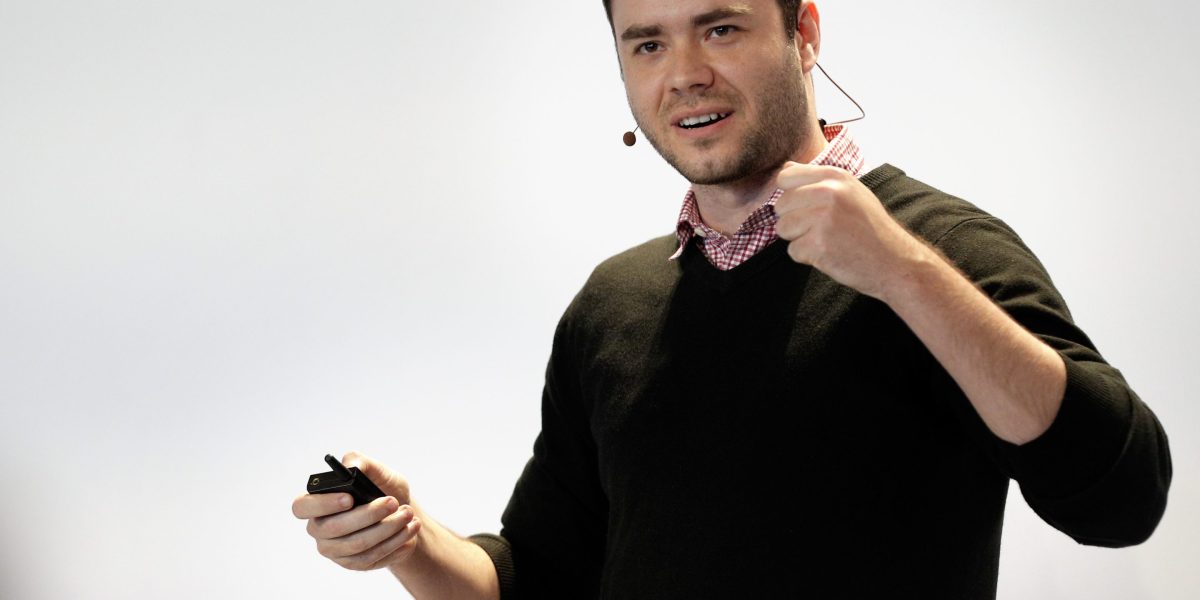
“What a privilege to have three of the leading minds driving transformation, driving change in the global south,” said Folly Bah Tibault, Al Jazeera presenter and moderator of the panel “Humanity’s Next Chapter: Innovation and Impact from the Global South”, during the Decemeber 2025 Doha Forum in Qatar.
The three people on stage were none other than Bill Gates, Sheikha Al Mayassa bint Hamad, sister of the current ruler of Qatar and daughter of the previous one, and Aliko Dangote, one of Africa’s richest men. That, for me, encapsulates what the Doha Forum represents: another intellectual node of the economic grid upon which the Machine functions.
The Forum is a yearly gathering organized by the Qatari Foreign Ministry that brings together an impressive array of guests and organizations. Some of this year’s attendees included Bill Gates, Hillary Clinton, Donald Trump Jr., Kaja Kallas, Ahmed Al-Shara, Hakan Fidan, Thomas Barrack and an array of ministers and foreign ministers, amongst many other academics and think tank representatives.
Though greatly dominated by pro-Western institutions such as the Atlantic Council, Foreign Policy, Chatham House, the World Economic Forum and the Gates Foundation, others, such as Roscongress (Russia), Center for China and Globalization (China), the Antalya Diplomacy Forum (Türkiye) and a host of Middle Eastern ones are also present as partners. This apparent diversity contrasts strongly with the homogenous underlying discourse funded upon the common acceptance of economic growth as the most desirable objective and its lack thereof as the cause of most problems.
During one of Bill Gates’ interventions in the aforementioned panel, he elaborated on how African farmers could turn the continent from a net importer of food to a net exporter using AI: “I believe that if we innovate by empowering those farmers, giving them an AI that’s giving them advice, giving them understanding about their soils and how to improve those soils, giving them new seeds, giving them new livestock, then the opportunity for that sector is to more than overcome those headwinds and turn this into the primary area of economic growth.”
The agenda included topics that touched upon many of the current ongoing conflicts and challenges: from Ukraine to Gaza, from AI to health, from development to sustainability.
These are some of the panel titles, which I mention in order to show the breadth of its scope:
Gulf-EU Relations in the Age of Strategic Isolation
Iran and the Changing Regional Security Environment
BRICS, GCC, and Evolving Relations for a Changing Global Order
Paths to Prosperity in Latin America: The Role of Cross-Regional Diplomacy
New Transatlantic Ties and the Evolving Global Order
Competing for the Future: AI’s Role in Economic Transformation and Global Power
Building Bridges: Migration Management, Economic Integration and Regional Resilience
The New Wealth of Nations: How Instrumental Capital is Reshaping Geopolitics and Global Finance
I was disappointed to find out, though not surprised, that there was not a single panel or speaker, either famous or not, progressive or reactionary, that was really saying something different, perhaps not even new—for that is truly a complicated thing—but at least different from the current socioeconomic discourse. There was not a single trait of deviant thinking. Not necessarily because it would be correct, but because even if it was wrong it would offer a different perspective. It was more of the same discourse that has brought us here, on steroids
But of course, this begs the question, what do I consider something different and different to what, exactly?
I believe that the underlying commonality, even when the narrative might have been apparently contrarian—such as the case between Donald Trump Jr. and Hillary Clinton—is an unquestionable faith in the constant march forward of the Machine, what Paul Kingsnorth describes as “an intersection of money power, state power and increasingly coercive and manipulative technologies” in his book Against the Machine.
This unwavering march ahead is like a flight forward, trying to solve or escape the current problems with the belief that we will find a solution for them in the future. And although humans are extremely creative in finding answers, it seems to me incoherent to think that some of the most pressing problems that we face will be solved by uncritically applying the same methodology that created the problems in the first place. That actually resembles more a definition of madness: to continue doing the same thing whilst expecting different results.
Let’s take, as an example, the environmental crisis, which is multifaceted. Our applied methodologies to control and extract resources from nature in order to sustain a particular way of life, a relatively new one, have led to a level of pollution and corruption of the earth and its produce that is threatening our very existence, at least healthy existence. This goes from the way we have polluted the oceans with microplastics that the fish eat and we then consume, and which might be affecting our reproductive capacity, to the unpredictability of the weather caused by our tampering with the natural cycles which might cause mass migrations.
Another example is a general loss of purpose and meaning which creates a fertile ground for many psychological conditions. The need to contribute productively to working of the Machine, in whichever capacity, in order to sustain life, has taken a toll on the traditional human relations that created a sense of community and belonging. In turn we are left with an absolute subjectivity that only allows us to blame ourselves if something does not go according to our projections—which most probably will be the case—and prescribes consumption in order to calm our anxiety. And if it does not work, then Prozac.
Beyond the politicization of the environmental crisis or the particular reasons for our psychological conditions, I think that there is little doubt that our actions have brought us where we are, some more than others, but it would be wrong to blame one in isolation. It is the way of life that emerged in the West from the Enlightenment and the industrial revolutions but which has basically extended everywhere now.
I am not rejecting that it has also brought us certain knowledge and tools that have made our lives safer and healthier, at least in some parts of the world, but there was particular inertia that was put into motion then of which we are seeing the results now. This was predicted by many great thinkers and poets of the past, Kingsnorth borrowed the metaphor of ‘The Machine’ from them.
A different way of thinking, to me, would be one that questions some of the sacred tenets of this inertia, this way of life, chief amongst them, progress measured by economic indicators. I single out this one here because it is the rationality beyond the constant advancement of the Machine, not necessarily its foundation, but the reason it continues moving forward, always ahead. In the words of Kingsnorth:
“This ‘growth’ is the overriding purpose of the ‘global economy’ which the Machine has built: everything else is of secondary importance. The growth has no specific aim and no end in sight, and can always be justified by pointing to problems -poverty, environmental degradation- which were in many cases caused by the growth, but which can only be solved by more of it. It is facilitated by the production and consumption of ‘goods and services’, the desire (or need) for which has been manufactured by vast marketing and advertising concerns whose best minds are trained in the essence of psychological manipulation”.
This ‘growth’ is measured by macroeconomic markers, such as GDP, inflation rates, industrial productivity or the labour market. This is the development, the solution to most problems or its cause if it is lacking, that is mostly discussed in events such as Doha Forum. But this type of growth is never questioned critically.
The reason why, I believe, it is not questioned is because these types of events accept the current form of our financial system almost like a natural biological development. The emergence of banking and fiat currencies has created the organs and the blood that keep this Machine alive and moving. That is what Kingsnorth misses and what I would consider thinking differently: the true nature of the Machine is not ideological, political or spiritual, although it encompasses all of them, the true nature of the Machine is financial. If there were no more growth, then the Machine would just stop working.
Do we want that?