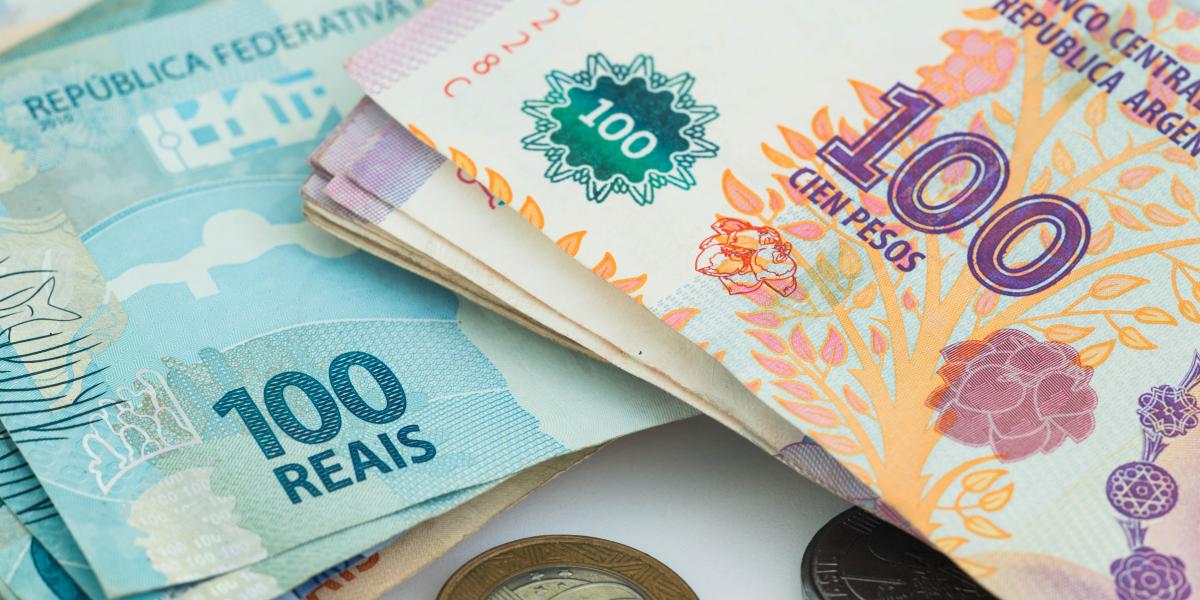
In a recent comment, Professor Hülsmann responds to my article in which I explain Ludwig von Mises’s classification of money into commodity money, credit money, and fiat money, and apply this framework to the historical case of Argentina in December 2023, when Javier Milei took office.
It is important to distinguish carefully between theory and history. Theory is universal and a priori; it provides the conceptual structure for interpreting contingent historical events. Historians apply theory to particular cases in order to make sense of the past.
Professor Hülsmann takes issue with my historical interpretation and counterfactual analysis, particularly concerning the question of what would have happened to the demand for pesos if Javier Milei had closed the central bank on his first day in office. I argue that Argentinians were already in the process of abandoning the peso in favor of the dollar, and that the closure of the central bank would have accelerated this process. The peso would have ceased to function as money, its purchasing power approaching zero—a view Professor Hoppe has at least implicitly supported (“The peso would disappear. That’s good… Then people use dollars instead of pesos.” — Hoppe 2024, PFP279, Min 36). Professor Hülsmann, however, does not share this interpretation of a hyperinflationary collapse in peso prices. In the context of his counterfactual assessment, he raises several interesting theoretical issues. I shall address four points and end with a factual clarification.
1. Central Bank Closure and the Money Stock
Professor Hülsmann argues that if the Argentinian central bank were closed on Milei’s first day in office, outstanding loans from the central bank to commercial banks “would not be extended and the money stock would be in free fall.”
It is true that if the central bank disappeared, so would its loans to commercial banks. The latter would write down the corresponding assets and liabilities on their balance sheets. Reserve requirements would also vanish. Thus, the disappearance of the central bank itself would not create deflationary pressure via reserve regulations.
However, a credit contraction could occur if commercial banks, fearing a run, voluntarily raised their reserve ratios, or if losses on central bank liabilities directly triggered a run. In that case, banks would reduce lending, as Professor Hülsmann points out. Yet, as Professor Hülsmann discusses the collapse of the banking system and its deflationary effects in his third comment, it remains unclear how his second and third points differ in substance.
Moreover, in Argentina one of the main indicators that may induce banks to restrict credit is the foreign-exchange rate itself. A sharp rise in the dollar price signals an impending bank run. As the peso depreciates, depositors anticipate further losses and rush to withdraw funds to exchange for dollars, prompting banks to call in loans and contract credit. Thus, the collapse in the demand for pesos—and the consequent surge in peso prices—precedes, rather than follows, the contraction of credit. This sequence underscores that monetary crises unfold through expectations: agents adjust their cash holdings in anticipation of further depreciation, validating the fall in demand that initiates the spiral.
2. The Collapse of the Banking System
The collapse of the Argentinian banking system would have increased uncertainty. and thereby the demand for money. However, historically, in Argentina periods of uncertainty have always led to a rise in demand for U.S. dollars, not pesos. From a historical standpoint, it follows that even if a collapse of the banking system reduced the stock of pesos, it would at the same time have accelerated dollarization—the very process already underway.
3. Theoretical Causes of Hyperinflation
The most interesting theoretical issue concerns the causes of hyperinflation, understood as a situation in which prices in terms of a given money rise toward infinity, i.e. the monetary unit loses all purchasing power. There is a demonetization. Professor Hülsmann writes:
“As Philipp Bagus presents it, there is only a short step between a decline in money demand and hyperinflation. But hyperinflation does not arise from a loss of confidence alone, but from a loss of confidence combined with an enormous increase in the money stock.”
This view implies that hyperinflation—or demonetization—cannot occur if the money supply is constant. In that case, even a fiat money such as the peso if its quantity is fixed could not be abandoned, because its fixed quantity would prevent complete loss of demand. But such a conclusion seems implausible.
The crucial point to grasp is that a decline in the demand for money is equivalent to an increase in its supply. Therefore, even with a constant nominal supply of pesos, hyperinflation can occur if the demand for pesos collapses to zero.
Fiat money ultimately rests on confidence—the expectation that others will accept it in exchange. Without confidence in its money nature, it is just paper with ink. Once that confidence erodes, it can enter a self-reinforcing spiral: declining confidence reduces money demand, lowering purchasing power, which in turn further undermines confidence. Even with a fixed supply, a fiat currency can thus entirely lose its monetary function once the network of mutual acceptance breaks down.
Historically, Argentina’s peso in late 2023 had already entered such a spiral, triggered by massive monetary expansion and the deterioration of the central bank’s balance sheet under President Alberto Fernández. Even if further increases in the money stock had stopped, the confidence collapse could have continued endogenously as the spiral had already been set into motion. The end of redeemability expectations for the peso as a credit money and the collapse of the banking system would have accelerated rather than halted the process. In times of turmoil, Argentinians flee to the dollar—their traditional refuge.
4. Transitional Measures and the Role of the State
Professor Hülsmann makes an insightful point regarding the role of government during monetary reform:“It is the main task of any reformer to anticipate social unrest and take temporary measures to help the most vulnerable during the transition.”
He seems to suggest that tax-financed transfers could be justified during this phase. Indeed, for libertarians and anarcho-capitalists who wish to move from today’s statist order to a free society, the transition problem is non-trivial. Should all state interventions be abolished overnight, or should some persist temporarily to avoid social upheaval?
During Milei’s first months in office (until June 2024), the broader monetary base continued to expand. An abrupt halt of monetary financing, according to some observers, could have provoked unrest. Professor Hülsmann seems to suggest that limited taxation might have been a better transitional instrument than continued monetary expansion. I do not wish to decide this question here, but simply note that both policies imply state action—either through inflation or through taxation.
5. Public Debts and the Exchange-Rate Regime in Argentina
At the end of his comment, Professor Hülsmann quotes the Post-Keynesian Marxist Yanis Varoufakis. This quotation may unintentionally give the impression that Varoufakis’s statement is factually accurate. Varoufakis claimed that Milei “borrow[ed] zillions of dollars, pile[d] them up on top of an already unbearable heap of public debt, to prevent the money market from choosing freely the exchange rate of your currency.”
In reality, Milei did not borrow “zillions of dollars”; he actually reduced public debt. His government achieved a budget surplus as early as January 2024, just one month after taking office, and has maintained it ever since. Rather than adding new net public debt, the administration has merely refinanced obligations inherited from previous governments. In fact, under Milei the national public debt was reduced by approximately USD 40 billion, and the debt-to-GDP ratio fell dramatically—from 154.6 percent in 2023 to 84.65 percent in 2024. As for the exchange-rate regime, it is moving in the right direction—toward greater monetary freedom. Capital controls and the cepo cambiario have been largely dismantled, allowing for an increasingly liberalized foreign-exchange market.
Conclusion
I am grateful to Professor Hülsmann for his thoughtful and stimulating remarks. We agree on many points, and where we differ, the issues raised are of real theoretical importance. Our historical reading of the situation differs, mainly because we place different emphasis on the relative importance of the underlying factors. Professor Hülsmann considers the contractionary effects of a banking collapse to be more significant, whereas I stress the collapse of confidence.
I fully share his hope that the recent electoral victory of Javier Milei’s movement will pave the way for genuine monetary reform.
In this regard, Professor Huerta de Soto has outlined a coherent reform plan:1. Establish a 100 percent reserve ratio for demand deposits (and time deposits up to one month which can be considered equivalents).2. Redeem cash and deposits in U.S. dollars—a full dollarization.3. Abolish the central bank.
Such a reform would mark a decisive step toward restoring monetary soundness, genuine economic freedom, and making Argentina great again.