The latest Eurostat release on business registrations and bankruptcies in Q4 2025 is perhaps one of the most revealing datasets on the real state of the European economy, and it confirms precisely the type of slow deterioration in confidence that I have warned about for years regarding the EU’s policy direction.
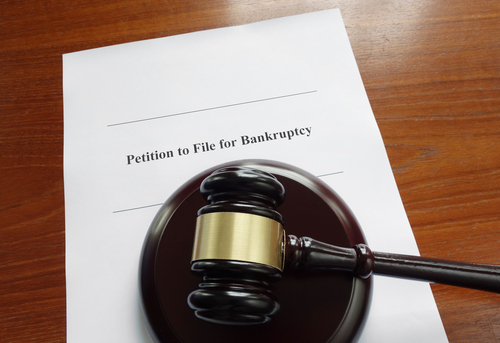
On the surface, bureaucrats will point to the 0.5% quarterly increase in business registrations across the EU as a sign of resilience. Yet at the very same time, bankruptcy declarations rose by 2.5% compared to the third quarter of 2025.
Looking deeper into the sector data makes the situation even more concerning. Registrations increased most in information and communication (+6.4%) and industry (+4.9%), while sectors tied directly to consumer demand, such as trade and construction, showed declines. Meanwhile, bankruptcies surged in accommodation and food services (+8.6%), transport (+5.6%), and even information and communication (+7.9%).
When bankruptcies rise across 6 out of 8 sectors, that reflects declining economic confidence and tightening margins across the entire economy. It is far easier to start a business than it is to maintain one. Bureaucrats choose to look at business starts rather than bankruptcies.
The sharp rise in bankruptcies in hospitality and services is particularly telling given Europe’s inflation in energy, labor costs, and regulatory compliance. Small and mid-sized businesses cannot absorb these costs the way multinational corporations can. The result is a slow liquidation cycle beneath the surface of headline GDP numbers. Entrepreneurs are the first to react to declining confidence in future policy stability. When bankruptcies rise faster than new firm formation, capital becomes less confident in long-term profitability.
The sector divergence also reflects the deeper structural transformation underway in Europe. Digital and information sectors are still attracting registrations, while traditional consumer and service sectors face insolvency pressure. That is consistent with an economy being reshaped by regulation, energy policy, and declining industrial competitiveness.
Rising bankruptcies do not immediately show up in political narratives, but they erode the tax base, increase unemployment risk, and force governments into further intervention. That intervention historically leads to more regulation and taxation, which only accelerates the liquidation cycle.
The ECM has long warned that the 2026 period would mark rising volatility driven by declining confidence in government. Rising bankruptcies alongside only marginal business creation are not a healthy expansion phase. It is the early-stage warning that the private sector is under pressure while policymakers continue to insist that the system is stable.