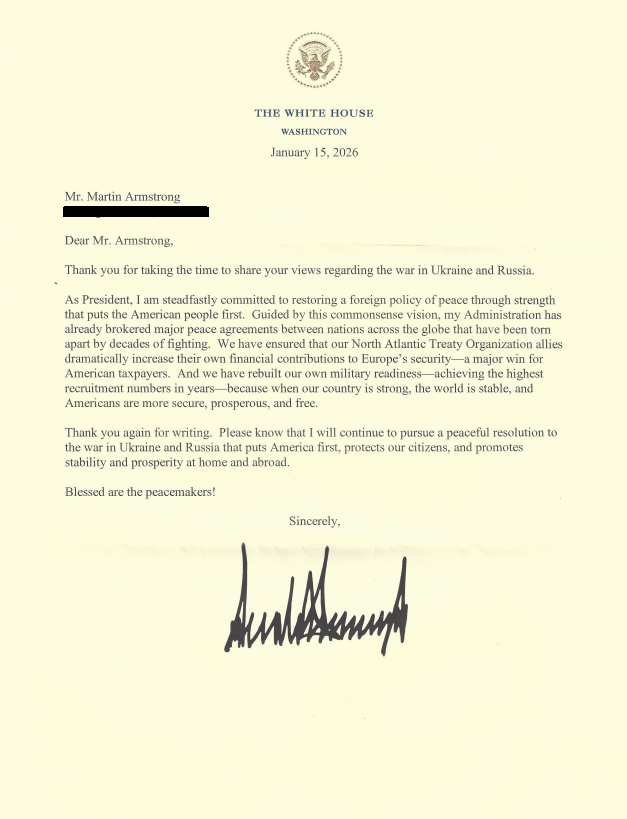
Tucker Carlson’s recent castration of Texas senator Ted Cruz produced several notable moments, one of which came when Cruz asserted that the Bible commands Christians to support Israel—by which he meant the political entity established in 1948 as the State of Israel.
To many Christians of Arab origin, this interpretation of biblical writ is simultaneously amusing and frustrating, eliciting more questions than scripture can answer. As arguably the oldest community of Christians in the world, are they called upon to embrace anything that could be interpreted as “support” for Israel, even if that means misguided intervention that kills innocents and leads to their displacement and destruction? One need not cite canon to know that the answer is “no.”
Were this an internal belief held widely by American politicians—affecting only their private lives and philanthropic habits—perhaps there would be little need for analysis. But this is not the case. Using specious affiliations between Christianity and Zionism, American pols eagerly enact policies that often prioritize Israeli aims over American.
But what of the impact of such policy on actual Christians in the Arab world? What is the practical result on this group, of the sum total of intervention, military exploits, and steadfast support of Israel—seemingly without question or reciprocal responsibility—taken by the US over the last hundred years and, in particular, over the last thirty years?
What is an “Arab Christian”?
To put Arab Christianity in context is a difficult task. The emergence of the broader Arab Christian community dates back to the centuries between the death of Jesus and the pre-Islamic era, with prominent Christian kingdoms and administrative areas taking shape in the Levant as early as the 2nd century AD, and others emerging during the later Roman period.
Further complicating the matter, some Arabic-speaking Christian groups often eschew an Arab identity, or at least de-emphasize it, preferring to view themselves as distinct and separate Christian pockets within the Arab world. Nevertheless, for the sake of discussion, I refer broadly to Arab Christians as those living in Arabic-speaking countries or their diaspora, who generally speak Arabic.
An Imperfect Balance, but a Balance Nonetheless
My father was raised in Bab Touma (“gate of the apostle Saint Thomas”), a Christian quarter of Syria’s capital, Damascus. As children visiting, my siblings and I would frequently hear church bells while residents ambled past carrying their beaded rosaries. A short walk through the neighborhood would take us seamlessly to the nearby, historic Umayyad Mosque. A spine surgeon, my father would often spend an entire day in the mosque tending to the medical needs of attendees—many of whom he knew, and some he had grown up with. Christian, Muslim, and Jewish intermingling was unremarkable—a simple fact of life.
Prior to Syria’s tragic civil war, Christians numbered roughly 10 percent of the population, or approximately 2 million. The Assad family—rulers of Syria since 1971—were Alawites, a minority Shia sect in a majority Sunni nation. An unspoken understanding existed between the two minority groups, namely, that Christians would be valued and protected from the possibility of fundamentalist persecution through a nominally-secular rule by the Alawites. The Alawites, in turn, would add a sizable minority in support of their regime. The Assad family were no angels—far from it—but the context in which developed the advocacy and protection of Christians is noteworthy, particularly as it is not the only such case.
Saddam Hussein’s leadership of Iraq was similar in many ways to that of Hafez al-Asad (followed by his son, Bashar) in Syria. Saddam was a Sunni Muslim in a majority Shia Muslim country. He also needed a coalition of sorts with the sizable Christian minority in his country. Before the wars in Iraq, beginning in the 1980s, the country maintained a Christian population equal to roughly 10 percent of the total, or approximately 2 million. Many of these Iraqi Christians comprised descendants of ancient empires such as the Assyrians. Unsurprisingly, the similar context to Syria produced similar results. Iraq was a relatively calm and stable home for Arab Christians.
A Clean Break
It has been US policy since the 1990s to pursue regime change in several Arab countries, including Syria and Iraq, to the benefit of Israel. Much of the thrust behind this approach stems from the Israeli-neocon cooperative strategic document, “A Clean Break: A New Strategy for Securing the Realm,” where the authors call for regime change in Iraq and, less explicitly, Syria. The document was written for then-incoming prime minister Netanyahu.
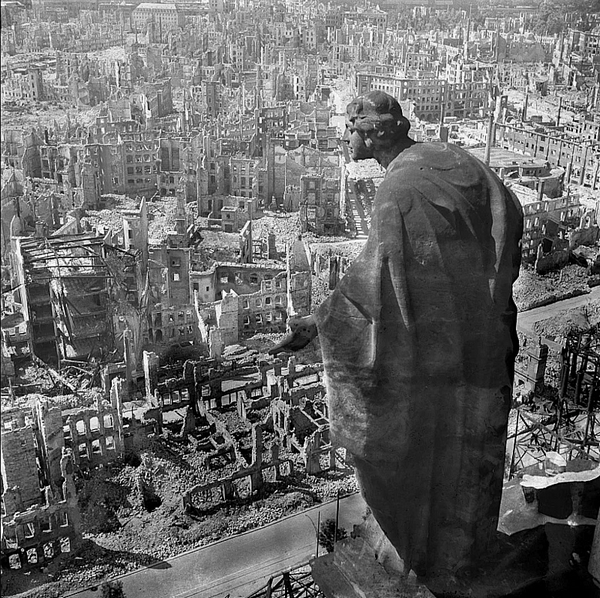
As a direct result of the regime change in Iraq—pursued in earnest in 2003 by the Bush administration—the country’s Christian population has been decimated, a decline further driven by subsequent sectarian violence between Shia and Sunni factions. From a pre-war level of 10 percent of the Iraqi population to 1-2 percent today, this entails the displacement of 1.5 million Iraqi Christians. In addition, innumerable historic churches and Christian artifacts have been destroyed.
ISIS and al-Qaeda gangs ran rampant through Christian communities, destroying ruins and artifacts while making life for Christians there unlivable through conversion demands, threats, implementation of a jizya system—taxation extracted from non-Muslims—and other forms of barbarism. An ancient and historical home for diverse Arabic-speaking Christians, Iraq is no longer such a haven.
As a result of Syria’s civil war—specifically the hijacking of the organic rebellion by Islamist forces funded by the US and others—Syria’s Christian population has been nearly wiped off the map. Estimates today suggest a reduction from 10 percent of the total to less than 2 percent, meaning roughly 1.5 million Syrian Christians have been displaced. As in Iraq, the arming of ISIS and al-Qaeda rebels by the US and its client states led directly to massive destruction of Christian churches and historic monuments, including some in the town of Maaloula, where I have visited often and where the inhabitants still speak Aramaic.
Briefly during the recent Syrian civil war, northeastern Syria was carved out as the home of the ISIS caliphate—a backwards and barbaric gang intent on ruling a chunk of Syria in the mode of medieval Islamic empires. Now, however, leaders of al-Qaeda—similar to ISIS in many respects—dominate Syria’s new government, put in place with US, Turkish, and Israeli support. A slap in the face to Christians everywhere—but particularly those in Syria—US president Trump has met on friendly terms with the Islamist goon and former al-Qaeda leader who now nominally leads the Syrian government, referring to him as a “young, attractive guy” with a “strong past.”
When the Syrian civil war began, there was legitimate discussion as to whether Syrians would be better off without Assad. Subsequent to the hijacking of that revolution, the answer is clear. Those who rejected Assad’s protection of Christians as a cynical and pragmatic political strategy—myself included—have seen the worst-case scenario materialize directly as a result of US intervention. Syria is no longer an acceptable home for Christians. And yet, for many, departure is not an option.
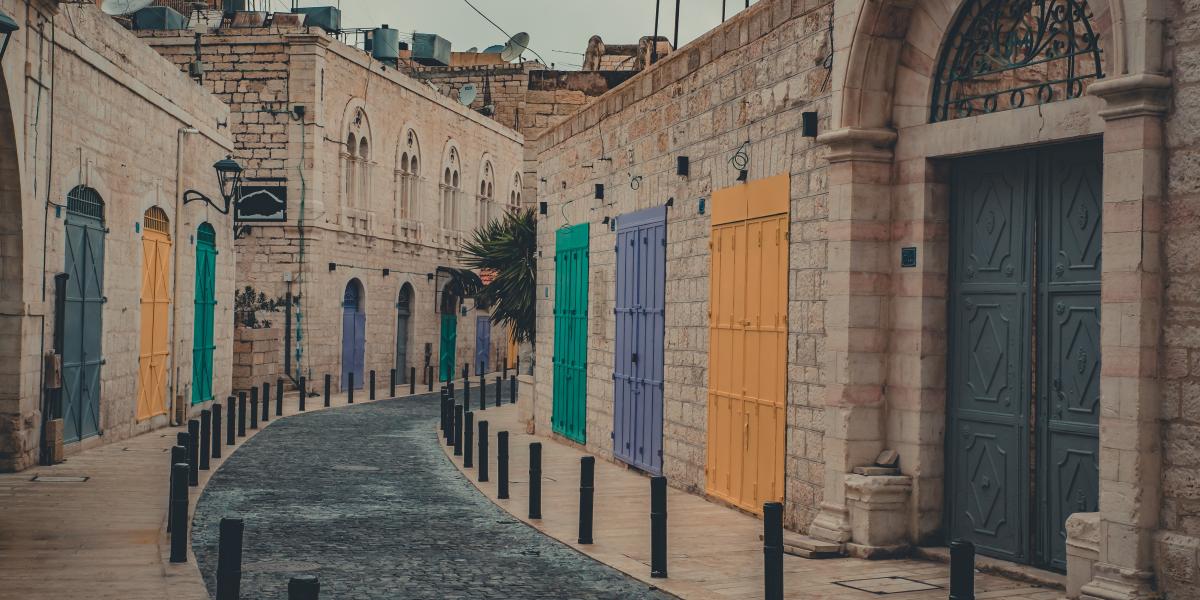
Figures for Palestinian Christendom are harder to estimate given the longer time periods involved, but likely numbered 10-15 percent of the total Palestinian population prior to the 1930s, at which point they began dispersing throughout the Arab world and the West. Palestinian Christians remaining in the area have all but disappeared. Gazan Christians number only 0.5 percent of that population while the West Bank contains 2-3 percent Christians. Christians there are subject to similar harassment as Muslims, typically in the form of Israeli settler expansion and indiscriminate IDF incursioans.
Father Bashar Basiel, of Christ the Redeemer Parish in Taybeh—reportedly the only remaining Christian village in the West Bank—recently described the Palestinian Christian situation as follows:
These days, we are living under the fire, barbarism and brutality of the settlers…and under the direct protection of the Israeli occupation army. We will win with hope. We are Palestinian Christians. We resist with our faith.
Father Johnny Abu Khalil, also from Taybeh, shared similar sentiments with regard to a specific June 21 incident:
It was an attack by burning a vehicle, but we fear that these attacks will escalate to include the burning of trees, houses and churches in the village… The settler does not distinguish between a Palestinian Muslim and a Palestinian Christian.
Among other things, events in Iraq, Syria, and Palestine are a reminder of the tremendous evil that occurs when the state and institutional religion combine powers to execute a political agenda.
Numbered Days
The days of the native Christian Arab may soon be entirely behind us. Outside of Egypt and parts of Lebanon, healthy and thriving Christian Arab communities are no more. What remains are vestiges of a two-thousand-year-old heritage now rapidly disappearing. Notwithstanding Ted Cruz’s Sunday school lessons, US intervention in the Middle East has done significant harm—probably irreparable—to the Christian community there. The neocons will no doubt chalk that up to collateral damage.