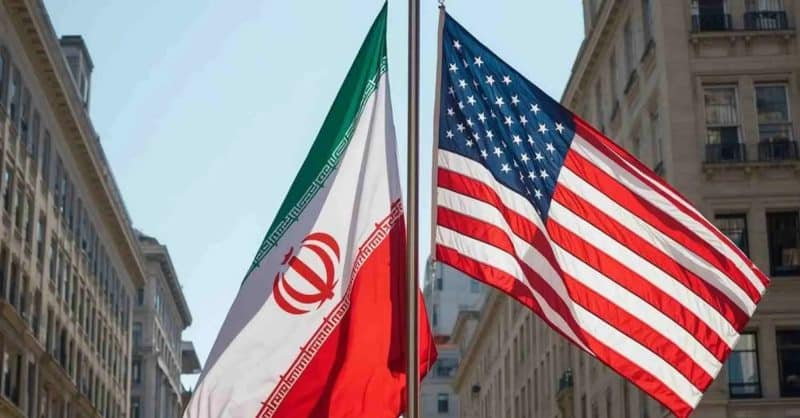
Of all the things Donald Trump has done to disrupt global commerce, from levying punitive tariffs to tearing up trade deals, few would be as consequential as withdrawing and leaving the rest of the world to secure the Persian Gulf.
The move, which the US president has repeatedly threatened as his war with Iran drags on, would represent a break with decades of US policy keeping open the sea lanes that carry four-fifths of the $35 trillion global goods trade. Even the threat of reducing security for the Strait of Hormuz risks shaking confidence in a pillar of the world economy, as well as American wealth and power.
Traffic through the strait has dropped to a handful of ships daily from about 135 before the war, with Iran allowing passage mainly for its own exports. Those conditions are putting at risk roughly one-fifth of global oil flows, driving up prices and injecting volatility into energy markets.
Since World War II, the US has used its navy to deter attacks, counter piracy and challenge attempts by states to restrict lawful passage across the oceans that cover more than 70% of the Earth’s surface. Those guarantees have allowed oil, goods and commodities to pass across borders with minimal friction.
“The free flow of commerce through the strait is a larger principle at stake in this conflict,” said retired Vice Admiral John W. Miller, former commander of US Fifth Fleet in Bahrain. “Failure to ensure freedom of navigation in Hormuz puts global freedom of navigation everywhere at risk.”
European and Asian officials, who spoke to Bloomberg on the condition of anonymity to discuss sensitive matters, said the conflict has eroded faith in the US role as protector of the high seas, raising concerns about energy prices, shifting security calculations around key choke points and growing doubts about Washington’s ability to manage the consequences of the war.
And it’s more than just Hormuz. The Trump administration’s campaign to blow up speed boats suspected of ferrying drugs across the Caribbean and doubts about whether the Navy made sufficient efforts to save crew members of an Iranian warship it sank off the coast of Sri Lanka have raised questions about the US’s commitment to the rules that protect all sailors at sea.
A Pentagon spokesperson didn’t answer a question about whether the US was still committed to ensuring freedom of navigation, saying only that the military “continues to provide the president options” regarding the strait. The White House didn’t respond to a request for comment.
In the absence of a US plan, smaller, trade-dependent nations have sought to build consensus for a multinational response. The United Arab Emirates on Tuesday urged the United Nations to authorize a range of measures, including force, to reopen the strait. The UK on Thursday convened representatives from more than 40 American allies to discuss nonmilitary options to convince Tehran to restore trade.
“When the Strait of Hormuz is strangled, the world’s poorest and most vulnerable cannot breathe,” UN Secretary-General António Guterres said on Thursday. “Freedom of navigation must be upheld.”
The free passage of vessels through choke points like Hormuz and the Strait of Malacca is protected under principles laid out in the UN Convention on the Law of the Sea. While the US never ratified the treaty, it played a key role in the document’s drafting and its almost 300-ship navy has served as chief enforcer of the rules.
Those include prohibition against regulating vessels that move between open waters, even if the route cuts through their territorial seas. Iran’s attempts to deny passage or charge fees in the Hormuz strait — as much as $2 million per transit — challenge that system.
In response, Trump has alternately suggested asserting US control over the waterway and leaving other nations to take responsibility for it.
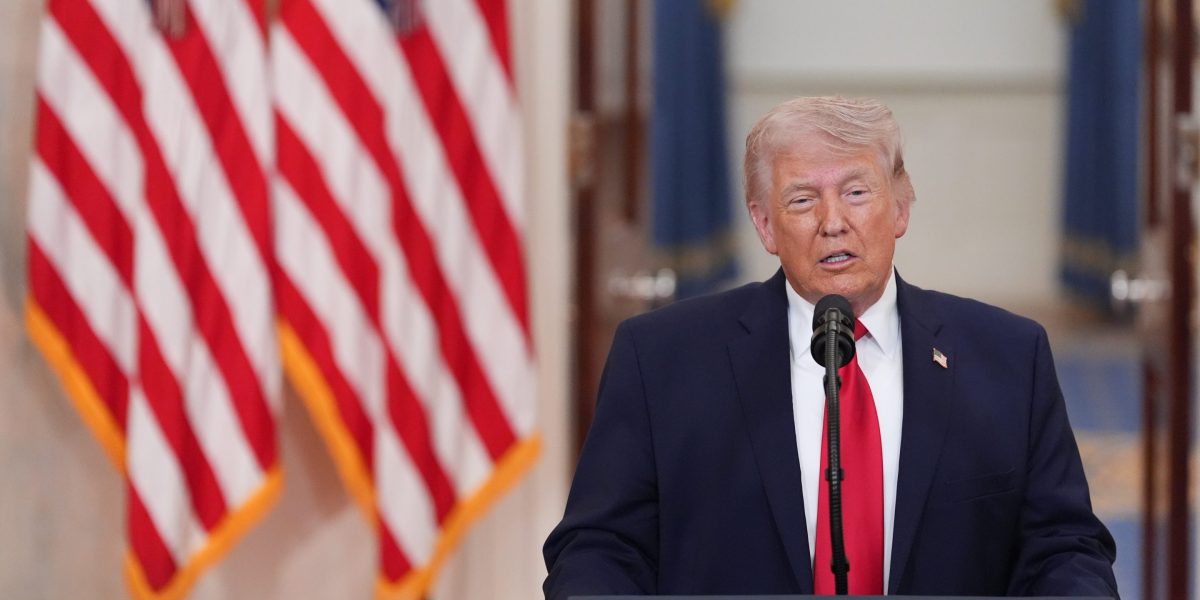
“The countries of the world that do receive oil through the Hormuz Strait must take care of that passage,” Trump said Wednesday in a televised address on the conflict. “They must cherish it. They must grab it and cherish it. They can do it easily.”
Even if the fighting stops, the disruption may persist. Shipping and oil-market analysts say a ceasefire without a plan to reopen the strait risks leaving the strategic artery in Tehran’s hands, prolonging the shock.
“This will not be a crisis that ends with a ceasefire announcement,” said Angelica Kemene, head of market strategy at Optima Shipping Services in Athens. “It’s a structural shift in how the Gulf operates as an energy export corridor.”
Read More: What It Would Take to Reopen the Strait of Hormuz: Explainer
The threat of Iranian attacks has kept most ship operators out of the strait since the US and Israel began strikes on Feb. 28 and that caution is unlikely to fade quickly, leaving any initial reopening dependent on naval escorts.
Vessels moving through Hormuz have largely been Iran-linked ships or those belonging to countries friendly with Tehran. That allows the Islamic Republic to earn almost $139 million per day in oil revenues — more than before the war, thanks to higher prices.
“It is a violation of maritime law to impede the free flow of travel in international waters,” US Secretary of State Marco Rubio said on Tuesday. “It’s illegal to hit commercial shipping and sink them. That’s what the Nazis did in World War II in the Atlantic.”
Iran, which also hasn’t ratified the sea-law treaty, is moving to formalize its control. A parliamentary committee has approved legislation to impose fees in the strait, according to the semi-official Fars news agency, though the bill has yet to go to a full vote. Authorities have already charged some vessels and barred ships from the US and countries supporting its military campaign, including Israel.
Tanker War
Asked about the US’s commitment to freedom of the seas, a White House official said Iran won’t be allowed to set up a permanent system that controls access to the Hormuz strait. The US has already destroyed 44 Iranian mine-laying vessels during the war and Trump is confident the strait will be opened very soon, the official said.
Ensuring the strait remains open has long been a core US objective in any conflict in the region. The US has intervened before to keep Hormuz open, notably during the so-called tanker war between Iran and Iraq in the 1980s.
The Navy has for years played a central role in maritime campaigns to suppress piracy off the Somali coast. More recently, the US led efforts to protect Red Sea shipping after attacks by the Iran-linked Houthis in Yemen caused vessels to make long, costly journeys around Africa.
The economic toll of Iran’s control over Hormuz is already clear: Iran’s grip on Hormuz comes at the expense of other major Gulf producers, with the potential to reshape global energy supplies.
Iraq’s exports plunged by about 80% in March compared with last year’s average daily volumes, while Saudi Arabia has rerouted crude through its east-west pipeline to the Red Sea, now running near capacity at roughly 7 million barrels a day. Even so, the kingdom was facing a drop of more than 25% in exports last month.
“The war in the Middle East is creating the largest supply disruption in the history of the global oil market,” the International Energy Agency said in early March.
Insurance costs have surged alongside the risk. Additional war-risk premiums that were about 0.15% of a ship’s value before the war have jumped as high as 10% in some cases in and around the strait, deterring operators from returning even if hostilities ease.
The disruption if allowed to persist could carry geopolitical consequences — especially in Asia. Washington’s commitment to that policy has been visibly demonstrated by the so-called freedom of navigation operations, or Fonops, that the US Navy conducts by asserting its right to sail through contested waterways.
If the US ends its campaign without reopening the strait, it risks setting a precedent that it won’t challenge expansive Chinese claims to the South and East China seas. Southeast Asian officials said such an outcome would deal a significant blow to US credibility in keeping sea lanes open.
It would also increase the incentive for Chinese President Xi Jinping, who now commands the world’s largest navy by number of ships, to assert greater influence at sea.
“If the US doesn’t have the ability to enforce freedom of navigation in the Straint of Hormuz, what then stops the People’s Liberation Army Navy from pushing things a bit farther in the South China Sea?” said Emma Salisbury, non-resident senior fellow in the National Security Program at the Foreign Policy Research Institute. “That’s a worrying precedent.”
That shift is already shaping how governments think about their security.
Officials said it could push countries to strengthen their capabilities around chokepoints, such as the Strait of Malacca, and coordinate more closely to uphold maritime norms under international law. The conflict has also shown that countries with sufficient military power and political will can move to control critical waterways.
While Europe is less directly dependent on Hormuz, its economy relies on the smooth functioning of global shipping routes. European officials said the episode is forcing a rethink of how allies protect sea lanes.
If the US were seen as unwilling or unable to keep key waterways open, countries may have to assume greater risk and adjust how they deploy forces, one official said. Major European economies also are assessing how to cushion any impact to other vulnerable shipping routes such as the Red Sea and the South China Sea.
“Iran controlling the Strait of Hormuz after the war would be a game-changer,” said Lucio Blanco Pitlo III, a Philippine foreign policy analyst. “US credibility as guarantor of unhampered navigation of crucial waterways will suffer.”