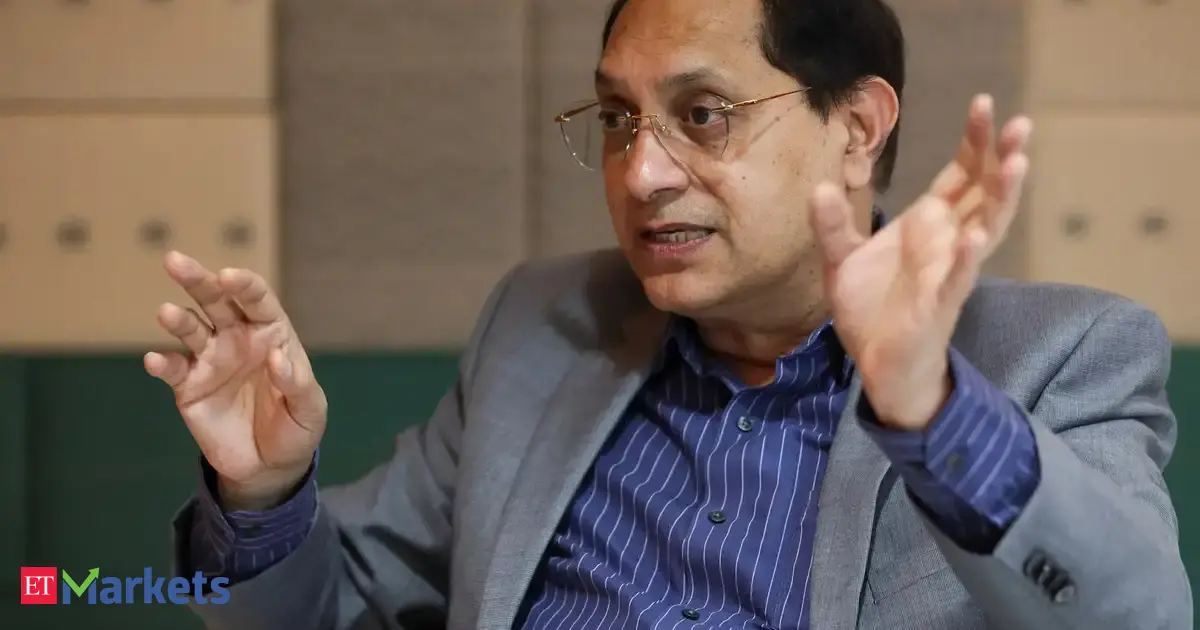
“At this moment, we are not contemplating any measures, and whatever framework that we have put in place, that will continue,” Pandey said. “When we as a regulator look at derivative markets, we do so in a very methodical manner based on data.”
The government raised transaction taxes on equity derivatives in the Union Budget to curb speculative trading. India’s futures and options volumes are more than 500 times the country’s GDP, underscoring the need for arate adjustment to rein in excessive activity, it said.
Separately, on the US-India trade deal, he said it would help get more investments into the country.
“Fundamentally, when you have an overhang of a regulatory action which is removed, and trade frictions removed, capital formation is always accelerated,” Pandey said. He added that the removal of the uncertainties can spur investment decisions and get a greater predictability on capital. “So overall in the situation I could say that with the deals that have been done on the trade side, a lot of uncertainties have been removed,” he said.
Algo Trades may Soon Not Face OTR PenaltiesThe Securities and Exchange Board of India (Sebi) on Wednesday proposed changes to its order-to-trade ratio (OTR) framework for equity options, to exempt algorithmic orders placed by market makers from OTR penalties.Under the revised framework, for equity option contracts, orders placed within a range of 40% above or below the last traded price (premium) “or ± ₹20, whichever is higher, shall be exempted from the framework for imposing penalty for high OTR,” the regulator said in a circular.At present, stock exchanges place economic disincentive for high order-to-trade ratio of algorithmic orders placed by stockbrokers. Further, algorithmic orders placed by designated market makers for market making activity would not be considered towards computation of OTR, Sebi said. “Orders placed within the range of ±0.75% of the LTP shall be exempted from the framework for imposing penalty for high OTR,” it said
No Fresh Curbs on Equity DerivativesPandey was speaking at the launch of a corporate-bond outreach event, where he noted that measures are being considered to deepen the bond market. Sebi will engage with market participants on implementing the Budget proposals related to corporate bonds, he said.
The recent Budget has proposed a series of reforms aimed at improving liquidity in the secondary market.
“A market-making framework will support continuous twoway quotes, reduce bid-ask spreads, and improve price discovery, thereby making corporate bonds a more reliable asset class for investors,” Pandey said. “Derivatives on corporate-bond indices and total-return swaps will help investors in efficient risk management. As secondary-market liquidity improves and investor base widens, the corporate-bond markets will become a more reliable and cheaper funding route for issuers.”
In FY25, issuers raised about ₹10 lakh crore through debt issuances. Outstanding corporate bonds have grown at roughly 12% CAGR, rising from ₹17.5 lakh crore in FY15 to ₹58 lakh crore by end-December 2025, according to Sebi data.
Pandey noted that the market remains heavily skewed towards highly rated issuers, who account for 90% of all bond issuances. Nearly 60% of funds are raised by financial institutions, limiting sectoral diversity.
“This concentration limits the choice available to investors and restricts fair price discovery across different sectors of the economy. The secondary market remains shallow because institutional investors follow a ‘buy-andhold’ approach rather than active trading,” he said.
This is further compounded by the dominance of private placements, which can reduce transparency and make it harder for smaller issuers to access the market, he added.
More than 5,600 companies are listed in the equity market, but only about 770 entities have raised funds through the debt market. Of these, 272 have tapped the market multiple times, while many have issued debt only once or twice, Sebi data showed.He also said a Sebi survey showed that more Indians know about crypto currencies than about bonds.