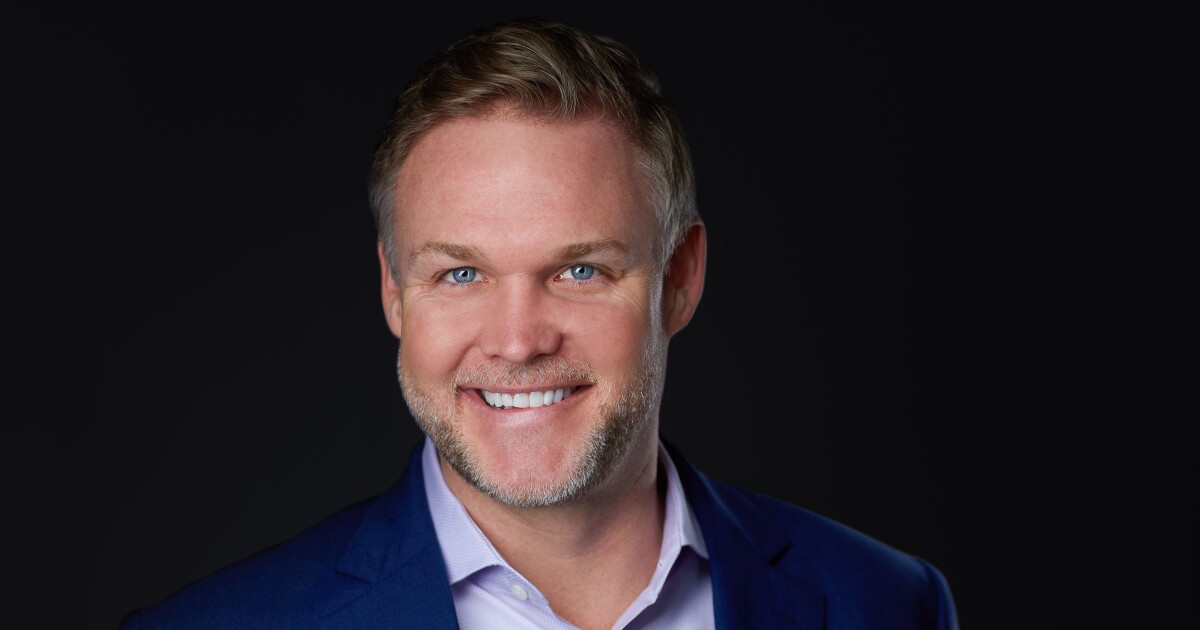
Bill Ackman has never been one to temper his ambitions, but by filing to take Pershing Square public, he may have taken the first step toward reaching his biggest goal yet—to create his own “modern-day” Berkshire Hathaway by following in the footsteps of one of the world’s most successful investors, Warren Buffett.
Pershing Square Capital Management on Tuesday filed to be listed on the New York Stock Exchange, Ackman’s second attempt to take the company public after an ambitious play to raise $25 billion for the largest closed-end fund IPO in history failed in 2024.
This time around, Ackman lowered his target, aiming to raise between $5 and $10 billion. He’s also revamped his approach as he’ll aim to list both the closed-end fund and Pershing Square’s parent company—which will use the ticker PSUS and PS respectively. To encourage investors, every 100 shares of the closed fund that investors buy will automatically give them 20 free shares of Pershing Square Capital Management. According to the Wall Street Journal, the minimum order size is a relatively accessible $5,000.
Through this approach, Ackman seeks to replicate Buffett’s success with Berkshire by gaining access to “permanent capital,” potentially through investors drawn to his fiery, and sometimes controversial, posts on X, where he has two million followers. While Pershing already has a similar dual listing that trades on European markets, the U.S. listing would give him better access to deep-pocketed U.S. investors.
For Ackman personally, this is one of the ways he can follow in his [unofficial] mentor’s shoes.
“I’ve been a kind of Warren Buffett devotee, unofficial—he’s been my unofficial mentor for many years,” said Ackman in 2023.
Ackman channels the Buffett playbook
Traditional hedge funds like Pershing Square allow investors to pull out their money either quarterly or annually. Therefore, fund managers need to keep cash on hand and may have to sell holdings in case their investors flee.
Through the dual listing, Pershing will instead have access to capital in its closed-end fund that can’t be directly revoked; investors have to sell their shares on the open market instead.
With this move, Ackman is directly channeling the Buffett playbook. Permanent capital—the kind Buffett perfected at Berkshire—has no expiration date, no forced exits, and no investors waiting for a check. Think of it as the Buffett model: raise capital once, hold forever, and let compounding do the rest.
Although Buffett didn’t start Berkshire—which he bought in the 1960s while he was a struggling textile maker—the legendary investor leveraged this “permanent capital” to transform the conglomerate that now owns Geico Insurance, ice cream chain Dairy Queen, and BNSF railway, into the most valuable financial institution in the world, with a $1 trillion market cap.
“The access to the permanency of that capital gave him the ability to take a—kind of a very long-term view in a world where people in the investment management business generally have to make short-term decisions because their capital, you know, it can leave,” said Ackman about Buffett’s strategy during a 2023 CNBC conference.
Pershing’s IPO will give it a leg up on hedge funds focusing on the short term, Ackman wrote in a letter to investors as part of the filing, the Wall Street Journal reported.
“Competing against investment managers with short-term capital is an important long-term, sustainable competitive advantage for Pershing Square, particularly in a world where a seemingly ever-increasing proportion of capital is managed with shorter-term investment objectives,” Ackman wrote in the filing.
Ackman has previously tried to pursue his dream of building a Berkshire copycat through a bet on real estate developer Howard Hughes Holdings (HHH). When he announced the play in a post on X last year, he described the deal as “a modern-day version of Berkshire.”
Yet it’s unclear how that bet will pan out. After Howard Hughes’ board rejected his first offer, Pershing in May handed over $900 million for newly issued shares that gave it a controlling stake, and Ackman was named executive chairman. Yet, a group of HHH shareholders sued Ackman last month, alleging the deal was done at an “unfair price,” Bloomberg reported.
Ackman’s “unofficial mentor”
From a young age, Ackman aimed high. He graduated magna cum laude from Harvard in 1988 and then earned an MBA from Harvard Business School. Soon after graduating he created his own hedge fund with a fellow Harvard graduate that only had $3 million under management and grew to some success before collapsing in the early 2000s.
Yet, Ackman was able to rebound from that failure to create his own hedge fund, Pershing Square, which grew an original $54 million seed investment into a firm that today boasts $28 billion in assets under management.
Along the way, Ackman has said a significant amount of his inspiration has come from Buffett. Speaking at a CNBC conference in 2023, Ackman described the similarities in both their careers, noting that before Buffett transformed a struggling textile company into what would later become the $1 trillion conglomerate Berkshire Hathaway, he was essentially an activist investor like Ackman, “running a series of private partnerships.”
In fact, Ackman in an X post last year credited reading one of Buffett’s famous annual shareholder letters as the reason he chose to become an investor.
When he started his first hedge fund at 26, Ackman wrote, “I thought that perhaps some day I could build a diversified holding company like Berkshire with an extraordinary long-term record.”