No Result
View All Result
  • Login
Thursday, August 6, 2026
FeeOnlyNews.com
  • Home
  • Business
  • Financial Planning
  • Personal Finance
  • Investing
  • Money
  • Economy
  • Markets
  • Stocks
  • Trading
  • Home
  • Business
  • Financial Planning
  • Personal Finance
  • Investing
  • Money
  • Economy
  • Markets
  • Stocks
  • Trading
No Result
View All Result
FeeOnlyNews.com
No Result
View All Result
Home Business

Asia needs deeper energy markets if it’s going to achieve its AI ambitions

by FeeOnlyNews.com
2 hours ago
in Business
Reading Time: 4 mins read
A A
0
Asia needs deeper energy markets if it’s going to achieve its AI ambitions
Share on FacebookShare on TwitterShare on LInkedIn


Asia’s energy security depends on the Strait of Hormuz, a waterway it doesn’t control, and the fallout from the return of conflict would extend well past fuel pumps.

If Asia doesn’t build deeper, more liquid electricity networks now, it risks losing its slice of the AI value chain. Nearly every major Asian economy now has a formal national AI masterplan. Japan recently announced a 370 trillion yen ($2.3 trillion) budget, with more than a quarter of that sum earmarked for spending on artificial intelligence and chips alone over the next 15 years.

Training a frontier AI model concentrates enormous computing power into a handful of locations, while inferencing pushes low-latency facilities into dense urban hubs. Data center power demand across Asia-Pacific is expected to increase by an estimated 165% in 2023-30.

Much of the region’s headline megawatt figures, though, are “bragawatts”—announcements that look impressive on paper but are far slower to turn into real energy.

Why? Despite the rapid progress in developing renewable energy generation, reliable systems require major grid upgrades. Renewables are typically built far from demand centers and generate power intermittently. Without new transmission and storage, server racks will therefore struggle to operate at full capacity. According to the International Energy Agency’s Southeast Asia Outlook, grid and storage investment in 2025 was just $13 billion, far lower than the $50 billion needed annually till 2050.

Also, in an era of higher fuel prices and energy insecurity, other priorities may supersede electricity supply for data centers. Politicians and policymakers want to keep the lights and the air-conditioning on, after all.

The U.S. is a cautionary tale. Up to half of all planned U.S. projects may not come online this year. In the first three months of the year, 75 data center projects worth a combined $130 billion were blocked or delayed by local opposition, matching the total number blocked in all of 2025.

Asia is already living a version of this. The region delivered only about 38% of its announced data center capacity in 2024, one of the widest plan-to-delivery gaps of any market globally, according to our white paper with Oxford’s Smith School. The problem is particularly acute in Malaysia and India, the two countries banking on a digital infrastructure boom.

Johor has banned the construction of Tier 1 and 2 facilities due to concerns over the strain on local water infrastructure, while India’s hopes to double projected capacity by the end of the next financial year will have to contend with severe grid delivery lags.

With AI-driven euphoria flooding the markets, the gap between what’s promised and what’s feasible is only going to widen.

Commodity markets are already pricing the announced build-out rather than what’s executable. Copper prices have stayed high on assumptions of surging data center construction demand, and transformer costs are running at two to three times pre-2020 levels as developers lock in scarce equipment.

If interconnection queues stretch the way they have in the U.S. and Europe, the mismatch between announced and delivered capacity could produce the kind of boom-bust cycle that metals markets saw in the last decade.

Singapore, Malaysia, and South Korea are responding with regulatory frameworks that require data center developers to draw up plans for battery storage and curtailment management alongside grid-impact assessments.

That means Asia’s AI build-out may slow down, even as the U.S. presses ahead with a further $4 trillion in data center construction planned through 2028. Every quarter that Asian operators wait is another quarter of compute, talent, and capital that could end up being deployed elsewhere.

A more liberal approach to distributed energy generation and electricity trading—essentially opening wholesale electricity markets to price competition—will help attract more investment and ease the region’s dependence on imported oil and gas. Getting there, however, requires deeper, more transparent energy markets.

The region’s electricity markets currently do not give investors the transparency they need.

Most Asian electricity systems still rely on a traditional ecosystem: vertically integrated, state-owned utilities acting as single buyers, with retail tariffs set administratively and limited trading allowed for third parties that can generate the future pricing signals needed through forward contracts. Investors in mature markets like Europe and the U.S., on the other hand, take such trading layers for granted.

Renewable energy investors in Asia are left with less certainty over long-dated returns, which are more exposed to government intervention during demand surges. This increases the risk that grid projects stall for lack of investment — the same grid that Asia’s data centers are waiting to connect to.

Some of the work to liberalize electricity markets is under way. Japan’s power futures market, for example, is the fastest-growing electricity derivatives market globally. India’s power exchange IEX now runs day-ahead and term-ahead markets. Meanwhile, electricity has been flowing and traded commercially from Laos through Thailand and Malaysia to Singapore since 2022.

Marex, where I work, has been contributing to growing liquidity in Japan’s power derivatives markets. In New Zealand, Marex was recently selected to provide an over-the-counter (OTC) trading platform supporting the country’s standardized super-peak electricity contract — deepening a local market that, like many across Asia, has traditionally been fragmented and thinly traded.

These steps point to what deeper Asian power markets could look like: instruments and platforms that let generators, industrial users and investors hedge and price electricity with the same confidence they bring to other commodities.

Electricity in Asia needs to trade with the same rigor as crude oil does in the global market. Hitting the AI build-out the region wants will ultimately require power markets that are sufficiently robust—and transparent—to give capital the confidence to build ahead of demand, not behind it.

The opinions expressed in Fortune.com commentary pieces are solely the views of their authors and do not necessarily reflect the opinions and beliefs of Fortune.




Source link

Tags: AchieveAmbitionsAsiaDeeperenergymarkets
ShareTweetShare
Previous Post

New professional designation aims to build DAF expertise

Next Post

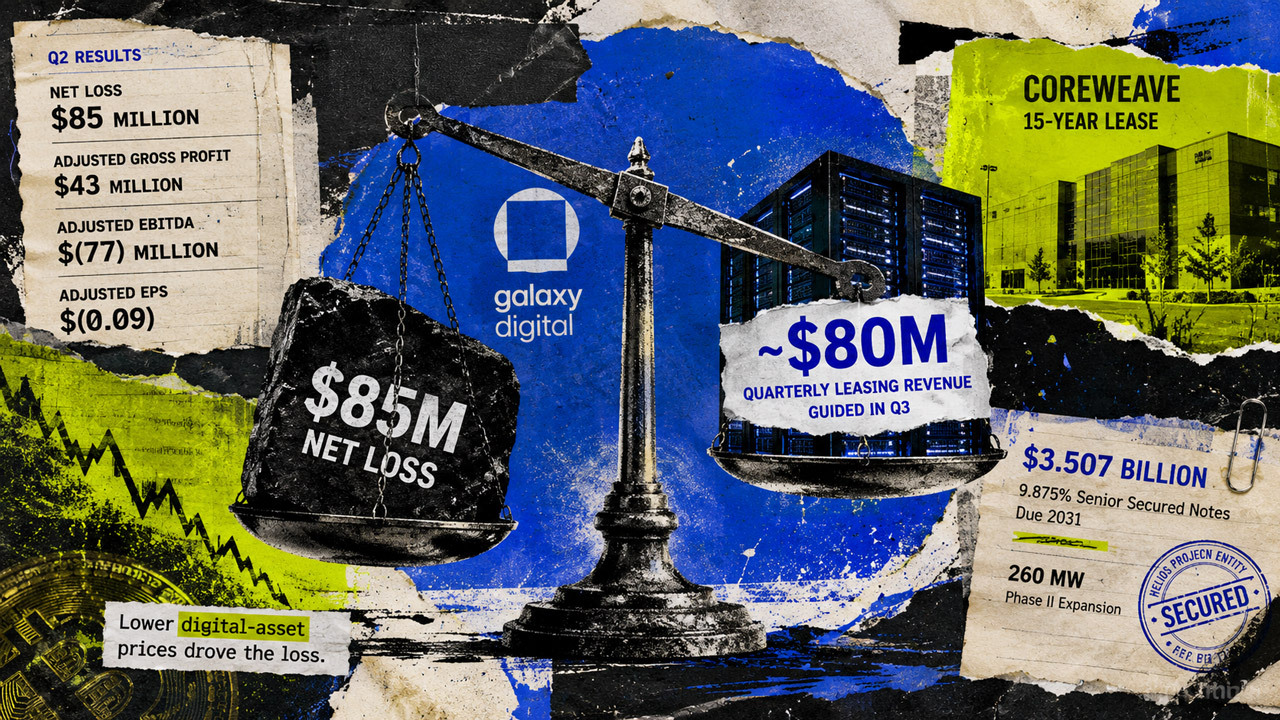
Galaxy Digital: $85M Q2 loss tests its $80M-a-quarter AI lease

Related Posts

Trump signs order setting 15% tariff, price floors on polysilicon imports (FSLR:NASDAQ)

Trump signs order setting 15% tariff, price floors on polysilicon imports (FSLR:NASDAQ)

by FeeOnlyNews.com
August 6, 2026
0

Aug 06, 2026, 6:56 PM ETFirst Solar, Inc. (FSLR) Stock, TE StockGLW, CSIQ, TAN, SPWR, ENPH, SEDG, RUN, BE, ARRY,...

Every major Italian city is on heat alert as the drought hits Hungary’s nuclear power

Every major Italian city is on heat alert as the drought hits Hungary’s nuclear power

by FeeOnlyNews.com
August 6, 2026
0

Italy placed all of its major cities under the highest heat alert Thursday as a blistering heat wave gripped Europe, setting a...

India tops world in IPO count, ranks third in fundraising in FY26: SEBI Annual Report

India tops world in IPO count, ranks third in fundraising in FY26: SEBI Annual Report

by FeeOnlyNews.com
August 6, 2026
0

India retained its position as the world's leading market for initial public offerings (IPOs) by number of issues during FY2025-26,...

How to read and analyze an options chain

How to read and analyze an options chain

by FeeOnlyNews.com
August 6, 2026
0

Pull up any stock's options page, and the screen fills with numbers. Dozens of rows, over 10 columns, and values...

BREAKING: Senate Panel Holds Fauci in Contempt, DOJ May Prosecute

BREAKING: Senate Panel Holds Fauci in Contempt, DOJ May Prosecute

by FeeOnlyNews.com
August 6, 2026
0

A Senate committee voted on Thursday to hold Dr. Anthony Fauci in contempt of Congress. The former director of the...

DoorDash Q2 2026 earnings: revenue up 36%, outlook raised

DoorDash Q2 2026 earnings: revenue up 36%, outlook raised

by FeeOnlyNews.com
August 6, 2026
0

DoorDash reported second-quarter revenue of $4.5 billion on Wednesday, up 36% year-over-year, and raised its outlook for the current quarter....

Next Post
Galaxy Digital: M Q2 loss tests its M-a-quarter AI lease

Galaxy Digital: $85M Q2 loss tests its $80M-a-quarter AI lease

What You Can Learn From the Nerds’ Home Improvement Projects

What You Can Learn From the Nerds’ Home Improvement Projects

  • Trending
  • Comments
  • Latest
Coffee Break: Armed Madhouse – From Spy Satellites to Peace Satellites

Coffee Break: Armed Madhouse – From Spy Satellites to Peace Satellites

July 7, 2026
US prosecutors examine LA Dodgers owner Mark Walter-linked insurers – report

US prosecutors examine LA Dodgers owner Mark Walter-linked insurers – report

July 21, 2026
Bond Vet and Small Door Merge to Form One of the Nation’s Largest Premium Veterinary Networks – AlleyWatch

Bond Vet and Small Door Merge to Form One of the Nation’s Largest Premium Veterinary Networks – AlleyWatch

July 9, 2026
Salesforce, RightCapital, And YCharts Launch Their Own New AI Capabilities (And More Of The Latest In Financial #AdvisorTech – July 2026)

Salesforce, RightCapital, And YCharts Launch Their Own New AI Capabilities (And More Of The Latest In Financial #AdvisorTech – July 2026)

July 6, 2026
House backs an emergency brake on elder fraud

House backs an emergency brake on elder fraud

June 26, 2026
Teachers’ Unions Shell Out More Than  Billion on Politics

Teachers’ Unions Shell Out More Than $1 Billion on Politics

May 14, 2026
Trump signs order setting 15% tariff, price floors on polysilicon imports (FSLR:NASDAQ)

Trump signs order setting 15% tariff, price floors on polysilicon imports (FSLR:NASDAQ)

0
Those That Were Considered To Be “Dirt Poor” In 1987 Would Be Considered To Be Very Wealthy In 2026

Those That Were Considered To Be “Dirt Poor” In 1987 Would Be Considered To Be Very Wealthy In 2026

0
What You Can Learn From the Nerds’ Home Improvement Projects

What You Can Learn From the Nerds’ Home Improvement Projects

0
SpaceX passed a key test Thursday. Sophisticated traders bet the bottom is in

SpaceX passed a key test Thursday. Sophisticated traders bet the bottom is in

0
Asia needs deeper energy markets if it’s going to achieve its AI ambitions

Asia needs deeper energy markets if it’s going to achieve its AI ambitions

0
When Death Is Cheaper Than Care: Mutual Aid for the Developing World

When Death Is Cheaper Than Care: Mutual Aid for the Developing World

0
Trump signs order setting 15% tariff, price floors on polysilicon imports (FSLR:NASDAQ)

Trump signs order setting 15% tariff, price floors on polysilicon imports (FSLR:NASDAQ)

August 6, 2026
What You Can Learn From the Nerds’ Home Improvement Projects

What You Can Learn From the Nerds’ Home Improvement Projects

August 6, 2026
Galaxy Digital: M Q2 loss tests its M-a-quarter AI lease

Galaxy Digital: $85M Q2 loss tests its $80M-a-quarter AI lease

August 6, 2026
Asia needs deeper energy markets if it’s going to achieve its AI ambitions

Asia needs deeper energy markets if it’s going to achieve its AI ambitions

August 6, 2026
New professional designation aims to build DAF expertise

New professional designation aims to build DAF expertise

August 6, 2026
Those That Were Considered To Be “Dirt Poor” In 1987 Would Be Considered To Be Very Wealthy In 2026

Those That Were Considered To Be “Dirt Poor” In 1987 Would Be Considered To Be Very Wealthy In 2026

August 6, 2026
FeeOnlyNews.com

Get the latest news and follow the coverage of Business & Financial News, Stock Market Updates, Analysis, and more from the trusted sources.

CATEGORIES

  • Business
  • Cryptocurrency
  • Economy
  • Financial Planning
  • Investing
  • Market Analysis
  • Markets
  • Money
  • Personal Finance
  • Startups
  • Stock Market
  • Trading

LATEST UPDATES

  • Trump signs order setting 15% tariff, price floors on polysilicon imports (FSLR:NASDAQ)
  • What You Can Learn From the Nerds’ Home Improvement Projects
  • Galaxy Digital: $85M Q2 loss tests its $80M-a-quarter AI lease
  • Our Great Privacy Policy
  • Terms of Use, Legal Notices & Disclaimers
  • About Us
  • Contact Us

Copyright © 2022-2024 All Rights Reserved
See articles for original source and related links to external sites.

Welcome Back!

Sign In with Facebook
Sign In with Google
Sign In with Linked In
OR

Login to your account below

Forgotten Password?

Retrieve your password

Please enter your username or email address to reset your password.

Log In
No Result
View All Result
  • Home
  • Business
  • Financial Planning
  • Personal Finance
  • Investing
  • Money
  • Economy
  • Markets
  • Stocks
  • Trading

Copyright © 2022-2024 All Rights Reserved
See articles for original source and related links to external sites.