We’ve all been there: saying yes to one too many things, overcommitting to promises we can’t keep, and then realizing we can’t show up fully when it matters most.
One of the most important lessons I’ve learned in my own life is that saying yes to everything is how you end up delivering less. Real progress comes from knowing when to say no and making intentional choices about where to focus your time and effort. It’s a lesson many portfolio marketing teams have yet to learn.
Let’s be honest: Most teams aren’t struggling because they’re lazy or incapable. They’re struggling because they’re trying to do everything. And when everything is a priority, nothing is.
That’s exactly where high performers break away. New research from our latest Portfolio Marketing And Product Management Survey shows that the best portfolio marketing teams make fundamentally different choices about what they will (and won’t) do. Here’s a glimpse of what sets them apart.
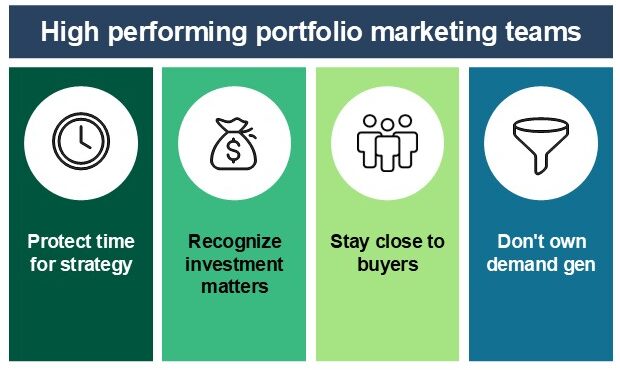
They Protect Time For Strategy
High-performing teams draw a hard line: Strategy comes first. They spend their time on market insight, buyer understanding, segmentation, and portfolio direction. And just as importantly, they actively avoid getting dragged into execution work that dilutes that focus.
That discipline pays off. One in three high performers meet or exceed their revenue plan, compared to just one in five low performers.
They Recognize That Portfolio Marketing Investment Matters
Low-performing teams fund activity. High-performing teams fund advantage. The best teams invest in skills, research, and enablement because they expect portfolio marketing to shape growth, not just support it. And they back that up with real commitment:
71% of high performers dedicate over 40 hours per year to professional development (vs. only 38% of low performers).
40% of high performers allocate more than 20% of total marketing program spend to product and portfolio marketing (vs. just 9% of low performers).
That’s not incremental. That’s a completely different mindset.
They Stay Obsessively Close To Buyers
High performers don’t treat personas and journey maps as one-and-done deliverables. They treat them as living systems. They’re constantly pressure-testing assumptions — by listening to sales calls, talking to customers, and refining insights in real time. In fact, 70% of high performers report speaking with 10 or more target buyers in the last month.
That level of proximity changes everything. Strategy becomes sharper. Messaging becomes clearer. Smart decisions get made faster.
And Here’s The Big One: They Don’t Own Demand Gen
This is where most teams need to rethink everything. High-performing portfolio marketing teams don’t try to own demand generation. They enable it. Why is this so important? Because the moment portfolio marketing gets pulled into execution, it loses the ability to set direction.
Instead, these teams focus on equipping demand and frontline teams with what they need: clear segments, sharp messaging, and actionable insight. Sixty-six percent of high performers report that demand/frontline teams use portfolio marketing’s defined market segments (vs. 48% of low performers).
The Big Takeaway
High-performing portfolio marketing isn’t about working harder. It’s about making intentional choices and working on the right things. It’s about investing in insight, not just output. It’s about saying no to execution creep. And it’s about unapologetically owning strategy.
For a more in-depth read on the survey findings and how high-performing teams outperform their peers, Forrester clients can check out my recently published report, written with my colleague Nicky Briggs.
If you’re interested in having a more detailed conversation with me on high-performing portfolio marketing practices, you can request a guidance session or inquiry.