Losing a hometown newspaper is a little like removing the front porch from every house. People still live there, but they don’t gather the same way. Before social media, newspapers were the glue of the community, keeping people in touch, informed, and bonded with their neighbors. A hundred years ago, many Americans knew the name of their mayor, sheriff, school superintendent, and city council members because their local paper covered them every week. Today, many people can name dozens of national politicians but can’t identify who approved the new development down the street. The loss of local newspapers means more than just technological progress; it means the loss of a way of life and so much more.
Newspapers Provided Connection and Inclusion
A local newspaper was like the town’s family photo album. Every week another page was added. It brought stories about neighbors; Mr. and Mrs. Smith opened a new grocery store, little Johnnie won the state spelling bee contest, and Tom and Sue announced their wedding engagement.
Newspapers brought neighbors and communities together as they talked about Friday night’s football game, the county fair coming up, and who would win the best pie contest or have the largest bull. They discussed the Fourth of July parade, if the mayor was doing a good job, and new local businesses opening. Reporters went to and reported on local city council meetings and other community events. Today, you may be able to find something online, but you wouldn’t likely find smaller news without a local paper. Now, people who live next door to each other likely read or watch completely different national news feeds.
Local newspapers were history books. Through them, you could find out when your grandparents married, who owned your house, what Main Street looked like in 1958, and who went to the 1966 prom. You may still find out some of this information online, but it likely won’t have the personal stories and details that you’d find in local media.
Social media changed the way we socialize. Instead of attending meetings, neighborhood watches, and even local events listed in newspapers, people now rely on neighborhood Facebook groups, Nextdoor, Reddit, and TikTok. These can spread information quickly but often lack verification or consistent coverage of local government. Research suggests people in news deserts increasingly turn to social media for local information. Without newspapers, communities lost part of their memory. They weren’t just reporting the story of a town. They were writing its first draft of history.
Changing Businesses
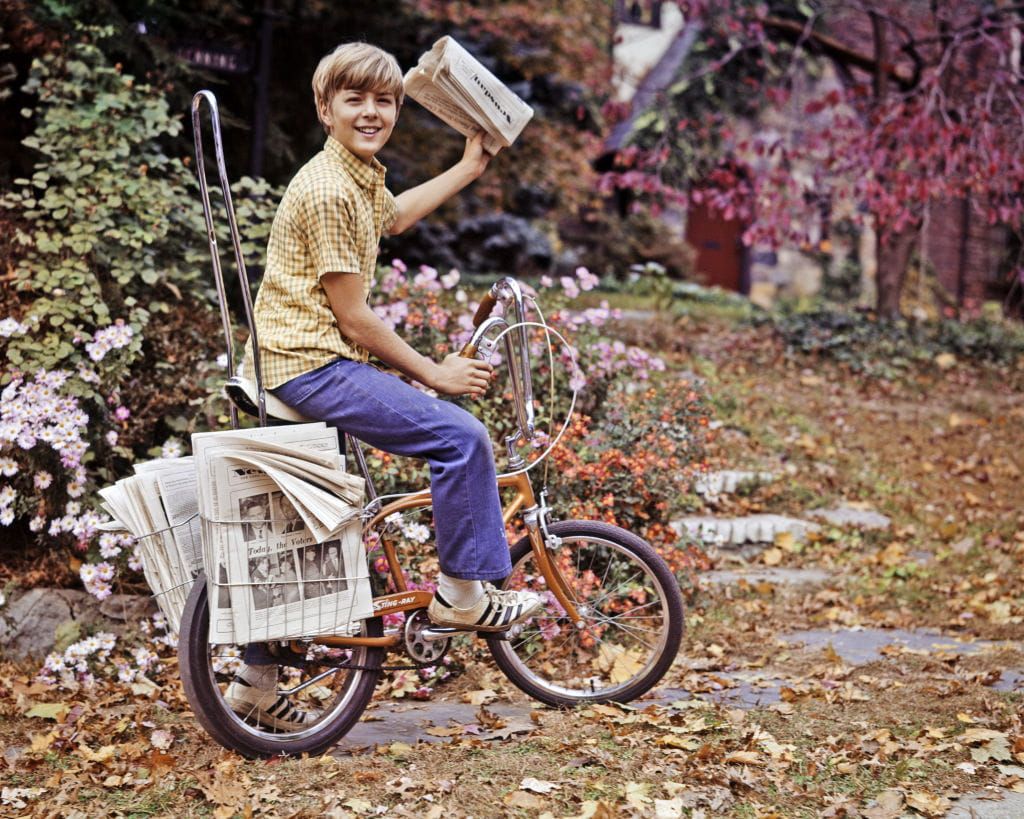
The loss of local newspapers didn’t just hurt communities, it changed businesses as well. Remember the days when the newspaper boy or girl delivered your news to you on your front porch – or in the sprinkler, driveway, or some other inconvenient place? A lot of people knew their delivery kids and would give them tips, cookies, or take some time to just visit and hear about town gossip. Gone are those days, and now we wake up and turn on our technical devices to devour information. No personal interaction or connections.
This was a good job for youngsters, providing them money, responsibility, and exercise. Instead of lying in bed playing their video games or searching YouTube videos, they were out being productive. In fact, many a famous person got their start delivering newspapers.
At age 13, Warren Buffett delivered both The Washington Post and other newspapers. He reportedly earned around $175 per month, more than many adults at the time, and even deducted his bicycle on his tax return, according to Biography. Some other noteworthy paperboys include Tom Brokaw, John Wayne, Martin Sheen, and David Letterman.
But that’s not all. Newspapers used to give all the content we need in one place. Take the classified ads for example. That’s where we turned to buy furniture, cars, rent apartments or look at homes for sale, seek out jobs, and so on. The National Endowment for the Humanities said that many marriages, careers, and businesses started because of newspaper classifieds. Now, Craigslist, Facebook Marketplace, Zillow, Indeed, and eBay have divided up what newspapers once did in one publication.
Newspapers used to also include the weather forecasts, comics, TV listings, recipes, crossword puzzles, movie times, and sports. Now, all these functions have their own apps, which can cause digital overload trying to keep up with everything!
Kept Local Governments Honest
One reason the Founding Fathers valued a free press wasn’t just to criticize Washington and politicians, it was also to watch city halls, county commissioners, school boards, sheriffs, zoning boards, and even tax districts. When reporters stop attending city council meetings, investigating contracts, or covering local government, investors have less independent information about how well that government is being run.
A 2018 study, titled “Financing Dies in Darkness? The Impact of Newspaper Closures on Public Finance,” examined 1,600 local newspapers serving 1,266 US counties between 1996 and 2015. It asked the question: What happens when investors decide how much to charge cities and counties to borrow money after a local newspaper closes since cities borrow funds by issuing municipal bonds to pay for things like schools, roads, bridges, police stations, etc. If investors think a local government is risky or poorly monitored, they demand higher interest rates.
“Following a newspaper closure, municipal borrowing costs increase by 5 to 11 basis points, costing the municipality an additional $650 thousand per issue,” the study found. “This effect is causal and not driven by underlying economic conditions.” Furthermore, “Overall, our results indicate that local newspapers hold their governments accountable, keeping municipal borrowing costs low and ultimately saving local taxpayers money.”
“When local newspapers aren’t there to hold governments accountable, we see costs increase due to a lack of scrutiny over local deals,” Pengjie Gao of the University of Notre Dame, the study’s lead author, said in a news release. “Also, the increase in borrowing costs tends to happen only when the last newspaper disappears, not when one leaves but others remain, indicating it’s the paper’s watchdog function rather than economics driving the effect.”
A free society depends on informed citizens, and for generations, local newspapers helped make that possible. They reminded Americans that liberty begins at home; that where neighbors know one another, communities stay connected; and that local news let local leaders know someone is paying attention. We may never return to the heyday of the hometown paper, but perhaps we can reclaim the spirit that made it so valuable.