No Result
View All Result
  • Login
Monday, September 14, 2026
FeeOnlyNews.com
  • Home
  • Business
  • Financial Planning
  • Personal Finance
  • Investing
  • Money
  • Economy
  • Markets
  • Stocks
  • Trading
  • Home
  • Business
  • Financial Planning
  • Personal Finance
  • Investing
  • Money
  • Economy
  • Markets
  • Stocks
  • Trading
No Result
View All Result
FeeOnlyNews.com
No Result
View All Result
Home Economy

Why Thales Still Matters | Mises Institute

by FeeOnlyNews.com
3 months ago
in Economy
Reading Time: 4 mins read
A A
0
Why Thales Still Matters | Mises Institute
Share on FacebookShare on TwitterShare on LInkedIn


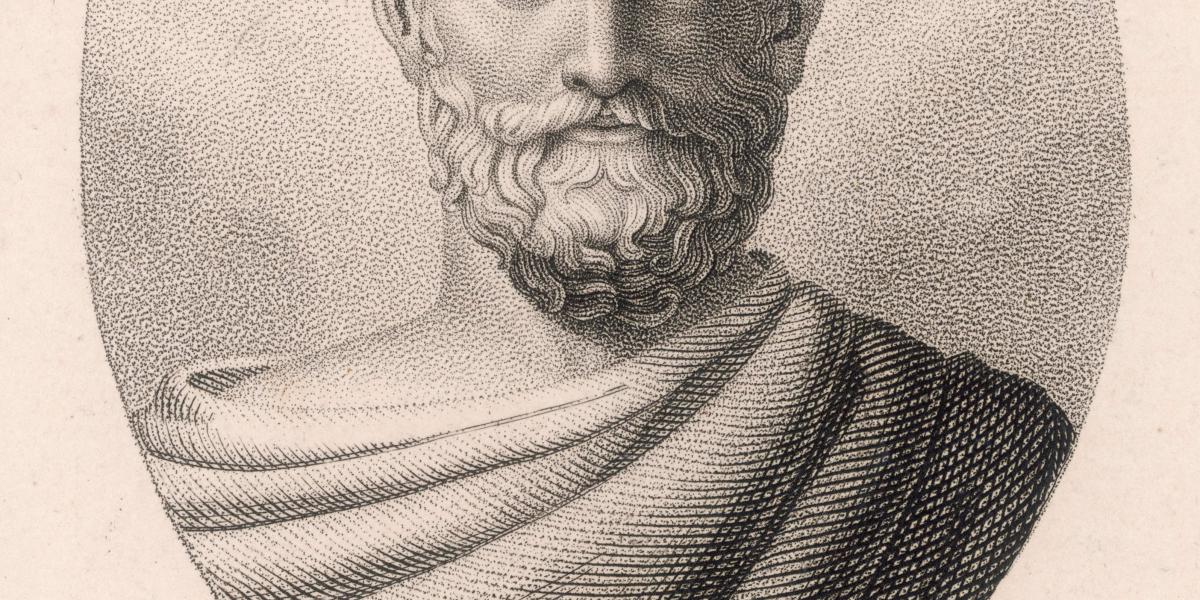
Western philosophy begins not with a system, but with a question. When Thales of Miletus asked what underlying principle governed the cosmos, he inaugurated something far greater than a theory about nature. He introduced the conviction that reality possesses an intelligible order accessible to human reason.

This shift may seem unremarkable to the modern mind, yet, in the ancient world, it represented a profound civilizational rupture. Before Thales, the structure of the cosmos was explained primarily through myth, divine genealogies, and sacred narratives. Nature reflected the will of gods, not principles discoverable through inquiry.

Thales altered the direction of Western thought by seeking a rational explanation for the world from within nature itself.

Living in Miletus during the late seventh and early sixth centuries BC, in a city shaped by commerce, navigation, and contact with Egypt and Babylon, Thales embodied both the practical and speculative spirit of the early Greek world. According to Aristotle, Herodotus, and Diogenes Laërtius, he was not merely a philosopher, but also an astronomer, engineer, geometer, and political thinker. He studied eclipses, measured pyramids, observed the stars, and searched for patterns beneath the visible order of things.

What distinguished him from earlier traditions was not technical knowledge alone, but the belief that the world contained an internal coherence that human reason could discover.

The Milesians called this originating principle the arché—a word meaning beginning, source, and governing principle simultaneously. It became the starting point of natural philosophy. The question that moved Thales was simple yet radical: What is the world ultimately made of? Is there a primordial principle from which all things emerge and to which all things return?

For Thales, that principle was water. To modern readers, this conclusion may appear primitive or naïve. Yet such a reaction misunderstands the significance of his insight. The importance of Thales lies not primarily in the substance he identified, but in the method he introduced. For the first time in Western thought, nature was approached as something governed by intelligible causes rather than divine genealogy alone.

Aristotle later explained the reasoning behind these first philosophers in Metaphysics (I, 3). They sought a permanent reality underlying change itself, something from which all things emerged and to which all things returned. Though forms changed, some enduring substrate remained.

Thales observed that life depended upon moisture. Seeds were moist, nourishment required moisture, and living beings could not survive without it. From these observations he concluded that water was the originating principle of nature.

This choice was not arbitrary. Across nearly all ancient civilizations, water symbolized life, fertility, destruction, continuity, and renewal. The Nile shaped Egypt. The Tigris and Euphrates sustained Mesopotamia. The Indus, Ganges, and Yellow River nourished entire civilizations in the East. Water stood at the boundary between chaos and order.

Thales transformed this ancient intuition into rational inquiry. In doing so, he initiated one of the most important transitions in human history: the movement from myth toward reason.

The symbolic force of water carried an even deeper philosophical significance. Water is always in motion, yet it preserves its identity. It is the same in rain, river, and sea. Within it coexist permanence and transformation, what Heraclitus would later recognize as becoming. Without fully realizing it, Thales anticipated one of the central tensions of Western philosophy: the relationship between being and change.

His gesture also marked the birth of physis, nature understood as an autonomous and intelligible reality. The world was no longer interpreted merely through sacred narrative or divine caprice, but through patterns, causes, and discoverable principles. When Thales measured the shadow of a pyramid or calculated an eclipse, he was doing more than mathematics. He was demonstrating that the order of the cosmos could be known.

This confidence in rational intelligibility was revolutionary. The cosmos ceased to be merely a prison of fate and became instead an architecture of reason. The world was intelligible not because man controlled it, but because he participated in it through thought itself.

The stories surrounding Thales are deeply symbolic. One tradition claims he fell into a well while observing the stars, a warning about philosophers who gaze toward heaven while neglecting the ground beneath them. Yet another story presents a very different image. Aristotle recounts that Thales predicted an abundant olive harvest and secured the local olive presses in advance, becoming wealthy when demand surged.

In that episode, knowledge becomes foresight, foresight becomes decision, and decision becomes exchange. Thought orders time, and in doing so, creates value. Without naming it, Thales anticipated something remarkably close to the economic principle of rational action under conditions of scarcity. For this reason, Thales still matters.

Thales matters not because modern science confirms his cosmology, but because he helped establish the intellectual habit upon which both science and philosophy depend: the belief that reality possesses an order discoverable through reason.

When Aristotle later called him the first philosopher, he was not merely offering retrospective praise. He recognized in Thales the archetype of the thinker, the man who—faced with the multiplicity of the world—sought the principle capable of unifying it. That principle was water, the first mirror in which Western civilization saw reflected the possibility of reason itself.



Source link

Tags: InstituteMattersMisesThales
ShareTweetShare
Previous Post

Home purchases by foreign residents fall

Next Post

AI Models Led to ‘Vulnerability Apocalypse’ in Crypto Security: Immunefi CEO

Related Posts

Republican Party Displacement | Mises Institute

Republican Party Displacement | Mises Institute

by FeeOnlyNews.com
August 8, 2026
0

Mark Thornton returns to Rothbard’s idea of major party realignment, arguing that ideology—not interest-group politics alone—drives long-term political change. He...

Democrats’ Affordability Message Misses a Key Expense—Student Debt

Democrats’ Affordability Message Misses a Key Expense—Student Debt

by FeeOnlyNews.com
August 8, 2026
0

Yves here. Although this article on student debt traps does not make these assumptions, many articles I see about student...

The Unwinnable Iran War | Armstrong Economics

The Unwinnable Iran War | Armstrong Economics

by FeeOnlyNews.com
August 8, 2026
0

I have reported that Trump was mislead into this unwinnable war with Iran, which has been planning for it since...

Here are three key takeaways from the disappointing July jobs report

Here are three key takeaways from the disappointing July jobs report

by FeeOnlyNews.com
August 7, 2026
0

Job seekers speak with employer representatives and browse information tables as they attend an Inspire Together job and resource fair...

Coffee Break: Gene Editing Gone Wrong, Plants that Eat Animals, and a Neanderthal Gene that Makes a Difference

Coffee Break: Gene Editing Gone Wrong, Plants that Eat Animals, and a Neanderthal Gene that Makes a Difference

by FeeOnlyNews.com
August 7, 2026
0

Part the First: If You Stretch Biomedical Science Too Far It Breaks, Every Time.  Gene editing using CRISPR technology has...

Netanyahu’s Scorched Earth Tactics | Armstrong Economics

Netanyahu’s Scorched Earth Tactics | Armstrong Economics

by FeeOnlyNews.com
August 7, 2026
0

According to formal complaints lodged by Lebanon with the United Nations, Israel did spray a toxic herbicide over agricultural land...

Next Post
AI Models Led to ‘Vulnerability Apocalypse’ in Crypto Security: Immunefi CEO

AI Models Led to ‘Vulnerability Apocalypse’ in Crypto Security: Immunefi CEO

Retail Crypto Trading in Japan May Face Major Reset as Tax Cut Plan Advances in Lower House

Retail Crypto Trading in Japan May Face Major Reset as Tax Cut Plan Advances in Lower House

  • Trending
  • Comments
  • Latest
Bitcoin and ethereum prices today, Friday, August 7, 2026: Crypto prices moving higher following July jobs report

Bitcoin and ethereum prices today, Friday, August 7, 2026: Crypto prices moving higher following July jobs report

August 7, 2026
MEXC Lists Ondo Yield Asset As Tokenized Treasury Demand Grows

MEXC Lists Ondo Yield Asset As Tokenized Treasury Demand Grows

July 3, 2026
Delek Logistics Partners Reports alt=

Delek Logistics Partners Reports $0.54 EPS for Q2 FY26

August 5, 2026
Onkure Therapeutics Releases Q2 2026 Financial Results

Onkure Therapeutics Releases Q2 2026 Financial Results

August 4, 2026
Thryv outlines M run-rate savings while revising 2026 SaaS adjusted EBITDA to M-M (NASDAQ:THRY)

Thryv outlines $60M run-rate savings while revising 2026 SaaS adjusted EBITDA to $42M-$44M (NASDAQ:THRY)

August 4, 2026
My Thoughts on Going All In

My Thoughts on Going All In

August 4, 2026
Advanced Micro Devices (AMD) Price Prediction: How Much a ,000 Investment Could Be Worth by 2031

Advanced Micro Devices (AMD) Price Prediction: How Much a $5,000 Investment Could Be Worth by 2031

0
Cities holding up to 3 million people found under Amazon rain forest

Cities holding up to 3 million people found under Amazon rain forest

0
Republican Party Displacement | Mises Institute

Republican Party Displacement | Mises Institute

0
Bybit Uses Tokenised Equities as Underlyings for Structured Yield

Bybit Uses Tokenised Equities as Underlyings for Structured Yield

0
Explained: How BSE traded fewer contracts after CAS but premiums rose 75% in first week

Explained: How BSE traded fewer contracts after CAS but premiums rose 75% in first week

0
Vaxart outlines Phase IIb COVID-19 top line data in first half of 2027 backed by BARDA funding (OTCMKTS:VXRT)

Vaxart outlines Phase IIb COVID-19 top line data in first half of 2027 backed by BARDA funding (OTCMKTS:VXRT)

0
Advanced Micro Devices (AMD) Price Prediction: How Much a ,000 Investment Could Be Worth by 2031

Advanced Micro Devices (AMD) Price Prediction: How Much a $5,000 Investment Could Be Worth by 2031

August 8, 2026
Republican Party Displacement | Mises Institute

Republican Party Displacement | Mises Institute

August 8, 2026
Vanguard Chief Economist: AI and jobs, still in an ATM phase

Vanguard Chief Economist: AI and jobs, still in an ATM phase

August 8, 2026
Explained: How BSE traded fewer contracts after CAS but premiums rose 75% in first week

Explained: How BSE traded fewer contracts after CAS but premiums rose 75% in first week

August 8, 2026
Democrats’ Affordability Message Misses a Key Expense—Student Debt

Democrats’ Affordability Message Misses a Key Expense—Student Debt

August 8, 2026
Banks or NBFCs? DSP’s Preethi R S explains where she sees the best opportunities

Banks or NBFCs? DSP’s Preethi R S explains where she sees the best opportunities

August 8, 2026
FeeOnlyNews.com

Get the latest news and follow the coverage of Business & Financial News, Stock Market Updates, Analysis, and more from the trusted sources.

CATEGORIES

  • Business
  • Cryptocurrency
  • Economy
  • Financial Planning
  • Investing
  • Market Analysis
  • Markets
  • Money
  • Personal Finance
  • Startups
  • Stock Market
  • Trading

LATEST UPDATES

  • Advanced Micro Devices (AMD) Price Prediction: How Much a $5,000 Investment Could Be Worth by 2031
  • Republican Party Displacement | Mises Institute
  • Vanguard Chief Economist: AI and jobs, still in an ATM phase
  • Our Great Privacy Policy
  • Terms of Use, Legal Notices & Disclaimers
  • About Us
  • Contact Us

Copyright © 2022-2024 All Rights Reserved
See articles for original source and related links to external sites.

Welcome Back!

Sign In with Facebook
Sign In with Google
Sign In with Linked In
OR

Login to your account below

Forgotten Password?

Retrieve your password

Please enter your username or email address to reset your password.

Log In
No Result
View All Result
  • Home
  • Business
  • Financial Planning
  • Personal Finance
  • Investing
  • Money
  • Economy
  • Markets
  • Stocks
  • Trading

Copyright © 2022-2024 All Rights Reserved
See articles for original source and related links to external sites.