Hardware businesses do not trade at software multiples. Except, apparently, when they sit on top of an Indian government subsidy pipeline that nobody outside the country has bothered to read carefully.
Indian rooftop solar startup SolarSquare is in advanced talks to raise $55–60 million in a Series C round co-led by B Capital and Lightspeed Venture Partners, according to TechCrunch. The financing would value the Mumbai-based company at between $450 million and $500 million, more than double its valuation 18 months ago, and signals how aggressively growth-stage capital is now flowing into India’s residential energy transition.
The deal terms
Lightspeed previously led SolarSquare’s $40 million Series B in December 2024 at a roughly $200 million post-money valuation. This time, the firm is investing through its growth fund, the same vehicle behind Indian payments leader Razorpay and quick-commerce company Zepto. Existing investor Elevation Capital is also expected to participate, with the round slated to close next month. SolarSquare has raised $61.1 million in equity to date, according to startup data platform Tracxn.
A full-stack play in a fragmented market
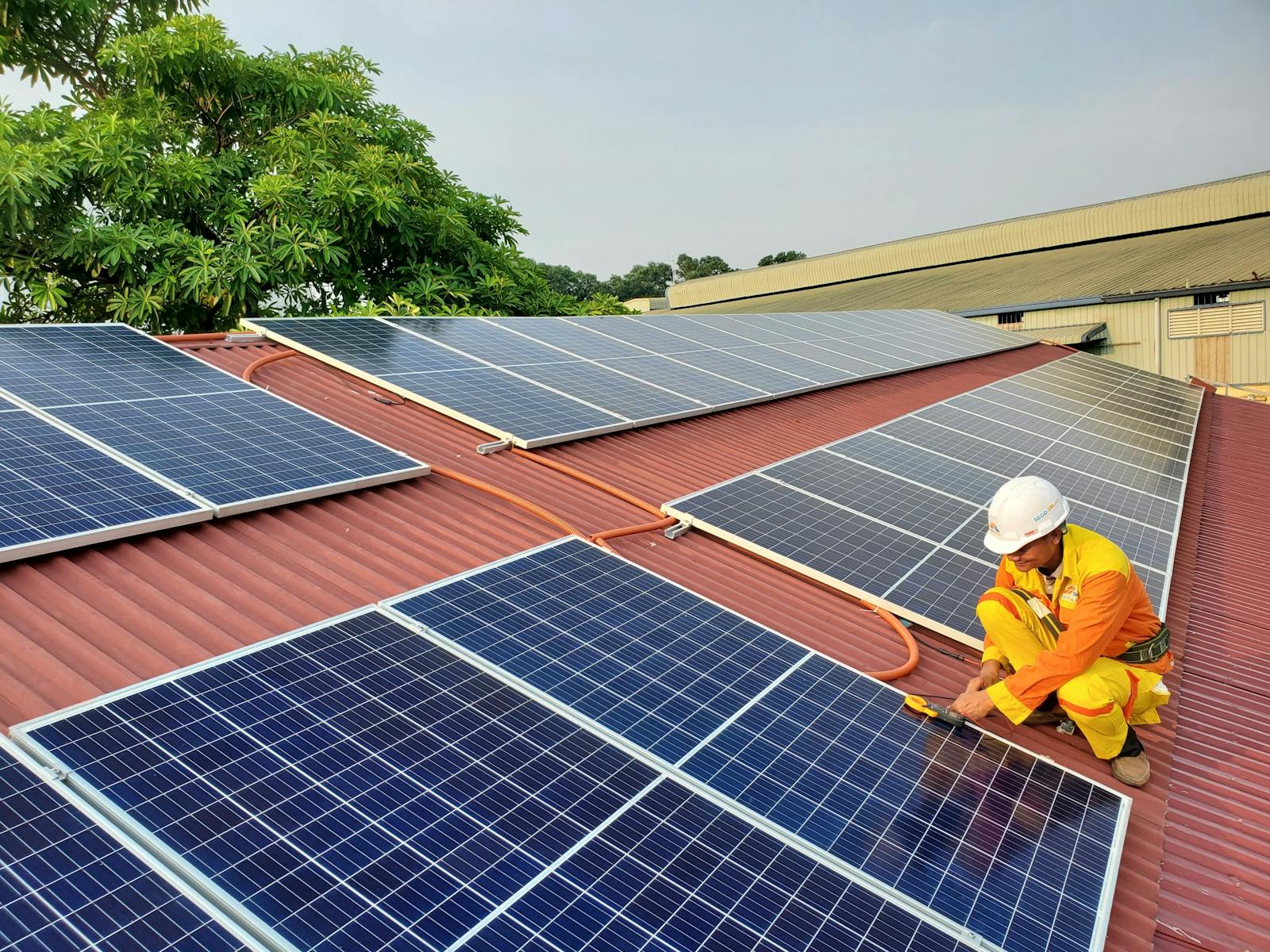
Founded in 2015, SolarSquare designs, installs, and maintains rooftop solar systems for homes, housing societies, and enterprises. The company operates across 29 cities in nine states, has installed more than 150 megawatts of capacity, and has powered close to 50,000 homes and around 400 housing societies. Annualised revenue has crossed ₹10 billion (about $104 million), and the company is targeting 200 MW of residential portfolio capacity this year.
The strategic shift visible in the numbers is the move away from lower-margin industrial rooftop projects toward residential and housing-society customers, where margins are higher and the competition is structurally weaker. India’s rooftop solar market is dominated by small local installers and dealer networks tied to component manufacturers such as Tata Power, Waaree Energies, Luminous, and Exide. A vertically integrated player offering financing, subsidy paperwork, installation, and maintenance under one brand is rare. That is the moat investors are pricing.
The subsidy mechanics creating the arbitrage
India has committed to 500 gigawatts of renewable energy capacity by 2030, with solar expected to contribute more than half. The country’s cumulative installed solar capacity has gone from roughly 3 GW in 2014, according to government figures, to more than 150 GW in 2026, per the Ministry of New and Renewable Energy. India became the world’s third-largest solar power producer in 2025, behind only China and the United States.
That growth has been engineered, not organic. The PM Surya Ghar Muft Bijli Yojana, launched in February 2024, provides direct central subsidies of ₹30,000 per kilowatt for the first 2 kW and ₹18,000 for the third, capped at ₹78,000 per household, disbursed directly to the consumer’s bank account after installation by an empanelled vendor. State top-ups stack on top: Uttar Pradesh adds up to ₹30,000 per installation, and several states offer concessional loans at 7 percent. The crucial detail foreign investors often miss is that subsidy disbursal flows through registered installers who handle the entire DISCOM application, net-metering inspection, and reimbursement claim. That paperwork bottleneck is the arbitrage. Whoever owns the empanelment and subsidy-administration layer effectively owns the customer, because households cannot access the money any other way.
What the valuation actually reflects
A $450–500 million valuation on roughly $104 million in annualised revenue puts SolarSquare at around 4.5–5x revenue. That is roughly double what listed Indian solar EPC peers trade at. Waaree and Premier Energies sit closer to 2–3x forward revenue, and the SolarSquare number approaches the 5–8x band typical of Indian SaaS growth rounds. Pure hardware-installation businesses globally rarely clear 1.5x revenue. The gap is what needs explaining.
What investors appear to be paying for is distribution plus an annuity tail. A typical residential installation generates a one-time hardware-and-installation margin of 12–18 percent on a ticket size of ₹2.5–4 lakh, but it also locks in a 25-year operations-and-maintenance contract billed annually at roughly 1–2 percent of system cost, plus inverter replacement cycles every 8–10 years. Run that math across 50,000 installed homes growing toward 200 MW of new capacity this year, and a meaningful share of forward revenue becomes contracted, recurring, and high-margin. Closer to a SaaS gross-margin profile than a contractor’s. Layer in the subsidy-administration lock-in described above, and the customer-acquisition cost amortises across two decades of cashflow rather than a single transaction. That is the underwriting case for software-style multiples on what looks like a hardware business.
The parallel worth noting is how Silicon Canals recently examined ICEYE’s debt-financed pivot: climate-coded businesses are increasingly being underwritten not on their environmental thesis but on the recurring, contracted revenue streams underneath.
SolarSquare, B Capital, Lightspeed, and Elevation Capital declined to comment or did not respond to queries. Terms could still change before close.