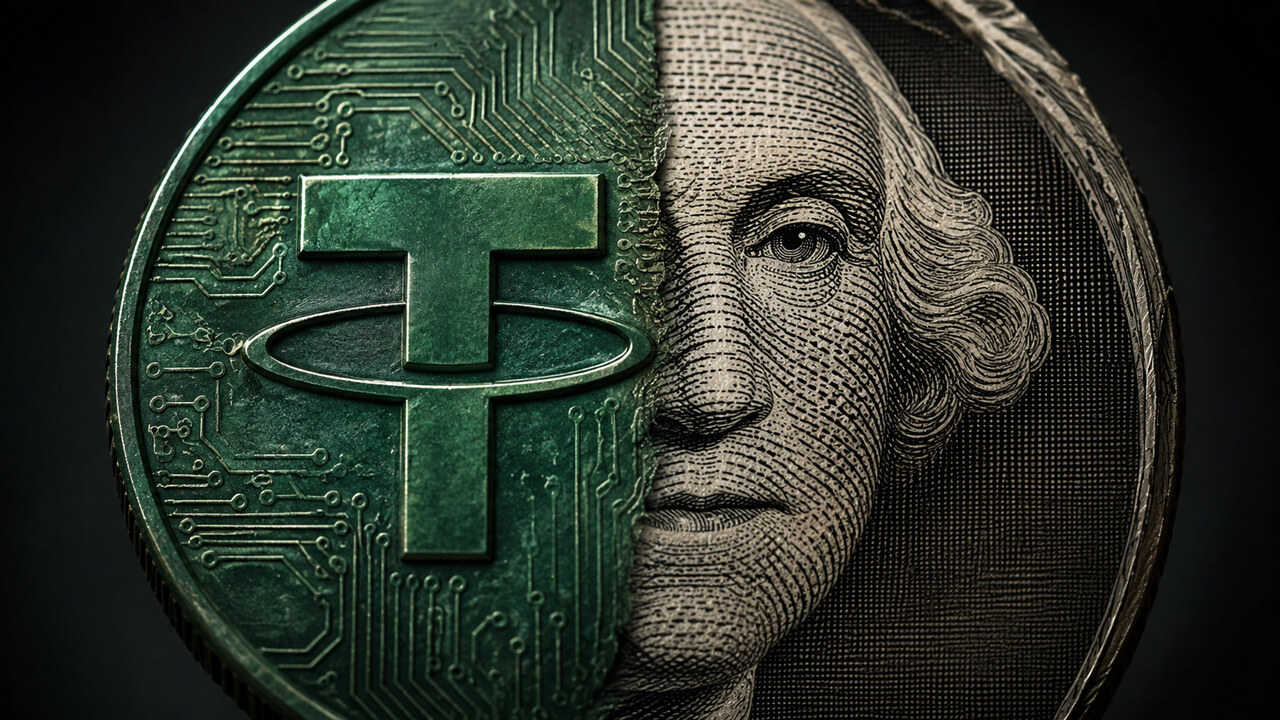


There’s a huge contradiction sitting at the center of modern American finance. The same industry regulators tried to isolate from the mainstream financial system has become one of the largest US Treasury buyers on the planet.
Tether, the company behind the world’s largest stablecoin USDT, closed 2025 with total direct and indirect exposure to US Treasuries surpassing $141 billion, making it one of the largest holders of American government debt worldwide. The company itself said it was the 17th largest overall, and the largest non-sovereign holder of US debt, a ranking that makes some policymakers nervous and others genuinely relieved.
The US government spent years debating whether to ban digital assets like stablecoins, restrict them, or treat them as a fringe curiosity.
Then, finally, after over a decade of a legal standstill, it signed legislation designed to make stablecoins part of the US financial system.
The GENIUS Act, signed into law by President Trump on July 18, 2025, after passing the Senate 68-30 and the House 308-122, established the first federal regulatory framework for stablecoins in US history. Its core requirement is that stablecoin issuers must maintain 100% reserve backing with liquid assets like US dollars or short-term Treasuries, with monthly public disclosures of reserve composition.
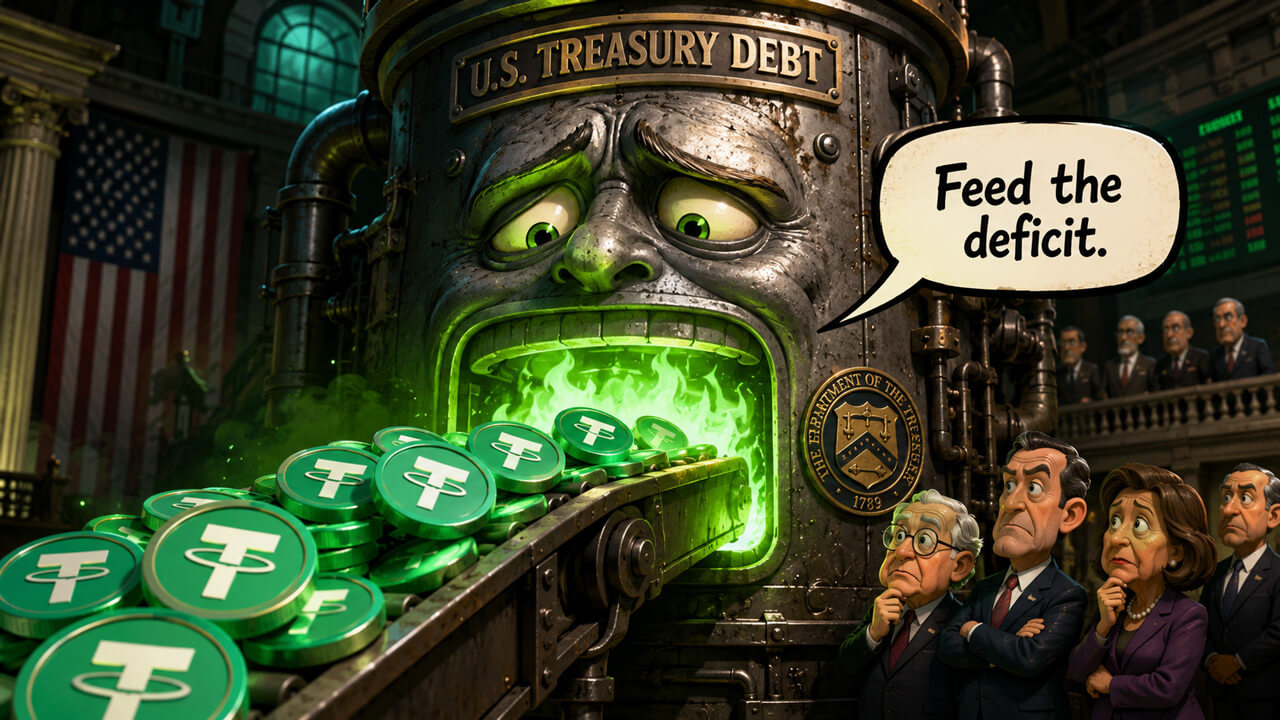
Treasury Secretary Scott Bessent called that provision a “debt relief engine” on the day the Senate voted, saying that stablecoin reserves parked largely in short-dated Treasuries would lift demand for the securities and ease financing pressure on the government. If the stablecoin market expands toward the $1.9 trillion base-case projections analysts are now using for 2030, that reserve mandate effectively hard-wires an enormous and perpetually growing source of demand into US sovereign debt markets.
How Tether became a Treasury buyer
It’s important to understand how Tether became such a systemically relevant bond buyer.
Every USDT the company issues represents a dollar taken from a user, and that dollar has to sit somewhere. After years of controversy over reserve quality and significant scrutiny following the 2022 FTX collapse, Tether pivoted toward what many see as the safest, most liquid asset class available.
By March 2025, 81.5% of Tether’s total $149.3 billion in reserves were held in cash, cash equivalents, and short-term deposits, primarily US government debt, with the bulk composed of $98.5 billion in direct Treasury bills and $15.1 billion in overnight repo agreements.
The structure is self-reinforcing in a way that tradfi hasn’t really seen before: as more people globally want access to digital dollars, Tether issues more USDT, collects more cash, and pours it straight back into American sovereign debt.
The IMF’s July 2025 External Sector Report noted that Tether and Circle collectively hold more US Treasuries than Saudi Arabia, and argued that increased international adoption of dollar-backed stablecoins could raise demand for US Treasuries, effectively reinforcing the country’s position as the world’s banker and helping stabilize its finances and external deficits.
That’s a pretty unusual setup by almost any measure: a private company registered in El Salvador, operating a product regulators once classified alongside speculative tokens, has become a structural source of demand in the market Washington uses to fund itself.
As CryptoSlate reported, the GENIUS Act would require issuers to fully back their tokens with “high-quality” liquid assets, including short-term Treasuries. This will institutionalize Treasury investment requirements across the entire stablecoin sector and anchor digital dollars within US financial infrastructure far more deeply than most people outside the bond market have registered.
The CLARITY Act, which passed the House 294-134 alongside the GENIUS Act and now awaits the Senate, extends that further into market structure. Taken together, these two bills are an acknowledgment that stablecoin infrastructure has grown large enough that designing around it is a less practical ambition than designing with it.
The banking system’s uncomfortable reckoning
The consequences flowing from this integration are complex, and they pull in multiple directions simultaneously.
The most politically charged one is the threat to traditional deposit banking. An April 2025 US Treasury report estimated that stablecoins have the potential to drain as much as $6.6 trillion in deposits from the banking system. A Citigroup executive echoed that figure publicly, and a more recent Citi Institute report suggested stablecoin growth could extract up to $1 trillion in domestic bank deposits by 2030.
The Federal Reserve’s own research was more cautious but still pointed. It said that large institutions with the scale, technological capacity, and regulatory expertise to participate in the stablecoin ecosystem may “offset potential disintermediation by issuing tokenized deposits and offering custodial services,” while smaller and less digitally advanced institutions face more serious headwinds, with their deposit base eroding and funding costs rising in ways their lending models weren’t built to absorb.
The banking lobby’s anxiety has translated into concrete policy pressure throughout the GENIUS Act’s construction. The law prohibits stablecoin issuers from paying yield to holders directly, a provision widely read as a concession to traditional banks, who argued that yield-bearing stablecoins would force a competitive repricing of deposit rates their business models can’t sustain.
Standard Chartered estimated stablecoins could pull roughly $500 billion in deposits out of US banks by the end of 2028, even under current restrictions. The real dispute animating GENIUS Act rulemaking through 2026 and into 2027 is whether third-party platforms and wallets can pay holders rewards funded by the yield those reserves generate, a question that’ll determine whether stablecoins function as genuinely competitive financial instruments or remain structurally constrained by regulatory design.
As CryptoSlate’s coverage of the rulemaking battle noted, Treasury’s proposed implementation rules are already showing how Washington intends to narrow the door it opened through legislation.
What happens when the structure gets stress-tested
The systemic risk surrounding stablecoins and their integration into mainstream finance is hard to deny. Despite the very clear language in both the GENIUS and the CLARITY Acts, regulators are still concerned.
The IMF warned that the $305 billion stablecoin market could threaten traditional lending, hamper monetary policy, and trigger a run on some of the world’s safest assets. The stress scenario runs like this: if confidence in a major stablecoin breaks and large redemptions spike simultaneously, issuers would need to liquidate Treasury positions into a market that may already be under pressure.
The IMF has characterized stablecoins as resembling money market funds more than actual money, warning they could face confidence-driven runs as tokenized finance scales, with liquidity crises potentially materializing instantly in systems built for continuous, automated settlement rather than the batch processing that gives traditional regulators time to intervene.
What makes this truly difficult to resolve is that the two most compelling arguments about stablecoins are both grounded in real evidence and pulling hard in opposite directions.
Bessent’s projection of a $3.7 trillion stablecoin market by 2030 becoming more likely with the GENIUS Act, represents a structural demand source for US debt that the Treasury finds appealing at a moment of elevated deficit financing pressure.
The IMF’s warning that this same system could transmit shocks at machine speed across borders represents an equally real risk that the legislation hasn’t resolved.
Stablecoins began as infrastructure for crypto traders and are now carrying the weight of arguments about dollar dominance, bank solvency, sovereign debt demand, and systemic liquidity risk all at once. That’s a convergence that Washington clearly didn’t anticipate when it first started drawing up rules for what it assumed was a peripheral asset class.
At some point in the not-too-distant future, the question of government tolerance for stablecoins will likely give way to a much harder one: how to manage a global financial system that’s already been reshaped around them.