A list of ETFs that may be subject to a fee of up to $100 for each client buy order at Fidelity Investments starting next month offered a rare lens into today’s custody business.
Processing Content
Beginning June 1, investors in ETFs offered by sponsors “that do not pay Fidelity a direct, asset-based fee” will draw a transaction charge of 5% of the value of the purchase, according to a document released by the giant brokerage, investment management, financial technology and custodian to registered investment advisory firms and other wealth management companies. Fidelity has capped the fee at no more than $100. But the precise language of the disclosure demonstrates the power of industry scale and private negotiations in the investment business.
The incoming revenue from the sponsors will “support their ETFs’ availability on our brokerage platform, including support for shareholder support services, the provision of calculation and analytical tools and general investment research and education materials regarding ETFs,” the document stated. “The complete list of ETFs currently subject to this service fee can be found below. This list is subject to change without notice.”
Financial arrangements between asset management firms, brokerages, custodians, wealth management firms and other service providers that are part of the investment ecosystem have been flowing across the industry for decades. However, Fidelity’s latest move to secure revenue from ETF sponsors who are part of the disruption of mutual funds’ dominance highlights the crucial role of that business line for custodians and other investment companies. And it demonstrates how Fidelity’s reticence against discussing its massive custodian business publicly belies the private company’s strong power moves behind the scenes.
READ MORE: Why the book-an-appointment tab is high-stakes for financial advisors
The available information on Fidelity custody
In response to inquiries as part of Financial Planning’s second story in an ongoing series on the services, fees and business models of the wealth management industry’s custodians, representatives for Fidelity cited scheduling conflicts that prohibited any executives from Fidelity Institutional Wealth Management Services being available for an interview. Instead, the firm responded to a series of questions with certain information and prepared statements.
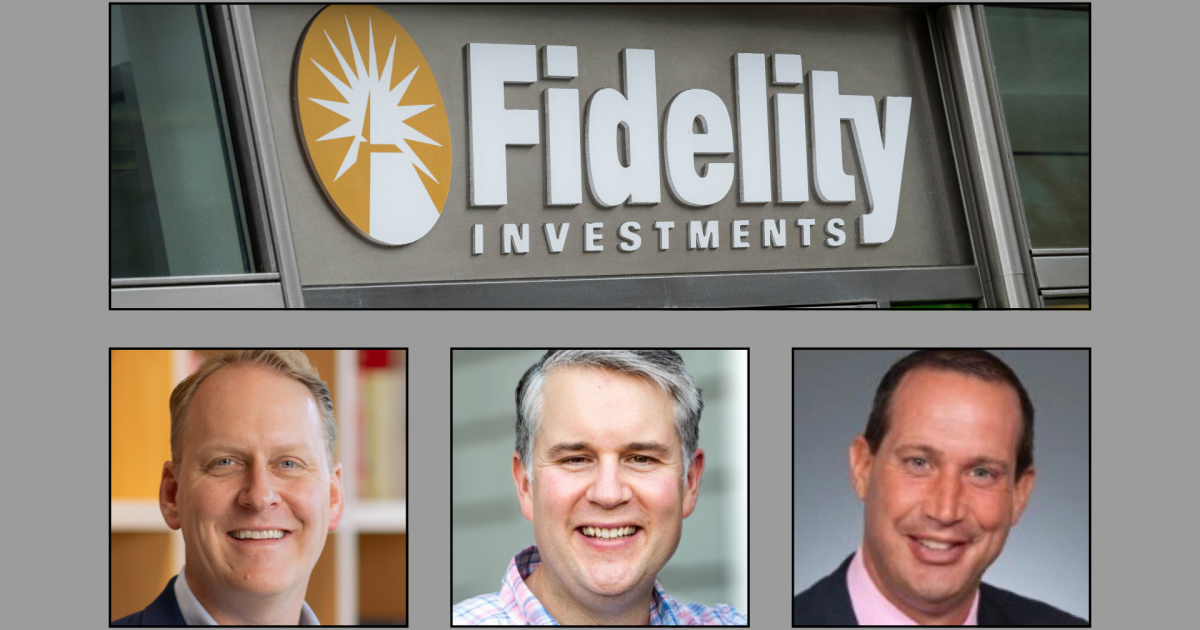
Since January, Steve Richard has been the head of Fidelity’s clearing and custody business, reporting to Vadim Zlotnikov, the head of Fidelity Institutional. And Richard’s reports include Head of Custody Trevor Norton, who leads the company’s custody unit for RIAs and family offices, and Head of Clearing Marc Squires, who’s in charge of the unit for broker-dealers.
“Fidelity has been a leading provider of clearing and custody services for more than four decades,” Richard said in a statement. “We often talk about our size and scale to help our clients grow, and our longstanding commitment to this business is a testament to that — clients can tap Fidelity’s brokerage, investing and other market-leading businesses.”
Since the firm is “focused on value creation to help our clients grow their businesses,” the costs of Fidelity’s services come down to “a relationship-based pricing approach” that is mutually beneficial to each side, Norton said.
“Our approach reflects our commitment to continuously investing in the tools and resources that are critical to helping our custody clients grow, including exceptional client service, practice management insights and support, and our vast suite of flexible, open-architecture investment solutions, technology and trading capabilities,” he said. “I believe our clients recognize the total cost of ownership of a Fidelity account — including the yield on commissions and other fees, availability of institutional fund share classes and borrowing costs — and choose to custody assets with us for the holistic value provided.”
At a size of $5.5 trillion in assets under administration among roughly 3,300 RIAs and other wealth management firms that use Fidelity’s clearing and custody business, Fidelity can choose its forums for any cost-benefit discussions. In contrast to its largest rival, publicly traded Charles Schwab, Fidelity had no available listing of the starting price tags for clearing and custody services used by financial advisors. But, at about 5.5 million daily trades in 48 capital markets and 21 currencies, the firm led by CEO Abigail Johnson is no less of a force in wealth management and investing.
And it has a different customer base from Schwab’s as a clearing and custody firm — while Schwab Advisor Services predominantly works with independent RIAs, Fidelity services those firms plus wealth management companies that are dually registered as brokerages and RIAs and often known by their industry moniker “broker-dealers.” In fact, even though Fidelity doesn’t publicly break down the size of its business with each type of firm, it and BNY’s Pershing are known as the two largest clearing and custody firms for BDs.
Regardless of that variance in industry classifications, custodians to any wealth management firms make money through transaction charges paid by investors, expenses for fund companies with products available on their menu and interest revenue generated from cash sweeps and lending of liquid holdings.
In the days before ETFs entered the picture, custodians could depend on “very lucrative revenue streams” based on mutual funds that made the services to RIAs and wealth management firms “an incredible business,” according to Tim Welsh, founder of Nexus Strategy, a consulting firm he launched after tenures with Schwab Advisor Services and Merrill. Fidelity and Schwab can still exert their size and capabilities across the industry. But the so-called race to zero fees and a trend toward RIAs using several custodians have altered that business.
“It has been an opaque process, but it’s even more so now,” Welsh said. “There’s no exclusivity anymore in terms of, ‘Hey, we’ve got cool products.’ It’s all now about service, because that’s what advisors worry about.”
Welsh said the specialized service desks offered by Schwab and Fidelity build in an advantage when working with advisors posing complex problems, and both can point to lengthy track records of aiding wealth management firms that have grown with a boost from their assistance.
READ MORE: An industry maverick’s latest plan to draw advisors from the giants
Scale and competition
Atlanta-based RIA platform Advisory Services Network is an example of one firm that credits Fidelity for enabling it to reach its current size of more than $11 billion in client assets across more than 200 offices and almost 260 advisors. When including turnkey asset management programs, the firm uses five other custodians as well, according to Trey Prescott, Advisory Services’ director of business development. But Fidelity was its first custodian and remains its largest. Through it and an array of other vendors, Advisory Services can pitch independent advisors a full menu of RIA services at a tiered fee of 0.08% to 0.12% of client assets.
“Fidelity is a fantastic custodian,” Prescott said. “Fidelity was the first custodian to actually say yes to ASN as a custodial relationship when we had no assets under management. … They were the first custodian to believe in our story.”
But more independent firms are working with multiple custodians “for choice as they’re recruiting advisors” who often balk at the interruption of switching services in a transition, said Rick Rummage, CEO of recruiting firm The Rummage Group. When asked the question of how Fidelity’s business model works as a custodian, Rummage said he didn’t “know how to answer it simply.” That doesn’t make the query any less important to advisors, though.
“There is so much competition in this space,” Rummage said. “What most of them end up doing is, they have the majority of assets on one platform anyways, so I sometimes wonder why they have three or four of them.”
That increasing competition explains why the ETF changes underway at Fidelity and Schwab loom so large to the custodian business.
Even though concerns about the impact of artificial intelligence technology affecting their ability to drive business from client cash holdings took center stage at Schwab’s investor day event earlier this month, Citizens Bank analyst Devin Ryan wrote in a note afterwards that the company provided “a more detailed and compelling framework for why AI should be a net positive over time” and that “ETFs represent the most visible near-term lever” toward bigger profits. Schwab is introducing more servicing fees for ETF sponsors that will bring a material impact to its bottom line by next year, he noted. While the note was about Schwab, everything Ryan wrote about its ETF fees would apply to Fidelity as well.
“Historically, much of the value created by Schwab’s distribution, technology and service infrastructure has accrued to third parties operating on the platform,” Ryan wrote. “As Schwab continues to invest in platform capabilities and deepen client relationships, we expect the company to be more proactive in ensuring it is appropriately compensated for the value it delivers, whether through servicing fees, revenue-sharing arrangements or new monetization models. This is a key incremental lever for both revenue growth and earnings durability, and we believe it is underappreciated in current expectations.”
READ MORE: The longevity blind spot: How advisors can change clients’ thinking
Disintermediation and power
In the prepared statements, Richard of Fidelity didn’t directly address its latest move to collect more fees from ETF sponsors and other asset managers. But he pointed to how the company’s many different types of businesses can maximize advisors’ value from its services.
“As a dual custody and clearing firm, we are at the forefront of helping clients navigate and grow within the increasingly complex array of business models emerging in our industry,” Richard said. “Our broad set of businesses enable us to deliver solutions to address a variety of needs. Fidelity has offered investment product distribution to wealth management firms and institutions for more than four decades, and we currently offer one of the largest, open-architecture investment lineups in the industry. Our expertise fuels increased focus and growth in product areas that are increasingly important to advisors, including active ETFs, custom SMAs and model portfolios.”
And the services Fidelity has delivered out of that complex mix of incoming revenue include portfolio construction tools, an in-house venture studio that created AI-powered public communications compliance and lead generation services for advisors and training resources for wealth management firms seeking to work with multigenerational clients. On the other hand, advisors could seek out any number of vendors for one or more of those resources.
The combination of scale with an array of technology tools and an ability to address advisors’ service needs will determine the future of the custody business at Fidelity and across the industry, according to Welsh. With thousands of baby boomers retiring each day, demand for planning, advice and other financial services “is only going to continue to grow,” he pointed out.
That means the key factors to the future of custody revolve around what tools show up on advisors’ desktop screens when they start their days.
“Whoever controls that will absolutely win,” Welsh said. “No. 2, it’s negotiable. If you have size, then you have power. But if you don’t, then you don’t have power.”