A Boston College analysis raised doubts about whether a bipartisan plan to use stocks and other high-return assets could really replenish the battered U.S. Social Security fund.
Processing Content
The Cassidy-Kaine plan would create a sovereign wealth fund to invest in equities, bonds and other high-return assets for 75 years. But it’s unlikely to pan out as a solution to cover Social Security’s shortfalls, according to a Center for Retirement Research at Boston College research report published this week.
The bipartisan proposal “is more likely to leave the government with a big pile of debt in the 75th year, requiring large interest payments,” Anqi Chen, Alicia H. Munnell and Jean-Pierre Aubry of Boston College wrote. “While borrowing to invest is not the silver bullet for solving Social Security’s financing problems, introducing equities can help the program’s finances if coupled with a reform package that restores solvency.”
As an alternative, the researchers recommended that Congress enact an immediate tax increase or benefit cut, followed by a 40% allocation to equities. They warned that if Congress waits until 2034 to implement the plan — when the fund is expected to be depleted and payouts would have to be reduced — it would probably not create a permanent fix for the Social Security fund’s solvency.
“If equity investment is to play any constructive role in Social Security reform, it must be considered early, alongside a comprehensive solvency package that restores balance between revenues and benefits and rebuilds reserves,” the researchers wrote.
READ MORE: Inflation, health care costs top retirees’ concerns, survey finds
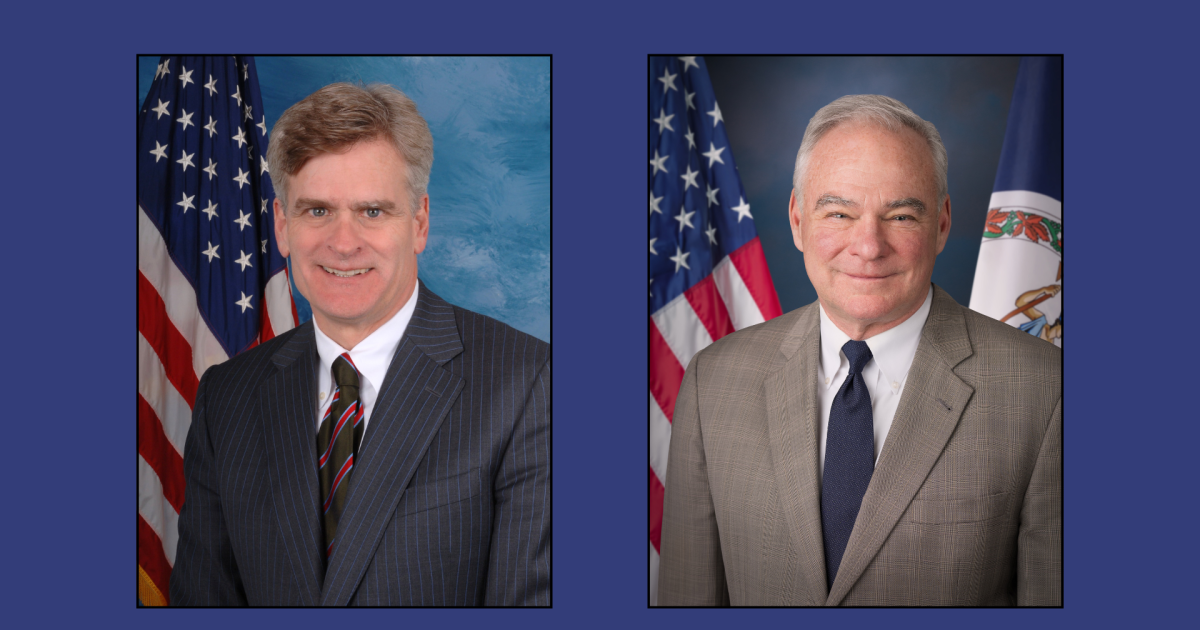
The plan’s namesakes, U.S. Sen. Bill Cassidy, a Republican from Louisiana, and U.S. Sen. Tim Kaine, a Democrat from Virginia, proposed the idea in July of 2025. They estimated $1.5 trillion would be the necessary upfront investment to start the fund, and after 75 years, the fund would pay back the U.S. Treasury and supplement payroll taxes. They also suggested using a fiduciary standard to seek maximum investment returns.
The senators compared their plan to state and private pension plans as well as to the National Railroad Retirement Investment Trust, created by Congress in 2001 as a diversified investment fund for railroad workers.
“The idea of borrowing money to invest — I don’t think I like that in general for even most individuals but let alone to fund something as important as Social Security,” Charles “Chuck” Failla, principal and founder of Sovereign Financial Group in Stamford, Connecticut, said in an interview. “I like the idea of incorporating more of a growth vehicle, perhaps, but I still think that should be maintained by the government and then have this as a defined benefit, which it always has been.”
Another critic of the plan is American Enterprise Institute’s Andrew G. Biggs, who criticized it for the risk stock investments carry and because the government would own an increasingly large portion of the stock market.
“Borrowing money to invest it and hoping for the best — that sounds like insanity to me,” Failla added. “We’re already pretty much at the gills as it stands, as a country, for borrowing money. … Social Security’s got to be completely reimagined, and it’s got to go back to being insurance.”
He compared the senators’ plan to an individual making up for overspending by investing in stocks.
“What they should do is fix the overspending problem, and the overspending problem in this context is they’re giving Social Security payments to billionaires,” he said.
READ MORE: How to have hard talks with overspending clients
As current and future Social Security beneficiaries await a solution to the expected shortfall in the fund, some younger clients already plan for the program to be gone by the time they would be ready to file for benefits.
As an alternative approach, Failla suggested a trio of changes for the future, including eliminating the cap, reducing the tax rate for Social Security payroll taxes and making the program means-tested so it would not apply to wealthy households. He noted his suggestions are for future changes, while current beneficiaries should be grandfathered into the system.
Social Security does not really function as insurance even though it is officially called insurance, Failla said, referencing the name Old-Age, Survivors, and Disability Insurance (OASDI). As an example, he mentioned that he pays into unemployment insurance because he is a business owner.
“I have yet to collect unemployment insurance. I’ve never lost my job,” he added. “I’m not going to complain about that. … Social Security should be what it was intended to be, which is insurance.”