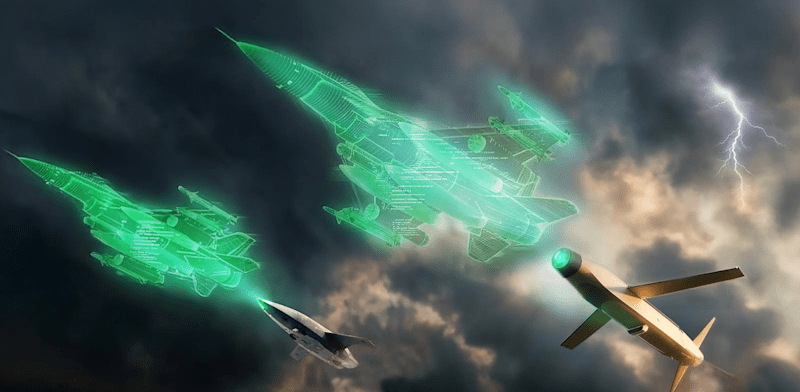
Israeli defense electronics company Rafael Advanced Defense Systems has unveiled Storm Shield, a compact electronic warfare system designed to protect unmanned aerial vehicles operating in highly contested airspace and anti-access/area denial environments.
With electronic warfare being widespread, and so many unmanned aerial vehicles, especially tiny ones, being activated, it is difficult to find a solution in the market. Therefore, Rafael created Storm Shield, which provides self-defense for the aircraft, and deception against threats. The software-based system has an advanced AESA transmitter and DRFM (digital radio frequency memory) capabilities, which create signals and confuse radars.
RELATED ARTICLES
Rafael and VW agree deal to produce Iron Dome parts – report
Norway to buy Rafaels Trophy protection system
Rafael CEO unapologetic about laser defense delays
Spain to buy Rafael German unit missiles despite Israel protest
Future-upgradable
As required in the world of UAVs, Storm Shield is lightweight. The reason for this is that the more weight you load on an aircraft, the shorter its possible operating time. The system’s coverage is 360 degrees so that even if the threat comes from a point that is not in the direction of flight, the vehicle will still not be damaged. Despite the multitude of threats in the arena, Storm Shield can also identify the source of the threat. Similar to a variety of products in the security field, the system can be future-upgraded on the platforms.
The new system joins Rafael’s existing renowned capabilities in the field of electronic warfare. These include Light Shield, which allows the attacking aircraft to evade enemy detection sensors and concentrate on carrying out the mission; and Sky Shield, which is the third generation of electronic warfare systems for aircraft, and facilitates evasion and disruption of enemy detection systems. The third and most prominent system is X-Guard: an advanced airborne deception system, based on fiber optic technology. The system draws the attacking missile away from the aircraft by creating a false and more attractive target signal, which causes the homing missile to deviate. The end result is that the attacking missile explodes, far from the platform it was aimed at.
Published by Globes, Israel business news – en.globes.co.il – on May 20, 2026.
© Copyright of Globes Publisher Itonut (1983) Ltd., 2026.