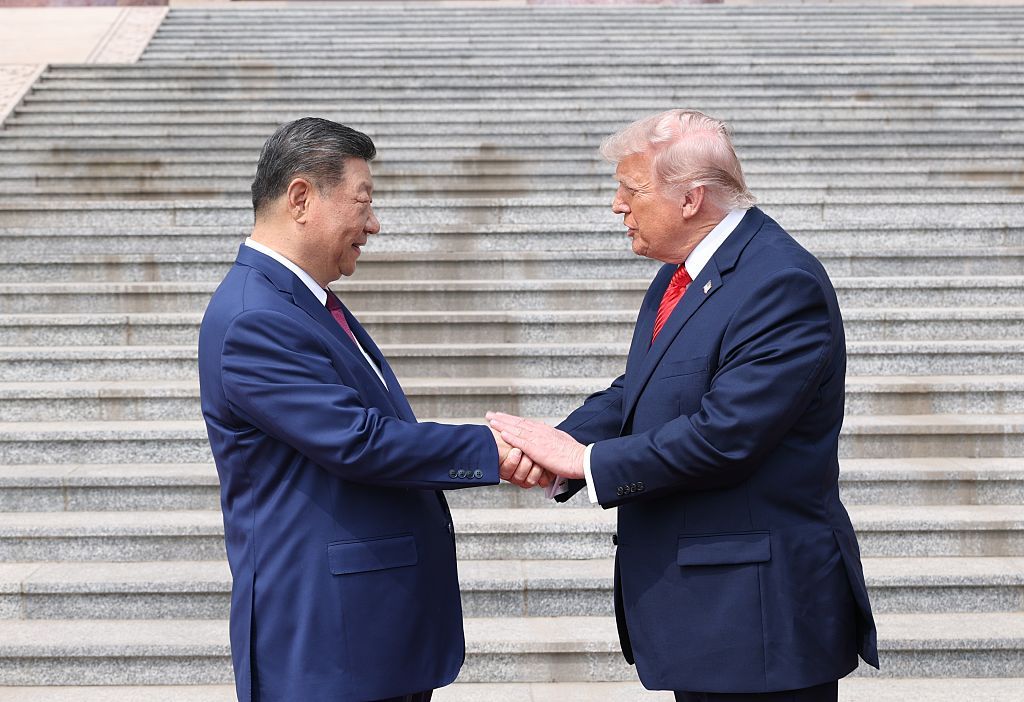
One conclusion can be made from President Donald Trump’s meeting with Xi Jinping: China just wants oil. For weeks, the administration has attempted to convince Beijing that helping resolve the 12-week-old conflict was in its best interests. Chinese President Xi Jinping ostensibly disagreed, leaving the United States to continue being alone in its regime change crusade. But some progress was made.
China Wants Iran Oil
Based on comments from President Trump, the world’s largest petroleum importer wants to keep purchasing Iranian crude. And Tehran wants to keep China as a happy customer. The numbers bear it out: as much as one-fifth of Beijing’s total crude imports emanate from Iran, averaging about 1.5 million barrels per day. Ninety percent of Iran’s oil exports are shipped to the Asian powerhouse.
The problem for Xi, however, is that the Strait of Hormuz remains closed. There is very little traffic in the narrow waterway, meaning China is not even getting the products it purchased. What’s more, according to the president, the Communist leader is unhappy about Iran erecting a toll system.
This is what could facilitate a substitution. In an interview with Fox News host Sean Hannity, President Trump confirmed that China will begin purchasing more US energy, further supporting the global shift over the past two months toward a ferocious demand for American oil.
“They’ve agreed they want to buy oil from the United States, they’re going to go to Texas, we’re going to start sending Chinese ships to Texas and to Louisiana and to Alaska,” Trump said. “They have an insatiable appetite for energy, and we have unlimited energy.”
US oil exports have reached record highs, supporting the gross domestic product (GDP) and correcting the trade imbalance. Industry data show that commercial ships worldwide have been avoiding the Strait of Hormuz, detouring around the Cape of Good Hope, and traveling toward the southern United States to refuel their tankers. America has plenty of energy: 14 million barrels of oil produced per day, 100 billion cubic feet of natural gas, and another ten million barrels or so of other petroleum.
But it could be a cause of quid pro quo. Speaking to reporters aboard Air Force One on the way back home, the president said he will decide whether to lift sanctions on Chinese oil firms that purchase Iranian crude. “I’m going to make a decision over the next few days,” he stated.
This might be a critical move. If Iran does not have a substantial revenue source in China, it will come under further pressure, which could eventually lead the regime to make concessions.
In the end, Treasury Secretary Scott Bessent is optimistic that Beijing will use its influence in the region. “I think they will be working behind the scenes to the extent anyone has any say over the Iranian leadership,” Bessent told CNBC on the sidelines of the summit. “China has a much bigger interest in reopening the strait than the U.S. does.”
More Than Energy
The two-day Xi-Trump summit was more than just Iran and oil. Both sides focused on artificial intelligence (AI), trade, and even a Boeing transaction.
Trump broke the news that Xi agreed to buy 200 Boeing jets. It had been speculated that the aerospace manufacturer would play a role in the foreign policy trip, since CEO Kelly Ortberg joined the president.
Bessent confirmed to the business news network that Washington and Beijing would explore a board of investment. This, he said, would allow China to make investments in “non-strategic” and “non-sensitive” areas. At the same time, according to the Cabinet official, it would address various security concerns.
Finally, the two sides advanced a framework regarding AI. While the details are scarce, the visit to Asia led to further discussions on best practices for the new technology. But Bessent espoused an America First attitude, telling CNBC that “the reason we are able to have wholesome discussions with the Chinese on AI is because we are in the lead.”
Xi What Happens
In the past, every time it appears the world’s two superpowers are on the cusp of advancing an agenda, something happens, and an agreement falls through. Will it be different this time? Past is prologue, and skepticism is warranted. Whatever the case, Iran will continue to be America’s problem.