Phoenix
Group is pushing deeper into artificial intelligence after a 43% revenue slide
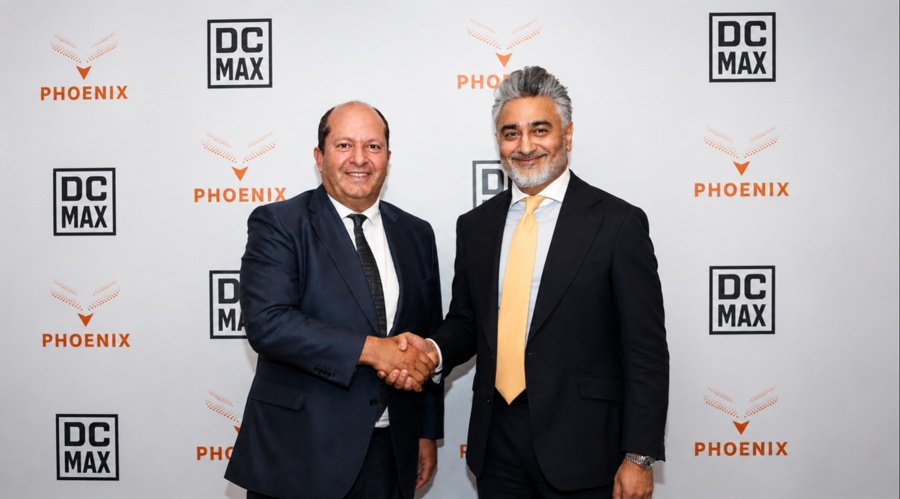
in 2025, signing French developer DC Max to build an 18-megawatt AI data center
in Lyon, the first European deployment in what the Abu Dhabi-listed firm says
will scale to more than one gigawatt of capacity.
Singapore Summit: Meet the largest
APAC brokers you know (and those you still don’t!)
The Lyon
facility is the inaugural site under what Phoenix is calling its European Data
Center Platform, a partnership structured around DC Max’s pipeline that the
firms value at roughly $8 billion.
Phoenix
said it has acquired the land, secured permits and lined up grid access, with
construction set to begin in July 2026 and handover scheduled for the fourth
quarter of 2027 or the first quarter of 2028.
The move
follows a now-familiar playbook in the Bitcoin mining sector. Full-year revenue
at Phoenix (ADX: PHX)
fell to $117.7 million from $205.7 million the year before, while the firm
reported a $271.7 million loss attributable to shareholders against a $167.4
million profit in 2024.
Like Wall Street peers Core Scientific,
Riot Platforms and Bitfarms, Phoenix is steering its power-hungry infrastructure toward AI tenants
willing to pay several times more per megawatt than current coin economics
support.
From Mining Losses to AI
Sites
The 2025
annual report Phoenix published last month showed the scale of the decline.
Trading revenue dropped 69% year on year, hosting revenue fell 62% and
self-mining revenue slipped 21%, dragging full-year revenue below $118 million.
Earnings
per share swung from a profit of $0.028 to a loss of $0.045, with unrealized
fair value losses of $223.3 million on digital asset holdings driving most of
the bottom-line damage.
The pivot
has been telegraphed in steps. Last summer, Phoenix unveiled a digital asset treasury
holding Bitcoin and Solana, becoming the first ADX-listed company to formalize such a structure as
an operational buffer against mining cash-flow volatility .
Around the
same time, it disclosed internal recruitment for AI divisions and began
scouting sites for AI and high-performance computing capacity. The Lyon deal
turns that scouting into the company’s first hard commitment outside the Gulf.
Co-founder
and Group CEO Munaf Ali described the announcement as more than incremental,
calling it “a genuine inflection point” for the firm. He added that
“the 1GW ambition is not a ceiling; it is a starting point.”
Bitcoin Miners Crowd Into
AI Real Estate
The
repositioning across the listed mining sector has accelerated through 2025 and
into 2026 as post-halving margin pressure squeezed coin economics.
Analysts
have estimated up to 20% of the industry’s power capacity could be repurposed
for AI and HPC by the end of 2027, with Goldman Sachs forecasting U.S. data
center power demand to grow at a 15% compound annual rate through 2030.
Nasdaq-listed
Core Scientific recently secured a financing
facility from Morgan Stanley of up to $1 billion to fund its conversion from crypto mining to
high-density colocation.
Riot
Platforms appointed three new board members with data center and AI experience,
including a former Meta executive. Bitfarms went further, renaming itself Keel
Infrastructure and halting all new Bitcoin mining investment.
The
financial logic is straightforward. Bitcoin miners typically trade at 6 to 12
times EBITDA, while data center operators trade between 20 and 25 times. A
clean operational pivot, with long-term tenant contracts replacing volatile
coin revenue, can support a meaningful multiple re-rating over time.
France Targets the
Hyperscaler Backlog
Demand for
AI compute in Europe has run ahead of supply, with hyperscalers and large
enterprises booking capacity years in advance. Traditional new-build timelines
of 36 to 48 months leave most operators struggling to keep pace.
Lyon offers
several advantages for developers willing to move quickly. France’s
second-largest city has an industrial base, dense electrical infrastructure and
land prices well below those around Paris, which has emerged as Europe’s most
contested data center market.
DC Max also
brings existing permits and grid agreements on some of its sites, which Phoenix
said allows it to compress the typical timeline.
“The
demand is there. The sites are there,” DC Max Chief Executive Romain
Fremont said in a statement, adding that the tie-up gives the French developer
access to capital and operational depth that would have been difficult to
assemble alone.
A 1GW Ambition Meets
Execution Risk
The Lyon
site joins roughly 550 megawatts of capacity Phoenix already operates across
the UAE, Oman, North America and Ethiopia, infrastructure originally built for
Bitcoin mining and now being repositioned for AI and HPC workloads.
The firm
also holds a 13.9% stake in Bitzero, a data-center-focused company that listed
on the Canadian Securities Exchange last year, while Ali himself has been buying shares to back the pivot strategy.
DC Max, for
its part, claims a roughly two-gigawatt portfolio and says it is backed by a
group with more than €6 billion in investment experience.
Phoenix
Group debuted on the ADX at the end of 2023, and since then its share price has
fallen 60% to the current level of AED 0.90.
Phoenix
Group is pushing deeper into artificial intelligence after a 43% revenue slide
in 2025, signing French developer DC Max to build an 18-megawatt AI data center
in Lyon, the first European deployment in what the Abu Dhabi-listed firm says
will scale to more than one gigawatt of capacity.
Singapore Summit: Meet the largest
APAC brokers you know (and those you still don’t!)
The Lyon
facility is the inaugural site under what Phoenix is calling its European Data
Center Platform, a partnership structured around DC Max’s pipeline that the
firms value at roughly $8 billion.
Phoenix
said it has acquired the land, secured permits and lined up grid access, with
construction set to begin in July 2026 and handover scheduled for the fourth
quarter of 2027 or the first quarter of 2028.
The move
follows a now-familiar playbook in the Bitcoin mining sector. Full-year revenue
at Phoenix (ADX: PHX)
fell to $117.7 million from $205.7 million the year before, while the firm
reported a $271.7 million loss attributable to shareholders against a $167.4
million profit in 2024.
Like Wall Street peers Core Scientific,
Riot Platforms and Bitfarms, Phoenix is steering its power-hungry infrastructure toward AI tenants
willing to pay several times more per megawatt than current coin economics
support.
From Mining Losses to AI
Sites
The 2025
annual report Phoenix published last month showed the scale of the decline.
Trading revenue dropped 69% year on year, hosting revenue fell 62% and
self-mining revenue slipped 21%, dragging full-year revenue below $118 million.
Earnings
per share swung from a profit of $0.028 to a loss of $0.045, with unrealized
fair value losses of $223.3 million on digital asset holdings driving most of
the bottom-line damage.
The pivot
has been telegraphed in steps. Last summer, Phoenix unveiled a digital asset treasury
holding Bitcoin and Solana, becoming the first ADX-listed company to formalize such a structure as
an operational buffer against mining cash-flow volatility .
Around the
same time, it disclosed internal recruitment for AI divisions and began
scouting sites for AI and high-performance computing capacity. The Lyon deal
turns that scouting into the company’s first hard commitment outside the Gulf.
Co-founder
and Group CEO Munaf Ali described the announcement as more than incremental,
calling it “a genuine inflection point” for the firm. He added that
“the 1GW ambition is not a ceiling; it is a starting point.”
Bitcoin Miners Crowd Into
AI Real Estate
The
repositioning across the listed mining sector has accelerated through 2025 and
into 2026 as post-halving margin pressure squeezed coin economics.
Analysts
have estimated up to 20% of the industry’s power capacity could be repurposed
for AI and HPC by the end of 2027, with Goldman Sachs forecasting U.S. data
center power demand to grow at a 15% compound annual rate through 2030.
Nasdaq-listed
Core Scientific recently secured a financing
facility from Morgan Stanley of up to $1 billion to fund its conversion from crypto mining to
high-density colocation.
Riot
Platforms appointed three new board members with data center and AI experience,
including a former Meta executive. Bitfarms went further, renaming itself Keel
Infrastructure and halting all new Bitcoin mining investment.
The
financial logic is straightforward. Bitcoin miners typically trade at 6 to 12
times EBITDA, while data center operators trade between 20 and 25 times. A
clean operational pivot, with long-term tenant contracts replacing volatile
coin revenue, can support a meaningful multiple re-rating over time.
France Targets the
Hyperscaler Backlog
Demand for
AI compute in Europe has run ahead of supply, with hyperscalers and large
enterprises booking capacity years in advance. Traditional new-build timelines
of 36 to 48 months leave most operators struggling to keep pace.
Lyon offers
several advantages for developers willing to move quickly. France’s
second-largest city has an industrial base, dense electrical infrastructure and
land prices well below those around Paris, which has emerged as Europe’s most
contested data center market.
DC Max also
brings existing permits and grid agreements on some of its sites, which Phoenix
said allows it to compress the typical timeline.
“The
demand is there. The sites are there,” DC Max Chief Executive Romain
Fremont said in a statement, adding that the tie-up gives the French developer
access to capital and operational depth that would have been difficult to
assemble alone.
A 1GW Ambition Meets
Execution Risk
The Lyon
site joins roughly 550 megawatts of capacity Phoenix already operates across
the UAE, Oman, North America and Ethiopia, infrastructure originally built for
Bitcoin mining and now being repositioned for AI and HPC workloads.
The firm
also holds a 13.9% stake in Bitzero, a data-center-focused company that listed
on the Canadian Securities Exchange last year, while Ali himself has been buying shares to back the pivot strategy.
DC Max, for
its part, claims a roughly two-gigawatt portfolio and says it is backed by a
group with more than €6 billion in investment experience.
Phoenix
Group debuted on the ADX at the end of 2023, and since then its share price has
fallen 60% to the current level of AED 0.90.