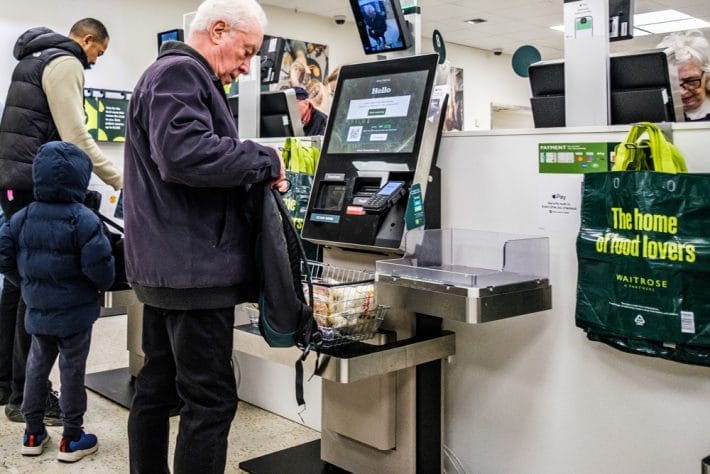
You’re standing at the checkout, focused on your groceries, when someone taps your shoulder and says, “You dropped some cash.” It sounds harmless (even helpful), but in many cases, it’s the start of a fast-moving scam targeting older adults. Across the U.S., police are warning about “dropped cash” or “cash drop” scams happening in grocery stores and parking lots. These scams are especially dangerous because they rely on distraction, speed, and trust. Older adults already lose billions annually to fraud, making them a prime target for these types of schemes. Here’s what you need to know about this scam and how to best protect yourself.
The Scam Starts With a “Helpful” Stranger
The “dropped cash” scam almost always begins with someone appearing helpful. A scammer will point to money on the ground or claim you dropped something, creating a moment of confusion. This tactic is designed to lower your guard and make you trust the person quickly. In reality, the money is often planted intentionally as part of the setup.
Sometimes, a second person joins in, acting like a bystander to reinforce the illusion. This teamwork makes the situation feel more believable. By the time you realize something is wrong, the scam is already in motion.
Distraction Is the Real Goal
While the dropped money grabs your attention, it’s not the real objective. The goal is to distract you long enough to steal something more valuable, usually your debit card or wallet. In many reported cases, victims bend down to pick up the “cash” while the scammer quickly removes their card from the reader.
This happens in seconds, often before the victim even realizes what’s missing. Some scammers also watch as you enter your PIN beforehand, making the theft even more damaging. Once they have both your card and PIN, they can drain your account quickly. This is why the distraction is so carefully timed.
Seniors Are Specifically Targeted for a Reason
Scammers don’t choose victims randomly. They look for people they believe are easier to approach and trust. Seniors are often targeted because they are seen as polite, helpful, and less suspicious of strangers. Many also rely heavily on debit cards, which can be drained faster than credit cards.
Unfortunately, older adults are also more likely to suffer larger financial losses once targeted. Scammers know that even a single successful attempt can result in thousands of dollars stolen.
The Scam Often Happens at Self-Checkout
Self-checkout areas are one of the most common locations for this scam. These areas are busy, fast-paced, and often lack close supervision from employees. Shoppers are focused on scanning items, entering PINs, and bagging groceries, all while trying to move quickly. This creates the perfect environment for distraction-based theft.
Scammers take advantage of this chaos to move in and out without being noticed. By the time the victim finishes their transaction, the damage is already done. The combination of distraction and speed makes self-checkout a prime target zone.
It Can Escalate Into Larger Financial Losses
What starts as a small distraction can quickly turn into a major financial problem. Once scammers have your card and PIN, they often purchase gift cards or withdraw cash immediately. In some cases, victims have lost thousands of dollars within hours. Because debit transactions happen instantly, recovering the money can be difficult. For anyone living on a fixed income, even a single incident can disrupt an entire monthly budget or retirement plan.
Warning Signs You Should Never Ignore
While scams catch many people off guard, there are several warning signs you shouldn’t ignore. Here’s what to look out for…
If a stranger suddenly points out dropped money or tries to rush you, take a step back.
Be especially cautious if more than one person is involved or if the situation feels staged.
Another warning sign is someone trying to distract you while you’re entering your PIN.
Trust your instincts. If something feels off, it probably is.
Avoid engaging and focus on securing your belongings immediately. You can also cover your keypad when entering your PIN, especially at self-checkout. Always keep your card in hand until the transaction is complete and never leave it unattended. And if someone tries to distract you, stop what you’re doing and check your belongings first. It’s also advisable to use a credit card instead of a debit card for added protection.
If you notice any suspicious behavior, always report it to store staff as soon as possible. This will not only keep you safe but also potentially save others from massive financial loss.
Have you ever experienced or witnessed a scam at a grocery store? What tips would you share to help others stay safe? Let us know in the comments.
What to Read Next
Android Users Alert: Scam Pop-Ups Posing as Google Are Targeting Older Adults
Social Security Warning: 3 New Scams Retirees Must Avoid Immediately
Medicare Alert: Scammers Are Mailing Seniors ‘Updated Benefits Cards’ — They’re After Your SSN
New Scam Targets Seniors With Fake Medical Devices — Here’s How to Spot It
Social Security Scam Surge: Ask This One Question Before You Give Your Number