
A growing body of psychological research points to an uncomfortable finding: many people who say they prefer being alone aren’t describing a stable personality trait. They’re describing an adaptation, one that emerged after connection disappointed them enough times that the nervous system quietly reclassified intimacy as threat and the conscious mind followed with a story that made the shift feel like a choice. The distance between a genuine preference and a protective narrative is enormous, and most of the people living inside the narrative can’t see the seam where one became the other.
Research on self-deception and attachment suggests that people unconsciously justify behavioral changes rooted in hurt as though those changes were deliberate decisions, and the justification becomes so seamless that even the person running it can’t distinguish adaptation from authenticity. What I’ve found, both through the literature and through roughly fifteen years of living as someone who told that exact story about himself, is that the preference for aloneness often emerges after connection has failed enough times that the brain optimizes away from it entirely. The story of preferring solitude comes later. It’s a narrative overlay on a wound that never quite closed.
This matters because solitude has become one of the few personality traits that society rewards twice: once for the strength it supposedly signals, and again for the peacefulness it promises. Say you prefer being alone and people nod approvingly. They assume you’ve arrived somewhere, that you’ve done the internal work and landed on a clean, self-sufficient truth about who you are. The conventional wisdom treats chosen solitude as a kind of emotional graduation. But the research tells a more complicated story, and the complication is worth sitting with.
The architecture of withdrawal
Psychologists who study attachment have a term for this pattern. Avoidant attachment describes a relational style in which closeness, dependency, or emotional intensity begins to feel threatening rather than soothing, especially as intimacy deepens. The key word there is “begins.” Nobody is born finding closeness threatening. That response gets built, brick by brick, through early experiences where reaching out for connection produced pain, absence, or unpredictability instead of comfort.
What happens next is architecturally interesting. The person doesn’t just stop wanting connection. They reorganize around the absence of it. They develop routines that fill the space where intimacy would go. They build lives that are genuinely functional, sometimes impressively so, and the functionality becomes its own evidence that they’re fine alone, even better than fine.
Functionality and fulfillment are different things.
I know this because I lived it. I was intentionally single for about fifteen years, from my late twenties into my early forties. I built a startup during that time. I lived in six countries. I had friendships, purpose, momentum. If you’d asked me during most of that stretch whether I preferred being alone, I would have said yes without hesitation. I would have meant it. And I would have been not lying exactly, but narrating a version of events that skipped the chapter where the preference was born. You can be functional in a way that looks like thriving from the outside and feels like endurance from the inside, and you can run that configuration for years without ever naming the gap.
How disappointment becomes identity
The mechanism is subtle enough that most people never catch it happening. Connection disappoints you. Maybe once dramatically, a betrayal, an abandonment, but more often through accumulation. A friendship that turned out to be infrastructure rather than friendship. A relationship where vulnerability was met with indifference. A family dynamic where emotional support only flowed one direction. None of these events are catastrophic on their own. But each one teaches the nervous system the same lesson: reaching out costs more than staying in.
After enough iterations, the brain does what brains do. It optimizes. It stops reaching. And because humans need narrative to make sense of behavioral change, you construct one: I prefer being alone.
The self-deception isn’t malicious. It’s efficient. The brain rewrites the story so you don’t have to feel the original wound every time someone asks why you’re single, why you eat dinner alone, why your weekends are so quiet.
The phrase I keep coming back to is portable disappointment. Solitude, framed as preference, makes the disappointment portable. You can carry it without anyone seeing it. You can carry it without seeing it yourself.
The body’s disagreement
Here’s what complicates the narrative further: even when the story of preferring solitude is firmly in place, the body often disagrees. People who have reorganized around aloneness still respond physiologically to connection. Their nervous systems still activate in the presence of warmth, safety, genuine interest. But the activation now comes paired with threat detection. A person experiences this as a kind of restlessness around intimacy, the feeling of wanting to leave a conversation just as it gets meaningful, or the impulse to create distance after a moment of vulnerability. The request for “space” in relationships often carries this dual signal: the need is real, but the need beneath the need, for connection that doesn’t punish, is also real.
I’ve written before about how the brain learns to delay emotional responses when early environments demanded functionality over feeling. The pattern with solitude-as-preference operates similarly. The desire for connection doesn’t disappear. It goes underground, surfaces as vague dissatisfaction, shows up as an inability to explain why Sunday evenings feel heavy, or why the sound of someone else’s laughter in another room produces a feeling that has no name. The body keeps the original draft of the story. The mind publishes the revised version.
What selectivity actually looks like
None of this means that genuine preference for solitude doesn’t exist. It does. Some people have temperaments that orient them toward quieter, more internal lives. Introversion is real. The desire for deep focus is real. Research on personality and temperament has documented the social exhaustion that certain people experience following interaction.
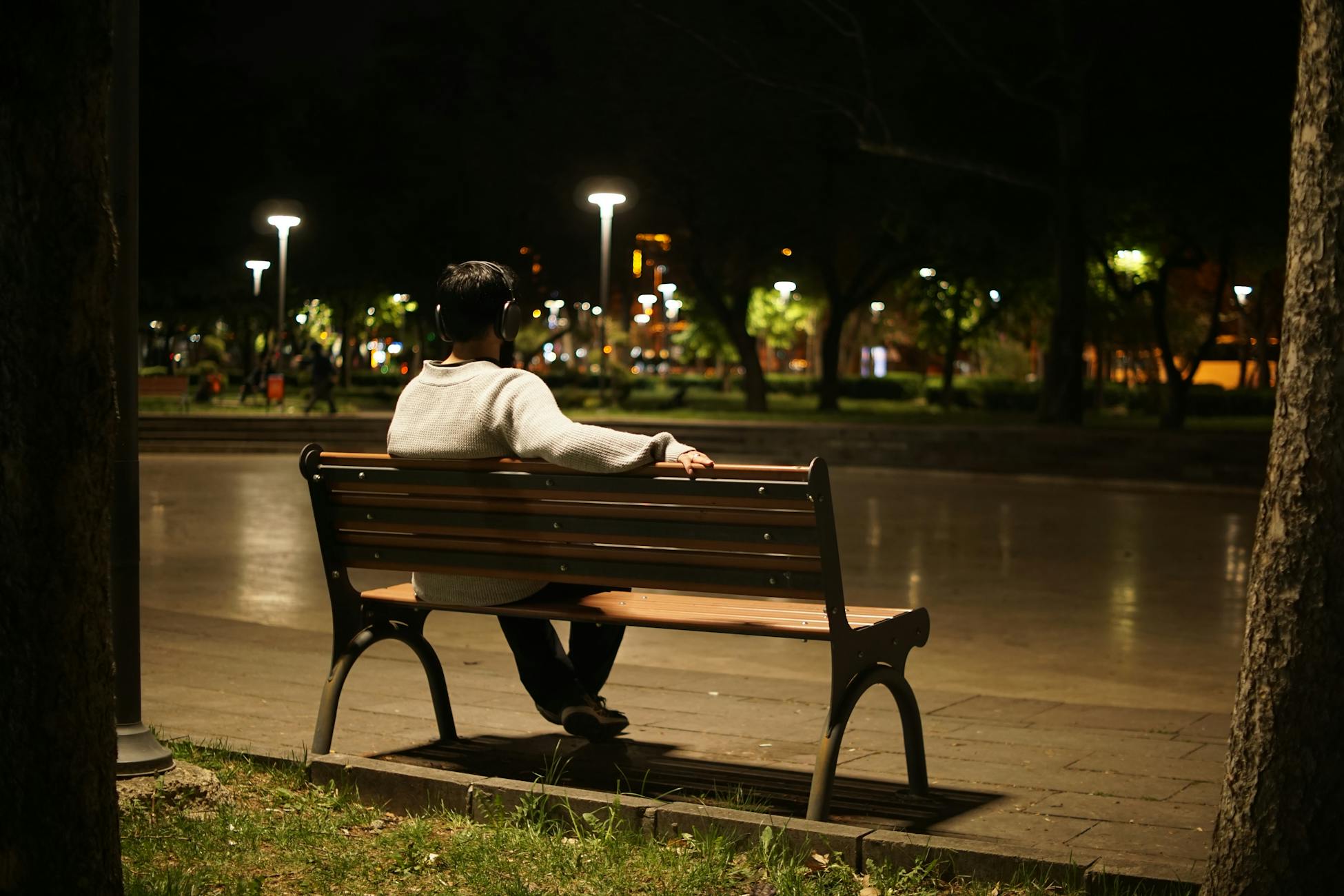
But genuine preference has a different texture than defensive withdrawal. Genuine preference doesn’t carry charge. A person who authentically prefers solitude can be around others without anxiety, can enjoy connection when it appears, and can return to aloneness without relief. There’s no urgency to it. No story they need you to believe.
Defensive withdrawal, by contrast, is loud about how quiet it is. It announces itself. It builds philosophical frameworks around valuing peace, claiming that people are draining, and asserting they’ve learned they’re better off alone. Each statement contains a kernel of truth wrapped in a much larger avoidance. The selectivity that develops in your forties can be healthy data-driven discernment. Or it can be the final fortification of a wall that started going up decades earlier. The difference matters.
The cost of the revised story
When I moved to Singapore a couple of years ago, partly to scale my work and partly because I was ready for a new chapter, something happened that I hadn’t anticipated. I started a relationship. After fifteen years of a story that cast me as someone who preferred being alone, the narrative collapsed almost overnight, not because it was disproven by some dramatic revelation, but because the relationship was simply good. And good connection, when it arrives, makes the old story impossible to maintain.
What struck me wasn’t the joy of the relationship itself. What struck me was the grief. There was a period where I had to sit with the realization that I hadn’t preferred being alone. I had preferred being alone to being disappointed again. Those are fundamentally different orientations, and conflating them had cost me years, not wasted years, because life happened during them, but years where something was available that I’d convinced myself I didn’t want.
That grief was specific and disorienting. It wasn’t regret in the conventional sense. I didn’t wish my life had been different in its broad outlines. It was more like discovering that a door you’d walked past every day for fifteen years had been unlocked the whole time, and you’d never tried the handle because someone once told you the room was empty. The grief was for the version of yourself who believed that story. Who needed to believe it.
And here’s what that grief taught me that I think matters for anyone reading this: the sadness wasn’t a sign that something had gone wrong. It was a sign that something was finally going right. When you’ve organized your entire emotional life around the premise that you don’t need something, and then you discover that you do need it and that the need is being met, the relief and the mourning arrive simultaneously. You’re grateful for what’s here while reckoning with what wasn’t. If you’ve ever felt an inexplicable heaviness in a moment that should feel purely good, a new friendship that clicks, a partner who actually stays, a conversation where someone sees you clearly, that heaviness might be grief. Not for what’s happening now, but for all the years you spent insisting this wasn’t something you wanted, because wanting it had become too expensive.
The psychological research on narrative reframing describes this mechanism clearly. The mind constructs stories to make difficult experiences more bearable, and those stories can become so load-bearing that removing them feels structurally dangerous. The narrative of preferring to be alone is a load-bearing narrative. It holds up the ceiling of an entire life architecture. Questioning it means risking the whole structure, and this is why people defend it so fiercely: not because the preference is sacred, but because admitting it might not be a preference means reopening every wound it was designed to cover.
I sat with this question for months—whether my years of singleness were truly a preference or something else—before I finally worked up the courage to talk about it on camera, and what I discovered about my own story surprised me more than I expected.
The difference between peace and resignation
I’ve noticed a pattern in conversations about solitude, particularly online. People who are genuinely at peace with being alone rarely evangelize about it. They don’t need anyone to validate the choice. They live it quietly. The people who build identities around solitude, who post about it, who frame it as wisdom earned, who react with hostility when someone suggests they might be lonely, are often the ones carrying the most unprocessed disappointment.
The hostility is diagnostic. Peace doesn’t need defending.
What I’ve come to understand, both through my own experience and through years of reading the psychology of attachment and emotional architecture, is that the question worth asking isn’t whether you prefer being alone. The question is: when did you start preferring being alone, and what happened just before that?
If the answer is that you’ve always been this way, that might be temperament. If the answer involves a person, a pattern, a season of life where reaching out stopped working, then the preference deserves a second look. Not because solitude is wrong, but because a preference born from pain tends to calcify into something that no longer serves you, even as it continues to protect you. The framing matters here. A person who says they’ve learned that keeping their personal life private works best for them might be describing genuine discernment. Or they might be describing the moment they decided that sharing was too expensive because someone once turned their vulnerability into currency. Both produce the same behavior. Only one is a free choice.
Solitude is beautiful when it’s chosen from a full menu. When every option is emotionally available and you reach for the quiet one, that’s preference. When connection has been crossed off the menu because the last three times you ordered it, it arrived cold or never came at all, that’s something else. That’s management. And management disguised as preference is one of the most sophisticated forms of self-deception a person can run. The people who benefit most from hearing this are the ones who will resist it hardest, and that resistance is also data, because it’s the nervous system recognizing that the load-bearing wall is being examined and mobilizing every defense it has to keep the structure standing. But structures built around avoidance aren’t designed to last. They’re designed to hold until something better becomes possible, and the architecture I described earlier, the routines that fill the space where intimacy would go, the functionality that doubles as evidence, the narrative that makes disappointment portable, all of it operates as a single integrated system. The system doesn’t want to be examined because examination is the one thing it wasn’t built to survive. This is true not just of solitude but of every story we tell ourselves about what we don’t need: the narrative becomes load-bearing, and then the load becomes invisible, and then the person carrying it genuinely cannot tell whether they’re at peace or simply well-adapted to a weight they’ve forgotten they picked up.
And that might be the most honest place to land. Not with resolution, not with the reassurance that you can simply check whether your preference is real and then act accordingly, but with the admission that some of us genuinely cannot tell anymore. The adaptation and the identity have fused so completely that separating them may not be possible from the inside, and the uncertainty itself, the willingness to sit with not knowing whether your solitude is chosen or inherited from a version of yourself who needed it to survive, might be the closest thing to clarity that this particular question allows.