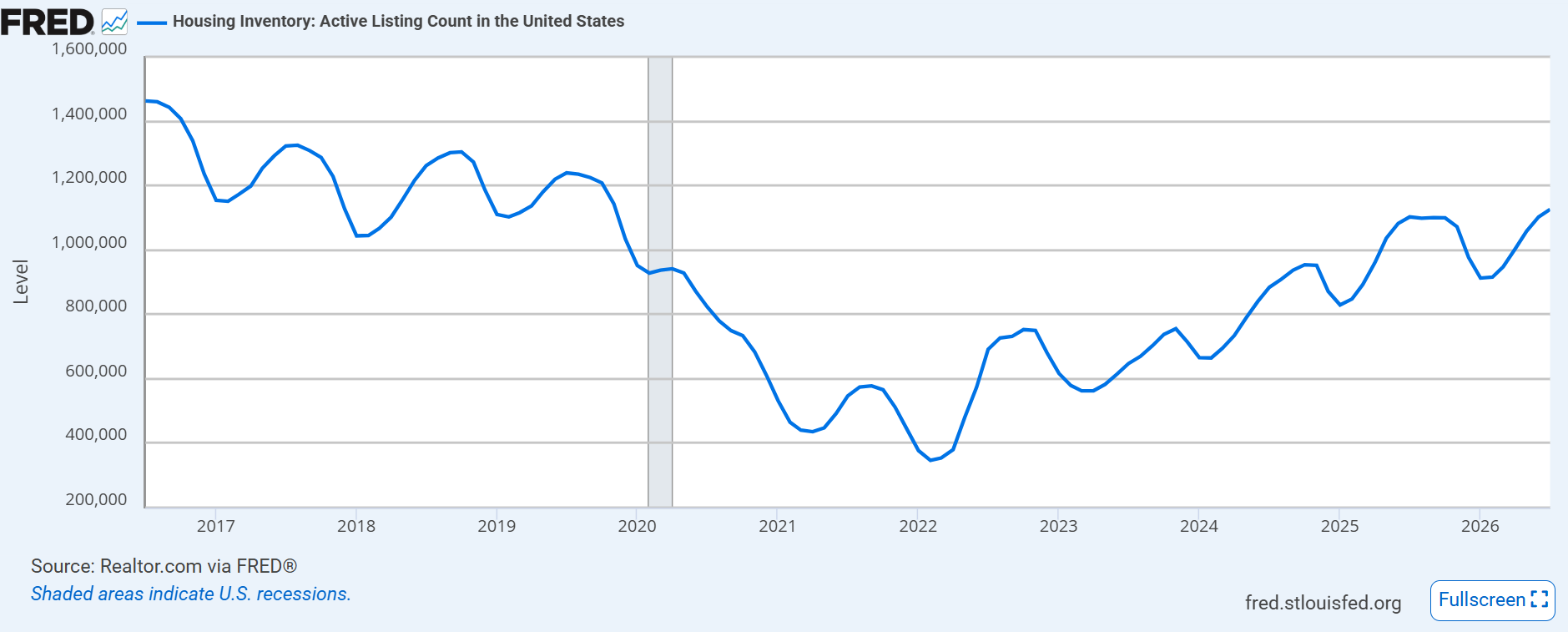
Dave:The war in Iran, AI displacement, a confusing labor market, declining consumer sentiment, and higher inflation. All of that made the news in just the last week. It’s a lot and it can be hard to keep up and understand how all of this news and information impacts your business and your portfolio. But you don’t need to be overwhelmed or worried when instead you can be informed and prepared because that is how you navigate and even thrive during uncertain periods. And that’s exactly what we’re going to help you do here today on On the Market. We’re going to dig into the absolute avalanche of economic news and data that’s come out in recent days, and we’re going to distill it into what actually you should be paying attention to and what you can ignore. This is On the Market. Let’s get into it.Hey everyone. It’s Dave. Welcome to On the Market. Today on the show, we’re going to be digging into recent events and data that are genuinely shifting expectations for the entire economy and for the housing market. And I’ll just be honest, this is a lot happening recently. It can be tough to keep up and try and piece together all this information that feels like it’s coming from every single angle. Every part of the economy, every news that you hear kind of shifts your brain about what you should be expecting for your business. And it can be confusing distilling that into actionable steps that you can actually do to help protect your business during uncertainty and actually help it grow. But I think I can help. I think I can help distill all the information that we’ve heard in the last couple of weeks down into some digestible takeaways, a couple predictions and actions that you as investors or industry professionals can take away.We got a lot to cover today, so we’re going to just jump right into this thing. So first up, we’re going to start with the news that I think personally is the biggest news for the housing market in general. And I do think it’s going to drive a lot of economic decision making, a lot of monetary policy, a lot of consumer behavior for the foreseeable future. And that was inflation really starting to pick up again. Fortunately, since 2022, since we saw the insane inflation of 9.1%, that’s where it peaked, things have been steadily coming down. For the last year or so, they’ve been up or down. It’s been kind of volatile. But this last month, which reported on inflation data from March of 2026, we saw a pretty dramatic reacceleration of the Consumer Price Index, which is the most publicized way of tracking inflation. Overall, the overall CPI, the top line number, went from 2.4% to 3.3% in just a single month.So it went up 0.9% in a single month. That’s not normal. At least not in COVID, but in a normal month in the last two, three years, we would expect 0.2, 0.3% in one direction or the other. But seeing 0.9 is a pretty dramatic acceleration in inflation. And although it’s just one month, and I always say on the show, we don’t want to get too obsessed, too overly concerned about one month of data. There are a lot of reasons and evidence that suggests that this wasn’t a one-time anomaly and it might actually get worse. Because if you think about what happened in the last month and why things went up so much, yeah, it’s easy to point at oil prices and the energy shock that is resulting from the war in Iran, but I don’t even think we’ve seen or measured the full impact of that in the economy.Sure. If you look at crude oil prices, yeah, they’re up like 50%. Even after the ceasefire, that’s very shaky right now. I’m recording this on the 13th of April, comes out on the 15th. So who knows what happens in just the two days between recording this and releasing it. But as of right now, this morning or yesterday, President Trump announced the blockade of Iran. We’re now seeing oil prices up above $100 a barrel again. But even with the ceasefire in place, they were still around a hundred bucks a barrel. That’s still 50% higher than they were back in February. And so yeah, that’s pushing up inflation. But oil is also an input cost for so many things in the economy, whether it’s construction because they use diesel or because they have to import things that are put on ships that also use diesel or food prices because 30% of the world’s fertilizer goes through the strait of hormones or service businesses that are now incurring themselves higher costs because of gas prices, because the cost of plastic is going up.All of these businesses are going to have input cost increases. And we don’t know if and how much of that is going to get passed onto consumers, but I would guess we’re going to see a lot of it, right? Actually, another measure of inflation. So I’m talking about the consumer price index, what it costs you and me to go out and buy stuff at the store, that’s gone up. But there’s something also called the producer price index, and this actually measures what it costs people to make stuff. And that was up 0.7% in just a month. And I was looking at forecast for this month, and it’s going to be up over 1% in the next month. That is a lot for a single month. And we don’t know if they’re going to pass it on to consumers, but if I was a betting man, sometimes I am.I would bet that those prices are going to leak into the rest of the economy and we’re going to see prolonged inflation. And this just is in theory. It’s not just my opinion here. If you look, this isn’t the first energy shock that we’ve had in the United States. It’s been going on for decades, right? And historically, if you look at energy shock, price shocks like this, they do tend to ripple through the economy with other prices. We are probably going to see more upward pressure on inflation. And we already had some upward pressure on inflation, right? It’s been going up, not a lot, but over the last couple months because of tariffs, we have seen inflation go up a little bit. And this just adds to that. So if you’re asking me, I think inflation is going to stay elevated definitely in the threes.I think it could go up even more than it is last month. Now, I am not saying it’s going to 9%. I don’t think that’s happening unless something else happens. But just the trajectory right now, could it hang in the three to 5% range for the rest of the year? Yeah, I do think so. And that in itself has profound implications. I know it doesn’t sound crazy. The difference between two to 3% in inflation might not sound like a lot to you. And in some ways in your personal pocketbook, it might not be that much. But if you think about some of the macroeconomic or monetary policy things that are based off of this number, the inflation number, it really does matter. And I’m going to explain why. First and foremost, you should know that inflation and mortgage rates are very highly correlated, right? When inflation goes up, bond yields go up.When bond yields go up, mortgage rates go up. That’s just how it works, right? That’s why in the last month in March, we saw mortgage rates on average go from about 6% to now 6.4-ish percent where they’re sitting today because the fear of inflation. That is why. Now, since this print came out, this inflation print that came out Friday, I guess the relatively good news is that the bond market and mortgage markets, we’re already expecting this. When they saw oil prices go up so much in the last month, they already adjusted. That’s why mortgage rates went up so quickly. So luckily, this inflation data that we got last week hasn’t pushed mortgage rates up even more. And I don’t think they’re going to go up even more right now. We’re going to have to wait and see further inflation data and see where that goes.But right now, they’re hanging in the mid sixes. But the thing I want everyone here to know is that I don’t really see a reason to expect that they’re going to go down. Can anyone articulate to me why mortgage rates are going to go down this year? If you listen to the show, I’ve been saying for a long time, I don’t think we’re out of the woods for inflation. I did not predict this war in Iran. I’m not saying that, but there are a lot of reasons we have inflationary pressure in the United States, whether it’s tariffs, whether it’s our national debt. Generally, geopolitical uncertainty increases the risk of inflation. So I’ve been saying this for a while, but I am feeling particularly confident in that advice right now because how are they going to go down? You need one of several things to happen.First and foremost, you need inflation to go down. How does inflation get better at this point? Might we see oil prices go down? Yeah. If there’s a deal with Iran struck, maybe we see oil prices go down, but even if there is a deal, if you look at some of the analyses by people who know way more about oil than I do, Goldman Sachs and these big companies, they’re saying that even if the straight afore moves opens and we start getting oil flowing again, oil prices are likely to remain elevated for about a year and we don’t have a deal. So is inflation going to go down? I hope so, but I don’t really see that happening in the meantime. What about Fed rate cuts? Is that going to bring down mortgage rates? Well, going into the year, the markets believe that there’s going to be two rate cuts, half point rate cut throughout the entire year.Now, people who literally bet on this stuff say there’s about a 75% chance that there are no rate cuts this year. I should mention that even if there are rate cuts that might not bring down mortgage rates, but rate cuts in themselves might not happen. The other thing I hear people say is, “What about a new Fed chair?” Nope, don’t see that happening either, right? New Fed chair can come in and say, “Yeah, I’m going to cut rates even though inflation’s high.” I don’t think he’s going to do that, but he could. But he’s also one of 12 voters, right? The chairman of the Fed does not unilaterally make monetary policy in the United States. He’s one of 12 people. Not to mention the fact that Senator Tom Tillis is refusing to bring Kevin Warsch’s nomination to a vote until the Department of Justice withdraws its lawsuit against Jerome Powell.So we might not even get a new Fed chair on May 15th when we’re expected to. So all of these reasons, whether it’s inflation staying high, the lack of rate cuts, tariffs, the uncertainty about a Fed share, all of those are reasons why I do not believe mortgage rates are going to come down. I’ve been trying to say this for a long time and here we are, right? I think people are finally starting to accept it. I’ve been arguing with people on social media about rates for years, people saying, “They’re going to be in the fives, they’re going to be in the fours.” I don’t think so. And I’m feeling more validated about this. I hope I’m wrong, right? It would be great if we got back into the fives. I think a five and a half mortgage would be a great place for us to be sitting, five to five and a half.That’s normal. That’s great, but I don’t think we’re getting there in 2026. I think it’s less and less likely every day right now. And I’m not happy to be right about this. It sucks. Let’s just admit it. This is not fun. We’ve been in four years of low affordability, of a slow housing market. I hate it. No one likes this. If you’re a home buyer, right? We are reversing this trend where we are finally starting to see affordability increase. That’s reversing now. And it sucks, but my job on the show is to be realistic, to help you all prepare your businesses, to prepare your portfolios for what I think is going to happen. And I will be wrong in the future. I’ve been wrong in the past, but for three, four, five years now, I’ve been pretty good on rates and home prices. And I just want to say, expect higher mortgage rates.That’s it.Make your decisions with higher mortgage rates. Now, of course, it’s not just about the number you see when you get a pre-approval. This is also going to have implications for the housing market, and this higher inflation is also going to impact other parts of the economy that you need to be paying attention to. We’re already starting to see evidence of this. It happened quick. Normally in housing, data lags a little bit, right? Current events, you start to see it a couple months later, right? The impacts of it, but we are already starting to see some of the impacts of higher mortgage rates and the war in Iran hitting the housing markets. And this is stuff you do really need to pay attention to. This is stuff that matters. We’re going to get into it in detail, but first we have to take a quick break.We’ll be right back.Welcome back to On the Market. I’m Dave Meyer going through recent news. I just kind of want to summarize what’s been going on in April so far because it’s so much and I want to help you understand what it means for the economy and the housing market. Before the break, I just talked about inflation, why I think it’s going to stay high in the mid threes at a minimum. I think it might go higher, and that mortgage rates are staying in the mid sixes for the foreseeable future. I hope that changes. Maybe something happens. Maybe the trade of hormones opens up. Maybe we get a little bit of relief, but right now, I don’t really see these things coming down. I don’t see any evidence, any narrative that suggests that they would. And this is impacting the housing market in measurable ways already. First and foremost, I think the thing you need to know is that we’re starting to see the housing market slow down even more.We saw one of the slowest Q1s first quarter of 2026 that we’ve ever seen, one of the slowest times. And now we’re even seeing things slower. Now, not every data provider tells us inventory or pending sales numbers on a weekly basis. We’re going to have to see where April comes in, but Redfin does actually do weekly data. And what it’s showing is that pending home sales are down in the beginning of April. They’re down two and a half percent year over year. Might not sound like a lot, but we are already extremely low. So seeing them go down another two and a half percent, it’s going to hurt. The NAR also released their existing home sales data. We just got this today on Tuesday, April 13th, and we saw almost 4% decrease monthly. And I should mention this data is seasonally adjusted for all those nerds out there.So this is even accounting for the seasonality that we see in the housing market. And right now, we are on pace for under four million home sales. Now, that’s not crazy by recent standards between 2023 and now we’ve been hovering around that four million sales number. Long-term average is about five and a quarter million. So we’re down a lot from there, more than 20% off of normal. We’re down a lot over COVID where we were over six million, but that’s kind of not normal either. But I think a lot of people, myself included, were hoping that the affordability gains we were starting to see would start to pick up the housing market. We would see more inventory. We would see more home sales, but I actually think we could go lower. I know, again, this isn’t good news, but if you look at everything that’s happening right now, there is not any reason to believe that we are going to see more home sales.And I think if anything, the evidence suggests that the market could go lower. So why is that? Why am I making this statement? Because I know it’s not fun. This isn’t news that I like to share, but there are reasons that I believe it. Number one, we already talked about, declining affordability and mortgage rates, but there are other reasons. Right now, American consumers, American homeowners, for lack of a better term, they’re just not feeling it, right? They just aren’t in the mood to buy stuff. Last week, we got April’s consumer sentiment score. This is something that has been measured for 70 years, and it was the worst consumer sentiment that we have seen in 70 years. That, my friends, is ugly. That is historically ugly data. And again, don’t want to make too much about one month of data, but it’s been hovering near these lows and it has gotten even worse in the last month.Economists were expecting it to go down. It went down even more. 70 years, it is the lowest point that we have seen. That is crazy. Now, I want though to put this into context because hearing that, it can make you think that we’re in this abysmal economy, right? Are we actually in the worst economy in the last 70 years? No, of course not. We’re not even really close to that. There have been far worse economic times than the one that we are in. I’m not saying that was good. I don’t think now is good. I think we have a lot of structural challenges in the economy that we need to contend with, but is this the worst economy in 70 years? No. But sentiment matters. People don’t feel good. They don’t feel optimistic about the economy, and this spills into the economy. It actually can be a lead indicator for economic activity.And my take on this is that even though this isn’t the worst economy ever, the stock market has been resilient. The labor market, surprisingly resilient, I think people are just tired. I think people are tired of five straight years of inflation, of the fear of AI, of a very slow hiring market, of much higher mortgage rates and lower housing affordability. People need a break from what feels like an onslaught of uncertainty and economic risk, and they’re not getting it. And it compounds over time. I’m sure you feel this. I feel this, right? I absolutely understand this. You see, every time you go to the store, every time you go to the gas station, every time you go to buy, look at a listing on Zillow or realtor or whatever, prices just keep going up and up and up and incomes aren’t keeping up. So I get why people have low sentiment.And for the economy, I guess fortunately, it depends how you see it, but in some ways it’s been good because it’s not like we’re in a huge recession. People are still spending. The economy is still flowing. But I do think at a certain point, the rubber hits the road, right? Sentiment is down. Wage growth is starting to go down. If we see this inflation stay where it is, we’re probably going to see negative real wage growth this year, which if you remember, last November, I think I put on an episode defining what I call the regular person recession. I don’t really care about GDP and the grand scheme of things. I care about it, but it’s one data point. I don’t think that should be the barometer of a recession. I think the barometer of recession should be are average Americans doing better or worse than they were a year ago or a month ago or whatever.And negative real wage growth, if your wages are growing slower than inflation, that just saps that. I think there’s a good chance that we hit that. I think it’s actually probably likely at this point that we’re going to have real wage growth and people that’s going to impact people, right? I am surprised as you, how much people keep spending despite the economic uncertainty, but at some point I have to believe that people are going to pull back. I’m not saying this is going to be a depression or anything like that, but I do think we will probably see a decline in economic activity because of all this stuff is going on. Now, I should mention, it’s not just consumers who are worried. Actually, at BiggerPockets, we do this sentiment survey and I write it. So I sent out this survey that asked, “What impact do you expect the Iran war to have on real estate market in the next three months?” And it’s just overwhelmingly negative.People just feel over 65% of people, more than two thirds of people think that it’s going to be a real detriment, a real negative to the housing market. Everyone else said neutral. No one else really thinks it’s going to be positive. So I’m just saying if investors who I might mention tend to be on the more optimistic side of the consumer spectrum, they’re not feeling great about some of the recent developments in the economy. And so I think that’s going to spill over everywhere. Now I don’t have any idea if they’re going to call it a recession or not, but I think the reasons for fear that people are experienced are real. The risk of recession, at least in my mind, is growing. Again, my hot take, if you remember back in December, my hot take for 2026, we are going to enter a normal person recession, and I think that is getting more and more likely.Now, I’m not saying that nothing is going right. In fact, unemployment has been kind of decent. It’s at 4.3%. That is good. But if you zoom out and look at the labor market picture as a whole, not looking so good, right? We had a good March print, a lot of jobs added in March, but we’ve consistently seen those numbers revised down after that. And if you just zoom out and look at sort of the overall picture for the last, I don’t know, 15 months or so, it hasn’t been good. We’ve had multiple months where we’ve lost hundreds of thousands of jobs. If you look at the revised data for 2025, we averaged only 15,000 jobs added per month. That’s not a lot for context. And I think we’re just in for more of that. Again, I’m not trying to spread fear. I just point me in the direction of data that suggests the labor market’s going to get better.I haven’t seen any. Even the most bullish people, right? Even the most bullish people about AI who say the economy’s going to be ripping and roaring because of AI. They’re saying that because they believe that the CapEx, the capital expenditures into AI are going to carry the economy, not because the labor market is good, right? The people who are bullish about AI are the ones who are most vocally saying that the labor market is going to get worse. Point me in the direction if you think I’m wrong, put in the comments. Why do you think the labor market’s going to get better? Because I have a hard time seeing in the immediate term, I’m not saying AI is going to take all our jobs and we’re all going to be unemployed. I don’t know if that’s true, but I’m not on that end of the spectrum where I’m like, “Oh my God, everything’s over.” But in the short run, almost everyone agrees that there’s going to be labor market disruption.So again, risk of recession is going up. I think overall, when you look at these things together, if you look at the risk of recession, if you look at lower affordability, higher mortgage rates, demand for housing is going to stay low. And I do think it could even fall. And I know that is concerning and I know that is worrisome because you might be worried about a crash or if you’re a real estate professional, you’re probably worried about your business. So let’s talk about that. Let’s talk about what lower demand or consistently low, maybe lower demand in the housing market means, but we do have to take one more quick break. We’ll be right back.Welcome back to On the Market. I’m Dave Meyer. Today, just going through recent data, summarizing my analysis for what’s going on in the housing market and the economy. And as you can tell, I’m not particularly optimistic. I’m not saying that there’s going to be a crash. We’ll get to that in just a minute, but I think that affordability is going to stay low, mortgage rates are going to stay high, demand for housing is going to remain low. Now, does that mean there is going to be a crash? Not so fast, right? We’re going to do a little bit of an econ lesson. Hopefully that makes everyone rest a little bit easier because I am not just saying there’s not going to be a crash based on gut feel. I genuinely do the analysis on this kind of stuff and I just don’t see evidence. Again, everything I’m saying here, there is opinion, but it is formed by evidence what we actually know, the data, the things that we can actually measure.And right now, on top of this low demand and potentially lower demand, which I think might happen, the other thing that is happening is that we are seeing inventory and new listings start to moderate. And this, if you were worried about a crash, if you were worried about significant price declines should be reassuring to you because the way … Econ 101, right? Let’s talk about supply and demand. If demand declines, a lot of people assume automatically that means prices are going to go down. Could happen, that is one scenario. But if supply goes down at the same time, the market price wise can stay in equilibrium. But if you’ve ever looked at an economic supply and demand graph, you would know that even though prices can stay relative, what happens when demand and supply go down, lower transaction volume, right? They can stay in balance with one another, but there’s just less of both.And that is what we are starting to see in the market. Now, make mode of stake, inventory is up over where it was during COVID. You’re going to see all these headlines and say, “Inventory is up 20% year over year.” Not really, actually. Maybe in some markets, but if you look at inventory numbers, the total number of homes that are on the market right now, how much are they up? They’re not. They’re down. They’re down 3% year over year, right? So all the people saying, “Crash. Oh my God, there’s no demand. Market’s going to crash.” Well, there is less demand, not that much actually. If you look at mortgage rate applications, it’s pretty stable year over year. My take is that it might go down in the future because inflation and higher mortgage rates and potential job loss recession, that kind of stuff. But it’s actually pretty stable right now.And we are seeing the normal response to this, which is lower new listings, right? We’re seeing lower inventory, which is good, right? If you don’t want prices to crash, and we’re seeing lower new listings. Now, this isn’t good if you want to see more transaction volume, but if demand’s going to be low, seeing supply go down at the same time means that it puts a floor for how low prices are likely to go. And this is what you expect. I talk about this a lot, right? This is what you expect a seller to do. If there’s less demand for your home, fewer people are going to list their properties. That is actually what you would expect. And this dynamic is what I expect we are going to see this spring. I think demand is going to remain low. I think inventory and new listings are going to start to moderate and we’re going to see a very slow market.I don’t think we’re getting above four million home sales anytime soon. It could drop to 3.9%. It’s not crazy decline from where we’re at right now, but I think most people are hoping we’d see modest improvement. I was expecting we go from four million to about 4.1 million this year. So I wasn’t expecting a huge increase, but I thought better affordability might put us in the right direction. Now I think the higher probabilities, if it moves, it moves in the wrong direction. It moves to a slower, but I don’t think prices are going to decline rapidly. I still stick by my prediction. I said we were going to get single digit declines in the national housing market this year. They’re flat right now. They’re not down. They’re like flat nationally, actually up a little bit, like 0.5% up year over year. But I do think it will come down.That is what I expect. So what do you do then, right? I’m sorry for being sort of negative about this. I do just want to be honest about what I’m seeing in the market. I don’t want to just rah rah the housing market and make it sound like things are going to get better when I genuinely don’t think that they are in terms of sales volume, in terms of affordability, in terms of appreciation. I don’t think that’s getting better soon. So what does that mean as an investor, as a professional in this industry? Well, if you work in this industry as a loan officer, as an agent, I’m genuinely sorry. I can’t find a silver lining for this. I can’t. I’m sorry. It sucks. It has been four difficult years of low transaction volume. And every time we start to think that we’re turning a corner, like we had nine months of affordability improvements, right?Now they’re moving in the wrong direction. So we’re not out of the woods on this. I’m not an agent, I’m not a loan officer, so I don’t have particularly advice on how to endure this or make your business more resilient. My job, or at least the thing I can help you do is just understand what’s likely to happen. And I don’t want people thinking we’re right around the corner from a turnaround in the market. Maybe I’m wrong, I hope I’m wrong, but my hope is to help you prepare for the worst, right? To be realistic about what is going to happen this year, and so you can prepare yourself and prepare your business for that. Now, if you’re a real estate investor, there is a silver lining, right? There is stuff that we talk about in this market. Every market has its pros and cons.And although I’ve been relatively negative in this episode about what I think is going to happen, because I think we’re not heading towards a healthy housing market. That’s what I’m negative about. I want us to get to a healthier housing market and we start Stubbornly cannot get closer. But as a real estate investor, there will be better deals.That is the silver lining of this situation. And that’s true even if there’s lower inventory. Even if sales volume is going down, I just think we are going to see better deals. I’m already starting to see it. Days on market, they’re going up. There’s going to be more motivated sellers. If prices come down like I think they’re going to and rents stay flat, which is usually what happens in a sort of uncertain or down economic period, cashflow prospects will actually get better for new acquisitions. So my advice for real estate investors is to stay the course.Don’t panic. Don’t exit the market, but be disciplined. Stick to your buy box. The things I’m doing, buying below current market comps. You got to buy 5% below comps, 10% current comps, not listing price. Buying below comps. Buy great assets. This is the opportunity. Things are going for sale. Great assets in good locations are sitting on the market. Not every seller is willing to take the offer that you have right now, but they will more and more. That’s what happens in these kinds of buyers market. That is the opportunity for investors. And the best advice I can give, and I think this is probably true for real estate professionals or real estate investors the same. Is think long-term. Real estate is a long-term game. It works in cycles. This is not uniquely bad times for the housing market. It works in cycles. You go through booms, you go through corrections.We are in that correction. We are in that slow period. We are enduring a difficult time in the housing market. I’m not sugarcoating it, but it will come back. The housing market works in cycle. We’re in the hard part of the cycle. It can’t always be fun. But if you think long-term, you can find good assets. You can get good deals right now. You could pay good prices for good assets. If you find the assets you want to hold onto for 10 years and you get a good price on it, that’s great. You should do that in any market. So don’t mistake my sober analysis of the economy and the housing market right now for negativity in general about real estate investing because that’s not it. I still think there’s going to be opportunity. I think there might be even more opportunity in the next couple of months, but we’re going to have to sift through bad deals.We’re going to have to sift through relatively low inventory. We’re going to have to endure higher mortgage rates. But if you can do that, you absolutely can still position yourself for success as a real estate investor. That is always true if you buy good assets at good prices and it’s especially true right now. All right, everyone. That is the show for today. Thank you so much for listening. I hope this analysis is helpful for you because I got these questions all day every day. People are like, “What does inflation mean for the market? What does the war at Iran mean for the market? What does consumer sentiment mean for the market?” And unfortunately, you can’t look at just one thing right now. You have to look at all of these data points and develop a thesis. And mine is that we’re stuck. The market’s going to stay slow.Affordability is going to stay low. And I don’t really have a line of sight on when that’s going to get better. I hope it’s soon. It’s not happening in the next couple months. I can tell you that maybe by the end of the year, but something will have to change because the evidence right now suggests it’s not. But don’t panic, stay the course. Take long term, that’s how you can still succeed as an investor. For On The Market, I’m Dave Meyer. I’ll see you next time.
Help us reach new listeners on iTunes by leaving us a rating and review! It takes just 30 seconds and instructions can be found here. Thanks! We really appreciate it!
Interested in learning more about today’s sponsors or becoming a BiggerPockets partner yourself? Email [email protected].