

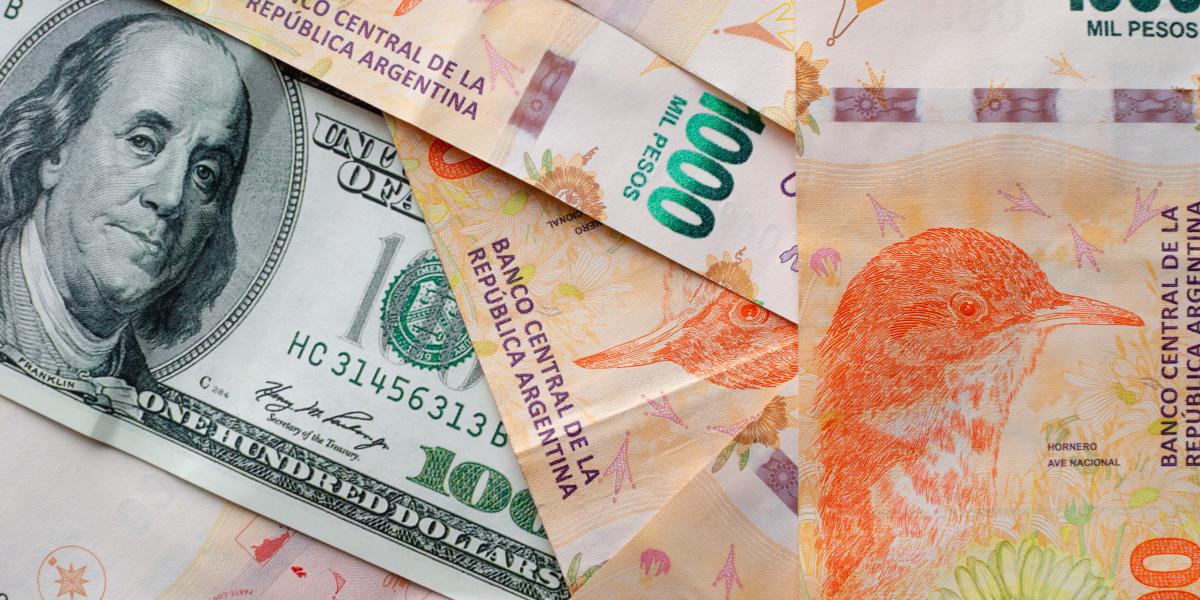
Argentina is better than it was before Milei’s victory. Argentina is better than it would be if either of the other two options had triumphed. The public spending cuts at the beginning of the Milei administration were larger than any other in history under similar circumstances. A crisis of unknowable magnitude was averted. Argentina is now on a path of growth.
Two years into his term, price inflation continues to be elevated relative to other countries and to the ultimate goal of eradicating it completely. This is understandable given the starting point. The hyperinflationary dynamic had already started and the central bank was housing a sterilized monetary mass that was 2.6 times larger than the circulating monetary mass, both of which were growing at over 100% per year. The options in that situation were to default, to explode the bomb, or to let the pressure out slowly.
A default would have destroyed the credibility, halted economic activity, further reduced the demand to hold pesos, triggered the hyper, and resulted in the removal of Milei from office. Exploding the bomb would have been to suddenly stop paying interest on reserves, which would have prompted the withdrawal of the entire sterilized monetary mass into circulation at once. This would have had the same result as the default.
[Read More: “Hoppe versus Milei on Central Banking: Breaking Down the Differences“ by Kristoffer Hansen]
They opted to attempt a soft landing and they were successful. This success was only possible because of the spending cuts that achieved a surplus, which increased credibility and demand to hold pesos. Interest on reserves was thus slowly decreased and the sterilized monetary mass was slowly withdrawn into circulation. Prices are still adapting to the last effects of this operation, but everything points to monetary convergence and a complete collapse of price inflation in the near future, in addition to capital accumulation and economic activity continuing to expand. There is no doubt that Milei has managed to set Argentina on a path towards prosperity.
However, Milei is failing to fulfil his duty of destroying the tools of monetary oppression that the democratic process is sure to use once again in the future to cause the same problem he was elected to solve. Milei promised to liquidate the central bank, and he is now starting to make excuses for not doing so.
His excuse for the continued circulation of the fiat peso is that people continue to use it even though it is now legal to use other currencies and commodities in transactions. It is a mistake to think that opening the door is enough to kick out the intruder. It is up to him to take the fiat peso out of circulation.
The endogenous process he has set out for the replacement of the peso as the primary medium of exchange in Argentina can only successfully effect a replacement in a context in which the demand to hold pesos completely collapses. His success in averting the hyperinflation solidified the inertia of the peso’s marketability, making it impossible for the fiat peso to be taken out of circulation without intentionally replacing it.
He has a moral duty to fulfil his promise of liquidating the central bank. At the very least he must replace the fiat peso with a different fiat currency, outside of the control of Argentine politicians. The libertarian principles he defends in rhetoric compel him to go further. He must replace the fiat peso with a commodity peso, particularly because it is not a complicated operation to execute under the monetary stability he achieved.
Gold is a very feasible option, as the Argentine central bank already holds about 2 million ounces, out of the 7 million ounces that would be required at a rate of 7 million pesos per ounce to liquidate the 49 trillion pesos outstanding. Around half are circulating notes and the other half are commercial bank and government reserves. They have more than enough foreign currency to quickly acquire the additional 5 million ounces of gold. This would not have a large effect on the price of gold, as the total amount of financial gold is estimated to be around 7 billion ounces and the global daily trading volume regularly exceeds 100 million ounces.
The disadvantage of gold is that coining it for direct circulation is not feasible, as the current note with the highest denomination is worth under one tenth of a gram of gold. If silver is chosen instead, the silver ounce coin could have a 100,000 peso denomination, and a small coin of a fifth of an ounce of silver would exchange directly for the current largest note. Either way, the pure metallic coins would not be able to satisfy the cash culture of Argentina.
The commercial banks must be allowed to issue notes in whichever denominations they see fit, to be managed in a similar manner to debit cards and checking accounts. What matters is the legal equivalence between the weight of a metal and an amount of pesos. As soon as this is fixed, the liquidation of the central bank becomes trivial and no change in prices is necessary, except perhaps for minor adjustments that occur day to day anyway.
There is no need to change all the prices in pesos for prices in dollars. Giving a metallic meaning to the prices that already exist and exchanging the outstanding fiat pesos for the metal is a lot easier. This is all within Milei’s grasp and could be done in a matter of months. He merely needs to decide to do it.





















