No Result
View All Result
  • Login
Saturday, July 11, 2026
FeeOnlyNews.com
  • Home
  • Business
  • Financial Planning
  • Personal Finance
  • Investing
  • Money
  • Economy
  • Markets
  • Stocks
  • Trading
  • Home
  • Business
  • Financial Planning
  • Personal Finance
  • Investing
  • Money
  • Economy
  • Markets
  • Stocks
  • Trading
No Result
View All Result
FeeOnlyNews.com
No Result
View All Result
Home Business

A global food emergency: Why the closed Strait of Hormuz puts half the world’s calories at risk

by FeeOnlyNews.com
3 months ago
in Business
Reading Time: 6 mins read
A A
0
A global food emergency: Why the closed Strait of Hormuz puts half the world’s calories at risk
Share on FacebookShare on TwitterShare on LInkedIn


Modern agriculture depends on precise timing of delivering nutrients to plants. When fertilizer arrives late or becomes too expensive to buy in sufficient quantities, farmers are left to either reduce the amount they use, plant fewer crops or switch to crops that need less fertilizer. Each option reduces overall productivity, cutting supplies of basic foods, feed for livestock and key ingredients used in a wide range of food products.

Ultimately, with corn prices rising, summer barbecues may taste a bit different or cost more. Corn on the cob may not be cheap, nor will corn-fed beef. In addition, many store-bought condiments, soft drinks and other food products are made with high-fructose corn syrup and will also cost more.

Farmers have hard decisions to make about what crops to plant and how much of each. RJ Sangosti/MediaNews Group/The Denver Post via Getty Images

3 main crops, 3 nutrients needed

Three staple crops – corn, wheat and rice – supply more than half of the world’s dietary calories.

To maximize production, those crops need three main nutrients: nitrogen, phosphate and potassium. Nitrogen helps plants grow. Phosphorus helps transport energy within plant cells and is critical for early root growth and the formation of seeds and fruit. Potassium helps plants conserve water and boosts protein content.

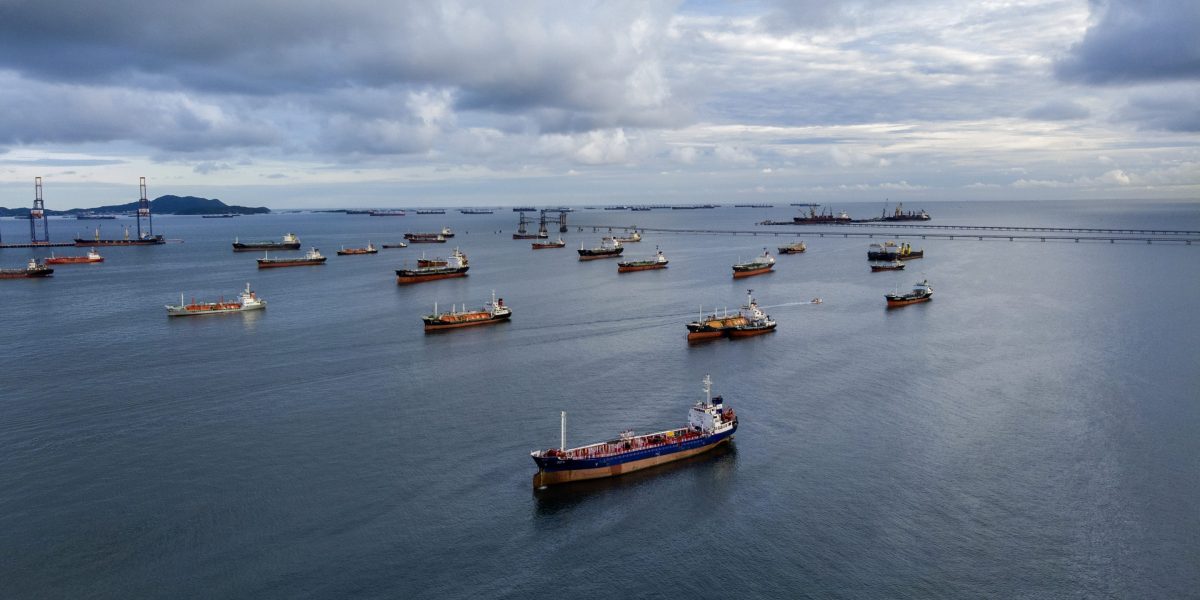
The closure of the Strait of Hormuz has reduced the supply and increased the cost of all three.

Natural gas, which determines 70% to 90% of the cost of producing nitrogen fertilizer, has seen a 20% drop in production due to the war and price increases up to 70%. To preserve its own supplies, Russia has suspended exports of ammonium nitrate, another nitrogen source for fertilizer.

In a similar effort, China, the world’s largest phosphate producer, has blocked phosphate exports, removing 25% of the global supply.

Potash, the potassium-rich component of fertilizers, has also been in short supply in recent years, in part because of economic sanctions on Belarus and Russia, which are major potash producers.

As a consequence, fertilizer prices have risen globally. In the U.S., some fertilizers rose more than 40% in just one month after the war’s start in late February 2026. https://www.youtube.com/embed/PkNWSogQzAM?wmode=transparent&start=0 An American farmer talks about the cost of fertilizer amid the war in Iran.

Affecting farmers first

Cereal plants absorb the vast majority of their nitrogen needs during their early growth. Applying fertilizer later in the growth cycle is less effective.

Reducing nitrogen application by 10% to 15%, or delaying application by two to four weeks, can reduce corn yields by 10% to 25%.

Producing less corn and wheat reduces not only food available for humans but also food for livestock. Increased fertilizer costs and reduced grain supplies increase the price of raising livestock, making meat and animal products more expensive.

When feed costs become unsustainable, farmers may be forced to kill or sell off the breeding cows and sows that represent the future of the food supply. In the U.S., a combination of persistent drought and high costs in 2022 forced producers to kill 13.3% of the national beef cow herd, the highest proportion ever. As a result, the U.S. beef cattle inventory shrank to its lowest level since 1962, a problem that restricts beef supplies for years.

Ultimately, the costs are passed to consumers. In 2012, when a historic Midwest drought slashed corn yields by 13%, it triggered a surge in feed prices, and U.S. poultry prices rose 20%.
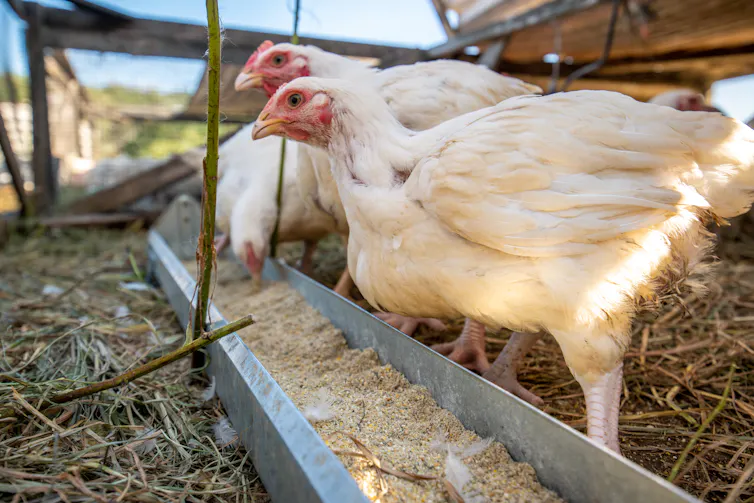
Chickens eat feed from a trough.

The cost of feeding chickens contributes to the cost of their meat. Edwin Remsberg/VWPics/Universal Images Group via Getty Images

More money can’t fix this problem

In mid-March 2026, the U.S. fertilizer supply was around 75% of normal levels. That’s right at the beginning of the time when Corn Belt farmers typically prepare their soil for planting, including the first applications of fertilizer. Subsequent fertilizer applications typically come from mid-April to early May and between late May and mid-June.

Farmers who fear not being able to optimize their corn yields may decide to plant less corn or switch crops and plant soybeans, which need less fertilizer. Either would reduce the corn supply.

Government loan guarantees and aid packages may help farmers cover higher costs, but they cannot address timing if enough fertilizer simply isn’t available when it is needed.

Hitting home

American consumers aren’t facing the gas and food shortages or power outages other countries are seeing from the war, but they will be hit in the pocketbook. U.S. prices for gas and jet fuel are already climbing. The effects on the food supply take longer to appear, but they are coming.

Even when crops are bountiful in the U.S., consumers are not immune to global economic forces. A smaller 2026 crop, with rising demand for livestock feed in some of the most populous countries, including China and India, will put pressure on global corn prices, affecting everyone regardless of their nationality.

In March 2026, the U.S. Department of Agriculture used data from before the Iran war to project a 3.1% average increase for all food prices.

The question for consumers is how much of the rise in corn prices will be passed to the consumer, and how fast.

USDA research shows that the speed and extent of changes in food prices vary widely by food category and the level of processing involved in making the food. Other factors also play a role, such as inventory levels, perishability and market competition. When farm prices change, wholesale prices usually adjust within the first month, but retail prices often take longer – sometimes two to four months.
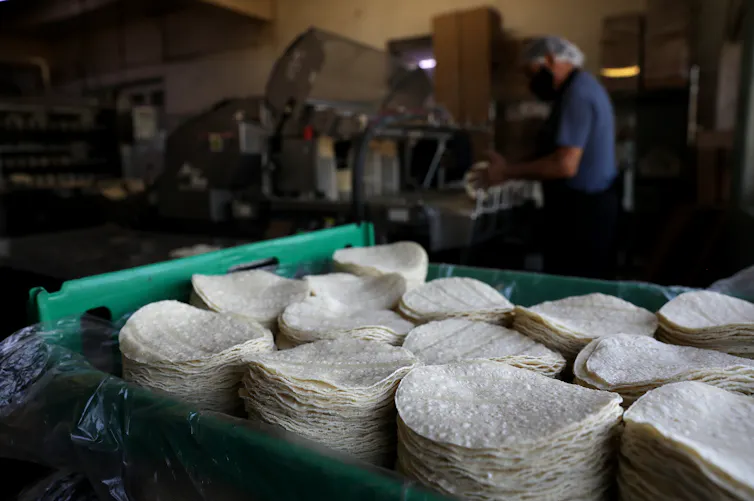
Stacks of round tortillas sit in a plastic carrying crate.

Corn tortilla prices rise relatively quickly when corn prices increase. Christina House/Los Angeles Times via Getty Images

Corn tortillas and other relatively lightly processed corn foods are more likely to show price responses within a few months after corn prices increase. Adjustments to cereals or poultry prices will take a little longer. Changes in the cost of livestock products such as beef will take longer, because there are more steps between the purchase of feed corn and the sale of the meat to consumers.

Other indirect costs, related to the cost of fuel and packaging, tend to hit later. Producers often absorb the price increases in the short term, but some increases are already in the works. For instance, transport companies are adding fuel surcharges on freight shipments.

Food price hikes hit low-income households harder than high-income households, because people with lower incomes spend larger shares of their money on food and housing. For these households, even relatively affordable proteins, such as chicken, may become harder to purchase regularly.
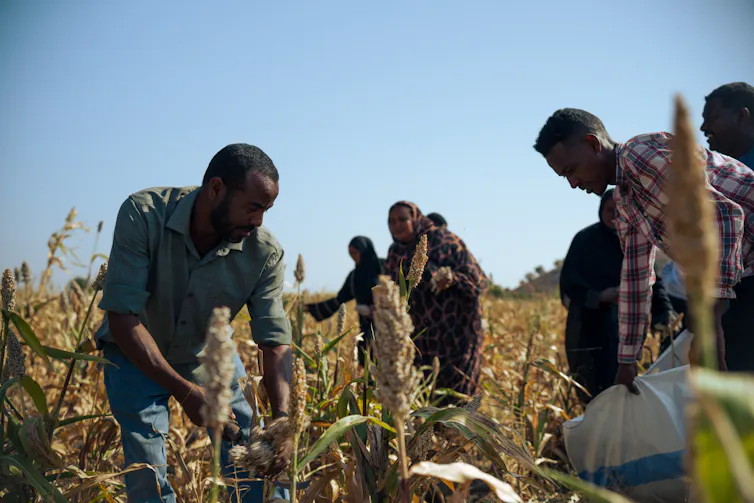
People in a field collect grain.

Farm workers in Sudan begin to harvest sorghum. Tariq Ishaq Musa/Xinhua via Getty Images

A global food emergency

The cost and availability of fertilizer will affect the whole world. More than 300 million people worldwide already do not have enough food. The U.N. World Food Program predicts an additional 45 million could join them by the end of 2026 if the conflict in the Middle East continues into the middle of the year.

Crop yields in India and Brazil in 2026 are expected to be lower than normal. East African farmers struggled to afford fertilizer even before the crisis and will likely have to make do with even less.

These problems may seem removed for most Americans, but food prices are global in nature, and people in the U.S. will soon face these additional costs of the war.

Aya S. Chacar, Professor of International Business, Florida International University

This article is republished from The Conversation under a Creative Commons license. Read the original article.

The Conversation


Source link

Tags: caloriesClosedEmergencyfoodGlobalHormuzputsRiskStraitworlds
ShareTweetShare
Previous Post

Why the AI Takeover Could Be the Best Thing for Your Professional Future

Next Post

Bitcoin flirts with $72K while a whale bets $80M it won’t last

Related Posts

Apple sues OpenAI, alleging it stole trade secrets

Apple sues OpenAI, alleging it stole trade secrets

by FeeOnlyNews.com
July 10, 2026
0

Apple sued OpenAI on Friday for allegedly stealing its trade secrets, an extraordinary move that pits the $4.6 trillion iPhone...

US stocks today: US stocks end higher as investors turn to earnings season

US stocks today: US stocks end higher as investors turn to earnings season

by FeeOnlyNews.com
July 10, 2026
0

​The S&P 500 rose to end just short of a record high on Friday, as a blockbuster Nasdaq debut of...

Elon Musk SEC settlement raises ‘red flags,’ judge says

Elon Musk SEC settlement raises ‘red flags,’ judge says

by FeeOnlyNews.com
July 10, 2026
0

Being the richest person in world history comes with its own headaches, and Elon Musk has a migraine-sized one when...

2 Recession-Resistant Dividend Stocks to Buy and Hold

2 Recession-Resistant Dividend Stocks to Buy and Hold

by FeeOnlyNews.com
July 10, 2026
0

Over the past few weeks, oil prices have decreased as geopolitical tensions in the Middle East have eased. While that's...

Top Iranian officials admitted to the supreme leader the US naval blockade was crushing the economy

Top Iranian officials admitted to the supreme leader the US naval blockade was crushing the economy

by FeeOnlyNews.com
July 10, 2026
0

Iran’s president and central bank chief told Supreme Leader Ayatollah Mojtaba Khamenei the economy was on the ropes due to...

What Does the Supreme Court Ruling on Citizenship Mean?

What Does the Supreme Court Ruling on Citizenship Mean?

by FeeOnlyNews.com
July 10, 2026
0

On June 30, the Supreme Court struck down President Donald Trump’s executive order attempting to abolish birthright citizenship, calling it...

Next Post
Bitcoin flirts with K while a whale bets M it won’t last

Bitcoin flirts with $72K while a whale bets $80M it won't last

Merrill underlines recruiting ambitions with .2B advisor pulled from JPMorgan

Merrill underlines recruiting ambitions with $2.2B advisor pulled from JPMorgan

  • Trending
  • Comments
  • Latest
House backs an emergency brake on elder fraud

House backs an emergency brake on elder fraud

June 26, 2026
Entry-Level Rentals Are Disappearing—Here’s How Landlords Can Fill the Gap

Entry-Level Rentals Are Disappearing—Here’s How Landlords Can Fill the Gap

June 18, 2026
LPL surges in JD Power advisor satisfaction rankings

LPL surges in JD Power advisor satisfaction rankings

July 9, 2026
Iran war cost U.S. households ,000 each, top economist says

Iran war cost U.S. households $1,000 each, top economist says

July 1, 2026
A Saints legend is selling fans a piece of professional sports for 0

A Saints legend is selling fans a piece of professional sports for $500

June 20, 2026
Trump claims Iran deal is ‘unconditional surrender’: Axios

Trump claims Iran deal is ‘unconditional surrender’: Axios

June 18, 2026
Traders fall back in love with Meta. Here’s where bulls see it going

Traders fall back in love with Meta. Here’s where bulls see it going

0
Rami Levy’s Cando Drones completes TASE IPO

Rami Levy’s Cando Drones completes TASE IPO

0
If you invested ,000 in Bitcoin, Trump meme coin, and gold when Trump took office, here’s what you’d have today

If you invested $10,000 in Bitcoin, Trump meme coin, and gold when Trump took office, here’s what you’d have today

0
Cloudflare Threatens to Cut Google Off From Their Publishers in Searches Due to AI Scraping

Cloudflare Threatens to Cut Google Off From Their Publishers in Searches Due to AI Scraping

0
Circle Bags Approval To Launch First National Crypto Bank, CRCL Stock Shoots 10%

Circle Bags Approval To Launch First National Crypto Bank, CRCL Stock Shoots 10%

0
The 0 Prescription Shock: What to Do When Medicaid Still Leaves You With a Huge Bill

The $450 Prescription Shock: What to Do When Medicaid Still Leaves You With a Huge Bill

0
Apple sues OpenAI, alleging it stole trade secrets

Apple sues OpenAI, alleging it stole trade secrets

July 10, 2026
Friday File: Royalties and Commodities… plus “America’s Greatest Retirement Stock”

Friday File: Royalties and Commodities… plus “America’s Greatest Retirement Stock”

July 10, 2026
The quarterly report gets a rewrite: heroes, villains and a story arc

The quarterly report gets a rewrite: heroes, villains and a story arc

July 10, 2026
How Self-Service Travel Became Another Unpaid Job for Travelers

How Self-Service Travel Became Another Unpaid Job for Travelers

July 10, 2026
Market Talk – July 10, 2026

Market Talk – July 10, 2026

July 10, 2026
Ten Grocery Items You Can Get for Less than  shipped!

Ten Grocery Items You Can Get for Less than $2 shipped!

July 10, 2026
FeeOnlyNews.com

Get the latest news and follow the coverage of Business & Financial News, Stock Market Updates, Analysis, and more from the trusted sources.

CATEGORIES

  • Business
  • Cryptocurrency
  • Economy
  • Financial Planning
  • Investing
  • Market Analysis
  • Markets
  • Money
  • Personal Finance
  • Startups
  • Stock Market
  • Trading

LATEST UPDATES

  • Apple sues OpenAI, alleging it stole trade secrets
  • Friday File: Royalties and Commodities… plus “America’s Greatest Retirement Stock”
  • The quarterly report gets a rewrite: heroes, villains and a story arc
  • Our Great Privacy Policy
  • Terms of Use, Legal Notices & Disclaimers
  • About Us
  • Contact Us

Copyright © 2022-2024 All Rights Reserved
See articles for original source and related links to external sites.

Welcome Back!

Sign In with Facebook
Sign In with Google
Sign In with Linked In
OR

Login to your account below

Forgotten Password?

Retrieve your password

Please enter your username or email address to reset your password.

Log In
No Result
View All Result
  • Home
  • Business
  • Financial Planning
  • Personal Finance
  • Investing
  • Money
  • Economy
  • Markets
  • Stocks
  • Trading

Copyright © 2022-2024 All Rights Reserved
See articles for original source and related links to external sites.